









- 21st Century Business Herald: AI and CTV Become Core Growth Engines for Digital Marketing in Overseas MarketsNov 18, 2026View details
- China Presents 25 Cooperation Outcomes in Areas Including Cross-Border E-Commerce During APECNov 18, 2026View details
- AI Products Drive Hong Kong Exports Up 64.9% in September, Fastest Growth in Over 40 YearsNov 17, 2026View details
- National Bureau of Statistics: Foreign trade grew rapidly in October, providing stable support for global tradeNov 17, 2026View details
- The U.S. has ended the $800 de minimis exemption for non-postal shipments; express courier packages must be formally declared.Nov 16, 2026View details
- ASEAN Signs Digital Economy Framework Agreement, Moving Toward Harmonized Cross-Border E-Commerce RulesNov 15, 2026View details
What Types of Traffic Can Social Media Marketing Bring to a Cross-Border Independent Website?
Is social media marketing important in the cross-border services ecosystem? Yes, but its value goes beyond adding a few visits to an independent website. Overseas users may first see a product demonstration on a social platform, search for the brand a few days later, and then visit the website to make an inquiry. They may also click an ad directly, browse products, leave, and return sometime later to place an order. Understanding these journeys helps determine what kind of traffic social media is actually bringing and how the website should engage those visitors.
Social media traffic is not limited to ad clicks
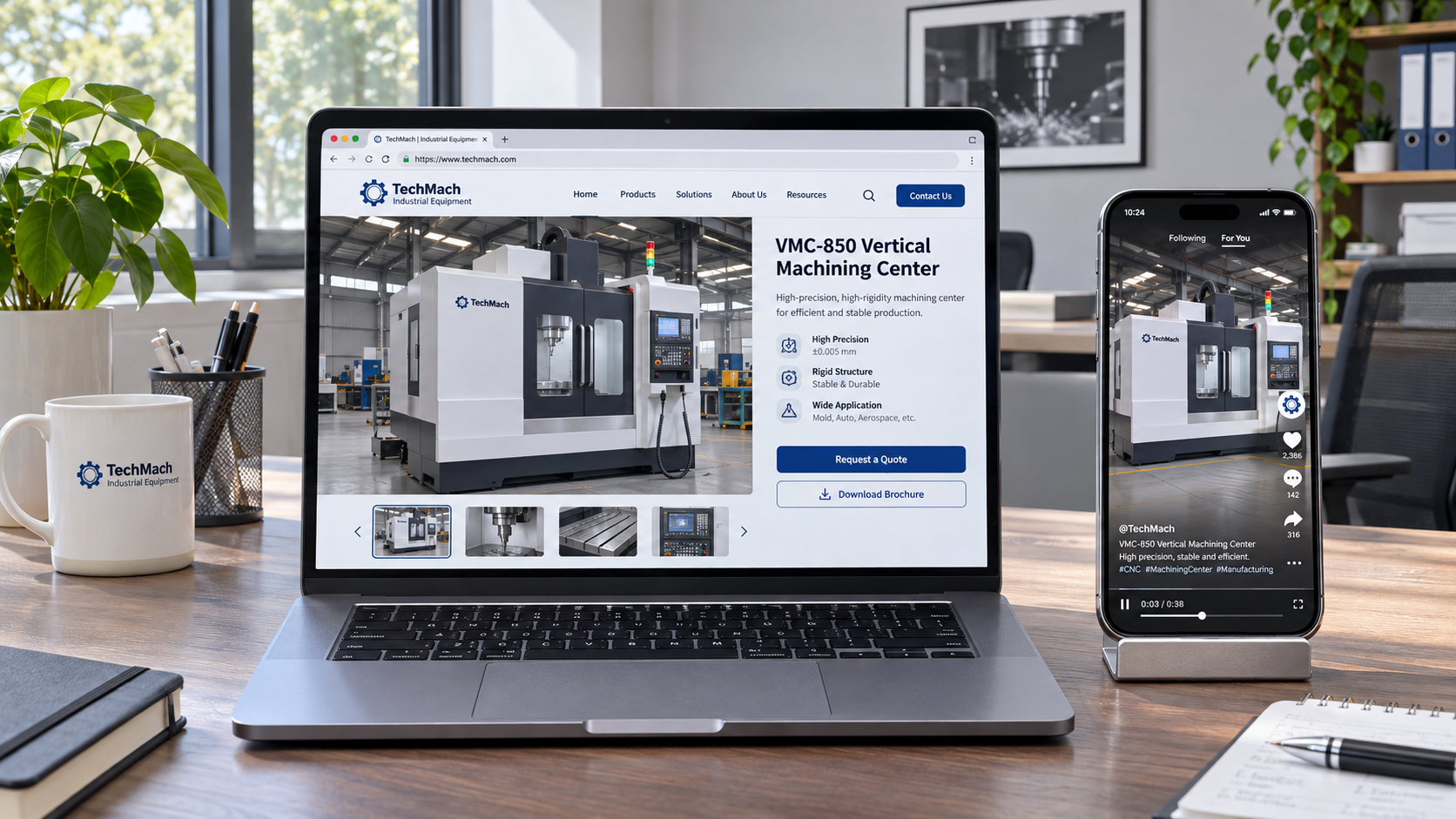
Visits driven by organic content usually come from posts, short videos, livestreams, or profile links published by a business. For example, a manufacturer of industrial equipment might showcase a machine in operation, prompting a purchasing professional to visit its website to check the technical specifications. A cross-border consumer brand might share how to use a product, leading interested users to visit its independent website to learn about the styles and prices. This traffic may not convert immediately, but it can introduce the business to people who were not actively searching for the brand.
Organic exposure also has its limits: people seeing content does not mean they will necessarily leave the platform. The way external links are displayed varies across platforms and content formats. Whether profile links, post links, or calls to action are easy to use can all affect the number of actual website visits. Therefore, video views or post engagement alone cannot be used to estimate website traffic.
Paid advertising is better suited to proactively reaching specific audiences with content and directing them to product pages, campaign pages, or inquiry pages. For example, consumer product ads can show the product in use and provide a direct way to buy; ads for export-oriented equipment are better off highlighting the application industry and key specifications, then directing users to the website for more information. Advertising can generate test feedback more quickly, but results are affected by click costs, audience fit, and page experience. Spending money does not necessarily bring in qualified customers.
Another source of traffic that is easy to overlook is sharing and referral traffic. Customers may share product links, industry communities may discuss solutions, and creators may describe their experience using a product—all of which can bring new users to an independent website. These visitors often arrive with specific questions, but businesses have relatively little control over when or to whom the content spreads. They should also ensure that partnership content is truthful and that commercial relationships are disclosed.
Social media visits can vary widely in how close they are to a sale
To assess traffic quality, look beyond the number of visits and consider why users clicked through. A visitor drawn in by an entertaining video may just want a quick look; someone who actively clicks on an equipment selection guide may be comparing suppliers. The former needs a clear brand introduction and easy-to-understand product content, while the latter is more likely to need specifications, application requirements, delivery information, and a clear way to get in touch.
This is especially true for B2B export inquiries. Purchasing decisions may involve technical, procurement, and management teams, and a single social media visit is unlikely to address everyone’s questions. Rather than rushing to ask visitors for their phone numbers, a website can provide product information, FAQs, and explanations tailored to specific applications, encouraging interested prospects to learn more. For cross-border retail, users are usually more concerned with product details, delivery coverage, costs, returns and exchanges, and the payment experience. If this information is unclear, even an appealing ad may fail to retain visitors.
Some social media influence is not directly attributed to a “social media” source. After seeing content, users may open another browser to search for the brand name, or even bookmark the website and return later. If analysis considers only the last click, it can underestimate social media’s role in early-stage reach. However, that does not mean all subsequent searches should be credited to social media; assessments should consider promotion timing, visitor journeys, and inquiry records together.
Before driving traffic, check whether your website is ready to engage visitors
A common source of wasted spend is an ad promoting a specific product that sends users to a cluttered homepage. Visitors then have to find the relevant model themselves, and the mobile site loads slowly. It is no surprise if they leave. A landing page does not need to be packed with information, but the ad promise, page title, product content, and next step should all align.
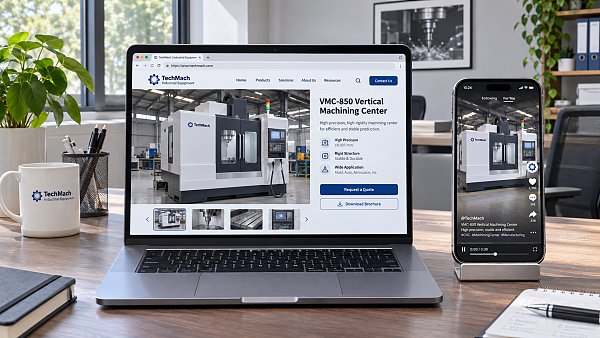
For different markets, also check whether the language, contact details, and delivery information are appropriate. A multilingual website is not just a matter of translating every page word for word: professional terminology, product units, purchasing practices, and users’ concerns may all need to be adapted. Forms should not include every possible field just for the sake of completeness. An industrial product inquiry form can retain essential details such as model and application, while a long form with too many required fields may create a barrier for first-time visitors.
This is where the value of coordinating website development and marketing becomes clear. Yiyingbao provides services including smart website development, multilingual websites, social media management, and advertising. For businesses, the practical considerations when choosing an integrated service are whether pages can be continuously adjusted to support promotion, whether data can be used for analysis, and who will be responsible for follow-up content and inquiries—not simply whether the full range of services is available.
How to determine whether social media traffic is effective
Start by separating your objectives. At the brand awareness stage, you can track reach in target markets, content engagement, and how many people go on to visit the website. If the goal is to generate inquiries, focus more on qualified form submissions, email inquiries, and sales follow-up. For cross-border e-commerce stores, assess add-to-cart activity, checkout, and orders to determine whether the traffic shows purchase intent. High engagement does not necessarily lead to high sales, and low traffic does not necessarily mean there is no value.
In practice, set distinguishable tracking parameters for different platforms, ads, and content, and check that events such as form submissions and clicks on key buttons are being recorded correctly. Differences between ad platform data and website analytics are common. Reporting methods, cross-device visits, and privacy settings can all affect the results, so do not simply add the figures from both sources together. When using tracking and retargeting, also check the requirements of the target market, platform rules, and whether users have given the necessary consent.
If your budget is limited, there is no need to rush into managing every platform at once. Start with one channel that matches your target customers and product presentation, then test with a small amount of content and a clear landing page: Which topics attract attention? Which visitors are willing to learn more? Are the inquiries relevant to the sales team? Once you identify whether the issue lies with the audience, creative, or page, you can decide whether to increase investment. This is more prudent than simply pursuing more clicks.
Related Articles
 How can you avoid duplicate content when distributing it across multiple social media platforms?
 What Types of Traffic Can Social Media Marketing Bring to a Cross-Border Independent Website?
 How to Track the Sources of Inquiries to Your Website from Overseas Social Media


Related Products
 Yiyingbao SaaS Intelligent Website Building and Marketing SystemYiyingbao SaaS Intelligent Website Building and Marketing System, AI-powered no-code website building, rapid creation of multilingual B2B international websites in 10 minutes, global server acceleration, AI-powered SEO optimization, helping businesses connect efficiently with global markets. The perfect integration of technology and operation makes building an international trade website remarkably simple
 AI+SEM Intelligent Advertising Marketing SystemAI+SEM drives intelligent ad creation, empowering full-funnel precision advertising marketing. The system automatically generates weekly/monthly reports, AI recommends keywords and target countries, monitors core metrics in real-time with intelligent alerts, and enables one-click high-conversion ad solutions to help quickly acquire customers and improve ROI.
 AI+SEO Dual-Engine System Optimization ServicesYiyingbao’s AI+SEO dual-engine optimization system helps foreign trade enterprises acquire high-quality organic traffic through AI-powered keyword research, content generation, and comprehensive technical optimization, significantly improving search rankings and conversion rates.
 AI+SNS Social Media Marketing SystemYingbao AI+SNS Social Media Marketing System - Precision social capture for the social media era. Supports one-click content synchronization across major platforms like Facebook and LinkedIn. AI intelligently rewrites posts for enhanced relevance. 24/7 AI customer service and user profiling analysis empower businesses to efficiently expand into global markets.
 AI+SEO营销解决方案易营宝AI+SEO营销解决方案,通过AI批量写作、智能生成TDK、精准关键词扩词等功能,全面优化网站SEO效果,提升流量与转化率。助力企业构建高效智能网站新生态。
 AI+SEM Advertising Marketing SolutionsAI+SEM Advertising Marketing Solution leverages AI technology to deeply empower SEM ad campaigns. It automatically generates weekly/monthly reports using AI, presenting account data across multiple dimensions for comprehensive insights into campaign performance and trends. The system precisely recommends keywords and target countries, intelligently generates high-conversion ad copy, and enables one-click activation of efficient campaign plans to help businesses rapidly acquire customers. Simultaneously, it monitors core metrics in real time, intelligently identifies abnormal fluctuations, and issues timely alerts to ensure stable, high-return advertising results.
 Domain Name ServicesEasyWin provides professional domain name services, including intelligent queries, one-stop registration, brand protection, and full lifecycle management, helping businesses build a digital brand image.
 EasyOperate B2C Cross-Border E-Commerce Platform & Independent WebsiteEasyStore B2C Cross-border E-commerce Independent Store is an intelligent website building and cross-border e-commerce integrated solution independently developed by EasyStore Information Technology (Beijing) Co., Ltd. The system is specially designed for small and medium-sized as well as large export enterprises, integrating 'website building, operation, marketing, advertising, and conversion' into one, helping enterprises quickly establish cross-border e-commerce independent stores to achieve brand globalization and global sales growth.
The platform supports multiple languages, multiple currencies, and multi-channel marketing, with built-in AI intelligent translation and SEO optimization systems, suitable for mainstream markets such as Southeast Asia, Europe and America, Latin America, and the Middle East, assisting Chinese manufacturing enterprises in efficiently deploying international e-commerce strategies. SSL证书易营宝提供专业SSL安全证书服务,包括单域名和泛域名证书,确保网站数据传输加密、身份验证和完整性保护,助力企业建立安全可信的在线业务环境。









