









- Levanta’s Inaugural China Summit Held in Shenzhen, Focusing on AI and Cross-Border Brand GrowthOct 20, 2026View details
- The October Edition of the 2026 GGE Shenzhen Cross-Border E-Commerce Expo OpensOct 20, 2026View details
- Dongguan’s foreign trade imports and exports reached RMB 1.29 trillion in the first three quarters, a record high for the same periodOct 20, 2026View details
- Liaoning Holds Province-Wide Meeting to Advance Cross-Border E-Commerce, Emphasizing the Need to Explore Differentiated Development PathsOct 20, 2026View details
- Advanced Manufacturing Seizes Global Opportunities as Guangdong’s Q3 Foreign Trade Surpasses RMB 3 Trillion for the First TimeOct 20, 2026View details
- Can the average annual growth rate reflect real opportunities in overseas markets?Oct 07, 2026View details
What multilingual fields are needed for a heavy machinery export website?
Multilingual fields for heavy machinery export websites cannot simply translate Chinese product pages into English, Russian, or Spanish. Overseas buyers typically search first by equipment model, operating conditions, load capacity, or attachment name, and then use the specification page to determine whether the equipment qualifies for the next round of quotation inquiries. When fields are missing, units are not converted, or terminology does not match local conventions, buyers may be able to understand the general idea but still be unable to confirm the details, even if the page language switches correctly.
The direct approach is: set information that affects purchasing decisions, transportation and installation, operation and maintenance, and quotation communication as translatable fields; retain objective data such as model numbers, certification numbers, and dimensional values from a unified source, and handle units, formats, and descriptions according to each language version. The key to the multilingual fields required for a heavy machinery export website is not the number of fields, but whether buyers can fully understand the equipment configuration and application limits on pages in their local language.
First distinguish: what should be translated and what must not be mistranslated
Heavy equipment pages usually combine marketing information, engineering specifications, and transaction information. The first two categories require localized wording, while specifications must be based on technical documentation. In particular, excavators, cranes, loaders, concrete equipment, mining equipment, and their attachments may have different names in different markets. A literal translation may misrepresent the working attachment, drive type, or rated capacity.
Core fields that product pages must cover
Name, model, and equipment category
Each language version should include at least a localized product name, a brief model description, equipment category, and application description. Model numbers, engine models, part numbers, and hydraulic system codes are generally not translated, but explanatory notes may be added, for example, to indicate that a specific code represents a tracked type, wheeled type, telescopic boom, or a particular tonnage range. Category names in page titles and breadcrumbs should also be translated consistently; otherwise, buyers may encounter mixed languages when entering a product page from a category page.
Applicable operating conditions and working capability
“Suitable for construction projects” is too broad. More useful fields include processable materials, recommended operating environments, ground conditions, slope limits, altitude or temperature ranges, continuous operating requirements, and scenarios where use is not recommended. For equipment with attachments, the compatibility conditions between the attachment and the main machine should be specified, such as hydraulic flow range, interface type, installation dimensions, or control method. Such information can reduce the risk of buyers confusing equipment capability with actual project requirements.
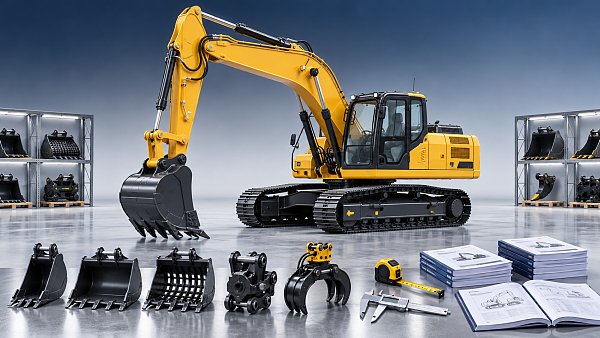
Technical specification tables and explanatory fields
A specification table cannot translate only a few headings such as “weight,” “power,” and “dimensions.” It is necessary to check whether every parameter name, unit, parenthetical note, remark, and test basis can switch with the language. Common fields include:
- Operating weight, transport weight, overall dimensions, working dimensions, and minimum turning radius;
- Rated load, maximum lifting capacity, bucket capacity, grabbing capacity, or tractive force;
- Engine power, emission version, fuel type, fuel tank capacity, and hydraulic oil capacity;
- Travel speed, swing speed, gradeability, ground pressure, or tire specifications;
- Working range data such as maximum digging depth, dumping height, operating radius, and boom length;
- Electrical specifications, control method, protection rating, and optional safety devices.
Unit conversion should be handled carefully. For the US market, imperial units may be more familiar; for most European markets, metric units are usually more straightforward. A more prudent approach is to display both the original metric values and converted values on the page, with conversion precision clearly stated. Do not arbitrarily truncate decimal places merely to keep the page tidy, especially for load, dimension, and pressure fields. If the conversion relationship has not been confirmed in the original documentation, retain the original unit rather than completing it independently.
Fields that are easily overlooked often determine inquiry quality
Procurement personnel do not only look at the main specifications. Names of downloadable materials, PDF catalogs, operation manual summaries, maintenance interval descriptions, spare part names, warranty terms, packaging methods, and container loading information on equipment detail pages should also have corresponding language fields. Even if a complete multilingual version of the manual cannot yet be provided, the download button, file description, and applicable models must not remain in Chinese.
Inquiry forms are also multilingual content. Product models can be filled in automatically, but prompts such as “required quantity,” “destination port,” “expected purchase time,” “whether attachments are required,” and “local voltage or emission requirements” should use wording that is easy for the target market to understand. If the form has too few fields, sales personnel will still need to repeatedly confirm details later; if the fields are overly engineering-oriented, the threshold for initial submission will increase. Information that must be confirmed for the project can be made mandatory, while the remaining content can be optional.
Different languages cannot share one set of machine translation rules
English pages should especially standardize British or American spelling, unit systems, and technical terminology; Russian, Arabic, and other pages also require checks for long phrases, character display, and table line breaks. Arabic involves right-to-left reading direction, so specification tables, icon positions, and form layouts all need adaptation rather than simply replacing text. Spanish covers multiple markets, and equipment names and measurement expressions may also vary by region. Priority should be given to terminology commonly used in procurement documents, local distributor materials, or by target customers.
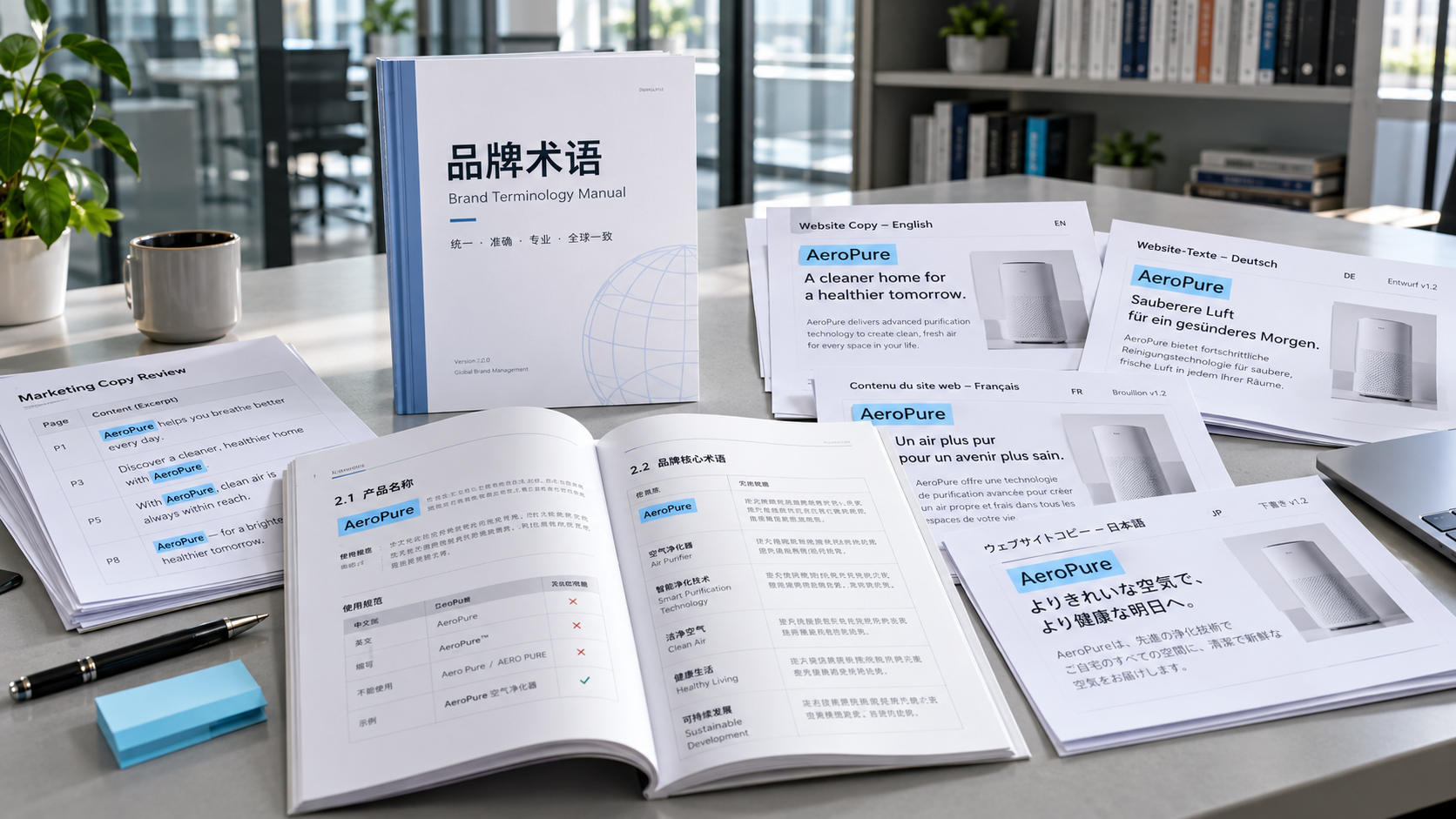
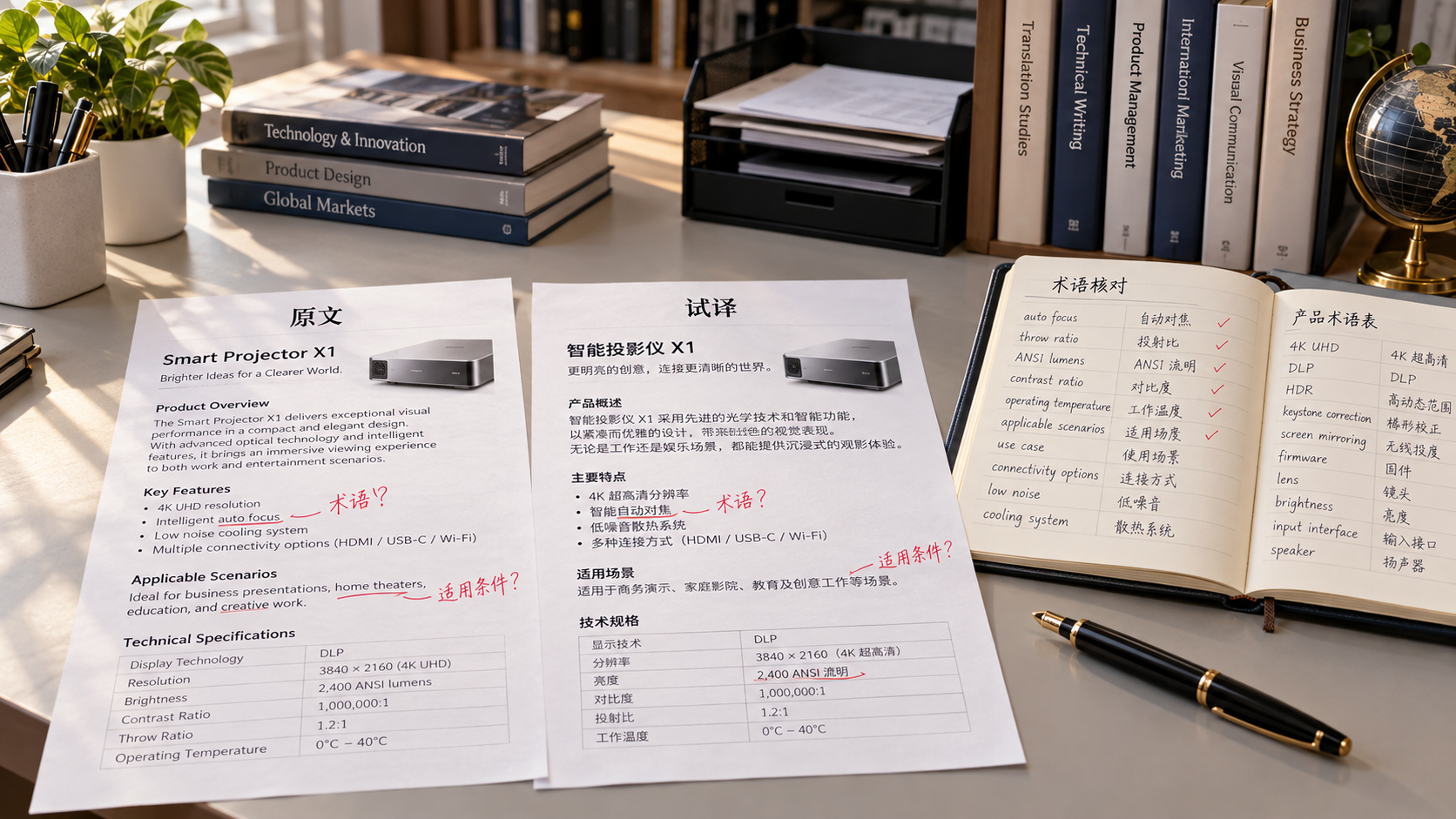
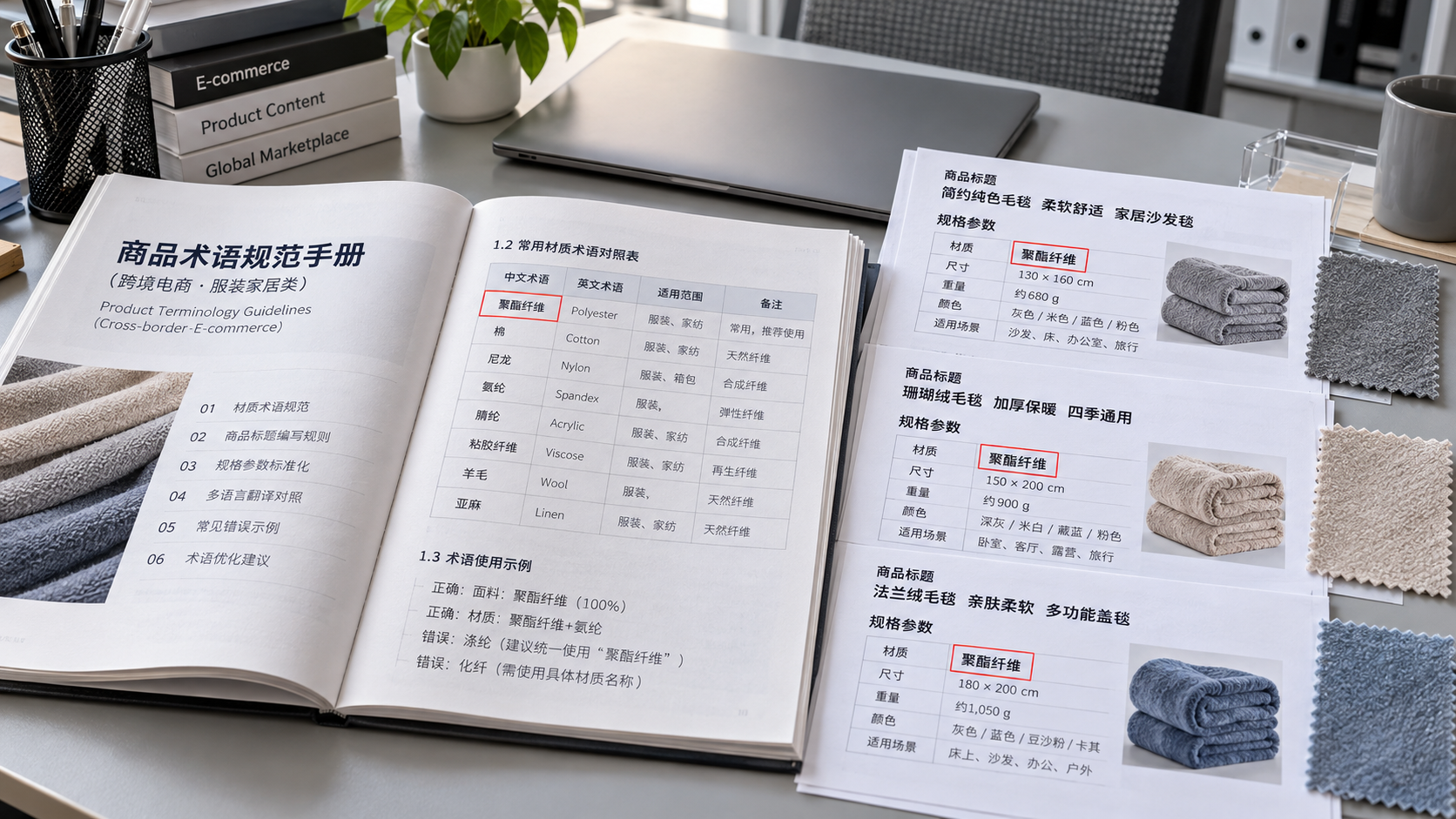
Before translation, it is best to establish a glossary listing general equipment terms, component names, attachment names, operating actions, fault prompts, key parameters, and model fields that must not be replaced. The content should then be reviewed by people familiar with the products, rather than checking grammar alone. For example, “operating weight” and “shipping weight,” as well as “rated load” and “maximum load,” do not convey the same purchasing meaning, and mixing them up will directly affect buyer judgment.
Before launch, check the page journey rather than only individual page copy
- Enter product pages from multilingual category pages and confirm that category names, filter options, product cards, and detail pages use consistent languages.
- Check the specification table item by item: confirm that values, units, footnotes, optional-equipment indicators, and downloadable files are displayed completely.
- Test model searches, on-site filtering, and inquiry submission to prevent search results from still returning pages in another language.
- Check text in images, nameplate screenshots, dimension drawings, and parameter charts. When images cannot be translated automatically, corresponding language-specific artwork or supplementary text outside the image should be provided.
- Confirm that the page title, description, image alt text, and structured fields for each language match the page content, preventing search engines from misidentifying different language versions as duplicate pages.
For products with frequently updated specifications and significant configuration differences between models, multilingual content should not be maintained separately across multiple static pages. Product data, translatable descriptions, and unit display rules should be managed separately: model numbers and basic values should be maintained from a unified data source, while language pages call the corresponding terminology and descriptions. This reduces missed updates when engine, attachment, or dimension parameters are updated and prevents contradictory configuration descriptions across different language pages.
Related Articles
Related Products
 Yiyingbao SaaS Intelligent Website Building and Marketing SystemYiyingbao SaaS Intelligent Website Building and Marketing System, AI-powered no-code website building, rapid creation of multilingual B2B international websites in 10 minutes, global server acceleration, AI-powered SEO optimization, helping businesses connect efficiently with global markets. The perfect integration of technology and operation makes building an international trade website remarkably simple
 AI+SEM Intelligent Advertising Marketing SystemAI+SEM drives intelligent ad creation, empowering full-funnel precision advertising marketing. The system automatically generates weekly/monthly reports, AI recommends keywords and target countries, monitors core metrics in real-time with intelligent alerts, and enables one-click high-conversion ad solutions to help quickly acquire customers and improve ROI.
 AI+SEO Dual-Engine System Optimization ServicesYiyingbao’s AI+SEO dual-engine optimization system helps foreign trade enterprises acquire high-quality organic traffic through AI-powered keyword research, content generation, and comprehensive technical optimization, significantly improving search rankings and conversion rates.
 AI+SNS Social Media Marketing SystemYingbao AI+SNS Social Media Marketing System - Precision social capture for the social media era. Supports one-click content synchronization across major platforms like Facebook and LinkedIn. AI intelligently rewrites posts for enhanced relevance. 24/7 AI customer service and user profiling analysis empower businesses to efficiently expand into global markets.
 AI+SEO营销解决方案易营宝AI+SEO营销解决方案,通过AI批量写作、智能生成TDK、精准关键词扩词等功能,全面优化网站SEO效果,提升流量与转化率。助力企业构建高效智能网站新生态。
 AI+SEM Advertising Marketing SolutionsAI+SEM Advertising Marketing Solution leverages AI technology to deeply empower SEM ad campaigns. It automatically generates weekly/monthly reports using AI, presenting account data across multiple dimensions for comprehensive insights into campaign performance and trends. The system precisely recommends keywords and target countries, intelligently generates high-conversion ad copy, and enables one-click activation of efficient campaign plans to help businesses rapidly acquire customers. Simultaneously, it monitors core metrics in real time, intelligently identifies abnormal fluctuations, and issues timely alerts to ensure stable, high-return advertising results.
 Domain Name ServicesEasyWin provides professional domain name services, including intelligent queries, one-stop registration, brand protection, and full lifecycle management, helping businesses build a digital brand image.
 EasyOperate B2C Cross-Border E-Commerce Platform & Independent WebsiteEasyStore B2C Cross-border E-commerce Independent Store is an intelligent website building and cross-border e-commerce integrated solution independently developed by EasyStore Information Technology (Beijing) Co., Ltd. The system is specially designed for small and medium-sized as well as large export enterprises, integrating 'website building, operation, marketing, advertising, and conversion' into one, helping enterprises quickly establish cross-border e-commerce independent stores to achieve brand globalization and global sales growth.
The platform supports multiple languages, multiple currencies, and multi-channel marketing, with built-in AI intelligent translation and SEO optimization systems, suitable for mainstream markets such as Southeast Asia, Europe and America, Latin America, and the Middle East, assisting Chinese manufacturing enterprises in efficiently deploying international e-commerce strategies. SSL证书易营宝提供专业SSL安全证书服务,包括单域名和泛域名证书,确保网站数据传输加密、身份验证和完整性保护,助力企业建立安全可信的在线业务环境。









