









- CBP Finalizes Electronic Rail Export Manifest Rule, Effective October 26, 2026Oct 26, 2026View details
- Amazon’s 2026 peak season surcharge takes effect on October 25Oct 26, 2026View details
- AI Is Eating SaaS: Three Real-World Cases in One AfternoonOct 25, 2026View details
- Exiger CEO: The SaaS Apocalypse Is Real, but It Means Something DifferentOct 25, 2026View details
- Hengqin Cooperation Zone Shares Cross-Border E-Commerce Developments, Focusing on Macao-Hengqin Collaboration and International MarketsOct 24, 2026View details
- A Shenyang study highlights the development of the “cross-border e-commerce + industrial cluster” modelOct 24, 2026View details
Does AI content localization for fragrance brands require human review?
When a fragrance enters an overseas market, consumers are buying more than just a "scent"; they are also buying the emotions, lifestyle, and aesthetic associations it represents. The sense of relaxation conveyed by a "rain-soaked woody note" may be evocative in Chinese, but when translated literally into English, Japanese, or Arabic, it can become stiff, ambiguous, or even touch on local cultural taboos.
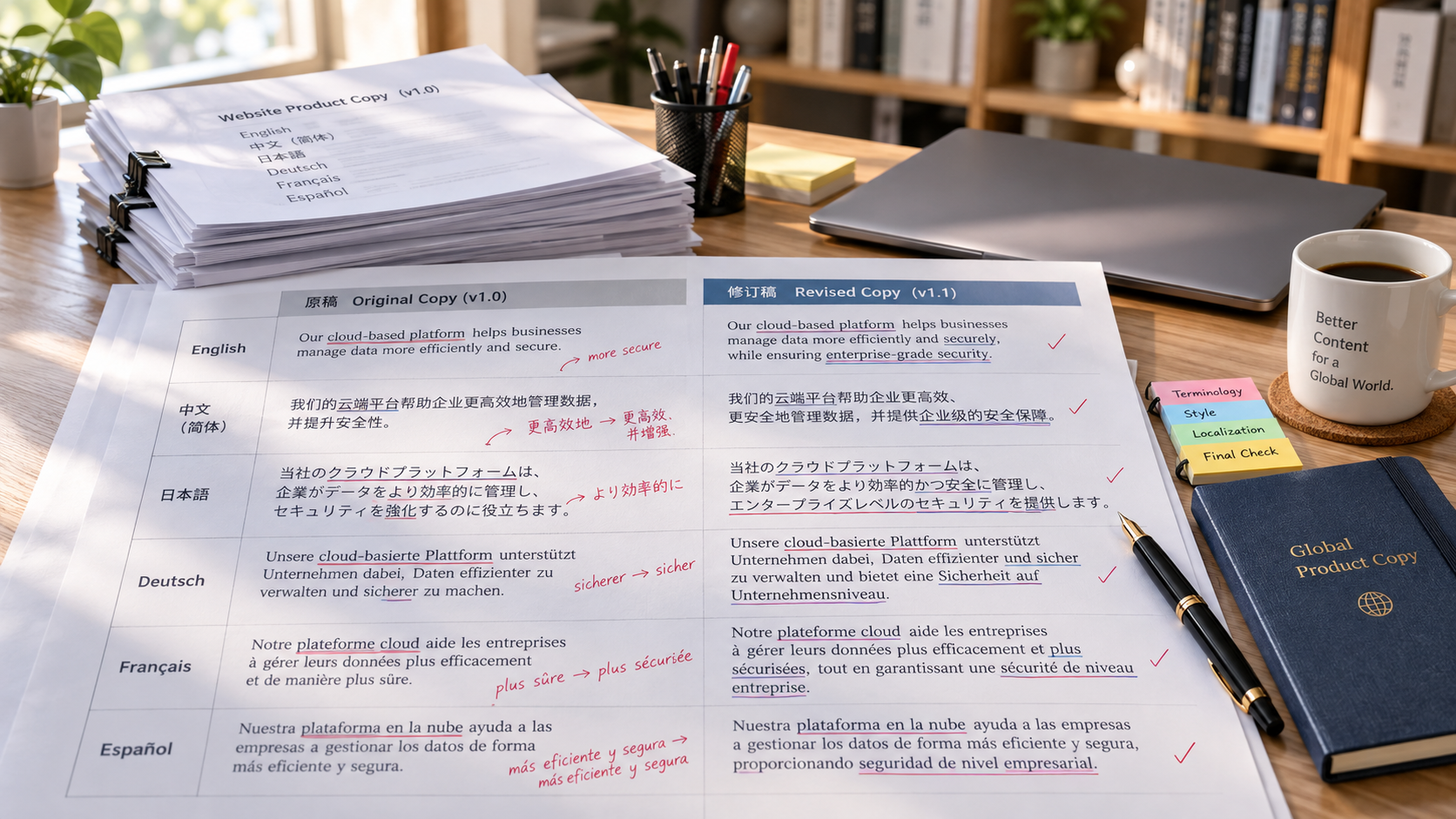
As a result, many brands ask when building multilingual standalone websites: Does AI content localization for fragrance brand websites require human review? The answer is clear: Yes, but not all content requires the same level of review. AI is well suited to handling initial translation drafts, tone adaptation, bulk rewriting, and basic SEO expansion. However, key pages involving brand tone, scent associations, claim compliance, and purchase decisions should still be reviewed by people familiar with the target market.
“Localization” of Fragrance Content Is Far More Than Changing the Language
On standard product pages, information such as "volume, material, and delivery method" can often be translated directly. However, categories such as perfumes, home fragrances, and scented candles are different. Their key selling points often stem from experiences that are difficult to quantify: the development of top, middle, and base notes, the atmosphere created in a space, gifting occasions, and users' subjective understanding of "cleanliness," "sophistication," and "comfort."
For example, "cool white florals" may convey restraint and transparency in the Chinese fragrance context. If AI translates it directly as "cold white flowers," overseas consumers may not understand it and may even assume the scent is artificial or distant. A more appropriate approach may be to reframe it around "crisp floral," "airy white bloom," or the characteristics of specific floral ingredients. This is not word substitution; it is a retelling of the original sensory experience.
Likewise, terms such as "Oriental," "Zen," "medicinal," and "musk" carry different cultural associations across markets. AI can recognize common meanings, but it may not necessarily understand whether a certain term appeals to, or causes misunderstanding among, French perfume enthusiasts, American home-fragrance users, or high-end consumer groups in the Middle East.
Which Pages Can AI Handle First, and Which Must Be Reviewed by Humans?
To determine the need for human review, it is better to categorize content by the "cost of errors" rather than simply assuming that all AI-generated content is unreliable.
- Low-risk content: Shipping information, FAQs, basic product specifications, website announcements, inventory notices, and similar content. AI can translate and format this content, followed by spot checks focused on units, currencies, timing, return and exchange policies, and links.
- Medium-risk content: Fragrance descriptions, usage recommendations, gifting copy, short social media posts, initial blog drafts, and category pages. For this content, AI can first generate multiple versions, after which content staff can select one and ensure a consistent tone.
- High-risk content: Brand stories, core homepage copy, best-selling product detail pages, advertising landing pages, influencer collaboration scripts, and content involving efficacy, safety, sensitive skin, sleep support, or emotional improvement. These pages should undergo human review and, where necessary, be confirmed by local-language editors or compliance consultants.
A practical principle is this: any wording that may affect whether consumers trust you, purchase immediately, or believe you have promised a particular result should not be published through a fully automated process.

What Does Human Review Mainly Examine?
Many teams understand human review as checking grammar and spelling. In fact, this is only the final basic step. Fragrance brands need to review the following four areas more closely.
1. Whether the Brand Voice Has Been Lost
Some brands are positioned as light and youthful, making short, evocative sentences appropriate. Others emphasize ingredient traceability, perfumery craftsmanship, and collectible value, requiring more restrained and evidence-based language. AI can easily cause tonal drift across pages: the homepage may feel refined, while product pages read like generic e-commerce copy; the English may be overly enthusiastic, while the Japanese may sound too blunt. The value of human review lies in ensuring that pages in different languages still sound like they come from the same brand.
2. Whether Scent Descriptions Match Local Consumers' Understanding
Overseas users may not be familiar with descriptions commonly used in the Chinese market, such as "osmanthus oolong," "smoky cedar," or "white tea soapiness." During review, it is necessary to consider: Should the ingredient name be retained with additional explanation? Should it be replaced with a more familiar sensory reference? Does "sweet" sound too much like food, or does "woody" sound too heavy? Good localization does not erase brand characteristics; it creates an accessible entry point for unfamiliar scents.
3. Whether Claim Boundaries Are Safe
Statements such as "improves sleep," "relieves anxiety," "antibacterial and mite-removing," "non-toxic," and "safe for pregnant women" may seem common, but they may involve advertising laws, cosmetics regulations, platform policies, or local consumer protection requirements. This is especially true for overlapping categories such as essential oils, fragrance diffusers, and fragranced body care, where AI may automatically add efficacy-related wording to make claims more persuasive. Human review should remove or revise unsupported absolute, medical, or guaranteed claims, while verifying necessary information such as allergens, usage warnings, and flammability notices.
4. Whether SEO Keywords Are Natural Rather Than Packed in “Translationese”
Multilingual SEO does not mean translating Chinese keywords one by one. English-speaking users may search for "home fragrance gift" or "long lasting room diffuser"; German-speaking users may focus more on product-type and specification combinations; Japanese users often look for products by use scenario and scent impression. AI can assist in organizing keyword clusters and generating draft titles and descriptions, but humans need to determine whether they align with actual local search habits and whether they are consistent with page content, product inventory, and landing-page intent.
A More Suitable Collaboration Model for Standalone Websites: Let AI Scale Production While People Guard Key Decision Points
For fragrance brands with many SKUs and broad market coverage, fully manual translation is costly and slow to launch; relying entirely on AI can make a website feel as though its "language is correct, but the feeling is wrong." A more reliable approach is to establish a reusable content workflow.
First, the brand defines content assets that should not be changed casually, including brand tone, translations of core fragrance ingredients, prohibited terms, compliance notices, packaging specification units, and preferred expressions in target markets. AI then generates initial drafts of product pages, category-page content, and Q&A modules in bulk based on these rules. Content staff prioritize reviewing the homepage, featured collections, ad destination pages, and high-traffic pages. Finally, before launch, they check links, currencies, dimensions, structured information, and mobile presentation.
The key is not to "have people correct AI's mistakes," but to make AI follow the brand's existing content standards. Without a glossary, style guide, and review priorities, even the best model can easily produce a different version of the brand each time.
Three Common Misconceptions That Often Hurt Conversion More Than Translation Errors
Misconception 1: Treating machine translation as localization. Grammatical fluency does not equal persuasive purchasing copy. Text that local consumers would neither say nor search for in that way can hardly fulfill a conversion role.
Misconception 2: Using vague terms excessively in pursuit of a “premium” feel. Once terms such as "luxurious," "captivating," "extraordinary," and "ultimate" are copied across languages, they often weaken the authentic character of a fragrance. It is better to clearly describe how the scent unfolds, what spaces it suits, and which seasons or lifestyle scenarios it pairs with.
Misconception 3: Ignoring consistency between pages. An advertisement may say "fresh citrus," but the product page describes it as a "rich Oriental scent"; social media may emphasize sustainability, while the product detail page provides no information about packaging or ingredients. Users may not explicitly point out the issue, but their trust will decrease subconsciously.
Conclusion: Human Review Is Needed, but Human Resources Should Be Reserved for What Requires the Most Judgment
Returning to the original question: Does AI content localization for fragrance brand standalone websites require human review? For brands seeking to operate in overseas markets over the long term, human review is not a "patch" outside the AI workflow, but part of content quality control. Especially in scent narratives, cultural context, compliance risks, and brand tone, people remain better than machines at understanding subtle boundaries.
For multilingual standalone website and overseas marketing scenarios, EasyMarketing integrates AI-powered website building, content optimization, SEO/GEO, and promotional page management into a single digital workflow. For fragrance brands, what matters more is not how much content can be generated at once, but ensuring that content production efficiency and human review mechanisms work together during expansion across multiple markets: what should be automated moves forward quickly, while what requires human judgment remains under control.
Related Articles
 Can I learn to use a multilingual content management system without a technical background?
 How can you evaluate a provider’s translation editing capabilities for AI-powered multilingual website services?
 Building a Website for the Russian-Speaking Market: Is Translating the Website Enough?


Related Products
 Yiyingbao SaaS Intelligent Website Building and Marketing SystemYiyingbao SaaS Intelligent Website Building and Marketing System, AI-powered no-code website building, rapid creation of multilingual B2B international websites in 10 minutes, global server acceleration, AI-powered SEO optimization, helping businesses connect efficiently with global markets. The perfect integration of technology and operation makes building an international trade website remarkably simple
 AI+SEM Intelligent Advertising Marketing SystemAI+SEM drives intelligent ad creation, empowering full-funnel precision advertising marketing. The system automatically generates weekly/monthly reports, AI recommends keywords and target countries, monitors core metrics in real-time with intelligent alerts, and enables one-click high-conversion ad solutions to help quickly acquire customers and improve ROI.
 AI+SEO Dual-Engine System Optimization ServicesYiyingbao’s AI+SEO dual-engine optimization system helps foreign trade enterprises acquire high-quality organic traffic through AI-powered keyword research, content generation, and comprehensive technical optimization, significantly improving search rankings and conversion rates.
 AI+SNS Social Media Marketing SystemYingbao AI+SNS Social Media Marketing System - Precision social capture for the social media era. Supports one-click content synchronization across major platforms like Facebook and LinkedIn. AI intelligently rewrites posts for enhanced relevance. 24/7 AI customer service and user profiling analysis empower businesses to efficiently expand into global markets.
 AI+SEO营销解决方案易营宝AI+SEO营销解决方案,通过AI批量写作、智能生成TDK、精准关键词扩词等功能,全面优化网站SEO效果,提升流量与转化率。助力企业构建高效智能网站新生态。
 AI+SEM Advertising Marketing SolutionsAI+SEM Advertising Marketing Solution leverages AI technology to deeply empower SEM ad campaigns. It automatically generates weekly/monthly reports using AI, presenting account data across multiple dimensions for comprehensive insights into campaign performance and trends. The system precisely recommends keywords and target countries, intelligently generates high-conversion ad copy, and enables one-click activation of efficient campaign plans to help businesses rapidly acquire customers. Simultaneously, it monitors core metrics in real time, intelligently identifies abnormal fluctuations, and issues timely alerts to ensure stable, high-return advertising results.
 Domain Name ServicesEasyWin provides professional domain name services, including intelligent queries, one-stop registration, brand protection, and full lifecycle management, helping businesses build a digital brand image.
 EasyOperate B2C Cross-Border E-Commerce Platform & Independent WebsiteEasyStore B2C Cross-border E-commerce Independent Store is an intelligent website building and cross-border e-commerce integrated solution independently developed by EasyStore Information Technology (Beijing) Co., Ltd. The system is specially designed for small and medium-sized as well as large export enterprises, integrating 'website building, operation, marketing, advertising, and conversion' into one, helping enterprises quickly establish cross-border e-commerce independent stores to achieve brand globalization and global sales growth.
The platform supports multiple languages, multiple currencies, and multi-channel marketing, with built-in AI intelligent translation and SEO optimization systems, suitable for mainstream markets such as Southeast Asia, Europe and America, Latin America, and the Middle East, assisting Chinese manufacturing enterprises in efficiently deploying international e-commerce strategies. SSL证书易营宝提供专业SSL安全证书服务,包括单域名和泛域名证书,确保网站数据传输加密、身份验证和完整性保护,助力企业建立安全可信的在线业务环境。









