









- Why the old AMP SEO 2020 practices no longer work and what has changed in current optimization prioritiesAug 02, 2026View details
- How to Choose Topics for an Industry News Section to Attract More Organic Search TrafficJul 29, 2026View details
- Digital Marketing Shenzhen Market Insights: Why Are Companies Expanding Overseas Looking for Growth Teams in Shenzhen?Jul 31, 2026View details
- Can Zhejiang foreign trade independent websites still be developed today? Look at changes in traffic and lead generationJul 28, 2026View details
- What New Signals Are Emerging in Enterprise Services SaaS Marketing ReportsJul 27, 2026View details
- What Does a Global Traffic Ecosystem Service Provider Do? What Are the Differences from a Single Advertising AgencyJul 16, 2026View details
Saudi Arabia's SASO Tightens Arabic Semantic Validation Requirements
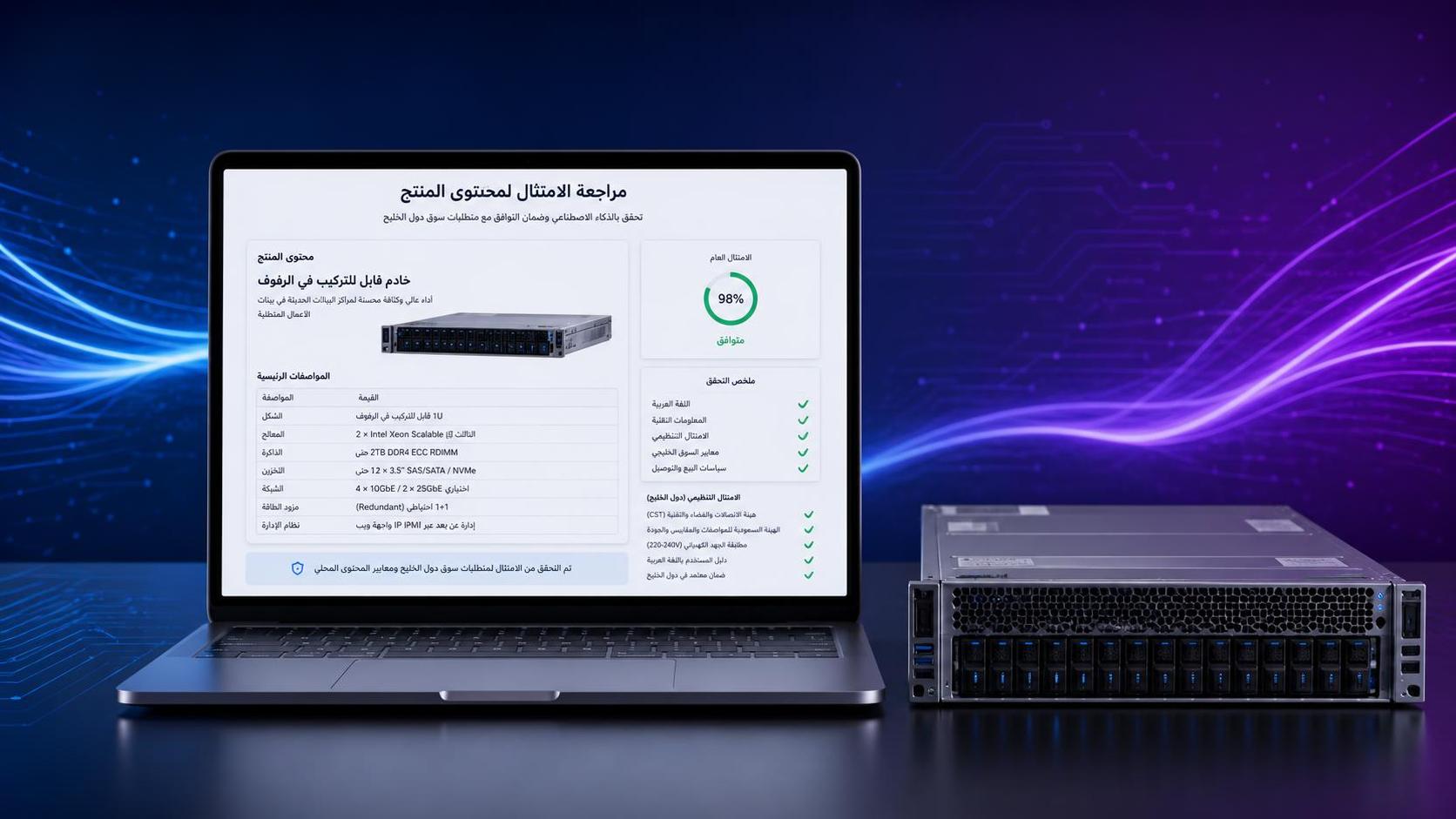
Starting August 15, 2026, B2B independent websites selling industrial products, electronic components, and building materials to the Saudi market will face a more specific online display compliance requirement: Arabic product descriptions must undergo review by an SASO-certified AI semantic validation engine, with a focus on whether terminology, units of measurement, and safety warnings comply with the local legal context. For export enterprises, website operation teams, product documentation personnel, and service providers responsible for certification coordination, this is no longer merely a language translation issue. It is a prerequisite directly related to whether products can be displayed on Saudi MarketPlace, and therefore deserves to be incorporated into industry compliance reviews as soon as possible.

Display Access Requirements Taking Effect in Mid-August
According to confirmed information, the Saudi Standards, Metrology and Quality Organization (SASO) announced on August 6, 2026, that from August 15, 2026, the Arabic product descriptions on all B2B independent websites selling industrial products, electronic components, and building materials to the Saudi market must pass an SASO-certified AI semantic validation engine, such as SASO-ALM v2.0.
This requirement focuses on the compliance of the Arabic content itself, including whether terminology, units, and safety warnings comply with the local legal context. If the relevant validation is not passed, the products concerned will be prohibited from being displayed on Saudi MarketPlace.
The Impact Extends Beyond the Translation Process
The Front End of Export Transactions Will Be Restricted First
From the perspective of the business chain, export enterprises conducting online customer acquisition and product display directly for the Saudi market will be affected first. This is because the Arabic descriptions on product pages are now directly linked to platform display eligibility. The main areas of impact include product listing, page maintenance, product catalog updates, and online inquiry conversion. Enterprises need to focus not only on whether an Arabic version of the page is available, but also on whether the page wording, unit expressions, and safety notices can pass the specified semantic validation logic.
Manufacturing and Technical Documentation Preparation Require Earlier Coordination
Manufacturing enterprises and technical teams responsible for producing product documentation may also be significantly affected. Arabic product descriptions usually originate from technical documents, specification descriptions, and safety-related texts. If the source materials are unclear or terminology is inconsistent, problems are more likely to arise during subsequent conversion into Arabic. Enterprises need to pay attention to consistency among technical materials, product descriptions, and safety warnings, and avoid discrepancies between front-end pages and internal technical documentation.
Certification Coordination and Service Support Will Require More Detailed Work
From the perspective of industry roles, service organizations responsible for certification coordination, compliance reviews, or localization support will also be affected. This is because the requirement incorporates “Arabic semantic compliance” into the prerequisites for display. Related services may shift from previously focusing primarily on document submission to also covering content validation, terminology verification, and page compliance reviews. For purchasers and channel distribution enterprises, it will also be necessary to pay attention to whether the Arabic materials submitted by suppliers meet display requirements, so as not to affect product selection, price comparison, or listing schedules.
Which Practical Changes Should Receive More Attention Now?
First Verify Whether the Arabic Descriptions Are Ready for Review
The analysis indicates that enterprises should first organize the Arabic product pages intended for the Saudi market, focusing on whether terminology, units of measurement, and safety warnings are used inconsistently, omitted, or expressed ambiguously. This step is closer to a compliance pre-check and is particularly applicable to the three clearly covered business categories: industrial products, electronic components, and building materials.
Manage Page Content and Technical Documentation Using the Same Standards
It appears that whether page descriptions can pass semantic validation often depends on whether the front-end content is consistent with the underlying materials. Enterprises need to pay particular attention to the relationships among product descriptions, inspection materials, technical parameter texts, and safety notices. Since the input information does not provide more detailed implementation rules, specific review results or standards should not currently be presented as established conclusions. However, consistency among materials has itself become a practical area of concern.
Monitor Whether the Implementation Standards Extend to More Delivery Milestones
What deserves greater attention at present is that although this requirement directly concerns eligibility for display on Saudi MarketPlace, its actual impact may extend to bid document preparation, procurement communications, and delivery instructions. Enterprises should continue tracking subsequent official statements, certification implementation standards, and changes in customers’ specific requirements for Arabic materials, so as to avoid discovering inconsistencies between the page and document systems only after quotation or before shipment.
Allow Time for Compliance Validation in Procurement and Scheduling
From a practical planning perspective, new product launches, bidding activities, or centralized listing plans involving the Saudi market may require additional time for semantic validation and revisions. Enterprises with many product models, multiple description versions, and frequent updates in particular need to incorporate Arabic content review into schedule management. The input information does not provide specific processing deadlines or review mechanisms. Therefore, at this stage, it is more appropriate to regard this as a compliance milestone that requires advance preparation in the process.
This More Closely Resembles an Implementation Signal That Has Already Been Initiated
From an industry perspective, the core signal conveyed by this information is not a general language localization requirement, but that Arabic product descriptions have been incorporated into a verifiable and enforceable compliance mechanism. The analysis indicates that it more closely resembles an implemented display access requirement, because both the implementation date and the direct consequences of non-compliance have been clearly specified.
At the same time, further tracking is still required regarding the detailed standards for validation, the pace of enterprise remediation, and differences in actual implementation among product categories. In other words, this change already has practical binding force, but the industry still needs to monitor subsequent feedback concerning the boundaries of specific operational procedures.
The Approach to Understanding Saudi Market Business Is Changing
Overall, this information is more appropriately understood as indicating that the Saudi market has introduced more granular requirements for B2B online display compliance, with the requirements extending from traditional documents, certifications, and product-level matters to the wording of Arabic pages themselves. For relevant enterprises, its most practical short-term significance lies in rechecking whether website content, technical materials, and compliance procedures are properly connected.
Rationally speaking, this does not mean that all enterprises will immediately face the same degree of business disruption. However, it has already reminded the industry that the threshold for entering a specific market is adding an executable component of “semantic compliance.” At present, it is more appropriate to regard this information as a rule change that has begun to take effect, while continuing to observe subsequent detailed rules, implementation standards, and market feedback.
Basis of This Article and Directions for Further Verification
This article was generated based on the information title, event date, and event summary provided by the user. The information used includes only the implementation date of August 15, 2026, and the Arabic AI semantic validation requirement announced by SASO on August 6, 2026, together with the display restrictions that apply if the requirement is not met.
For events of this type, continued verification generally also requires reference to official announcements, information released by regulatory authorities, trade authority information, industry association information, standards organization documents, and reports from authoritative media. Since no specific official source links were provided in the input, the relevant original release information still requires further verification.
The aspects that still require particular attention include whether policy details will be supplemented, whether certification implementation standards will be further clarified, whether tender documents or procurement requirements will change accordingly, whether industry feedback will diverge, and how enterprises adjust during actual implementation.
Related Articles


Related Products
 Yiyingbao SaaS Intelligent Website Building and Marketing SystemYiyingbao SaaS Intelligent Website Building and Marketing System, AI-powered no-code website building, rapid creation of multilingual B2B international websites in 10 minutes, global server acceleration, AI-powered SEO optimization, helping businesses connect efficiently with global markets. The perfect integration of technology and operation makes building an international trade website remarkably simple
 AI+SEM Intelligent Advertising Marketing SystemAI+SEM drives intelligent ad creation, empowering full-funnel precision advertising marketing. The system automatically generates weekly/monthly reports, AI recommends keywords and target countries, monitors core metrics in real-time with intelligent alerts, and enables one-click high-conversion ad solutions to help quickly acquire customers and improve ROI.
 AI+SEO Dual-Engine System Optimization ServicesYiyingbao’s AI+SEO dual-engine optimization system helps foreign trade enterprises acquire high-quality organic traffic through AI-powered keyword research, content generation, and comprehensive technical optimization, significantly improving search rankings and conversion rates.
 AI+SNS Social Media Marketing SystemYingbao AI+SNS Social Media Marketing System - Precision social capture for the social media era. Supports one-click content synchronization across major platforms like Facebook and LinkedIn. AI intelligently rewrites posts for enhanced relevance. 24/7 AI customer service and user profiling analysis empower businesses to efficiently expand into global markets.
 AI+SEO营销解决方案易营宝AI+SEO营销解决方案,通过AI批量写作、智能生成TDK、精准关键词扩词等功能,全面优化网站SEO效果,提升流量与转化率。助力企业构建高效智能网站新生态。
 AI+SEM Advertising Marketing SolutionsAI+SEM Advertising Marketing Solution leverages AI technology to deeply empower SEM ad campaigns. It automatically generates weekly/monthly reports using AI, presenting account data across multiple dimensions for comprehensive insights into campaign performance and trends. The system precisely recommends keywords and target countries, intelligently generates high-conversion ad copy, and enables one-click activation of efficient campaign plans to help businesses rapidly acquire customers. Simultaneously, it monitors core metrics in real time, intelligently identifies abnormal fluctuations, and issues timely alerts to ensure stable, high-return advertising results.
 Domain Name ServicesEasyWin provides professional domain name services, including intelligent queries, one-stop registration, brand protection, and full lifecycle management, helping businesses build a digital brand image.
 EasyOperate B2C Cross-Border E-Commerce Platform & Independent WebsiteEasyStore B2C Cross-border E-commerce Independent Store is an intelligent website building and cross-border e-commerce integrated solution independently developed by EasyStore Information Technology (Beijing) Co., Ltd. The system is specially designed for small and medium-sized as well as large export enterprises, integrating 'website building, operation, marketing, advertising, and conversion' into one, helping enterprises quickly establish cross-border e-commerce independent stores to achieve brand globalization and global sales growth.
The platform supports multiple languages, multiple currencies, and multi-channel marketing, with built-in AI intelligent translation and SEO optimization systems, suitable for mainstream markets such as Southeast Asia, Europe and America, Latin America, and the Middle East, assisting Chinese manufacturing enterprises in efficiently deploying international e-commerce strategies. SSL证书易营宝提供专业SSL安全证书服务,包括单域名和泛域名证书,确保网站数据传输加密、身份验证和完整性保护,助力企业建立安全可信的在线业务环境。









