









- APEC Shenzhen Spotlight: Cross-Border E-Commerce Orders Promote Asia-Pacific Trade and Economic CooperationNov 08, 2026View details
- China-Europe Railway Express and CIIE Hold Business Matchmaking Event, Focusing on Cross-Border E-commerce B2B ExportsNov 07, 2026View details
- China’s Ministry of Commerce Responds to Additional Charges on Low-Value Imports Imposed by the EUNov 06, 2026View details
- Two Internet Development Reports Released at the 2026 World Internet ConferenceNov 05, 2026View details
- Internet Business Revenue of Enterprises Above the Designated Size Reached RMB 1.716 Trillion in the First Three Quarters, with Profits Up 17.6%Nov 05, 2026View details
- Shopify's Third-Quarter Revenue and GMV Fall Short of Expectations, Sending Shares Tumbling Before the Market OpensNov 04, 2026View details
How can you evaluate the copywriting capabilities of a marketing website translation provider?
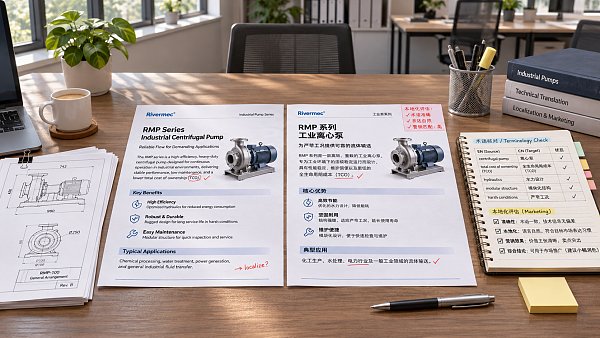
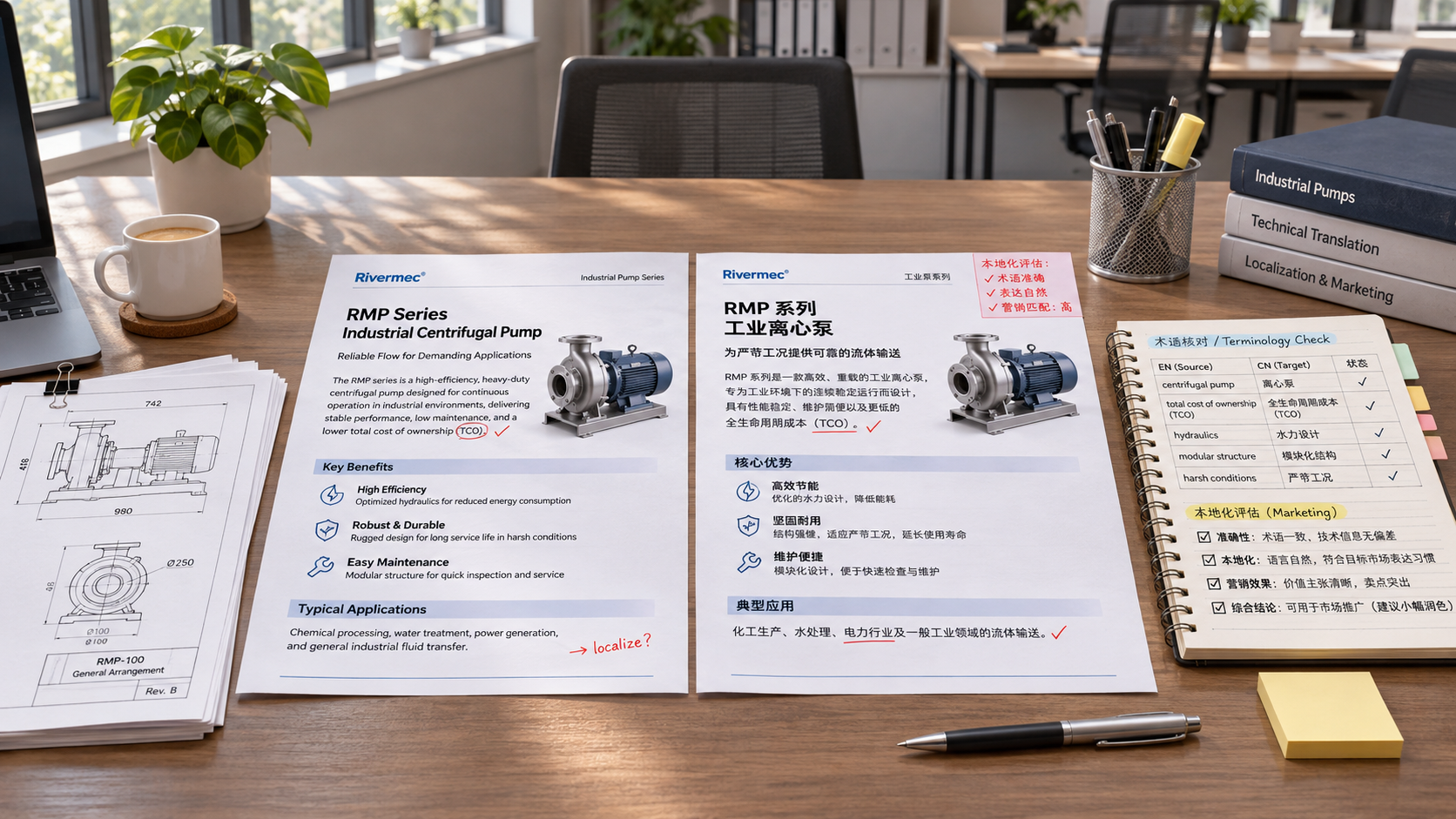
To assess the copywriting skills of a marketing website translation provider, buyers can start by reviewing one deliverable: after receiving product information, can the provider create a page for a specific market that is accurate, natural, and encourages target customers to take action? Fluent language is only the starting point. If a translation reads smoothly but obscures product specifications, purchasing conditions, or how to submit an inquiry, it will still do little for a marketing website.
The most effective way to evaluate a provider is to have shortlisted candidates translate a small section of the same real page, then compare their work alongside relevant case studies and delivery processes. This is particularly important for industrial products and custom manufacturing, where copy must help overseas buyers understand the value while also standing up to review by sales and technical teams.
First, check whether the translation reflects the purchasing context
The questions a page needs to answer differ depending on whether a product is aimed at end consumers or business buyers. B2B customers often first need to determine whether the product suits their project, whether the supplier can meet their specifications, and what information they should provide next. A good translation preserves these decision-making cues and organizes the content in a way that is easy for the target audience to understand.
For example, if a Chinese page says, “Custom orders based on customer drawings; flexible lead times,” a translation that only emphasizes “professional customization” and “fast delivery” still leaves readers unsure what materials they can submit or what the lead time depends on. A more useful approach is to draw on the company’s actual capabilities and explain that customers can provide drawings or specification requirements, and that lead times can be confirmed through an inquiry. A provider can ask follow-up questions, but should not invent minimum order quantities, delivery times, or performance commitments.
During the review, sales or product staff can check the parameters, scope of application, certification status, and limitations item by item. Someone familiar with the target market’s language can then assess whether the wording is natural. Content involving safety, legal, or compliance commitments should also be reviewed by the appropriate person in the company; language review cannot replace fact-checking.
Use the same test translation to assess localization and marketing copy
It is difficult to assess how well a provider understands your business by looking only at polished samples they have selected. Buyers can choose a product description and provide candidates with the same product information, target country, customer type, and page purpose, along with the page title, several key selling points, and inquiry button text. The scope, fee, and delivery time for the test translation should be agreed in advance.
When evaluating the work, do not focus solely on sentence-by-sentence correspondence. More useful questions include:
- Is the information accurate? Have the product’s use, specifications, or business boundaries been omitted, exaggerated, or mistranslated? If the source text is ambiguous, does the provider ask questions?
- Is the wording right for the target audience? Does it sound natural? Are the terminology, units of measurement, and forms of address suitable for the specified market? Do not assume that usage in one variety of English or another language applies everywhere.
- Are the selling points substantiated? Does the copy connect product features with the value customers care about, while avoiding claims such as “best” or “zero failures” that cannot be proven?
- Are the calls to action clear? Do the button and form text match the page’s purpose, such as inviting customers to submit specifications, request a quote, or schedule a consultation?
For the same “Contact us” message, a product detail page may be better served by asking customers to submit the model and quantity, while a custom services page could invite them to provide drawings or project requirements. A provider that can explain the reasons for its revisions and identify information the company needs to supply is generally easier to work with than one that simply delivers fluent copy.
A test translation also has limits: a short sample can help identify obvious language and comprehension issues, but it cannot prove that a provider can reliably deliver an entire multilingual website. Before making a final decision, also review the team structure, proofreading process, and revision policy.
Review case studies for both deliverables and evidence of results
A provider’s overseas website portfolio does not necessarily mean it was responsible for the marketing copy. When reviewing case studies, ask whether the provider handled translation, rewriting, and terminology review, or whether the work also included page structure and call-to-action design. Find out about the project’s target market, business type, and acceptance criteria. Since the writing for a manufacturing procurement page can differ significantly from that of a consumer goods store, case studies that closely match your business are usually more relevant.
If a provider claims that its copy increased inquiries or conversion rates, ask about the measurement period, comparison baseline, and whether advertising, traffic sources, page design, or forms were also changed during that time. Inquiry results depend on many factors, so a single growth figure is not enough to attribute the change entirely to translated copy. If client data cannot be shared, ask the provider to explain, within confidentiality limits, the rationale behind revisions, questions raised by the client, and how those questions were handled.
You can also ask the provider to explain how it handles search-related wording: how target customers might describe the product, why particular terms were chosen for the page title and body text, and how readability is maintained while covering search terms. A provider can suggest keywords, but should not guarantee search rankings or inquiry growth as a result of translation alone.
Include copy quality in the deliverables and acceptance criteria
Even when a quote uses the same label—“website translation”—the actual work included can vary considerably. When purchasing, confirm whether the fee covers terminology management, localized rewriting, review by native speakers or subject-matter experts, webpage button and form copy, and post-launch checks. If there are multiple target languages or regions, clarify who is responsible for each language and whether each version receives an independent review.
Acceptance criteria should correspond to verifiable deliverables: a page list, target languages and regions, a glossary, editable documents, review records, and the number of revision rounds and response arrangements. The company should also designate someone who can verify product facts and agree on a process for questions and confirmation when source materials are incomplete. This helps prevent providers from filling in selling points based on guesswork.
For projects with limited budgets, you can begin with a traffic landing page or a key product page and use the test translation and initial deliverables to assess how well both parties work together. If pages need ongoing updates, then evaluate terminology consistency and maintenance capabilities. Ultimately, choose a provider that can explain its copy decisions, accepts fact-checking, and clearly defines responsibilities and the scope of deliverables.
Related Articles
 Does Spanish-language content for the Latin American market need to be localized by country?
 Should URLs Be Kept in Their Original Language After Website Content Is Translated?
 How can you evaluate the copywriting capabilities of a marketing website translation provider?

Related Products
 Yiyingbao SaaS Intelligent Website Building and Marketing SystemYiyingbao SaaS Intelligent Website Building and Marketing System, AI-powered no-code website building, rapid creation of multilingual B2B international websites in 10 minutes, global server acceleration, AI-powered SEO optimization, helping businesses connect efficiently with global markets. The perfect integration of technology and operation makes building an international trade website remarkably simple
 AI+SEM Intelligent Advertising Marketing SystemAI+SEM drives intelligent ad creation, empowering full-funnel precision advertising marketing. The system automatically generates weekly/monthly reports, AI recommends keywords and target countries, monitors core metrics in real-time with intelligent alerts, and enables one-click high-conversion ad solutions to help quickly acquire customers and improve ROI.
 AI+SEO Dual-Engine System Optimization ServicesYiyingbao’s AI+SEO dual-engine optimization system helps foreign trade enterprises acquire high-quality organic traffic through AI-powered keyword research, content generation, and comprehensive technical optimization, significantly improving search rankings and conversion rates.
 AI+SNS Social Media Marketing SystemYingbao AI+SNS Social Media Marketing System - Precision social capture for the social media era. Supports one-click content synchronization across major platforms like Facebook and LinkedIn. AI intelligently rewrites posts for enhanced relevance. 24/7 AI customer service and user profiling analysis empower businesses to efficiently expand into global markets.
 AI+SEO营销解决方案易营宝AI+SEO营销解决方案,通过AI批量写作、智能生成TDK、精准关键词扩词等功能,全面优化网站SEO效果,提升流量与转化率。助力企业构建高效智能网站新生态。
 AI+SEM Advertising Marketing SolutionsAI+SEM Advertising Marketing Solution leverages AI technology to deeply empower SEM ad campaigns. It automatically generates weekly/monthly reports using AI, presenting account data across multiple dimensions for comprehensive insights into campaign performance and trends. The system precisely recommends keywords and target countries, intelligently generates high-conversion ad copy, and enables one-click activation of efficient campaign plans to help businesses rapidly acquire customers. Simultaneously, it monitors core metrics in real time, intelligently identifies abnormal fluctuations, and issues timely alerts to ensure stable, high-return advertising results.
 Domain Name ServicesEasyWin provides professional domain name services, including intelligent queries, one-stop registration, brand protection, and full lifecycle management, helping businesses build a digital brand image.
 EasyOperate B2C Cross-Border E-Commerce Platform & Independent WebsiteEasyStore B2C Cross-border E-commerce Independent Store is an intelligent website building and cross-border e-commerce integrated solution independently developed by EasyStore Information Technology (Beijing) Co., Ltd. The system is specially designed for small and medium-sized as well as large export enterprises, integrating 'website building, operation, marketing, advertising, and conversion' into one, helping enterprises quickly establish cross-border e-commerce independent stores to achieve brand globalization and global sales growth.
The platform supports multiple languages, multiple currencies, and multi-channel marketing, with built-in AI intelligent translation and SEO optimization systems, suitable for mainstream markets such as Southeast Asia, Europe and America, Latin America, and the Middle East, assisting Chinese manufacturing enterprises in efficiently deploying international e-commerce strategies. SSL证书易营宝提供专业SSL安全证书服务,包括单域名和泛域名证书,确保网站数据传输加密、身份验证和完整性保护,助力企业建立安全可信的在线业务环境。









