









- Hengqin Cooperation Zone Shares Cross-Border E-Commerce Developments, Focusing on Macao-Hengqin Collaboration and International MarketsOct 24, 2026View details
- A Shenyang study highlights the development of the “cross-border e-commerce + industrial cluster” modelOct 24, 2026View details
- Three China Advertising Association GEO group standards take effect on October 23Oct 24, 2026View details
- Amazon Raises Fulfillment Fees Twice, Yet the Median Platform Fee Remains Around 40%Oct 22, 2026View details
- AliExpress and YouTube Partner to Expand Marketing Opportunities for Chinese Brands Going GlobalOct 22, 2026View details
- Publicis says AI marketing is developing at two speeds, with agentic AI helping win clientsOct 21, 2026View details
The EU DPP transition period has started ahead of schedule, and independent websites need to connect with EPD and DPP interfaces
On August 10, 2026, the European Commission released a signal that the foreign trade industry should respond to in advance: the Digital Product Passport (DPP) requirements under the Ecodesign for Sustainable Products Regulation (ESPR), originally scheduled for implementation in 2027, have begun allowing voluntary access for exported products in three major categories—electrical and electronic products, building materials, and machinery. It also explicitly recommends that foreign trade companies deploy Environmental Product Declaration (EPD) and DPP structured data API interfaces on their independent websites simultaneously. For manufacturers, exporters, distribution channels, and related service providers targeting the EU market, this is not only a matter of compliance preparation, but also concerns the pace of coordination between inventory admission and green procurement evaluations.

Transition-period signals have been released ahead of schedule
The confirmed information shows that on August 10, 2026, the European Commission announced that the DPP requirements under the ESPR, originally scheduled for implementation in 2027, would open voluntary access for exported electrical and electronic products, building materials, and machinery from that day onward.
At the same time, the EU strongly recommends that foreign trade companies deploy EPD and DPP structured data API interfaces on their independent websites simultaneously. This means that, at the current stage, relevant companies need to focus not only on DPP itself, but also on the parallel preparation of the two types of data interfaces: EPD and DPP.
Based on the information provided, this arrangement will directly affect inventory admission and green procurement ratings for EU distributors. In other words, whether data can be presented and connected in a structured manner is becoming one of the practical considerations in transaction and circulation processes.
The impact is extending from compliance to transactions
Companies shipping to the EU will feel the pressure first
For direct trading companies and export manufacturers, the impact will first be reflected in the preparation of materials for EU business and website capabilities. Since the EU has opened voluntary access for exported products in the three major categories and clearly recommends that independent websites support both EPD and DPP data APIs, EU-facing sales pages, product information access methods, and external disclosure structures may all become part of customer audits.
Distribution and channel operations will place greater emphasis on data accessibility
For EU distributors and channel circulation companies, the confirmed impacts are concentrated on inventory admission and green procurement ratings. This indicates that when introducing products, maintaining inventory, or participating in procurement evaluations, channel partners may pay greater attention to whether suppliers have the corresponding data integration capabilities, rather than focusing solely on traditional product specification documents.
Supply chain and technical service providers will need to shift their focus earlier
For service providers offering independent website development, data interfaces, and compliance support, the key point to watch at present is that customer needs may shift from simple information display to structured output and interface connectivity. These changes are expected to mainly affect solution design, delivery sequence, and integration arrangements with customers’ business systems.
What practical issues should companies focus on now?
First distinguish between “open voluntary access” and “actual business impact”
From an industry perspective, not all outcomes at the current stage have been implemented as uniformly mandatory requirements, but inventory admission and green procurement ratings have already been specifically mentioned. When making internal assessments, companies need to distinguish between the transition-period arrangements stated in the policy and the access requirements that customers and channels may adopt more quickly.
Does the independent website have the capability to support both data interfaces?
The direct implication of this information is clear: independent websites need to consider EPD and DPP structured data API interfaces simultaneously. For relevant companies, the current question is not general digitalization capability, but whether product information can be integrated, displayed, and accessed in a structured manner.
Priority categories should be the first to undergo a review of their information chains
Exported electrical and electronic products, building materials, and machinery are already within the scope covered by this arrangement. Companies involved in these categories should give priority to reviewing their existing product information, environmental declaration materials, and external data output paths to avoid insufficient information coordination during customer inquiries, channel listing, or procurement evaluations.
Communication guidelines for EU customers should be prepared in advance
During the transition period, customers and distributors may pay attention to DPP, EPD, and interface preparation before a uniform implementation schedule is finalized. Companies can focus on preparing external communication guidelines, including the current support scope, the extent of available materials, and plans for subsequent interface deployment, in order to reduce communication costs and uncertainty in fulfilling obligations.
This is more like an early business signal
This information is more appropriately understood as an early business signal rather than an ordinary policy announcement. The reason is that it has already explicitly identified aspects directly related to transaction execution, such as independent website deployment, dual data API interfaces, inventory admission, and green procurement ratings.
At the same time, it should also be noted that what has been confirmed so far is “open voluntary access” and a “strong recommendation for simultaneous deployment,” rather than more complete implementation details already being provided in the input information. Therefore, the more prudent assessment at this stage is that the relevant industries have entered a preliminary preparation period, while continued attention is still needed regarding the coordination between official statements, customer requirements, and actual implementation methods.
At this stage, it should not be treated as an ordinary technology upgrade
Overall, the significance of this development lies not in the individual technical interfaces themselves, but in the fact that EU market requirements for access to product environmental and identity data are entering foreign trade processes at an earlier stage. For export companies related to electrical and electronic products, building materials, and machinery, this is neither a distant arrangement that can be ignored nor a final rule that can simply be regarded as fully established.
At present, it is more appropriate to understand this as a clearly directed transition-period change that has already begun. Relevant companies need to focus on priority product categories, independent website data capabilities, customer access communications, and subsequent rule verification, rather than waiting until the formal implementation date to address these matters intensively.
Basis of this article and directions for subsequent verification
This article was generated based on the information title, event date, and event summary provided by the user. The information used includes the relevant statement issued by the European Commission on August 10, 2026, the transition-period arrangements for DPP requirements under the ESPR framework, the categories involved, and the recommendation regarding dual data API interfaces for EPD and DPP.
For this type of information, subsequent verification would normally need to be conducted continuously against official announcements, corporate announcements, industry association information, authoritative media reports, and documents issued by standards organizations. Since no specific official source link was provided in the input, this article cannot further verify the full text of the original documents. Subsequent attention should therefore focus on whether official statements include supplementary explanations and whether more detailed information is released regarding independent website interfaces, inventory admission, and green procurement ratings.
Related Articles
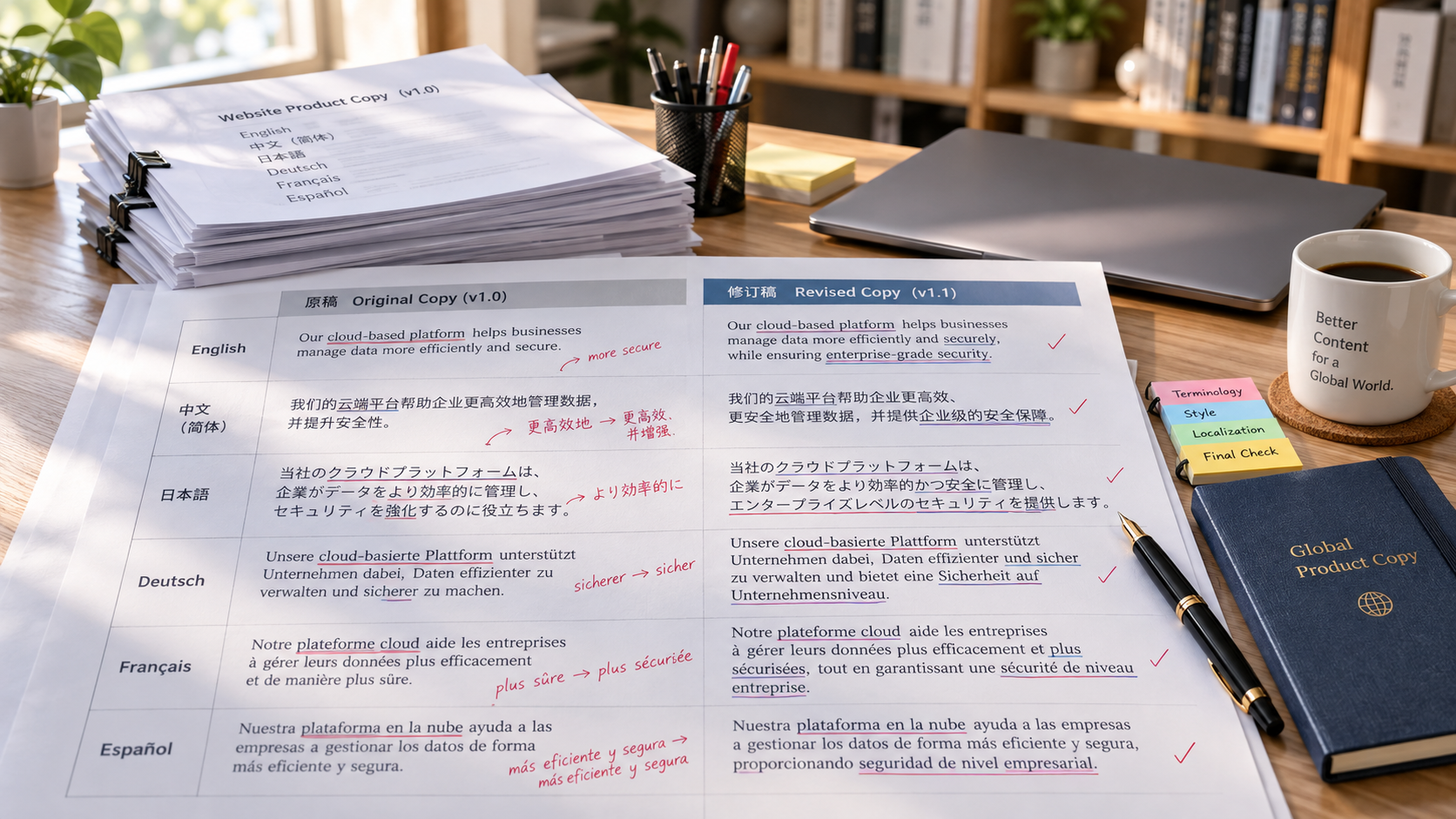
 How can you evaluate a provider’s translation editing capabilities for AI-powered multilingual website services?
 Building a Website for the Russian-Speaking Market: Is Translating the Website Enough?
 Does the quote for building a website in a less commonly used language include localization and translation?


Related Products
 Yiyingbao SaaS Intelligent Website Building and Marketing SystemYiyingbao SaaS Intelligent Website Building and Marketing System, AI-powered no-code website building, rapid creation of multilingual B2B international websites in 10 minutes, global server acceleration, AI-powered SEO optimization, helping businesses connect efficiently with global markets. The perfect integration of technology and operation makes building an international trade website remarkably simple
 AI+SEM Intelligent Advertising Marketing SystemAI+SEM drives intelligent ad creation, empowering full-funnel precision advertising marketing. The system automatically generates weekly/monthly reports, AI recommends keywords and target countries, monitors core metrics in real-time with intelligent alerts, and enables one-click high-conversion ad solutions to help quickly acquire customers and improve ROI.
 AI+SEO Dual-Engine System Optimization ServicesYiyingbao’s AI+SEO dual-engine optimization system helps foreign trade enterprises acquire high-quality organic traffic through AI-powered keyword research, content generation, and comprehensive technical optimization, significantly improving search rankings and conversion rates.
 AI+SNS Social Media Marketing SystemYingbao AI+SNS Social Media Marketing System - Precision social capture for the social media era. Supports one-click content synchronization across major platforms like Facebook and LinkedIn. AI intelligently rewrites posts for enhanced relevance. 24/7 AI customer service and user profiling analysis empower businesses to efficiently expand into global markets.
 AI+SEO营销解决方案易营宝AI+SEO营销解决方案,通过AI批量写作、智能生成TDK、精准关键词扩词等功能,全面优化网站SEO效果,提升流量与转化率。助力企业构建高效智能网站新生态。
 AI+SEM Advertising Marketing SolutionsAI+SEM Advertising Marketing Solution leverages AI technology to deeply empower SEM ad campaigns. It automatically generates weekly/monthly reports using AI, presenting account data across multiple dimensions for comprehensive insights into campaign performance and trends. The system precisely recommends keywords and target countries, intelligently generates high-conversion ad copy, and enables one-click activation of efficient campaign plans to help businesses rapidly acquire customers. Simultaneously, it monitors core metrics in real time, intelligently identifies abnormal fluctuations, and issues timely alerts to ensure stable, high-return advertising results.
 Domain Name ServicesEasyWin provides professional domain name services, including intelligent queries, one-stop registration, brand protection, and full lifecycle management, helping businesses build a digital brand image.
 EasyOperate B2C Cross-Border E-Commerce Platform & Independent WebsiteEasyStore B2C Cross-border E-commerce Independent Store is an intelligent website building and cross-border e-commerce integrated solution independently developed by EasyStore Information Technology (Beijing) Co., Ltd. The system is specially designed for small and medium-sized as well as large export enterprises, integrating 'website building, operation, marketing, advertising, and conversion' into one, helping enterprises quickly establish cross-border e-commerce independent stores to achieve brand globalization and global sales growth.
The platform supports multiple languages, multiple currencies, and multi-channel marketing, with built-in AI intelligent translation and SEO optimization systems, suitable for mainstream markets such as Southeast Asia, Europe and America, Latin America, and the Middle East, assisting Chinese manufacturing enterprises in efficiently deploying international e-commerce strategies. SSL证书易营宝提供专业SSL安全证书服务,包括单域名和泛域名证书,确保网站数据传输加密、身份验证和完整性保护,助力企业建立安全可信的在线业务环境。









