









- Hengqin Cooperation Zone Shares Cross-Border E-Commerce Developments, Focusing on Macao-Hengqin Collaboration and International MarketsOct 24, 2026View details
- A Shenyang study highlights the development of the “cross-border e-commerce + industrial cluster” modelOct 24, 2026View details
- Three China Advertising Association GEO group standards take effect on October 23Oct 24, 2026View details
- Amazon Raises Fulfillment Fees Twice, Yet the Median Platform Fee Remains Around 40%Oct 22, 2026View details
- AliExpress and YouTube Partner to Expand Marketing Opportunities for Chinese Brands Going GlobalOct 22, 2026View details
- Publicis says AI marketing is developing at two speeds, with agentic AI helping win clientsOct 21, 2026View details
Why can’t French website development for entering the French market be limited to translation?
When many companies first enter the French market, they often understand “French website development” as building an English website first and then handing the pages over to translators. After launch, however, they find that although the website has French content, it generates no organic traffic; advertising brings visits, but it is difficult to obtain inquiries; and although the products are clearly competitive, French customers still leave before submitting a form.
The issue is usually not whether the website “has been translated into French,” but whether it has truly been designed around how French users read, search, assess trust, and make purchasing decisions. For companies seeking to enter the European market, the French market is not merely a language version of an English website, but a digital presence that requires the content, user experience, and growth path to be reorganized.
Translation solves “being understood”; localization solves “being willing to get in touch”
When French customers visit an overseas supplier's website, they quickly assess three questions: Does this company understand my needs? Is the information trustworthy and complete? Is the next step of contacting or purchasing sufficiently reassuring? Machine translation can hardly answer these questions.
For example, Chinese or English websites often begin their narrative with “factory strength, production scale, and product parameters”; whereas French purchasers, distributors, or end consumers also typically focus on product application scenarios, usage benefits, delivery terms, after-sales support, and compliance information. If the page still retains the logic of directly translated Chinese expressions, even grammatically correct sentences can easily sound stiff and create a sense of distance.
French website development needs to address more than vocabulary; it also includes content priorities. What value information should be presented first on the homepage, how product pages explain specifications and scenarios, how case studies build credibility, and whether contact pages lower the barrier to inquiry all directly affect conversion.
- Language: Use French that fits the local business context, rather than text translated sentence by sentence.
- Content: Reorganize selling points, parameters, lead times, and service descriptions around the questions French customers commonly ask.
- Experience: Adapt to euros, commonly used local units, telephone formats, address formats, and clear calls to action.
- Trust: Provide essential information such as company identity, privacy policy, Cookie notices, and return, exchange, or service terms.
Especially for B2B manufacturing companies, a downloadable document, a clear inquiry entry point, or French content explaining delivery capabilities can often do more to put customers at ease than stacking promotional phrases such as “industry-leading.”
Search entry points in the French market cannot simply copy English keywords
The terms French users use for searching are not always consistent with the product names companies use internally. For industrial products, for example, customers may search for specific models, application scenarios, or problem-solving solutions, and may also search French long-tail terms with stronger purchasing intent, such as “supplier,” “manufacturer,” or “customized.” Simply translating English keywords directly may result in low search volume, unnatural semantics, or attracting irrelevant traffic.
Therefore, website planning for the French market should begin with keyword research: identify core category terms, application terms, industry terms, and regional terms, and then assign these terms to navigation sections, product pages, solution pages, and content pages. Such an information architecture makes it easier for Google to understand the website's topic and also avoids having a single page carry too many keywords without being able to explore the content in depth.
It is worth noting that French users have high requirements for page readability. Titles, summaries, image descriptions, FAQs, and internal links need to address real questions; phrases such as “French website development French market” should not be repeated merely for SEO purposes. Keywords should naturally serve the content, enabling customers to find genuinely useful answers after searching.
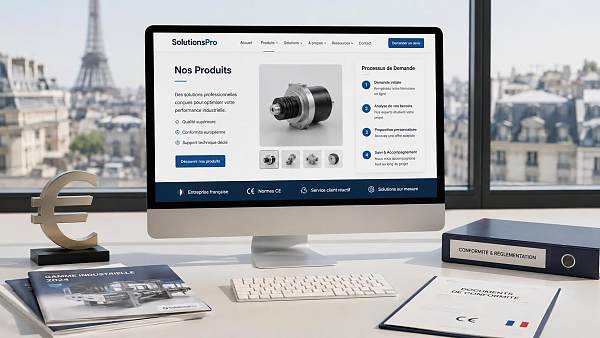
What determines conversion is often the seemingly minor local details in France
Drop-off on overseas websites does not necessarily occur on product introduction pages; it may also happen in the final minute before a customer is ready to take action. For example, too many form fields, a contact number available only in the China time zone, mandatory registration to download materials, or a quotation process with no explanation can all increase hesitation among unfamiliar customers.
For French website development targeting the French market, it is advisable to break down the conversion path more precisely: customers browsing products can view technical documentation or related applications; purchasers with clear requirements can quickly submit specifications and quantities; while visitors still in the comparison stage can build initial trust through FAQs, case studies, certification information, or service processes. Users with different levels of intent should not be forced to follow the same path.
Compliance and technical foundations are the baseline for long-term operation of a French website
When entering the French market, websites also need to take seriously European users' sensitivity to privacy and data usage. Cookie pop-ups, privacy policies, form data explanations, and marketing subscription authorizations should remain consistent with actual business processes. When GDPR, French regulatory requirements, or e-commerce transaction terms are involved, companies should have professionals review them in light of their own business model rather than copying page text from other websites.
Technical aspects are equally important. A website should provide stable overseas access speed, mobile compatibility, standardized page titles and structured content, and properly configured relationships among multilingual versions. If a company operates English, French, German, and other websites simultaneously, it is even more important to avoid confusion among pages in different languages, which can affect search engine recognition and user experience.
From website development to customer acquisition, the French market requires a continuous growth chain
Website launch is not the end point of work in the French market. For foreign trade companies, a French official website should serve as a unified landing page for Google organic search, Google Ads, LinkedIn or Facebook social media content, and follow-up outreach after trade shows; for cross-border brands, the website also needs to connect product displays, payments, logistics information, content marketing, and remarketing strategies.
For businesses expanding overseas, Yiyingbao provides services including AI-powered website development, multilingual website development, B2B marketing websites, cross-border online stores, SEO, advertising, and social media operations. Its value lies not only in generating a French page, but in planning site structure, content production, search visibility, and subsequent promotion within the same growth framework. For decision-makers evaluating the French market, this integrated perspective helps reduce duplicate investment caused by separating “website work” from “promotion work.”
To determine whether a French website development solution is suitable, it may be helpful to return to one practical question: From searching and browsing to comparing and initiating an inquiry, can the website provide French customers with sufficiently clear, credible, and seamless responses at every step? If the answer is merely “the content has already been translated,” then truly entering the French market may still require rebuilding the website for local users.
Related Articles
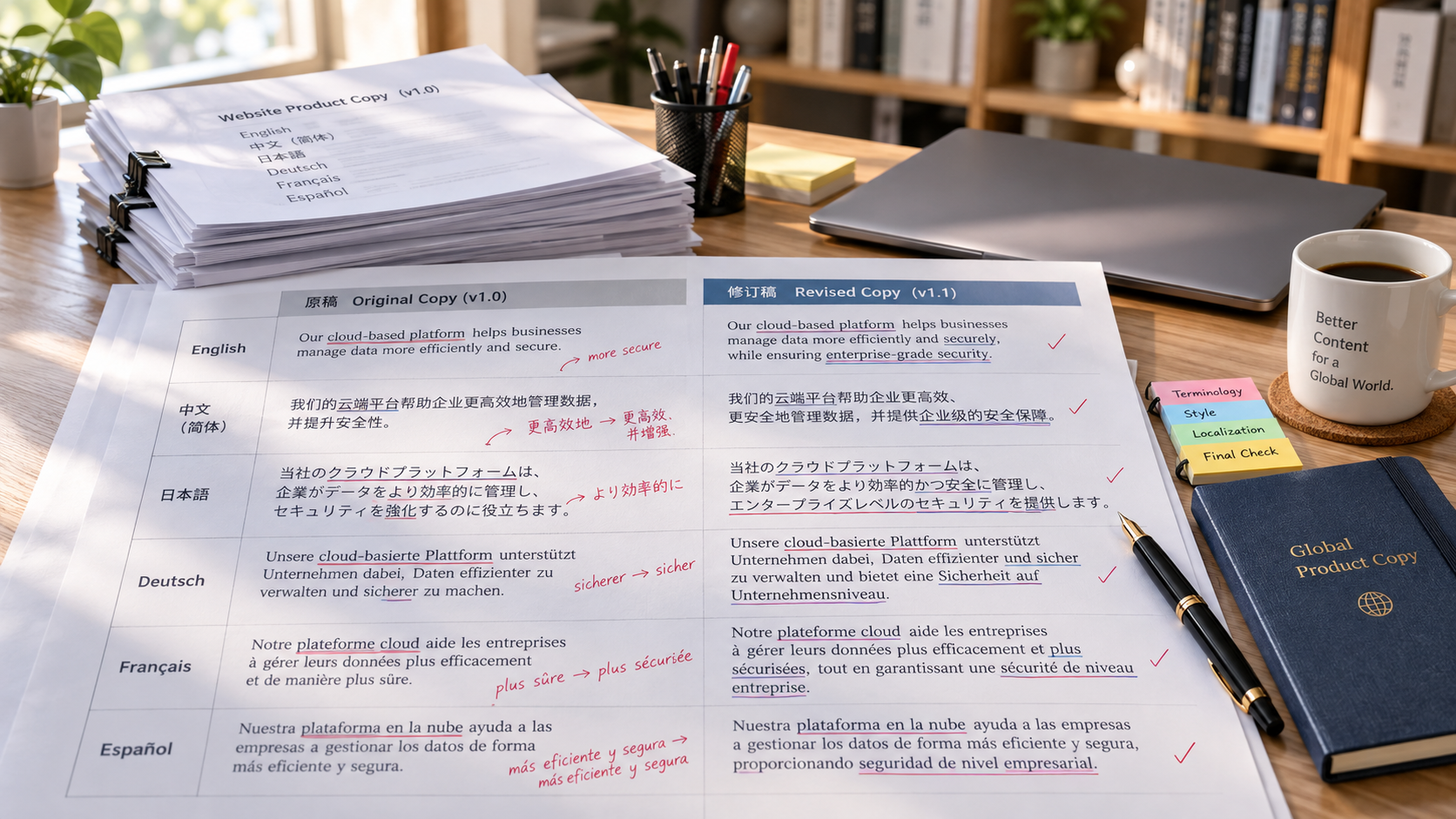
 How can you evaluate a provider’s translation editing capabilities for AI-powered multilingual website services?
 Building a Website for the Russian-Speaking Market: Is Translating the Website Enough?
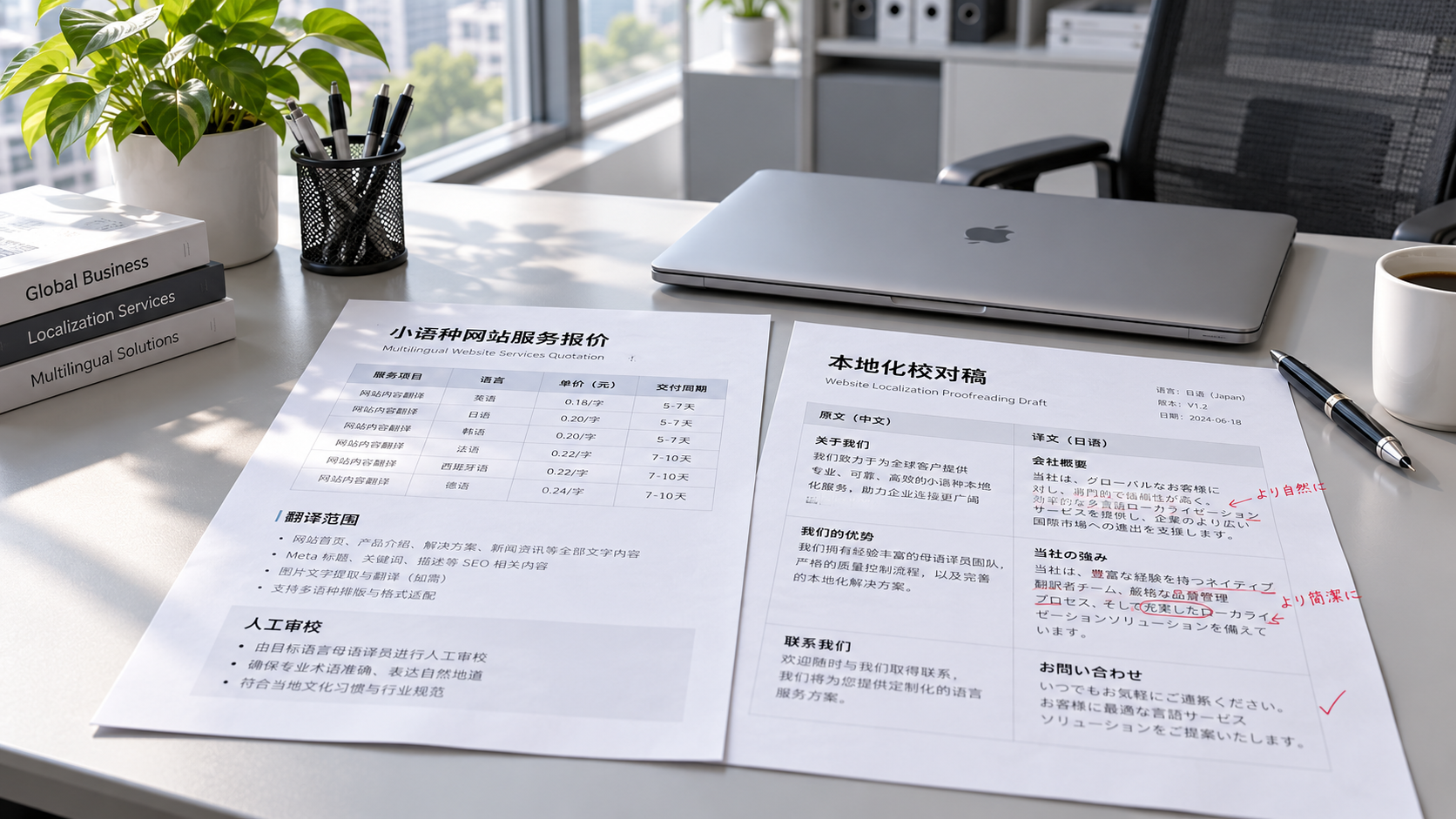
 Does the quote for building a website in a less commonly used language include localization and translation?

Related Products
 Yiyingbao SaaS Intelligent Website Building and Marketing SystemYiyingbao SaaS Intelligent Website Building and Marketing System, AI-powered no-code website building, rapid creation of multilingual B2B international websites in 10 minutes, global server acceleration, AI-powered SEO optimization, helping businesses connect efficiently with global markets. The perfect integration of technology and operation makes building an international trade website remarkably simple
 AI+SEM Intelligent Advertising Marketing SystemAI+SEM drives intelligent ad creation, empowering full-funnel precision advertising marketing. The system automatically generates weekly/monthly reports, AI recommends keywords and target countries, monitors core metrics in real-time with intelligent alerts, and enables one-click high-conversion ad solutions to help quickly acquire customers and improve ROI.
 AI+SEO Dual-Engine System Optimization ServicesYiyingbao’s AI+SEO dual-engine optimization system helps foreign trade enterprises acquire high-quality organic traffic through AI-powered keyword research, content generation, and comprehensive technical optimization, significantly improving search rankings and conversion rates.
 AI+SNS Social Media Marketing SystemYingbao AI+SNS Social Media Marketing System - Precision social capture for the social media era. Supports one-click content synchronization across major platforms like Facebook and LinkedIn. AI intelligently rewrites posts for enhanced relevance. 24/7 AI customer service and user profiling analysis empower businesses to efficiently expand into global markets.
 AI+SEO营销解决方案易营宝AI+SEO营销解决方案,通过AI批量写作、智能生成TDK、精准关键词扩词等功能,全面优化网站SEO效果,提升流量与转化率。助力企业构建高效智能网站新生态。
 AI+SEM Advertising Marketing SolutionsAI+SEM Advertising Marketing Solution leverages AI technology to deeply empower SEM ad campaigns. It automatically generates weekly/monthly reports using AI, presenting account data across multiple dimensions for comprehensive insights into campaign performance and trends. The system precisely recommends keywords and target countries, intelligently generates high-conversion ad copy, and enables one-click activation of efficient campaign plans to help businesses rapidly acquire customers. Simultaneously, it monitors core metrics in real time, intelligently identifies abnormal fluctuations, and issues timely alerts to ensure stable, high-return advertising results.
 Domain Name ServicesEasyWin provides professional domain name services, including intelligent queries, one-stop registration, brand protection, and full lifecycle management, helping businesses build a digital brand image.
 EasyOperate B2C Cross-Border E-Commerce Platform & Independent WebsiteEasyStore B2C Cross-border E-commerce Independent Store is an intelligent website building and cross-border e-commerce integrated solution independently developed by EasyStore Information Technology (Beijing) Co., Ltd. The system is specially designed for small and medium-sized as well as large export enterprises, integrating 'website building, operation, marketing, advertising, and conversion' into one, helping enterprises quickly establish cross-border e-commerce independent stores to achieve brand globalization and global sales growth.
The platform supports multiple languages, multiple currencies, and multi-channel marketing, with built-in AI intelligent translation and SEO optimization systems, suitable for mainstream markets such as Southeast Asia, Europe and America, Latin America, and the Middle East, assisting Chinese manufacturing enterprises in efficiently deploying international e-commerce strategies. SSL证书易营宝提供专业SSL安全证书服务,包括单域名和泛域名证书,确保网站数据传输加密、身份验证和完整性保护,助力企业建立安全可信的在线业务环境。









