









- The U.S. has ended the $800 de minimis exemption for non-postal shipments; express courier packages must be formally declared.Nov 16, 2026View details
- ASEAN Signs Digital Economy Framework Agreement, Moving Toward Harmonized Cross-Border E-Commerce RulesNov 15, 2026View details
- Shenzhen Becomes the First City in Mainland China to Exceed RMB 5 Trillion in Foreign TradeNov 15, 2026View details
- Fujian Announces the First Batch of Provincial-Level Cross-Border E-Commerce Industrial Parks and Key Brands for CultivationNov 14, 2026View details
- Amazon Global Store Announces the Launch of the 2026 Black Friday Global Shopping SeasonNov 14, 2026View details
- CCTV.com Examines APEC’s Role in China’s Foreign TradeNov 12, 2026View details
How to Turn Customer Research into Localized Marketing Content for Overseas Markets
The goal of localized marketing for overseas markets should be to enable target customers, when reading, searching, and making inquiries, to quickly determine: “Is this product suitable for my application? Is cooperation feasible? What should I ask next?” If research remains limited to countries, languages, and competitor names, the content often becomes a generic introduction: the page may be grammatically correct, yet it does not address purchasing cycles, acceptance criteria, delivery constraints, or risk concerns.
First, organize research findings into decision-making information that the content team can use, rather than into a set of interview notes. Each item of information should answer three questions: Under what circumstances does the customer raise this question? What risk does the question seek to rule out? What evidence should the website, advertising landing page, or social media content provide? This gives subsequent multilingual adaptation a clear basis and avoids translating the Chinese draft sentence by sentence into another language.
Identify the Real Decision Criteria Behind Customer Questions
The same question, “How much does it cost?”, can mean different things in different markets and at different stages of the sales process. When asked during a first visit to a page, it may be used to assess the product tier and budget range; when asked after receiving a specification sheet, it may indicate a comparison of configurations, packaging, shipping, or after-sales terms. If a page merely keeps emphasizing low prices, it may overlook what customers actually need to confirm: minimum order quantities, sample arrangements, lead-time calculation methods, or spare parts availability.
During research, prioritize collecting the context in which frequently asked questions arise, including which search term, ad creative, or social media post brought customers in, which pages they viewed, what materials they requested before submitting an inquiry, and what explanations were repeatedly added during sales communications. Do not directly attribute “few inquiries” to copy that is not compelling enough. Low traffic, quick exits after entry, and failure to submit a form after reviewing specifications each point to different areas, such as keyword matching, above-the-fold information, technical evidence, or the conversion path.
For industrial products, customized products, or complex services, usage conditions must also be recorded in full. Ambient temperature, installation space, raw material characteristics, interfaces with existing equipment, maintenance frequency, and delivery destination can all change how customers understand the same selling point. For example, “durable” provides no basis for evaluation; content only becomes valuable for communication when it can explain applicable operating conditions, wear-prone parts, maintenance actions, and available documentation. When transportation is involved, package dimensions, loading and unloading constraints, and installation support after arrival at the port can often reduce follow-up questions more effectively than abstract descriptions of quality.
Turn Research Materials into a Content Evidence Chain
Content planning should not be divided according to internal company departments, but organized according to the sequence in which customers make decisions. Search result pages and advertising landing pages should first address product use, target users, and key differences; product detail pages should cover specifications, selection criteria, and application limitations; downloadable materials, case study pages, or areas near inquiry forms should supplement drawings, samples, lead times, payment, and service boundaries. Each layer requires a different depth of information, but terminology, models, units, and the scope of commitments must remain consistent.

Research findings can be grouped into four types of content assets:
- Need identification content: Organize page titles and introductions around specific issues, materials, processes, or application scenarios, rather than using only internal product category terms.
- Comparison content: Explain the conditions for which different configurations are suitable, their substitutable scope, and situations in which they are not applicable. Comparison tables are meaningful only when parameter definitions are consistent; rated values, maximum values, and recommended values must not be mixed in the same column.
- Validation content: Provide dimensions, interfaces, testing methods, packaging details, installation steps, or common fault identification. Technical documentation should indicate the version and applicable models to avoid retaining outdated parameters in attachments after sales pages have been updated.
- Action content: Form fields should support subsequent evaluation. For products requiring freight calculation, destination and quantity are more useful than a generic “message”; for customized projects, drawings, photos of existing equipment, or target operating conditions can be set as optional upload fields.
A method for feeding information back should be established among content owners, sales teams, and technical support. Every question added by sales should not be placed directly onto a page. First determine whether it is a special requirement for only a few projects or information significant enough to change the decisions of most visitors. The former is better suited for inquiry response templates, while the latter warrants updates to public pages. Otherwise, pages will become filled with exception clauses, diluting the core information.
Multilingual Implementation Is Not Sentence-by-Sentence Substitution
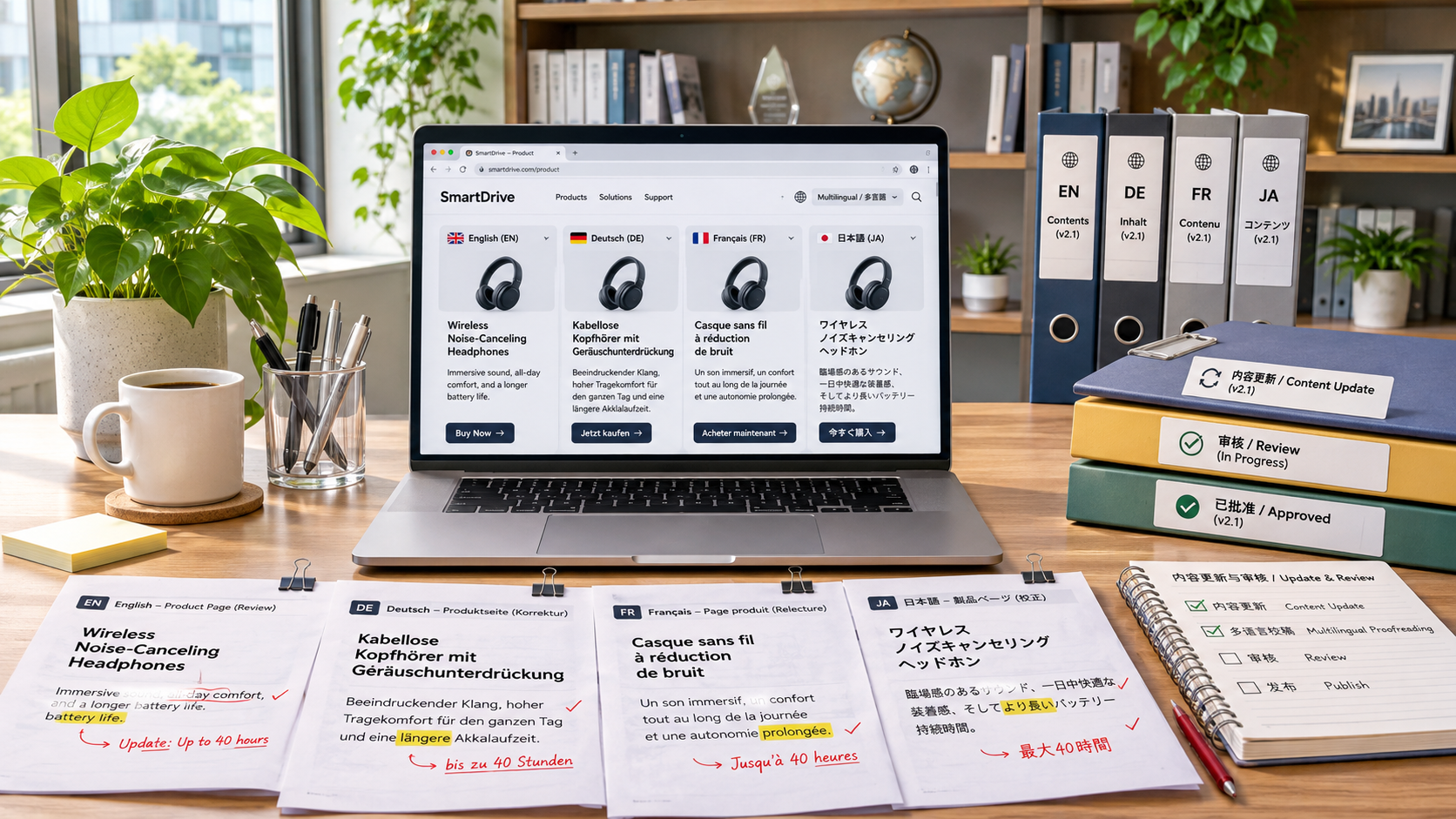
During localization, first determine the role of the page, then address the language. Pages targeting organic search need to retain the search terms commonly used by local customers; pages targeting ad clicks should closely correspond to the ad promise, product scope, and form entry point; pages intended for customers from existing channels can reduce basic explanations and add downloadable materials and comparison information. Copying the complete Chinese page to every language site often results in unnatural keywords, a reading order that does not align with local habits, or delivery information that does not apply to the new market.
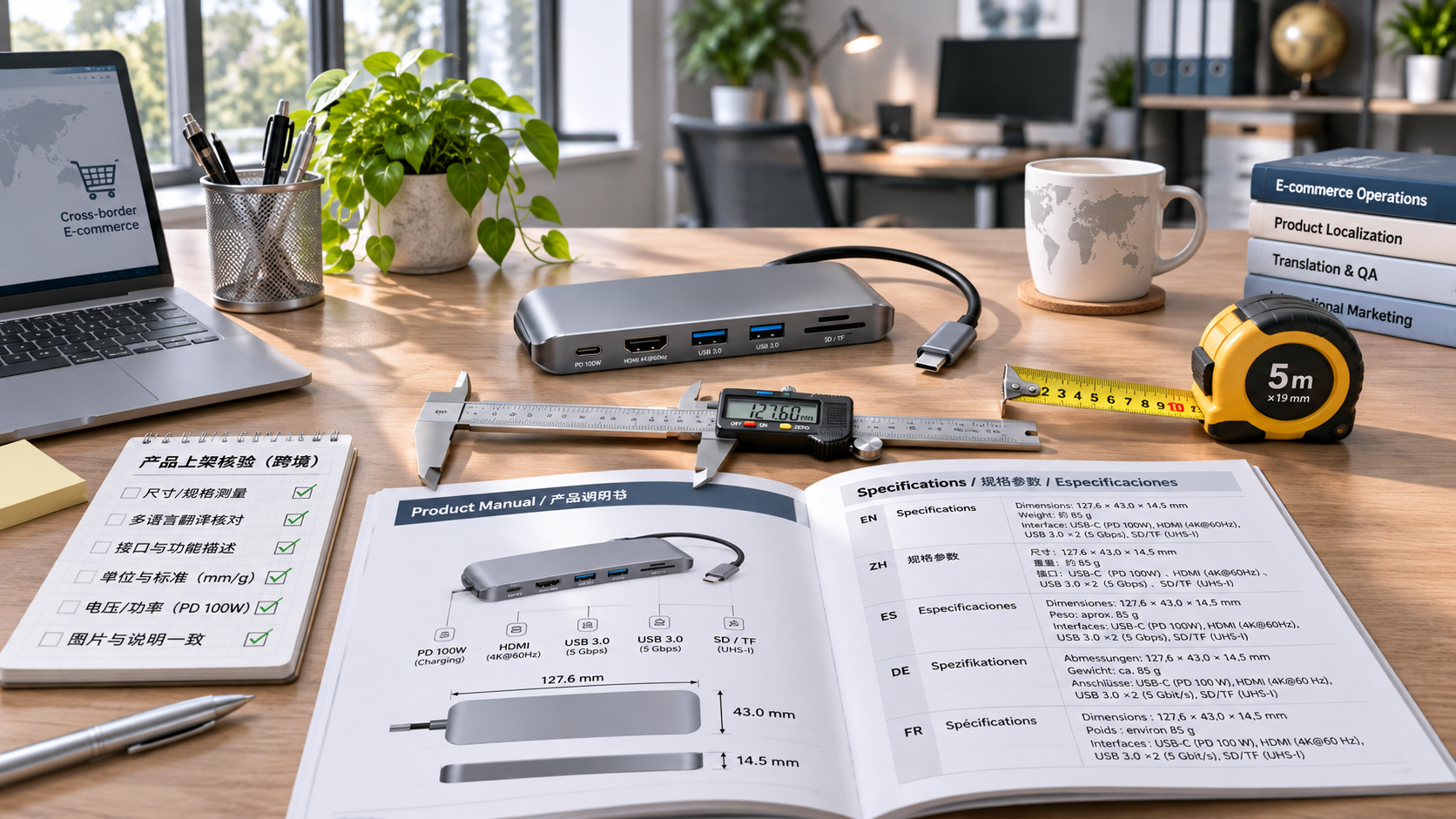
After the translation is completed, at minimum verify product names, units of measurement, date formats, currency expressions, text in images, downloadable files, and form prompts. In particular, machine translation can easily render industry terms as everyday words or describe an “optional configuration” as a standard configuration. When performance data is involved, translators must not independently supply omitted conditions; if the original text does not clearly state the test environment, first confirm it against technical documentation before deciding whether to publish it.
Call-to-action buttons on the page should also match local communication habits and project complexity. Standardized consumer products can direct visitors straight to specification selection or checkout; for products requiring technical confirmation, asking for an order too early can interrupt communication, so visitors should first submit key conditions. Forms that are too long reduce willingness to submit, while too few fields lead to repeated follow-up questions. Depending on product complexity, the process can be divided into an initial inquiry and a technical confirmation stage, rather than requesting all information during the first contact.
Use Feedback to Refine Research, Rather Than Looking Only at Traffic
After publication, the focus should be whether the content reduces ineffective communication. If a page receives many visits but generates low-quality inquiries, first check whether traffic keywords are attracting the wrong demand; if many forms are submitted but quotations cannot be prepared, check whether the page lacks model, size, or application boundaries; if inquiries concentrate on the same parameter, the placement, wording, or unit of that information may not be clear enough. Content adjustments should retain change records to prevent parameter drift among different language versions after multiple updates.
Localization projects are also often slowed by differences in how financial, sales, and operational data are defined. For example, when advertising costs are aggregated by region, leads are recorded by language site, and closed deals are counted by customer entity, it becomes difficult to determine the actual contribution of a particular type of content. Discussions on data fields, process traceability, and collaboration responsibilities can refer to the information system development approach in Information System Development Paths for Corporate Financial Management in the Context of the Digital Economy, using unified definitions to connect content investment with subsequent business records.
Research, content, and feedback should form a continuous cycle: new questions are categorized, existing pages are supplemented with evidence, and content unsuitable for public elaboration is retained as communication material. Only then can localized marketing for overseas markets maintain information consistency across different languages and channels while continuing to respond to how local customers actually make decisions.
Related Articles
 How Can You Avoid Localization Mistakes When Building a Japanese-Language Brand Website?
 How Does a Website Localization System Manage Multilingual Content Updates?
 How Can Cross-Border E-Commerce Multilingual Product Pages Avoid Errors in Translating Product Specifications?

Related Products
 Yiyingbao SaaS Intelligent Website Building and Marketing SystemYiyingbao SaaS Intelligent Website Building and Marketing System, AI-powered no-code website building, rapid creation of multilingual B2B international websites in 10 minutes, global server acceleration, AI-powered SEO optimization, helping businesses connect efficiently with global markets. The perfect integration of technology and operation makes building an international trade website remarkably simple
 AI+SEM Intelligent Advertising Marketing SystemAI+SEM drives intelligent ad creation, empowering full-funnel precision advertising marketing. The system automatically generates weekly/monthly reports, AI recommends keywords and target countries, monitors core metrics in real-time with intelligent alerts, and enables one-click high-conversion ad solutions to help quickly acquire customers and improve ROI.
 AI+SEO Dual-Engine System Optimization ServicesYiyingbao’s AI+SEO dual-engine optimization system helps foreign trade enterprises acquire high-quality organic traffic through AI-powered keyword research, content generation, and comprehensive technical optimization, significantly improving search rankings and conversion rates.
 AI+SNS Social Media Marketing SystemYingbao AI+SNS Social Media Marketing System - Precision social capture for the social media era. Supports one-click content synchronization across major platforms like Facebook and LinkedIn. AI intelligently rewrites posts for enhanced relevance. 24/7 AI customer service and user profiling analysis empower businesses to efficiently expand into global markets.
 AI+SEO营销解决方案易营宝AI+SEO营销解决方案,通过AI批量写作、智能生成TDK、精准关键词扩词等功能,全面优化网站SEO效果,提升流量与转化率。助力企业构建高效智能网站新生态。
 AI+SEM Advertising Marketing SolutionsAI+SEM Advertising Marketing Solution leverages AI technology to deeply empower SEM ad campaigns. It automatically generates weekly/monthly reports using AI, presenting account data across multiple dimensions for comprehensive insights into campaign performance and trends. The system precisely recommends keywords and target countries, intelligently generates high-conversion ad copy, and enables one-click activation of efficient campaign plans to help businesses rapidly acquire customers. Simultaneously, it monitors core metrics in real time, intelligently identifies abnormal fluctuations, and issues timely alerts to ensure stable, high-return advertising results.
 Domain Name ServicesEasyWin provides professional domain name services, including intelligent queries, one-stop registration, brand protection, and full lifecycle management, helping businesses build a digital brand image.
 EasyOperate B2C Cross-Border E-Commerce Platform & Independent WebsiteEasyStore B2C Cross-border E-commerce Independent Store is an intelligent website building and cross-border e-commerce integrated solution independently developed by EasyStore Information Technology (Beijing) Co., Ltd. The system is specially designed for small and medium-sized as well as large export enterprises, integrating 'website building, operation, marketing, advertising, and conversion' into one, helping enterprises quickly establish cross-border e-commerce independent stores to achieve brand globalization and global sales growth.
The platform supports multiple languages, multiple currencies, and multi-channel marketing, with built-in AI intelligent translation and SEO optimization systems, suitable for mainstream markets such as Southeast Asia, Europe and America, Latin America, and the Middle East, assisting Chinese manufacturing enterprises in efficiently deploying international e-commerce strategies. SSL证书易营宝提供专业SSL安全证书服务,包括单域名和泛域名证书,确保网站数据传输加密、身份验证和完整性保护,助力企业建立安全可信的在线业务环境。









