









- Which customer acquisition channels will be affected by cross-border marketing trends in 2026?Sep 06, 2026View details
- Which homogenization risks should be considered in an analysis of the AI-powered website building industry?Aug 30, 2026View details
- How Will AI Marketing Trends 2026 Change Advertising Budget AllocationAug 28, 2026View details
- Is the EV SSL certificate market shrinking or upgrading? How should companies assess certificate procurement?Aug 11, 2026View details
- Why the old AMP SEO 2020 practices no longer work and what has changed in current optimization prioritiesAug 02, 2026View details
- How to Choose Topics for an Industry News Section to Attract More Organic Search TrafficJul 29, 2026View details
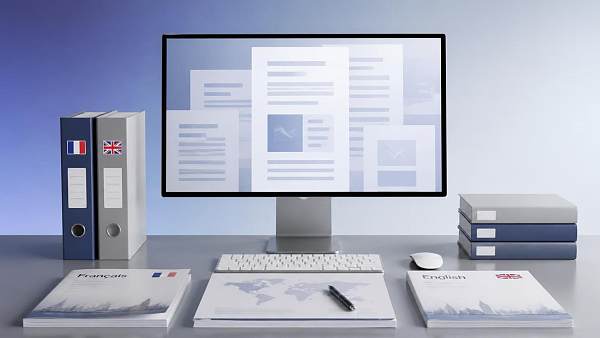
Are There Significant Differences Between Building a French-Language Website and an English-Language Website?
The difference is quite significant, and it is often not the kind of difference visible on the surface. Many projects understand a French website as simply “translating an English website into French,” only to discover after launch that the bounce rate is high, inquiries are low, and indexing is slow. The real differences usually appear in information organization, language tone, page details, search-term layout, as well as forms and conversion paths—places that may seem insignificant. Is there a big difference between building a French website and an English one? If this question is answered only from a translation perspective, the conclusion will be highly inaccurate.
First, consider the way content is presented. English websites commonly use direct wording, short headlines, and clear verbs, and tend to quickly present selling points, specifications, delivery times, or application results. French pages place more emphasis on complete sentences, logical explanations, and professionalism. This is especially true for industrial products, B2B equipment, custom processing, and technical services. If a French version simply copies the very short sentences and strongly imperative buttons used on an English website, it may sound stiff and fail to inspire sufficient trust. For example, English websites often use “Get Quote,” “Start Now,” and “Fast Delivery.” In a French context, the subject, conditions, or service scope usually need to be clarified according to the context; otherwise, although the page may be literally accurate, it will read like machine-assembled text.
This difference directly affects the structure of the website. English websites are more likely to accept dense, one-page presentations, placing product advantages, specifications, case studies, and FAQs on one long page. French websites are often better suited to separating core information more clearly—for example, using separate pages for product introductions, technical specifications, application scenarios, and delivery and after-sales services. This is not because French users necessarily prefer more pages, but because French text is naturally longer. When phrases and sentences become longer, continuing to use the layout of an English website can make the first screen look crowded, while buttons, tables, navigation, and breadcrumbs can easily become distorted.
Translation Is Only the Starting Point; The Real Challenge Is Localization and Rewriting
Common section names, selling-point sequences, and CTA copy on English websites may not be suitable for direct use on French websites. A common misjudgment is to translate all pages in batches according to fields, resulting in inconsistent terminology. For example, the same type of product may be described using one French expression in the title, another on the category page and specifications page, and yet another in downloadable documents. Search engines will find it difficult to determine the primary keyword, and visitors may wonder whether these are different products. This issue is particularly common in industrial manufacturing, cross-border retail, and software services, because English terms are concise, while French expressions may involve grammatical gender, singular and plural forms, and the coexistence of abbreviations and full terms.
If the content involves materials, processing methods, dimensions, tolerances, surface treatments, packaging, and shipping conditions, it is best to establish a terminology glossary before producing the French version. A terminology glossary is not merely a translation dictionary. It should also specify which terms are used in navigation, which are used in product titles, which appear only in technical documents, which expressions are more suitable for the French market, and which are more suitable for French-speaking regions of Canada. This helps prevent multiple similar but inconsistent keywords from appearing on the same website.
Another frequently overlooked point is numbers and formatting. English websites commonly use decimal points, date formats, telephone-number grouping, currency placement, and dimension formats that, if handled inconsistently on French pages, can significantly reduce the sense of professionalism. When presenting delivery periods, installation dimensions, temperature ranges, load parameters, or packaging volumes, spaces and symbol formats between units and numbers must be standardized. Technical-document download pages, product comparison tables, and quotation forms are particularly likely to expose such issues.
SEO Differences Are More Difficult to Remedy Than Copywriting Differences
Is there a big difference between building a French website and an English one? At the SEO level, the difference is usually even more apparent. The English keyword pool is large and competition is intense, but search behavior is relatively dispersed. French keyword volumes may be more concentrated, while long-tail keyword combinations, preposition usage, and word-order variations can affect whether a page is matched correctly. Translating English keywords once and then inserting them directly into titles and descriptions is one of the most common—and least effective—approaches.
French SEO requires attention to three issues. First, are the keywords genuinely aligned with local search habits, rather than simply French versions of internal terminology? Second, does the page focus on one clear topic instead of mixing multiple similar expressions? Third, do the URL, title, H2, image alt text, breadcrumbs, and internal-link anchor text use the same terminology system? If the category page uses one name, the detail-page title uses another, and a blog article uses a third expression, it will be difficult to form a clear topical cluster after indexing.
Regional differences must not be overlooked either. French is not the language of a single uniform market. France, Belgium, Switzerland, and French-speaking regions of Canada may differ in terminology, tone, pricing information, and delivery descriptions. If the business needs to cover multiple French-speaking regions, the website architecture should determine in advance whether to use one unified French website or separate directories and content by region. Splitting too finely increases maintenance costs; not splitting at all may cause search terms and conversion copy to constrain one another. This decision should usually be made during the website-building stage. Changing the URL structure after all pages have gone live will be more costly.
In Interface Design, French Is More Likely to “Break” an English Layout
English buttons, menus, and card titles are short, so page grids are often relatively spacious. French words tend to be longer, especially in navigation bars, filters, breadcrumbs, form labels, price descriptions, and shipping information, where line breaks and misalignment are most likely to occur. If an English e-commerce template does not leave enough space for multiple languages, switching to French will typically cause several problems: wrapped menus may produce abnormal header heights, button text may extend beyond boundaries, filter labels may overlap, table columns may be too narrow, and copy may occupy too much of the first screen on mobile devices.
Therefore, French websites usually need length adaptation at the front-end level in advance, rather than waiting until translation is complete and then making passive fixes. A more reliable approach is to avoid double modifiers in navigation names whenever possible; reserve a wider minimum size for important buttons; allow product specification tables to wrap automatically without disrupting column alignment; and move mobile form labels to a separate line when necessary. When building multilingual websites, many teams reserve field-length controls in the content management system to prevent titles, summaries, and SEO descriptions from becoming uncontrollable in a particular language. This approach is especially valuable when combined with AI-assisted content production, because automatically generated text is often longer than manually written copy.
The Conversion Path Cannot Simply Follow the Pace of an English Website
English websites favor fast-paced conversion, with quotation buttons, demo requests, immediate purchasing, or quick consultation appearing relatively early on the homepage or landing page. Using the same strong push on a French website is not necessarily ineffective, but in technical, customized, high-value, or long-delivery-cycle scenarios, more preliminary information is often needed to establish a basis for evaluation. This includes delivery scope, material information, processing capabilities, packaging methods, shipping conditions, installation constraints, and after-sales boundaries. If these details are missing, even a highly visible form button may not generate valid submissions.
For example, if an equipment page in English emphasizes “Fast Quote” on the first screen, the French version may need to provide downloadable specifications, compatibility standards, delivery information, or application conditions near the first screen before guiding visitors to make an inquiry. Similarly, a cross-border e-commerce website may use a simplified checkout path in English, while the French version needs to explain more carefully how taxes are displayed, the delivery regions, return and exchange conditions, and payment steps. The process is not necessarily longer; the page simply needs to make the rules clearer.
The forms themselves also differ. The order of name fields, the way company information is entered, telephone-number formats, address structures, and prompts in the remarks area may all affect submission quality. Directly translating “Message” from an English website into a vague message box is usually less effective than providing more specific guidance, such as the specifications, quantity, dimensions, target market, and delivery region that should be included. This reduces subsequent communication costs.
During Content Production, Technical Details Need to Be More “Practical”
French content often has less tolerance for abstract promotional language, especially when the page is responsible for lead generation and qualification. Vague wording is difficult to support search and conversion. Rather than repeatedly emphasizing quality, efficiency, and professionalism, it is more useful to turn the page into an evaluable information resource. For example:
- Material pages should clearly state the thickness range, common specifications, tolerance expressions, surface condition, storage requirements, and whether moisture or scratch protection is needed during transportation.
- Processing pages should not only list the process names. They should ideally also specify minimum order conditions, required drawing formats, whether the sampling period is affected by structural complexity, and whether secondary assembly of finished products is required.
- Installation or deployment pages should explain site conditions, including power requirements, wall load-bearing capacity, network environment, interface protocols, and space reservations. The earlier these constraints are clarified, the less repeated communication will be needed later.
These details are equally important for English websites, but on French websites they are even less suitable for replacement by “marketing language.” The reason is simple: once a French page contains more text, empty promotional statements become more conspicuous. Without specific information, the page looks like an English promotional page wrapped in another language.
Several Areas Most Easily Overlooked Before Launch
The first is a lack of synchronization between metadata and body content. The body of the page may have been changed to French, while the title tag, description, Open Graph data, and names in structured data still remain in English. As a result, shared content appears inconsistent, and the topic captured by search engines is incomplete.
The second is that attachments and downloadable materials have not been localized accordingly. The page is in French, but the linked English PDF, English drawing instructions, or English installation manual remains unchanged. This disconnect directly undermines trust.
The third is that URLs generated by automatic translation have not been reviewed. Some systems generate very long transliterated URLs that are neither easy to read nor convenient to maintain later. A more reliable approach is to manually organize the URLs of core sections and key pages, keeping them concise, understandable, and structurally stable.
The fourth is that customer service and email templates have not been updated accordingly. If the success message displayed after form submission, the automated reply email, or the inquiry field labels are still in English, the localization work completed earlier will break down at the final step.
Is there a big difference between building a French website and an English one? If the goal is merely to “make it understandable,” the difference may not seem significant. If the goal is to “be found, build trust, and convert smoothly,” the difference is sufficient to affect the planning of the entire website. What is truly worth investing in is not copying an English website into another language, but aligning the page structure, terminology, search strategy, and conversion details with the French market. This requires more work, but usually results in less rework.
Related Articles
Related Products
 Yiyingbao SaaS Intelligent Website Building and Marketing SystemYiyingbao SaaS Intelligent Website Building and Marketing System, AI-powered no-code website building, rapid creation of multilingual B2B international websites in 10 minutes, global server acceleration, AI-powered SEO optimization, helping businesses connect efficiently with global markets. The perfect integration of technology and operation makes building an international trade website remarkably simple
 AI+SEM Intelligent Advertising Marketing SystemAI+SEM drives intelligent ad creation, empowering full-funnel precision advertising marketing. The system automatically generates weekly/monthly reports, AI recommends keywords and target countries, monitors core metrics in real-time with intelligent alerts, and enables one-click high-conversion ad solutions to help quickly acquire customers and improve ROI.
 AI+SEO Dual-Engine System Optimization ServicesYiyingbao’s AI+SEO dual-engine optimization system helps foreign trade enterprises acquire high-quality organic traffic through AI-powered keyword research, content generation, and comprehensive technical optimization, significantly improving search rankings and conversion rates.
 AI+SNS Social Media Marketing SystemYingbao AI+SNS Social Media Marketing System - Precision social capture for the social media era. Supports one-click content synchronization across major platforms like Facebook and LinkedIn. AI intelligently rewrites posts for enhanced relevance. 24/7 AI customer service and user profiling analysis empower businesses to efficiently expand into global markets.
 AI+SEO营销解决方案易营宝AI+SEO营销解决方案,通过AI批量写作、智能生成TDK、精准关键词扩词等功能,全面优化网站SEO效果,提升流量与转化率。助力企业构建高效智能网站新生态。
 AI+SEM Advertising Marketing SolutionsAI+SEM Advertising Marketing Solution leverages AI technology to deeply empower SEM ad campaigns. It automatically generates weekly/monthly reports using AI, presenting account data across multiple dimensions for comprehensive insights into campaign performance and trends. The system precisely recommends keywords and target countries, intelligently generates high-conversion ad copy, and enables one-click activation of efficient campaign plans to help businesses rapidly acquire customers. Simultaneously, it monitors core metrics in real time, intelligently identifies abnormal fluctuations, and issues timely alerts to ensure stable, high-return advertising results.
 Domain Name ServicesEasyWin provides professional domain name services, including intelligent queries, one-stop registration, brand protection, and full lifecycle management, helping businesses build a digital brand image.
 EasyOperate B2C Cross-Border E-Commerce Platform & Independent WebsiteEasyStore B2C Cross-border E-commerce Independent Store is an intelligent website building and cross-border e-commerce integrated solution independently developed by EasyStore Information Technology (Beijing) Co., Ltd. The system is specially designed for small and medium-sized as well as large export enterprises, integrating 'website building, operation, marketing, advertising, and conversion' into one, helping enterprises quickly establish cross-border e-commerce independent stores to achieve brand globalization and global sales growth.
The platform supports multiple languages, multiple currencies, and multi-channel marketing, with built-in AI intelligent translation and SEO optimization systems, suitable for mainstream markets such as Southeast Asia, Europe and America, Latin America, and the Middle East, assisting Chinese manufacturing enterprises in efficiently deploying international e-commerce strategies. SSL证书易营宝提供专业SSL安全证书服务,包括单域名和泛域名证书,确保网站数据传输加密、身份验证和完整性保护,助力企业建立安全可信的在线业务环境。









