









- Which customer acquisition channels will be affected by cross-border marketing trends in 2026?Sep 06, 2026View details
- Which homogenization risks should be considered in an analysis of the AI-powered website building industry?Aug 30, 2026View details
- How Will AI Marketing Trends 2026 Change Advertising Budget AllocationAug 28, 2026View details
- Is the EV SSL certificate market shrinking or upgrading? How should companies assess certificate procurement?Aug 11, 2026View details
- Why the old AMP SEO 2020 practices no longer work and what has changed in current optimization prioritiesAug 02, 2026View details
- How to Choose Topics for an Industry News Section to Attract More Organic Search TrafficJul 29, 2026View details
Which industries is Korean website development suitable for?
Which Industries Are Suitable for Korean Website Development
When many companies plan to expand overseas, they typically think of an English website first and then websites in other languages. However, when they are truly preparing to enter the Korean market, they often face a very practical question: which industries are suitable for Korean website development, and is it worth making a separate investment? The answer should not depend solely on whether you have Korean customers. You also need to consider your customer acquisition methods, decision-making process, product prices, and whether customers rely on online information to make decisions before placing an order.
If your target audience includes local Korean purchasers, end consumers, agents, franchisees, or customers with whom you need to build long-term brand awareness, a Korean official website is usually not an optional configuration. It is more than simply translating pages. It presents product information, builds trust, reaches users through search, and facilitates inquiries in a language environment familiar to Korean users. In industries such as B2B manufacturing, cross-border retail, education and training, medical aesthetics, and cultural tourism services, a Korean website can often generate inquiries more consistently than a Korean-language brochure.
Of course, not every industry needs to build a complete Korean official website from the outset. If a company's Korean business is still in the testing stage, starting with key pages or localized landing pages may be more practical. The key is not whether the industry is popular, but whether Korean customers will actively search, compare, and submit inquiries, and whether your website can effectively support this process.
Which Industries Usually See Better Results from a Korean Website
The first and most typical category is foreign trade manufacturing and industrial supply chain companies. For products such as machinery and equipment, components, electronic components, packaging materials, and industrial consumables, Korean buyers usually review a company's official website to assess its basic capabilities before entering into communication. When purchasing decisions involve specifications, delivery times, customization capabilities, and factory background, an English website may be understandable, but a Korean website can reduce communication barriers more effectively. The problem for many manufacturing companies is not a lack of products, but that their websites only explain “who we are” without clearly presenting the information buyers need to verify, such as materials, applicable scenarios, delivery methods, certification scope, and sample-making processes. For these industries, the core purpose of a Korean website is not to “look good,” but to clearly explain all the information that needs to be confirmed before an inquiry is submitted.
The second category is cross-border e-commerce and branded independent websites. Korean consumers are relatively sensitive to the shopping experience, localized wording, and page details. If you sell standardized products such as beauty and personal care products, household goods, 3C accessories, pet supplies, or clothing accessories, a Korean website can directly affect conversion rates. A common misconception is that translating product pages into Korean is enough to achieve localization. In fact, Korean users pay more attention to whether delivery information, after-sales service, payment experience, promotional wording, and review presentation feel natural. If the website is in Korean but the size information, logistics promises, and return and exchange policies are still written according to the practices of other markets, conversion may not improve.
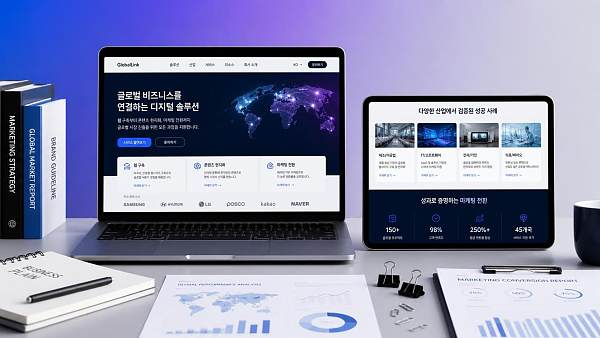
The third category is education, training, and study-abroad services. This includes language training, international school enrollment, vocational skills training, study-abroad applications, and corporate training services. This industry relies heavily on information transparency because users have long decision-making cycles and repeatedly compare options before making inquiries. The value of a Korean website here is not limited to Korean students or institutions. It can also serve Korean companies, schools, and partners. If information about course arrangements, application requirements, service scope, instructor backgrounds, and schedules is only available on Chinese or English pages, you may easily lose potential customers who were originally willing to learn more.
The fourth category is medical aesthetics, health management, and related services. This industry has higher localization requirements because users pay close attention to institutional qualifications, service procedures, pre- and post-treatment instructions, appointment mechanisms, and privacy-related communication. It is important to note that content involving medical services, efficacy claims, and compliance-related wording cannot be written solely according to marketing practices. It usually needs to be confirmed in light of the regulations in the service location and the qualification materials for the specific project. A Korean website is suitable for this industry, but the content must be accurate and restrained; wording should not be overstated merely to improve conversion.
Other suitable industries include cultural tourism, exhibitions and conferences, hotels and hospitality, and cross-border business services. Korean users often compare information online in advance when arranging travel or business activities. Services such as airport transfers, exhibition participation, interpretation, visa assistance, hotel reception, and customized itineraries can be more efficient when the website clearly explains procedures, pricing logic, and service scope, rather than relying solely on social media messages. These industries rely heavily on “trust,” which often comes from details: whether frequently asked questions are provided, whether service timelines are clearly stated, whether the team introduction is authentic, and whether contact information is easy to find.
What Should a Korean Website Look Like for Different Industries
Being suitable for a Korean website does not mean that every industry should use the same approach.
For B2B manufacturing websites, the primary focus is usually inquiry generation and management. The page structure should center on product categories, application scenarios, technical specifications, production capabilities, quality management, and delivery processes. Korean purchasers may not contact you immediately, but they will use your pages to determine whether you are a supplier that can “get things done.” Therefore, the biggest problem for this type of website is a lack of substantive content. If the entire site contains only a company introduction and a few product images, valuable information is effectively being hidden.
For B2C retail or branded independent websites, the focus is on whether the purchase journey is smooth. Homepage visuals, product filtering, promotion details, payment and logistics information, and the mobile browsing experience are often more important than “the year the company was founded.” Mobile traffic in the Korean market is generally significant, so page loading speed, button placement, and form simplicity should be prioritized. This also demonstrates the value of integrating website development and marketing: launching the website is not the end. The site should be connected with subsequent search campaigns, advertising, social media traffic acquisition, and content development.
Service industries rely more heavily on content organization. Users do not place an order immediately; they first assess whether you are professional and trustworthy and whether communication will be convenient. Therefore, FAQs, service procedures, consultant introductions, appointment instructions, and examples of service types are critical. The focus should be on “service types,” not on fabricating results. When publicly shareable cases are unavailable, service scenarios, delivery processes, and project boundaries can be used instead. This is often more authentic.
When Should a Company Build a Korean Official Website Instead of Just a Korean Page
There are three practical criteria for making this decision.
First, the Korean market is already a defined target rather than a possibility to be considered later. If a company plans to run campaigns, produce content, and handle inquiries continuously, a complete official website is more stable than a single page. A single page can support one campaign, but it is difficult to support long-term search traffic and brand awareness.
Second, the product information is complex and customers will not make a decision after a quick glance. Equipment, materials, education solutions, medical aesthetics projects, and customized services all require multiple pages to explain. If you only create a Korean landing page, you may end up with a situation where visitors are interested after clicking an advertisement but find no further information when they continue reading.
Third, the company intends to treat the website as a marketing asset rather than an electronic business card. Smart website development, SEO, advertising, social media, and visibility in AI search must ultimately be supported by on-site content that can be continuously updated. Platforms such as Yiyingbao, which provide both website development and overseas marketing, have the advantage of allowing the site architecture to take later promotion into account from the beginning. This avoids the situation where the website, advertising campaigns, and content are developed separately and ultimately become disconnected. For companies planning to enter the Korean and Japanese markets, this type of integrated planning generally involves less rework than hiring a translation company separately and using a template website.
Several Commonly Overlooked Points in Korean Website Development
The first overlooked issue is not translation quality, but information selection. Many companies transfer their Chinese official website word for word, only to bury the information Korean users actually care about. A Korean website should first clarify why customers would look for you, what they need to confirm before placing an order, and what concerns they may have, and then determine the page hierarchy.
The second issue is focusing only on language without localization. Details such as telephone number formats, form fields, address formats, time expressions, and customer service response methods need to be adjusted. Otherwise, users may feel that the website was not prepared for them. Long forms and too many required fields in particular often directly affect the inquiry submission rate.
The third issue is ignoring search entry points. The question of which industries are suitable for Korean website development is ultimately related to customer acquisition methods. If a company hopes to acquire customers through organic search, it cannot treat the Korean website merely as a presentation brochure. Keyword placement, content structure, and content update mechanisms should be considered in advance. Unlike a one-time campaign page, a long-term website needs to be scalable so that it can later support more product-related keywords, scenario-based keywords, and problem-oriented keywords.
There is also a very practical consideration: launch speed and subsequent maintenance. Companies often struggle to decide whether to build a comprehensive website first or launch it and iterate later. Generally speaking, a new website targeting the Korean market is better suited to a pace where core content is completed first and non-core content is added later. As long as the homepage, key product pages, inquiry page, company introduction, and FAQs are ready, followed by ongoing content updates, this is already better than delaying the launch indefinitely.
How to Determine Whether Your Industry Is Worth Targeting with a Korean Website
You can start by asking yourself four questions: Will Korean customers search for an official website before making a purchase? Do they read content in their local language? Can the website answer their key questions? Do you have a plan for ongoing promotion? If at least three of the four answers are yes, a Korean website is generally worth building.
If your industry involves major decisions, relies heavily on trust, and requires detailed explanations, a Korean official website is often not just an enhancement but basic infrastructure for entering the market. Conversely, if your business has no clear direction in Korea, your products rely heavily on platform traffic, and you have no short-term plans for content operations or promotion, there is no need to start with an overly extensive website. Building key pages first to validate demand is a more prudent approach.
Ultimately, there is no absolute dividing line regarding which industries are suitable for Korean website development. The companies that benefit most are often those willing to treat the Korean market as a long-term business focus. A website is only an entry point, but whether that entry point appears professional will directly determine whether customers are willing to continue exploring. For companies already engaged in foreign trade, cross-border e-commerce, or overseas brand expansion, it is generally easier to consider website development, content, and promotion as one integrated system from the beginning than to remedy the situation later.
Related Articles


Related Products
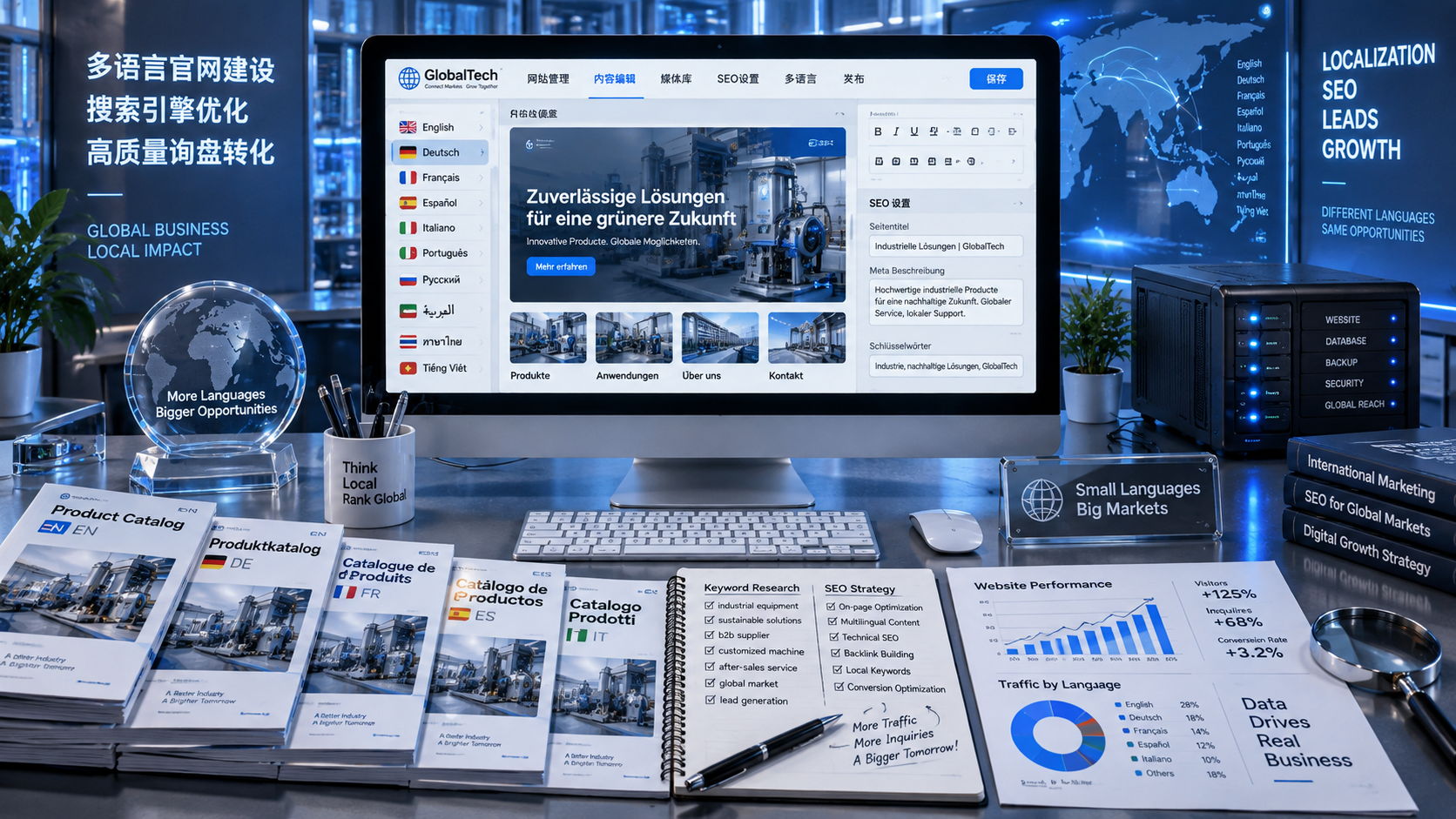
 Yiyingbao SaaS Intelligent Website Building and Marketing SystemYiyingbao SaaS Intelligent Website Building and Marketing System, AI-powered no-code website building, rapid creation of multilingual B2B international websites in 10 minutes, global server acceleration, AI-powered SEO optimization, helping businesses connect efficiently with global markets. The perfect integration of technology and operation makes building an international trade website remarkably simple
 AI+SEM Intelligent Advertising Marketing SystemAI+SEM drives intelligent ad creation, empowering full-funnel precision advertising marketing. The system automatically generates weekly/monthly reports, AI recommends keywords and target countries, monitors core metrics in real-time with intelligent alerts, and enables one-click high-conversion ad solutions to help quickly acquire customers and improve ROI.
 AI+SEO Dual-Engine System Optimization ServicesYiyingbao’s AI+SEO dual-engine optimization system helps foreign trade enterprises acquire high-quality organic traffic through AI-powered keyword research, content generation, and comprehensive technical optimization, significantly improving search rankings and conversion rates.
 AI+SNS Social Media Marketing SystemYingbao AI+SNS Social Media Marketing System - Precision social capture for the social media era. Supports one-click content synchronization across major platforms like Facebook and LinkedIn. AI intelligently rewrites posts for enhanced relevance. 24/7 AI customer service and user profiling analysis empower businesses to efficiently expand into global markets.
 AI+SEO营销解决方案易营宝AI+SEO营销解决方案,通过AI批量写作、智能生成TDK、精准关键词扩词等功能,全面优化网站SEO效果,提升流量与转化率。助力企业构建高效智能网站新生态。
 AI+SEM Advertising Marketing SolutionsAI+SEM Advertising Marketing Solution leverages AI technology to deeply empower SEM ad campaigns. It automatically generates weekly/monthly reports using AI, presenting account data across multiple dimensions for comprehensive insights into campaign performance and trends. The system precisely recommends keywords and target countries, intelligently generates high-conversion ad copy, and enables one-click activation of efficient campaign plans to help businesses rapidly acquire customers. Simultaneously, it monitors core metrics in real time, intelligently identifies abnormal fluctuations, and issues timely alerts to ensure stable, high-return advertising results.
 Domain Name ServicesEasyWin provides professional domain name services, including intelligent queries, one-stop registration, brand protection, and full lifecycle management, helping businesses build a digital brand image.
 EasyOperate B2C Cross-Border E-Commerce Platform & Independent WebsiteEasyStore B2C Cross-border E-commerce Independent Store is an intelligent website building and cross-border e-commerce integrated solution independently developed by EasyStore Information Technology (Beijing) Co., Ltd. The system is specially designed for small and medium-sized as well as large export enterprises, integrating 'website building, operation, marketing, advertising, and conversion' into one, helping enterprises quickly establish cross-border e-commerce independent stores to achieve brand globalization and global sales growth.
The platform supports multiple languages, multiple currencies, and multi-channel marketing, with built-in AI intelligent translation and SEO optimization systems, suitable for mainstream markets such as Southeast Asia, Europe and America, Latin America, and the Middle East, assisting Chinese manufacturing enterprises in efficiently deploying international e-commerce strategies. SSL证书易营宝提供专业SSL安全证书服务,包括单域名和泛域名证书,确保网站数据传输加密、身份验证和完整性保护,助力企业建立安全可信的在线业务环境。









