









- 21st Century Business Herald: AI and CTV Become Core Growth Engines for Digital Marketing in Overseas MarketsNov 18, 2026View details
- China Presents 25 Cooperation Outcomes in Areas Including Cross-Border E-Commerce During APECNov 18, 2026View details
- AI Products Drive Hong Kong Exports Up 64.9% in September, Fastest Growth in Over 40 YearsNov 17, 2026View details
- National Bureau of Statistics: Foreign trade grew rapidly in October, providing stable support for global tradeNov 17, 2026View details
- The U.S. has ended the $800 de minimis exemption for non-postal shipments; express courier packages must be formally declared.Nov 16, 2026View details
- ASEAN Signs Digital Economy Framework Agreement, Moving Toward Harmonized Cross-Border E-Commerce RulesNov 15, 2026View details
How to Resolve Frequent hreflang Tag Errors on Multilingual Websites
Introduction: How can you resolve recurring hreflang tag errors on multilingual websites? From language codes and reciprocal references to canonical link configuration, this article outlines common issues and solutions to help websites improve global search visibility.
When Google Search Console continues to report hreflang errors, many businesses first suspect that the code has been written incorrectly. In fact, the issue often extends beyond tag syntax and may also involve page relationships, language version strategies, redirect logic, and canonical configuration.
For foreign trade corporate websites, cross-border online stores, and multilingual B2B websites, hreflang is not an optional SEO detail. Incorrect configuration can prevent search engines from determining which page users in different countries should see, resulting in indexing confusion, mismatched traffic, and even keyword ranking fluctuations.
Users searching for “how to resolve recurring hreflang tag errors on multilingual websites” usually do not primarily need to understand the basic concept. Their core need is to quickly identify the cause of the error, assess its impact, and establish a multilingual SEO configuration approach that can be maintained over the long term.
First, clarify this: hreflang determines “who sees what,” not “whether a page can be indexed”
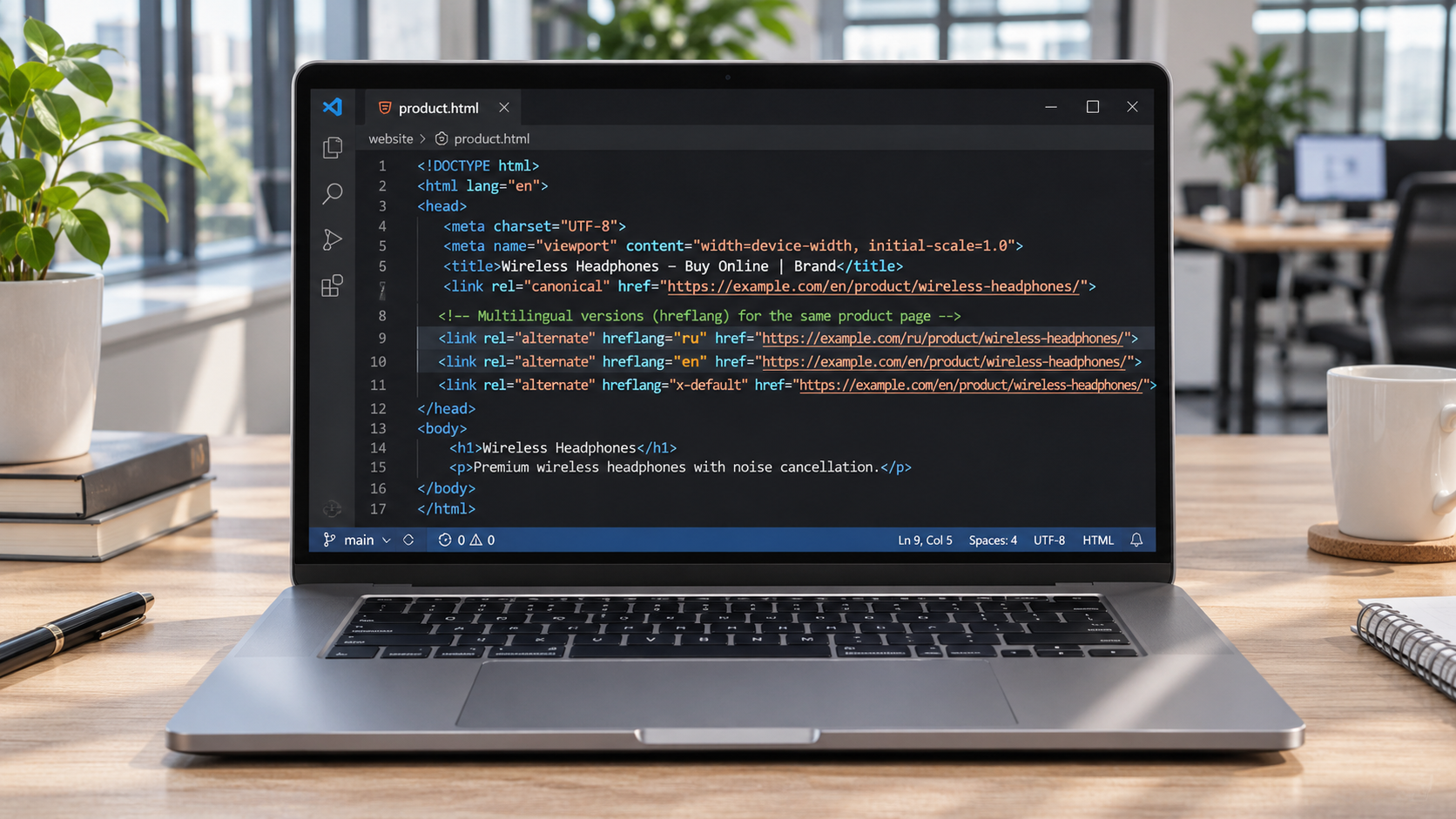
hreflang tells search engines which languages or regional users a group of similar pages is intended for. For example, a global English version, a U.S. English version, and a German German-language version can all be associated through language and region codes.
It cannot replace website translation, content localization, or page optimization. If pages in different languages have highly duplicated content, excessive automatic redirects, or cannot be crawled, it is still difficult to obtain stable international organic traffic even if hreflang is correctly implemented.
First Check the Five Most Common Types of hreflang Tag Errors

The most common error is the use of language or country codes that do not comply with standards. Languages should use ISO 639-1 two-letter codes, such as en, de, and ja; regions should use ISO 3166-1 Alpha-2 codes, such as US, GB, DE, and JP.
The correct format is usually “language-region,” such as en-US, en-GB, and zh-CN. Do not use non-standard formats such as en-UK, cn-CN, or jp-JP. In particular, UK, CN, and JP are often mistakenly used as language codes, which can cause search engines to ignore the tags.
The second issue is missing reciprocal or self-referencing links. When page A points to page B, page B must also point back to page A. At the same time, each page should include an hreflang tag pointing to itself; otherwise, the entire set of relationships may not be fully recognized.
The third issue is inconsistent link addresses. URLs in hreflang tags must be accessible final canonical URLs. You cannot use HTTP at times and HTTPS at others, nor can you mix URLs with and without www or URLs with and without parameters.
The fourth issue is a conflict between hreflang and canonical. For example, a German site page declares de-DE through hreflang, but its canonical points to the global English version. Search engines will prioritize understanding that the page is not an independent version, naturally weakening the hreflang signal.
The fifth issue is referencing pages that cannot be indexed. If a target page returns a 404, redirects with a 301, is blocked from crawling by robots, is set to noindex, or requires login access, it cannot participate as a valid hreflang alternate page.
Establishing Correct Page Group Relationships Is More Important Than Fixing Tags Individually
When fixing hreflang, it is not advisable to focus only on a single URL reporting an error. First, create a list of language versions based on “the same product or the same topic page,” and confirm which pages belong to the same group and which pages only have similar content but are not interchangeable.
For example, a product page for the U.S. market and one for the UK market can be mutually tagged as en-US and en-GB. However, if a U.S. promotional page and a regular UK product page differ in content, price, and purpose, they should not be forcibly placed in the same hreflang group.
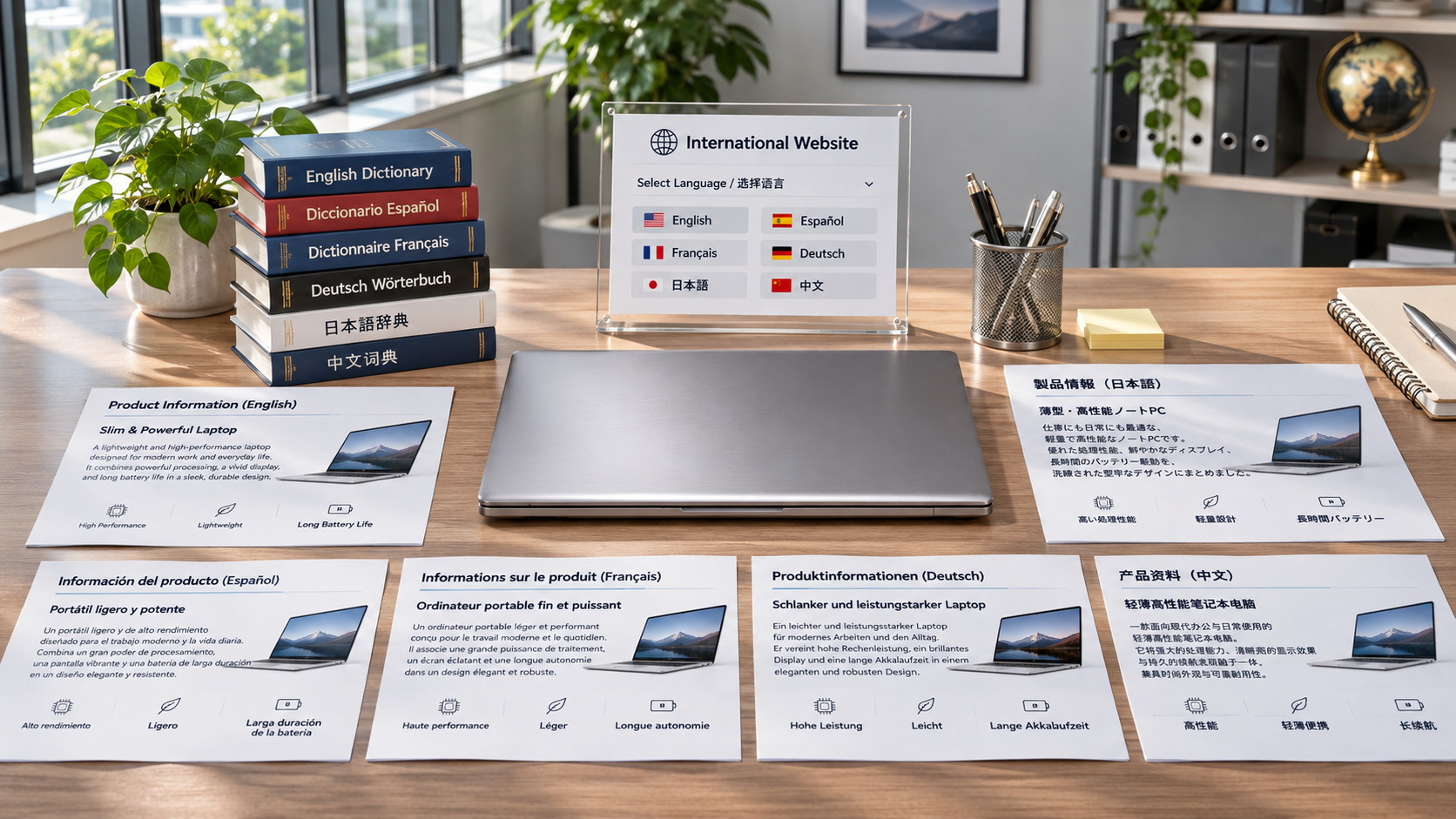
A complete language group should include all interchangeable versions. If a website has Chinese, English, Japanese, and Spanish pages, each version should list all four URLs, rather than listing English only on the Chinese page and Japanese only on the English page, creating an incomplete chain.
For users without a specific language or regional match, an x-default page can be configured. It is usually suitable for a global English homepage, a language selection page, or a default landing page, provided that the page can genuinely meet the access needs of unmatched users.
x-default does not need to be set on every page. If a business already has a clear global English version and users in different regions can browse and convert normally, it can be used as the default version. If pages automatically force redirects, this may instead affect search crawling and user experience.
How hreflang and canonical Should Be Configured Together
In multilingual SEO, a basic principle is that each language version that can independently participate in search rankings should preferably use a self-referencing canonical. In other words, a German page should have a canonical pointing to itself, and a French page should have a canonical pointing to itself, rather than all pointing to the original English page.
Only when a page genuinely constitutes duplicate content and is not intended to be indexed independently should a cross-language or cross-region canonical be set. However, doing so usually means that the page is no longer suitable as an independent hreflang alternate version, and the two should not simply be used together.
Website redirect rules also require attention. Many cross-border websites automatically redirect users to the corresponding country site based on IP addresses, which can prevent Googlebot from consistently crawling URLs in each language. A more reasonable approach is to provide language suggestions or switching options rather than forced redirects.
Whether multilingual websites are deployed using subdirectories, subdomains, or country-specific domains, hreflang can be referenced across domains. The key is not the URL structure, but whether each version is consistently accessible, reciprocally referenced, and aligned in content, language, and target market.
How to Quickly Identify Errors and Verify Whether Fixes Are Actually Effective
The first step is to export affected pages from Google Search Console’s international targeting-related reports, page indexing reports, and URL Inspection tool. Do not look only at the number of errors; also distinguish between isolated page issues and widespread recurring errors caused by template-level configuration.
The second step is to check hreflang declarations in the page source code or sitemap. Corporate websites typically deploy them through the HTML head, HTTP response headers, or XML Sitemap. All three methods can coexist, but the URLs and language codes for the same page must remain fully consistent.
The third step is to spot-check the status code, canonical, robots rules, and final landing URL of each URL. Especially after a redesign, migration, or website-building system replacement, old links may remain in language tags, creating persistent warnings that “alternate pages return errors.”
The fourth step is to use crawler tools to batch-check reciprocal reference relationships. For manufacturing companies with hundreds of product pages, manual review alone makes it difficult to identify problems such as a missing language page, a URL spelling error, or a page that lacks a self-referencing tag.
Do not expect everything to recover on the same day after a fix. Search engines need to recrawl and process page group relationships. You should generally continue monitoring index coverage, impressions and clicks in target countries, and changes in error reports, while incorporating newly added pages into the maintenance process.
Businesses Should Incorporate hreflang Into a Long-Term Multilingual Website Operations Framework
Frequent hreflang errors often reflect not carelessness by technical staff, but rather a lack of unified management for language sites. Marketing, translation, website development, and SEO teams modify pages separately without jointly maintaining version lists, URL rules, and go-live inspection standards.
For foreign trade companies, the most effective approach is to incorporate hreflang into website templates and publishing workflows. Whenever a new language version, product category page, or marketing landing page is added, the corresponding tags should be generated automatically, and the URL, canonical, and index status should be checked before publication.
If a website covers multiple markets such as North America, Europe, the Middle East, Japan and South Korea, and Latin America, it should first determine which languages and regions genuinely require independent operation. More language versions are not necessarily better; pages lacking translation quality, product information, and local conversion capability will instead increase maintenance costs.
For companies using AI-powered website-building systems, they should confirm whether the system supports automatically maintaining multilingual page relationships, generating standard code, synchronizing sitemaps, and automatically updating them after page redesigns or URL adjustments. This directly affects the long-term stability of international SEO.
Conclusion: Fix Page Relationships Before Fixing Code Details
To resolve recurring hreflang tag errors on multilingual websites, the key is not merely correcting a single line of code. It is ensuring that language codes are standard, pages reference each other, canonical links are consistent, target URLs can be indexed, and every page group genuinely serves users in the corresponding market.
Businesses should regard hreflang as an information architecture task for global websites rather than a one-time technical patch. Only by establishing unified multilingual URL rules, content version strategies, and go-live testing procedures can Google display the right pages to target customers more accurately.
Related Articles
 How Long After Launch Should You Redesign a Multilingual Website? Check Whether the Content Is Outdated First
 How to Choose Target Languages When Building an International Website for Global Brand Expansion
 How Do You Set Up Multilingual SEO Tags for a Russian-Language Website?

Related Products
 Yiyingbao SaaS Intelligent Website Building and Marketing SystemYiyingbao SaaS Intelligent Website Building and Marketing System, AI-powered no-code website building, rapid creation of multilingual B2B international websites in 10 minutes, global server acceleration, AI-powered SEO optimization, helping businesses connect efficiently with global markets. The perfect integration of technology and operation makes building an international trade website remarkably simple
 AI+SEM Intelligent Advertising Marketing SystemAI+SEM drives intelligent ad creation, empowering full-funnel precision advertising marketing. The system automatically generates weekly/monthly reports, AI recommends keywords and target countries, monitors core metrics in real-time with intelligent alerts, and enables one-click high-conversion ad solutions to help quickly acquire customers and improve ROI.
 AI+SEO Dual-Engine System Optimization ServicesYiyingbao’s AI+SEO dual-engine optimization system helps foreign trade enterprises acquire high-quality organic traffic through AI-powered keyword research, content generation, and comprehensive technical optimization, significantly improving search rankings and conversion rates.
 AI+SNS Social Media Marketing SystemYingbao AI+SNS Social Media Marketing System - Precision social capture for the social media era. Supports one-click content synchronization across major platforms like Facebook and LinkedIn. AI intelligently rewrites posts for enhanced relevance. 24/7 AI customer service and user profiling analysis empower businesses to efficiently expand into global markets.
 AI+SEO营销解决方案易营宝AI+SEO营销解决方案,通过AI批量写作、智能生成TDK、精准关键词扩词等功能,全面优化网站SEO效果,提升流量与转化率。助力企业构建高效智能网站新生态。
 AI+SEM Advertising Marketing SolutionsAI+SEM Advertising Marketing Solution leverages AI technology to deeply empower SEM ad campaigns. It automatically generates weekly/monthly reports using AI, presenting account data across multiple dimensions for comprehensive insights into campaign performance and trends. The system precisely recommends keywords and target countries, intelligently generates high-conversion ad copy, and enables one-click activation of efficient campaign plans to help businesses rapidly acquire customers. Simultaneously, it monitors core metrics in real time, intelligently identifies abnormal fluctuations, and issues timely alerts to ensure stable, high-return advertising results.
 Domain Name ServicesEasyWin provides professional domain name services, including intelligent queries, one-stop registration, brand protection, and full lifecycle management, helping businesses build a digital brand image.
 EasyOperate B2C Cross-Border E-Commerce Platform & Independent WebsiteEasyStore B2C Cross-border E-commerce Independent Store is an intelligent website building and cross-border e-commerce integrated solution independently developed by EasyStore Information Technology (Beijing) Co., Ltd. The system is specially designed for small and medium-sized as well as large export enterprises, integrating 'website building, operation, marketing, advertising, and conversion' into one, helping enterprises quickly establish cross-border e-commerce independent stores to achieve brand globalization and global sales growth.
The platform supports multiple languages, multiple currencies, and multi-channel marketing, with built-in AI intelligent translation and SEO optimization systems, suitable for mainstream markets such as Southeast Asia, Europe and America, Latin America, and the Middle East, assisting Chinese manufacturing enterprises in efficiently deploying international e-commerce strategies. SSL证书易营宝提供专业SSL安全证书服务,包括单域名和泛域名证书,确保网站数据传输加密、身份验证和完整性保护,助力企业建立安全可信的在线业务环境。









