









- 21st Century Business Herald: AI and CTV Become Core Growth Engines for Digital Marketing in Overseas MarketsNov 18, 2026View details
- China Presents 25 Cooperation Outcomes in Areas Including Cross-Border E-Commerce During APECNov 18, 2026View details
- AI Products Drive Hong Kong Exports Up 64.9% in September, Fastest Growth in Over 40 YearsNov 17, 2026View details
- National Bureau of Statistics: Foreign trade grew rapidly in October, providing stable support for global tradeNov 17, 2026View details
- The U.S. has ended the $800 de minimis exemption for non-postal shipments; express courier packages must be formally declared.Nov 16, 2026View details
- ASEAN Signs Digital Economy Framework Agreement, Moving Toward Harmonized Cross-Border E-Commerce RulesNov 15, 2026View details
Can AI-generated foreign trade blog content be used directly?
The answer is: it can be used as a first draft, but it is not recommended to publish it directly without review. AI can significantly shorten the time needed for topic selection, outlining, and first-draft creation, but it cannot replace a company in verifying products, understanding markets, localizing language, or designing conversions. This is especially true for foreign trade blogs, where readers often visit a website with specific purchasing questions. An article that appears fluent but is vague, contains inaccurate specifications, or does not align with local communication practices may fail to generate inquiries and may even undermine trust.
Whether AI-generated foreign trade blog content can be used directly should not be judged only by grammatical correctness or whether it “looks like English.” More importantly, it should be assessed based on whether it answers the real questions target customers ask, whether it aligns with the company’s actual capabilities, and whether search engines and readers can recognize it as valuable content.
When AI first drafts can be published relatively quickly
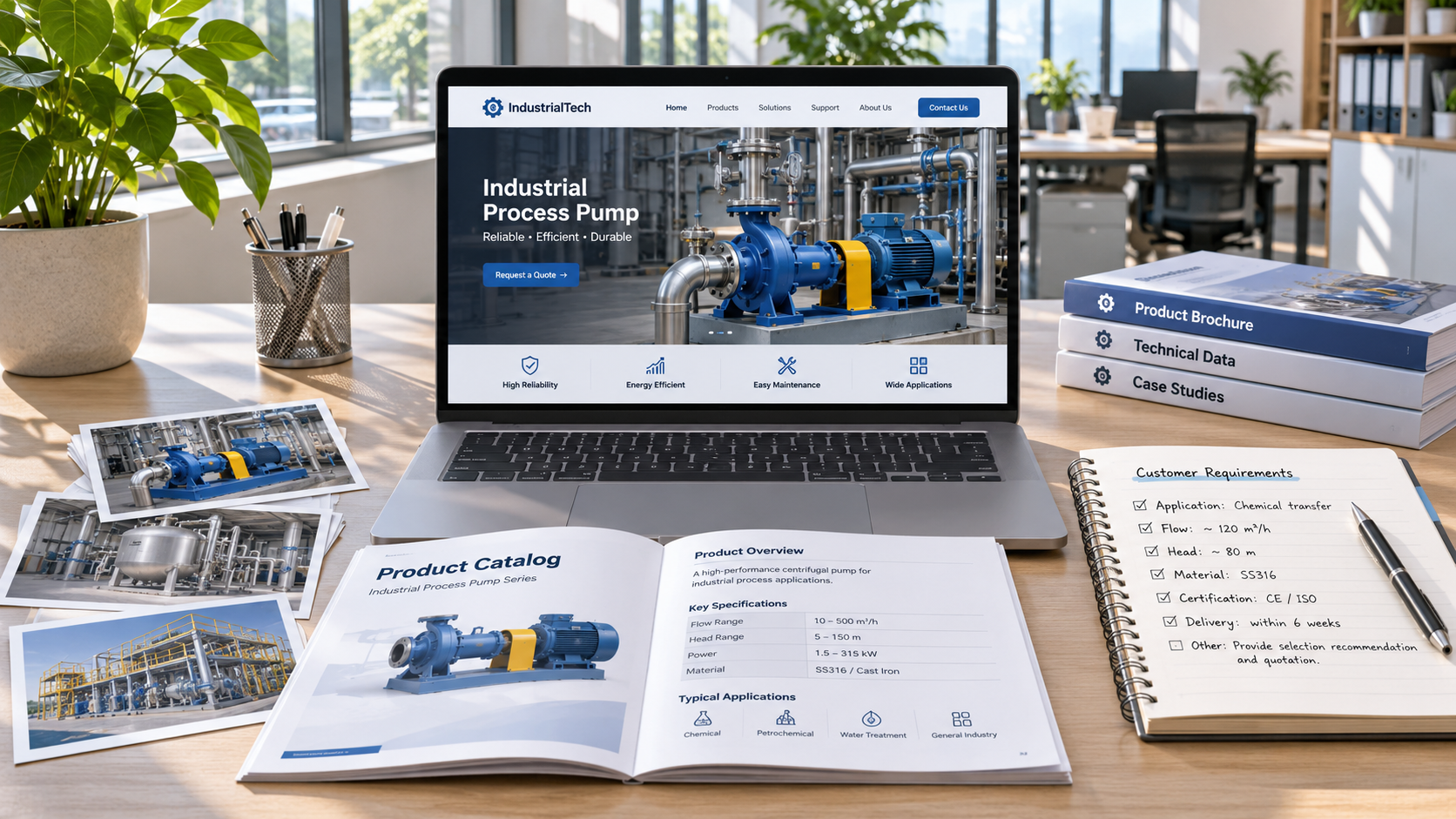
If an article consists of basic and stable information, such as explanations of common terms, reorganized existing website materials, or supplementary product catalog descriptions, an AI first draft can be used relatively quickly after manual proofreading. The prerequisite is that the content does not involve changeable prices, lead times, certifications, technical specifications, application scope, or policy requirements.
For example, a company that manufactures standardized industrial components needs to write an introductory article on “how to select a certain type of part based on material and operating environment.” AI can help organize the decision criteria, structure the paragraphs, and generate an English first draft. The editor only needs to add the materials, process range, testing methods, and application limitations the company can actually provide, and then have someone familiar with the target market language refine the wording. The content will then have a foundation for publication.
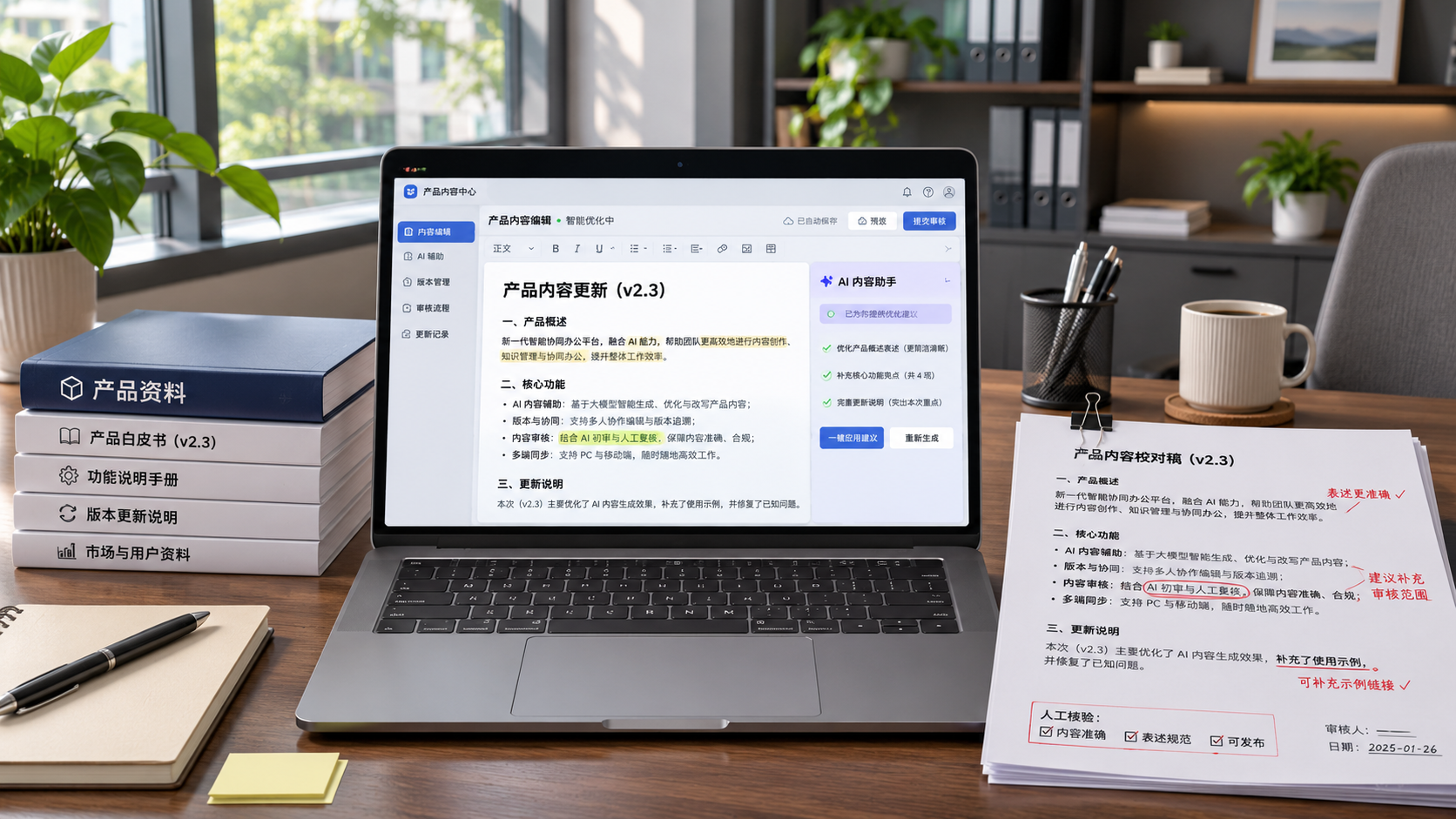
However, “publishing relatively quickly” does not mean one-click publishing. At a minimum, fact-checking, brand tone adjustment, and page link checks must be completed. Even if an article has no obvious errors, it is difficult to turn reading into subsequent action without conversion paths such as product pages, case study pages, and inquiry pages.
Four types of content cannot be published directly
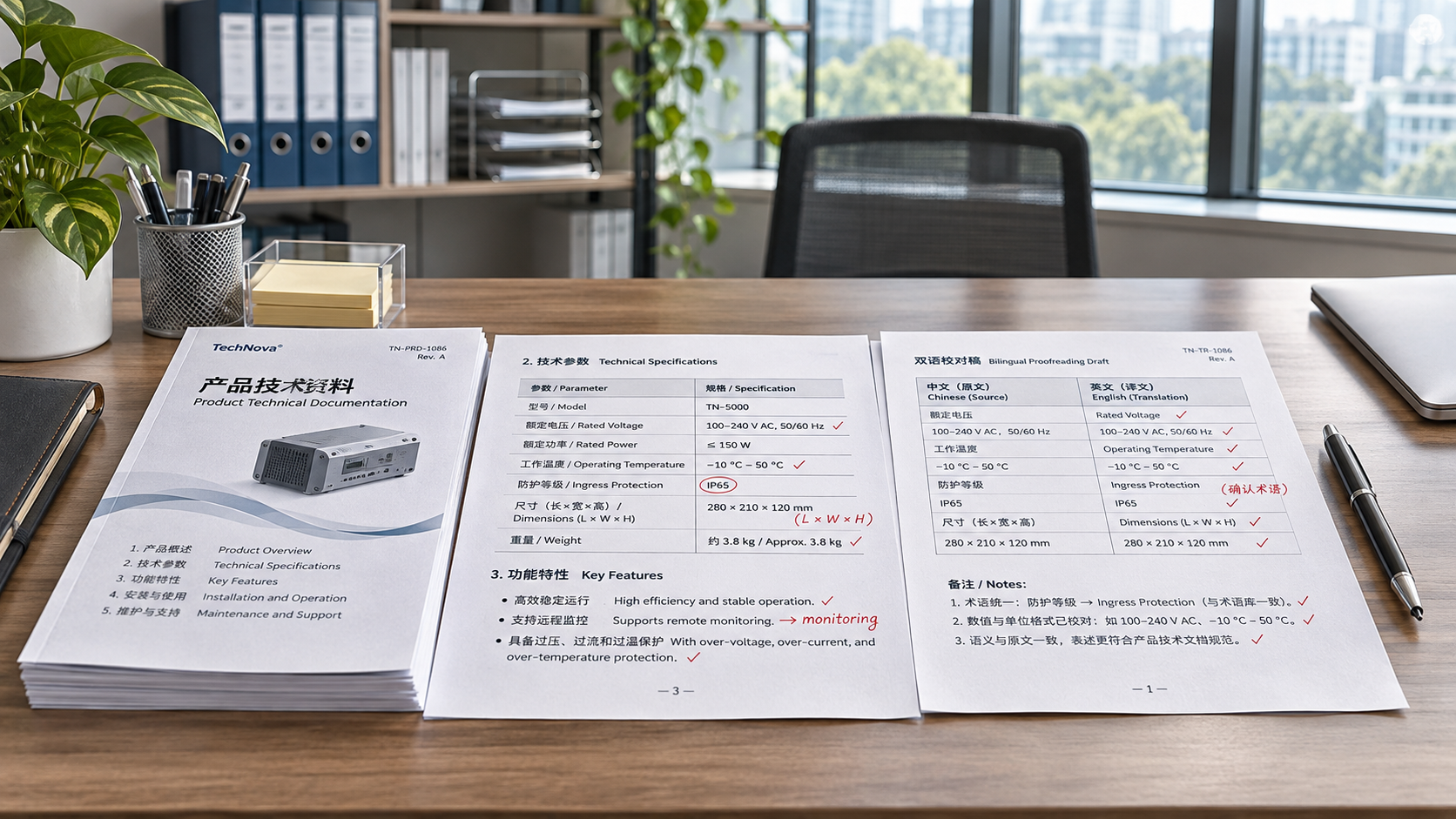
The first type is product technical and compliance content. AI may mix information across different models, countries, or standards. For foreign trade companies, details such as dimensional tolerances, material grades, certification statements, packaging methods, and applicable industries may all affect purchasing decisions. Descriptions that have not been confirmed by business personnel should not be written as firm commitments.
The second type is articles involving competitive comparisons. For topics such as “which is better, a certain product or an alternative material” and “what are the differences among supply regions,” AI tends to produce broad conclusions. Comparisons with real reference value must clearly state the conditions of use: conclusions will differ depending on purchase volume, performance requirements, delivery schedules, after-sales capabilities, customization difficulty, and total procurement cost.
The third type is content oriented toward local markets. Directly translating Chinese logic into English, or copying the same English content onto pages in multiple languages, usually results in unnatural wording. Search terms, measurement units, purchasing habits, and communication priorities are not exactly the same across markets such as North America, Europe, the Middle East, and Latin America. AI can assist with rewriting, but it cannot replace localization judgment.
The fourth type is core pages intended to drive transactions. These include high-value product solution pages, advertising landing pages, inquiry guidance pages, and articles on key product categories. These pages need not only accurate content, but also clear guidance on what the company can provide, which needs it is suited for, what information should be submitted, and how to get in touch next. AI can often produce complete paragraphs, but it may easily omit these specific details that determine conversion.
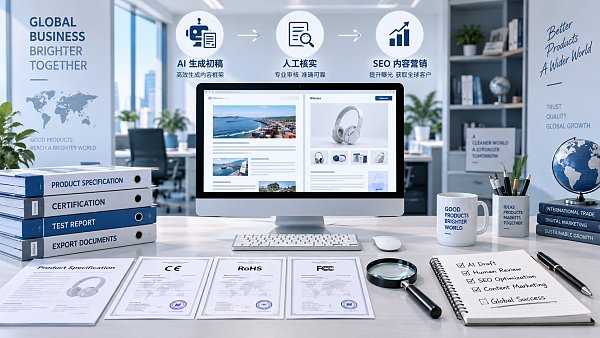
Before publishing, consider handling AI content in this order
- First, confirm the search question. Do not simply enter a broad keyword and ask AI to “write an article.” First determine what stage the reader is at: learning about a product, comparing solutions, looking for suppliers, or preparing to purchase. The content focus for a search for “how to choose” is completely different from that for a search for “manufacturer.”
- Provide AI with sufficiently accurate materials. Organize confirmed product information, common customer questions, markets you can serve, actual delivery processes, and content that must not be promised as input. The closer the input is to the company’s actual situation, the less likely the first draft is to become generic or inaccurate.
- Verify high-risk statements item by item. Focus on checking models, specifications, certifications, lead times, minimum order quantities, application results, regional restrictions, and comparison conclusions. When information is insufficient, it is better to use conditional descriptions than to fill the gaps with vague but definitive language.
- Rewrite the introduction, conclusion, and call to action. These three sections have the greatest impact on reading and conversion. The introduction should directly address purchasing questions; relevant products, solutions, or resource pages can be linked naturally in the body text; and the conclusion should let readers know what key information they need to provide when requesting a quote.
- Check whether the page is suitable for indexing and continued reading. The title, description, heading structure, internal links, image descriptions, and relationships among multilingual pages should all be organized around one clear topic. Do not repeatedly publish the same article merely by replacing keywords.
What Google cares about is not “whether it was written by AI”
What usually has a greater impact on content performance is not the writing tool itself, but whether the page truly solves a problem. Search engines need to determine whether content has independent value, and readers will also judge whether a company understands their purchasing scenarios. An article written by a person but merely repeating common industry knowledge may likewise lack competitiveness; an article assisted by AI but containing clear selection logic, reliable product information, and specific usage recommendations is more likely to gain sustained traffic.
A common misconception is treating “content quantity” as SEO growth. Publishing a large number of similar articles in a short time, with overlapping topics and no clear division of purpose between pages, often makes a website’s overall content appear weak. A more reliable approach is to build a content hierarchy around key product lines: use one core page to explain the product or solution, use blog posts to answer more specific questions about selection, application, maintenance, and purchasing processes, and then use internal links to help readers and search engines understand the relationships between them.
What foreign trade blogs most often lack is the company’s own information
AI excels at summarizing public knowledge, but it is not good at automatically generating credible details unique to a company. What buyers truly care about is often information not found in public materials: whether customization is supported, which documents are needed for samples, how consistency is controlled for bulk orders, how packaging is adapted for transportation, and how requirements are confirmed after receiving an inquiry. This information does not necessarily need to be written as a lengthy company introduction, but it should appear naturally in appropriate places.
For multilingual independent websites, content production also needs to work in coordination with website building, SEO, advertising, and social media traffic generation. For example, organic traffic brought by blog posts should have corresponding product pages and inquiry forms; advertising landing pages should focus on a single purchasing intent rather than directly reusing an informational long-form article. The intelligent website building, multilingual website, SEO, and overseas marketing integration capabilities provided by Yiyingbao are suitable for incorporating content publishing, page conversion paths, and subsequent promotion into the same operational workflow. Tools can improve execution efficiency, but topic selection, material review, and conversion information still require company involvement.
Whether an article can be published ultimately depends on three questions
Before publishing, quickly ask yourself: Does this article answer a specific question? Does every product or service statement in it align with the company’s actual situation? After reading it, can readers naturally enter a relevant product page, submit an inquiry, or continue reading the next piece of content?
If all three questions can be answered clearly, an AI-generated foreign trade blog can become an efficient content asset. If the answers are vague, completing the information and page paths first is more valuable than continuing to generate articles in bulk.
Related Articles
 How Do AI Marketing Cases Reflect Changes in Content Production?
 AI Content Generation for Export Websites: How to Prevent Errors in Product Specifications and Translation
 How Can AI Drive Website Content Updates as an Engine of Innovation?
Related Products
 Yiyingbao SaaS Intelligent Website Building and Marketing SystemYiyingbao SaaS Intelligent Website Building and Marketing System, AI-powered no-code website building, rapid creation of multilingual B2B international websites in 10 minutes, global server acceleration, AI-powered SEO optimization, helping businesses connect efficiently with global markets. The perfect integration of technology and operation makes building an international trade website remarkably simple
 AI+SEM Intelligent Advertising Marketing SystemAI+SEM drives intelligent ad creation, empowering full-funnel precision advertising marketing. The system automatically generates weekly/monthly reports, AI recommends keywords and target countries, monitors core metrics in real-time with intelligent alerts, and enables one-click high-conversion ad solutions to help quickly acquire customers and improve ROI.
 AI+SEO Dual-Engine System Optimization ServicesYiyingbao’s AI+SEO dual-engine optimization system helps foreign trade enterprises acquire high-quality organic traffic through AI-powered keyword research, content generation, and comprehensive technical optimization, significantly improving search rankings and conversion rates.
 AI+SNS Social Media Marketing SystemYingbao AI+SNS Social Media Marketing System - Precision social capture for the social media era. Supports one-click content synchronization across major platforms like Facebook and LinkedIn. AI intelligently rewrites posts for enhanced relevance. 24/7 AI customer service and user profiling analysis empower businesses to efficiently expand into global markets.
 AI+SEO营销解决方案易营宝AI+SEO营销解决方案,通过AI批量写作、智能生成TDK、精准关键词扩词等功能,全面优化网站SEO效果,提升流量与转化率。助力企业构建高效智能网站新生态。
 AI+SEM Advertising Marketing SolutionsAI+SEM Advertising Marketing Solution leverages AI technology to deeply empower SEM ad campaigns. It automatically generates weekly/monthly reports using AI, presenting account data across multiple dimensions for comprehensive insights into campaign performance and trends. The system precisely recommends keywords and target countries, intelligently generates high-conversion ad copy, and enables one-click activation of efficient campaign plans to help businesses rapidly acquire customers. Simultaneously, it monitors core metrics in real time, intelligently identifies abnormal fluctuations, and issues timely alerts to ensure stable, high-return advertising results.
 Domain Name ServicesEasyWin provides professional domain name services, including intelligent queries, one-stop registration, brand protection, and full lifecycle management, helping businesses build a digital brand image.
 EasyOperate B2C Cross-Border E-Commerce Platform & Independent WebsiteEasyStore B2C Cross-border E-commerce Independent Store is an intelligent website building and cross-border e-commerce integrated solution independently developed by EasyStore Information Technology (Beijing) Co., Ltd. The system is specially designed for small and medium-sized as well as large export enterprises, integrating 'website building, operation, marketing, advertising, and conversion' into one, helping enterprises quickly establish cross-border e-commerce independent stores to achieve brand globalization and global sales growth.
The platform supports multiple languages, multiple currencies, and multi-channel marketing, with built-in AI intelligent translation and SEO optimization systems, suitable for mainstream markets such as Southeast Asia, Europe and America, Latin America, and the Middle East, assisting Chinese manufacturing enterprises in efficiently deploying international e-commerce strategies. SSL证书易营宝提供专业SSL安全证书服务,包括单域名和泛域名证书,确保网站数据传输加密、身份验证和完整性保护,助力企业建立安全可信的在线业务环境。









