









- APEC Shenzhen Spotlight: Cross-Border E-Commerce Orders Promote Asia-Pacific Trade and Economic CooperationNov 08, 2026View details
- China-Europe Railway Express and CIIE Hold Business Matchmaking Event, Focusing on Cross-Border E-commerce B2B ExportsNov 07, 2026View details
- China’s Ministry of Commerce Responds to Additional Charges on Low-Value Imports Imposed by the EUNov 06, 2026View details
- Two Internet Development Reports Released at the 2026 World Internet ConferenceNov 05, 2026View details
- Internet Business Revenue of Enterprises Above the Designated Size Reached RMB 1.716 Trillion in the First Three Quarters, with Profits Up 17.6%Nov 05, 2026View details
- Shopify's Third-Quarter Revenue and GMV Fall Short of Expectations, Sending Shares Tumbling Before the Market OpensNov 04, 2026View details
What Factors Affect Product Page Translation Pricing? A Detailed Explanation of Content Complexity, Language Pairs, and Delivery Standards
How is product page translation pricing often so “different” at first glance?
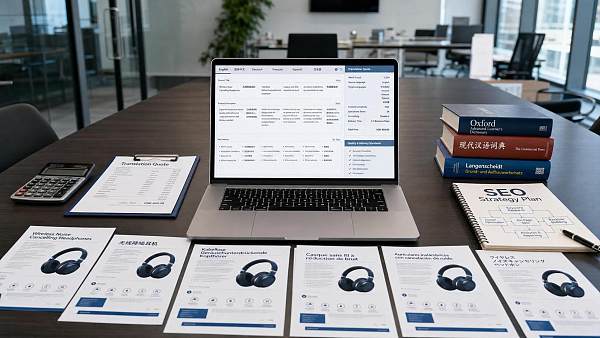
There is rarely a single fixed answer to product page translation pricing. On the surface, it looks like it is just translating Chinese into the target language; but in actual execution, price differences often come from the content itself, the language combination, the delivery method, and whether website building, SEO, and conversion copy need to be considered later.
If a product page is only for basic parameter display, the translation difficulty is usually manageable. But once the page includes industry terminology, marketing copy, inquiry forms, SEO titles, image text, and localized expressions, the pricing logic is no longer based on word count alone.
In website and marketing integrated projects, translation also affects indexing, ad landing performance, and conversion efficiency. That is why product page translation pricing is not just a language cost, but part of the overall cost of overseas website execution.
When content complexity is high or low, what exactly creates the price gap?
Many people ask about unit price first, but they should actually look at content complexity first. Even within the same product page, the difficulty can be completely different. The higher the complexity, the more likely product page translation pricing is to go up.
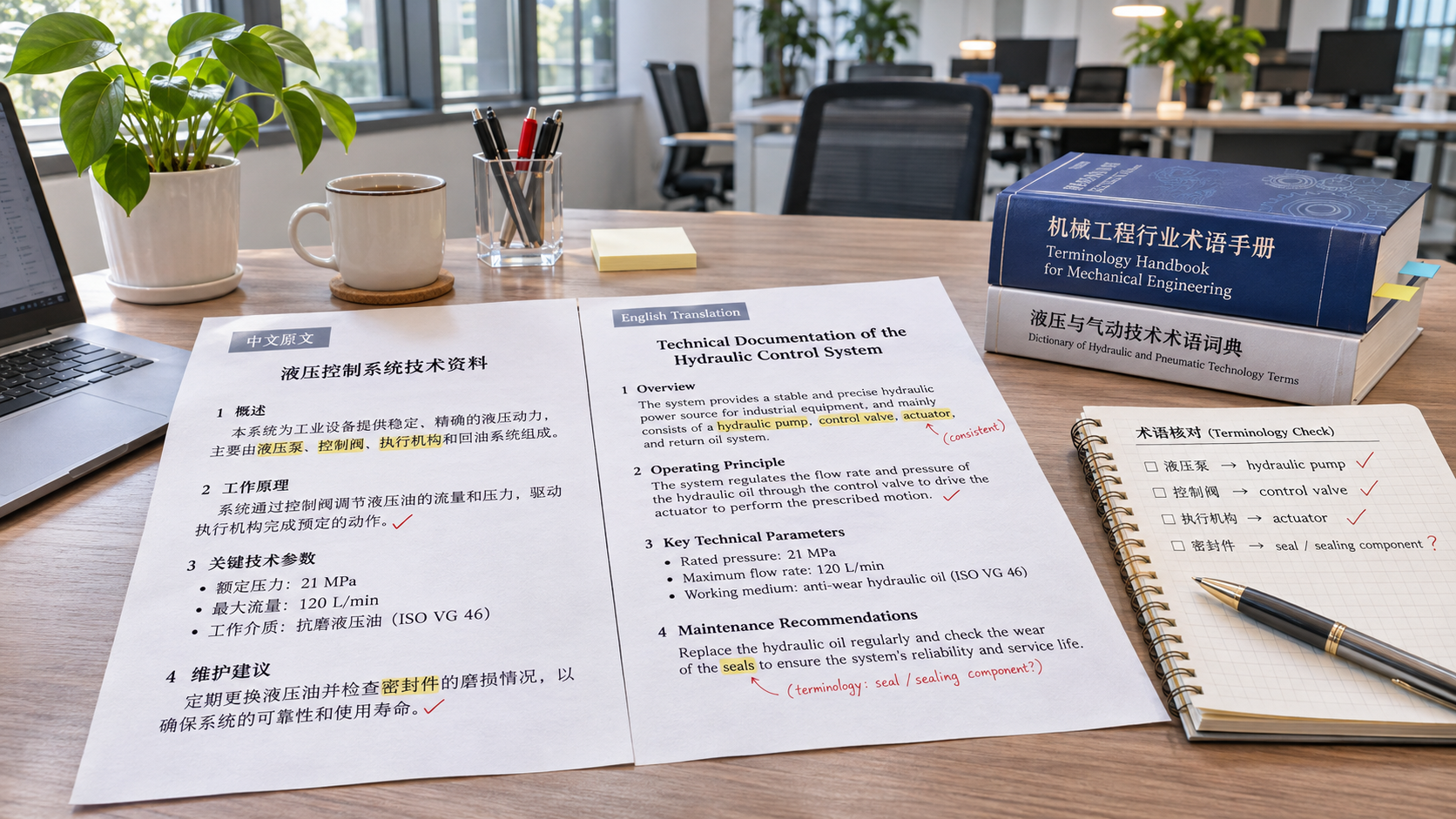
Common differences are mainly reflected in several levels. First is the density of professional terminology. Pages for machinery, chemicals, medical devices, and industrial components are the kind where one terminology error can affect the quality of subsequent inquiries. Second is page structure. Titles, selling points, parameters, application scenarios, FAQs, and button copy all require different handling methods.
A more common situation is that product pages are not pure “literal translation.” They need to balance readability and search expression. For example, the same word must be accurate in technical descriptions, concise in navigation, and more in line with click behavior on ad landing pages.
- Basic content: parameter tables, specification descriptions, standardized titles, and pricing are usually more stable.
- Marketing content: selling points, differentiated descriptions, and action buttons often require localized rewriting.
- Hybrid content: when technology, SEO, and conversion goals are included at the same time, pricing is generally higher.
So when judging product page translation pricing, first distinguish whether “what is being translated is information” or “what is being translated is the page effect”; this step is even more important than simply comparing unit prices.
Why are pricing differences so obvious across different languages?
Language is the second core factor affecting product page translation pricing. Not all languages are calculated under the same cost model. English resources are the most mature, so pricing is usually more transparent; but for minor languages, bidirectional rare languages, and languages with stronger regional adaptation requirements, the cost rises significantly.
The reason is not complicated. Translator availability, industry experience coverage, completeness of terminology resources, and whether localized expression is needed all affect delivery efficiency. For example, expressions for Latin America and Europe in Spanish may differ; Arabic, Russian, Japanese, and other languages may also require format adaptation or adjustments in wording style.
If the project also needs synchronized multilingual website development, this difference becomes even more obvious. Because translation is not only limited to documents; it also enters page structure, URL naming, meta tags, and search term layout. Platforms like 易营宝, which have long been doing multilingual website building and overseas marketing, usually evaluate translation, page adaptation, and SEO copy together rather than viewing language as a separate item.
A simple table to understand common pricing differences
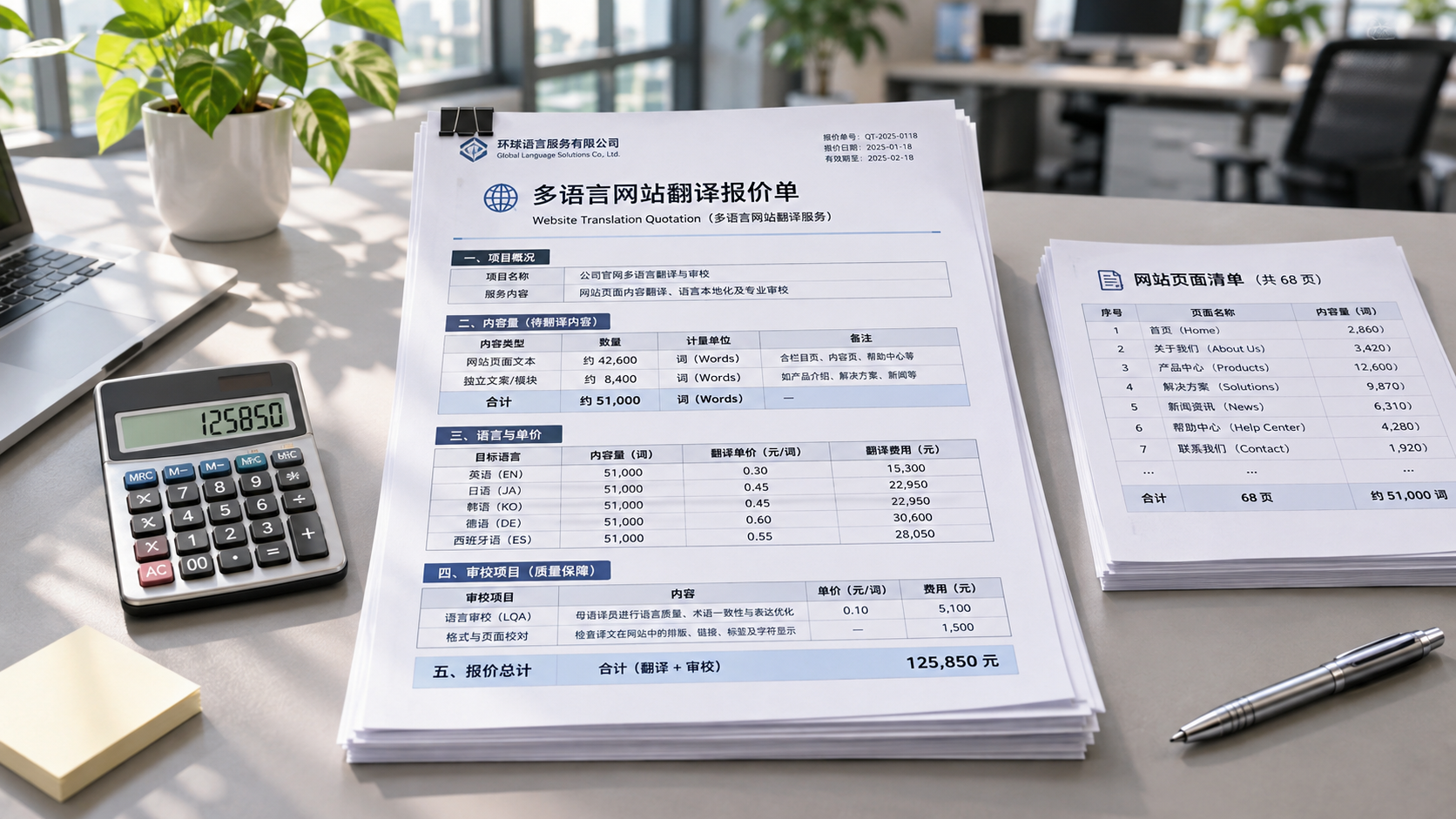
If you need to quickly assess the budget in the early stage, you can first use the table below for an initial screening and then decide whether to proceed with a detailed quotation.
Different delivery standards: where exactly does product page translation pricing differ?
Many budget deviations do not come from the translation itself, but from the delivery standards not being clarified in advance. Some people understand delivery as returning a bilingual table; others assume it includes page replacement, keyword layout, image text handling, and even post-launch fine-tuning.
These delivery methods have completely different cost structures. The former focuses on content processing, while the latter has already entered the website operation stage. Especially when the product page needs to support Google SEO, ad placement, or social media landing pages, the translated content must consider title length, description logic, button wording, and indexing friendliness.
In practical application, the closer the delivery standard is to “ready to go live,” the less product page translation pricing can be judged by word count alone. Because the execution team also needs to handle page review, format unification, link verification, and multilingual display consistency.
- Translation only: suitable for teams that already have internal website operations.
- Translation for publishing: suitable for website projects with relatively fixed page structures.
- Translation for promotion pages: suitable for scenarios that pursue SEO and conversion performance at the same time.
If we only compare unit prices, what common risks are often ignored?
Low price does not necessarily mean real budget savings. If product page translation pricing is obviously below the normal range, it usually means the delivery boundaries need to be reviewed further. Common risks are not as simple as “translating a few words wrong,” but rather the subsequent rework chain gets extended.
For example, inconsistent terminology directly affects brand professionalism; improper handling of titles and keywords weakens the page’s indexing foundation; stiff CTA wording may make inquiry conversion worse. If corrections are made after the website goes live, the actual cost is often higher than spending a little more in the early stage.
Another easily overlooked situation is that translation, website building, SEO, and ad placement are split across different teams. On the surface, the quotation seems detailed, but in reality the communication cost is higher. For projects that require multilingual official websites, independent sites, and coordinated overseas traffic acquisition, managing language, localization, and promotion rhythm in one integrated execution logic is usually easier to control risk.
What should be prepared before requesting a quote to judge product page translation pricing more accurately?
If you want the quotation to be closer to the real execution cost, the more complete the preliminary materials, the better. It is not that more materials are always better, but that the key boundaries must be clear. This not only makes comparison easier, but also reduces later additional costs.
- Organize the page list and distinguish between product pages, category pages, topic pages, and landing pages.
- Mark the target market, not just the target language.
- Specify whether SEO titles, descriptions, and keyword adaptation are required.
- Confirm whether image text, tables, downloadable materials, and button copy are included.
- Clearly state the delivery format: document, backend input, or direct go-live.
If the project also involves multilingual website building, overseas promotion, and continuous optimization, it is best to evaluate translation together with the overall website strategy. 易营宝 has long served multilingual independent-site projects across different regions, and the common approach is to put language processing, page structure, SEO/GEO visibility, and marketing delivery requirements into the same execution logic, which makes it easier to avoid early-stage budget waste and later rework.
In the end, how do you judge whether this quotation is worth it?
To judge whether product page translation pricing is reasonable, the key is not whether it is expensive or cheap, but what results it covers. If it only meets the minimum requirement of “being readable,” it is suitable for the lowest-cost launch; if it also needs to support search indexing, ad delivery, and brand expression, then a more complete cost structure should be accepted.
A more stable approach is to split and verify content complexity, target language, professional requirements, and delivery standards, and then compare different options. This way, you can clearly see the pricing logic and identify missing items in advance.
If the next step is to enter quotation, it is recommended to first list the page scope, market scope, and launch requirements, and then let the service provider quote under a unified standard. Only then will the resulting product page translation pricing be closer to a real budget and better suited for subsequent website and marketing integrated execution.
Related Articles
 How can you evaluate the terminology accuracy of Yiyingbao’s AI translation engine?
 How Are Translation Costs for Multilingual Website Solutions for International Trade Calculated?
 How do you set up a language switcher for multilingual pages in a smart website builder?
Related Products
 Yiyingbao SaaS Intelligent Website Building and Marketing SystemYiyingbao SaaS Intelligent Website Building and Marketing System, AI-powered no-code website building, rapid creation of multilingual B2B international websites in 10 minutes, global server acceleration, AI-powered SEO optimization, helping businesses connect efficiently with global markets. The perfect integration of technology and operation makes building an international trade website remarkably simple
 AI+SEM Intelligent Advertising Marketing SystemAI+SEM drives intelligent ad creation, empowering full-funnel precision advertising marketing. The system automatically generates weekly/monthly reports, AI recommends keywords and target countries, monitors core metrics in real-time with intelligent alerts, and enables one-click high-conversion ad solutions to help quickly acquire customers and improve ROI.
 AI+SEO Dual-Engine System Optimization ServicesYiyingbao’s AI+SEO dual-engine optimization system helps foreign trade enterprises acquire high-quality organic traffic through AI-powered keyword research, content generation, and comprehensive technical optimization, significantly improving search rankings and conversion rates.
 AI+SNS Social Media Marketing SystemYingbao AI+SNS Social Media Marketing System - Precision social capture for the social media era. Supports one-click content synchronization across major platforms like Facebook and LinkedIn. AI intelligently rewrites posts for enhanced relevance. 24/7 AI customer service and user profiling analysis empower businesses to efficiently expand into global markets.
 AI+SEO营销解决方案易营宝AI+SEO营销解决方案,通过AI批量写作、智能生成TDK、精准关键词扩词等功能,全面优化网站SEO效果,提升流量与转化率。助力企业构建高效智能网站新生态。
 AI+SEM Advertising Marketing SolutionsAI+SEM Advertising Marketing Solution leverages AI technology to deeply empower SEM ad campaigns. It automatically generates weekly/monthly reports using AI, presenting account data across multiple dimensions for comprehensive insights into campaign performance and trends. The system precisely recommends keywords and target countries, intelligently generates high-conversion ad copy, and enables one-click activation of efficient campaign plans to help businesses rapidly acquire customers. Simultaneously, it monitors core metrics in real time, intelligently identifies abnormal fluctuations, and issues timely alerts to ensure stable, high-return advertising results.
 Domain Name ServicesEasyWin provides professional domain name services, including intelligent queries, one-stop registration, brand protection, and full lifecycle management, helping businesses build a digital brand image.
 EasyOperate B2C Cross-Border E-Commerce Platform & Independent WebsiteEasyStore B2C Cross-border E-commerce Independent Store is an intelligent website building and cross-border e-commerce integrated solution independently developed by EasyStore Information Technology (Beijing) Co., Ltd. The system is specially designed for small and medium-sized as well as large export enterprises, integrating 'website building, operation, marketing, advertising, and conversion' into one, helping enterprises quickly establish cross-border e-commerce independent stores to achieve brand globalization and global sales growth.
The platform supports multiple languages, multiple currencies, and multi-channel marketing, with built-in AI intelligent translation and SEO optimization systems, suitable for mainstream markets such as Southeast Asia, Europe and America, Latin America, and the Middle East, assisting Chinese manufacturing enterprises in efficiently deploying international e-commerce strategies. SSL证书易营宝提供专业SSL安全证书服务,包括单域名和泛域名证书,确保网站数据传输加密、身份验证和完整性保护,助力企业建立安全可信的在线业务环境。









