









- Amazon Raises Fulfillment Fees Twice, Yet the Median Platform Fee Remains Around 40%Oct 22, 2026View details
- AliExpress and YouTube Partner to Expand Marketing Opportunities for Chinese Brands Going GlobalOct 22, 2026View details
- Publicis says AI marketing is developing at two speeds, with agentic AI helping win clientsOct 21, 2026View details
- Salesforce Plans to Acquire Braze for $5.66 Billion to Enhance AI Marketing CapabilitiesOct 21, 2026View details
- Levanta’s Inaugural China Summit Held in Shenzhen, Focusing on AI and Cross-Border Brand GrowthOct 20, 2026View details
- The October Edition of the 2026 GGE Shenzhen Cross-Border E-Commerce Expo OpensOct 20, 2026View details
Should German ad copy written by AI be reviewed by a native speaker before launch?
For advertising launched in Germany for the first time, involving claims about product performance, or with plans to increase the budget, it is advisable to have a native German speaker familiar with local business communication review the copy before launch. However, not every revision needs to be fully retranslated: when an approved copy template is updated only with confirmed information such as model numbers and dimensions, a targeted review may be sufficient.
The key is not to find someone who “speaks German” to check the grammar, but to confirm that the ad sounds natural and accurate and does not lead customers to expect more than you can actually deliver. Native-speaker review is a quality-control measure; it is not a legal review and cannot replace verification of product facts.
Fluent AI-Written Copy Does Not Mean an Ad Is Ready to Go Live
AI-generated German copy may have no obvious spelling errors yet still shift the meaning of a sales claim. For example, a company that offers “configuration to meet specific needs” might end up with copy saying “all requirements can be customized”; or an ad might imply that samples are free when the company only offers samples. The problem is not whether the German reads fluently, but whether the original information has been expanded into an unverified promise.
Another type of risk comes from the way claims are expressed. Even if terms such as “reputable manufacturer,” “quality assurance,” and “one-stop solution” are translated accurately from Chinese, German customers may not understand their specific value. Reviewers should determine whether these claims can be replaced with verifiable information, such as material specifications, processing capabilities, delivery terms, or service details, rather than simply swapping them for more polished German promotional language.
Forms of address and tone should also match the business context. Formal procurement communications and consumer brand promotions may call for different tones, but ads, landing pages, and inquiry forms should not each use a different style. There is no single approach that works for the entire German market; the choice should reflect the brand positioning, product category, and customer relationship, and then remain consistent.
Which Copy Requires More Rigorous Review
Allocate review effort according to the impact of an error, rather than just the length of the copy. An ad headline of a few dozen words that includes a guarantee, price, or delivery-time commitment may merit closer scrutiny than a full page of general product information.
- New copy for a first-time campaign: Check the wording, terminology, claims, and consistency with the landing page in full, and establish a baseline for future reuse.
- Claims related to performance, certification, safety, or environmental impact: In addition to language review, have someone with access to the relevant documentation verify the applicable models, test conditions, certificate scope, and supporting evidence.
- Claims related to pricing, discounts, or delivery: Check whether minimum order quantities, shipping costs, applicable regions, validity periods, or other restrictions have been omitted. Confirm specific disclosure requirements based on the business model and applicable rules.
- Small-scale changes to an approved template: A targeted review may be sufficient, but still check numbers, units, changes in word forms, and whether the changes alter the original meaning.
Claims such as “free,” “guaranteed,” “best,” and “zero risk” should be flagged separately. They are not necessarily prohibited in every case, but must be supported by relevant facts and conditions. Claims involving regulated products or complex compliance issues should be assessed by the relevant specialists; language reviewers should not be the sole approvers.
Preparing Complete Review Materials Is More Effective Than Repeated Polishing
Sending only a German passage and asking whether it “sounds natural” can result in copy that is linguistically correct but inaccurate about the business. Reviewers should be given, at a minimum, the original product information, target page, advertising channel, character limits, and a list of permitted and prohibited claims.
Product information should distinguish between “confirmed facts” and “selling points we want to highlight.” For example, the fact that one model supports processing a particular material does not mean the entire product range does; nor does the fast delivery of one order mean all orders have the same lead time. Clearly defining these boundaries helps prevent reviewers from expanding claims further in an effort to make the copy more compelling.
For technical products, also provide a glossary listing product names, key components, process names, and unit conventions. Native-language fluency does not automatically ensure technical accuracy. If reviewers are unfamiliar with the industry, a product manager should confirm the terminology rather than letting reviewers replace it based on linguistic preference.
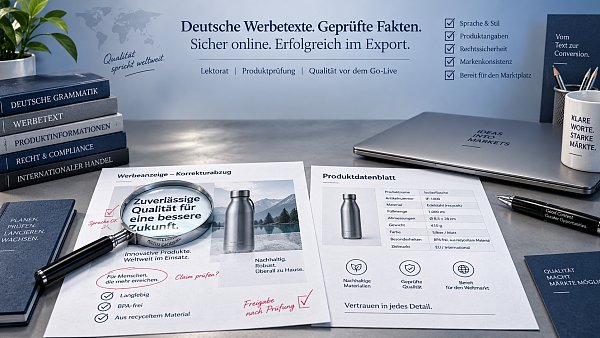
Complete Pre-Launch Checks in the Order of “Facts—Wording—Presentation”
First, verify the facts. Mark each performance, price, delivery, service, and qualification claim in the copy, and check it against company documentation. Remove claims that cannot be substantiated or narrow their scope; do not try to retain them merely by adding vague qualifiers.
Then review the German wording. Check whether the sentences read like natural business communication, terminology is consistent, forms of address are uniform, and calls to action are clear. Ask reviewers to explain their proposed changes and distinguish essential corrections from optional stylistic refinements. This helps prevent repeated review rounds from turning into debates over personal wording preferences.
Next, compare the ad with the landing page. The product, services, and conditions promised in the ad should be explained on the target page. If an ad invites users to “get a quote” but the page offers only a generic contact option, or the form asks for a lot of irrelevant information, natural language alone cannot make up for the poor user experience.
Finally, check how the copy appears in practice. German compound words can be long, and layouts that accommodate Chinese or English may not work for German. Check line breaks on mobile devices, button width, headline truncation, and ad platform character limits. For responsive search ads, also review combinations of headlines and descriptions to ensure they do not create redundant or contradictory claims or omit necessary qualifications.
Keep version records for reviewed copy and verify each item in the advertising platform before launch. Otherwise, approved wording can become incorrect again when it is copied, shortened, or changed at the last minute.
Even After Native-Speaker Review, Validate Performance Against Campaign Results
Review addresses language and information risks that can be identified before launch; it does not guarantee higher click-through rates or more qualified inquiries. Clicks, form submissions, and inquiry quality are also affected by keywords, audiences, offers, and page experience, so poor performance should not be attributed entirely to the German wording.
If the budget is limited, prioritize high-impression headlines, core selling points, price and delivery commitments, calls to action, and the landing page above the fold, then gradually review the remaining content. Approved terminology and sentence structures can be incorporated into templates, but new selling points, broader claims, or a change in target market should trigger a new review. AI improves drafting efficiency, native-language reviewers check the wording, and business and technical specialists confirm the facts and applicable limits. This division of responsibilities is more reliable than simply aiming for copy that “sounds native.”
Related Articles
 Building a Website for the Russian-Speaking Market: Is Translating the Website Enough?
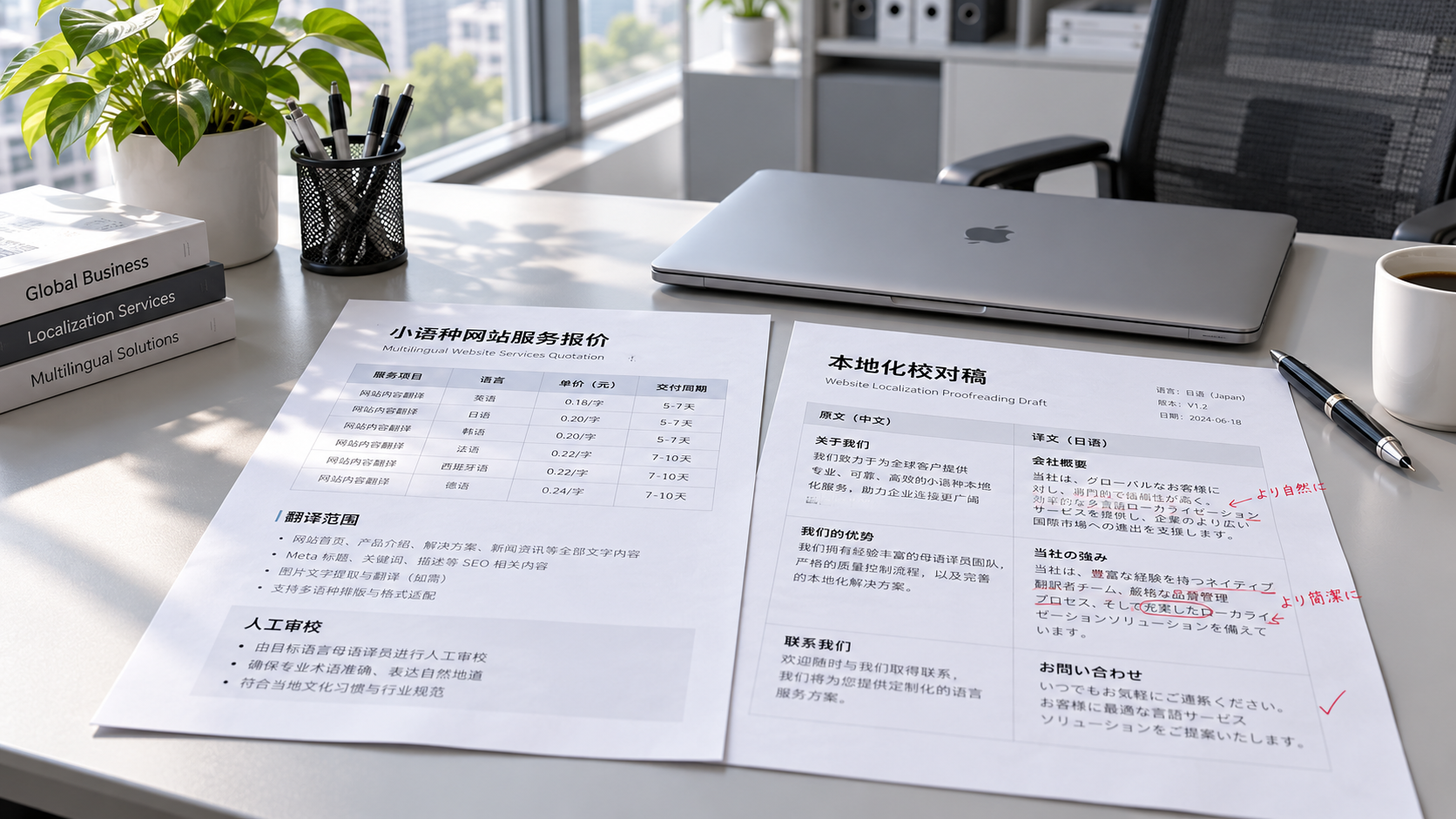
 Does the quote for building a website in a less commonly used language include localization and translation?
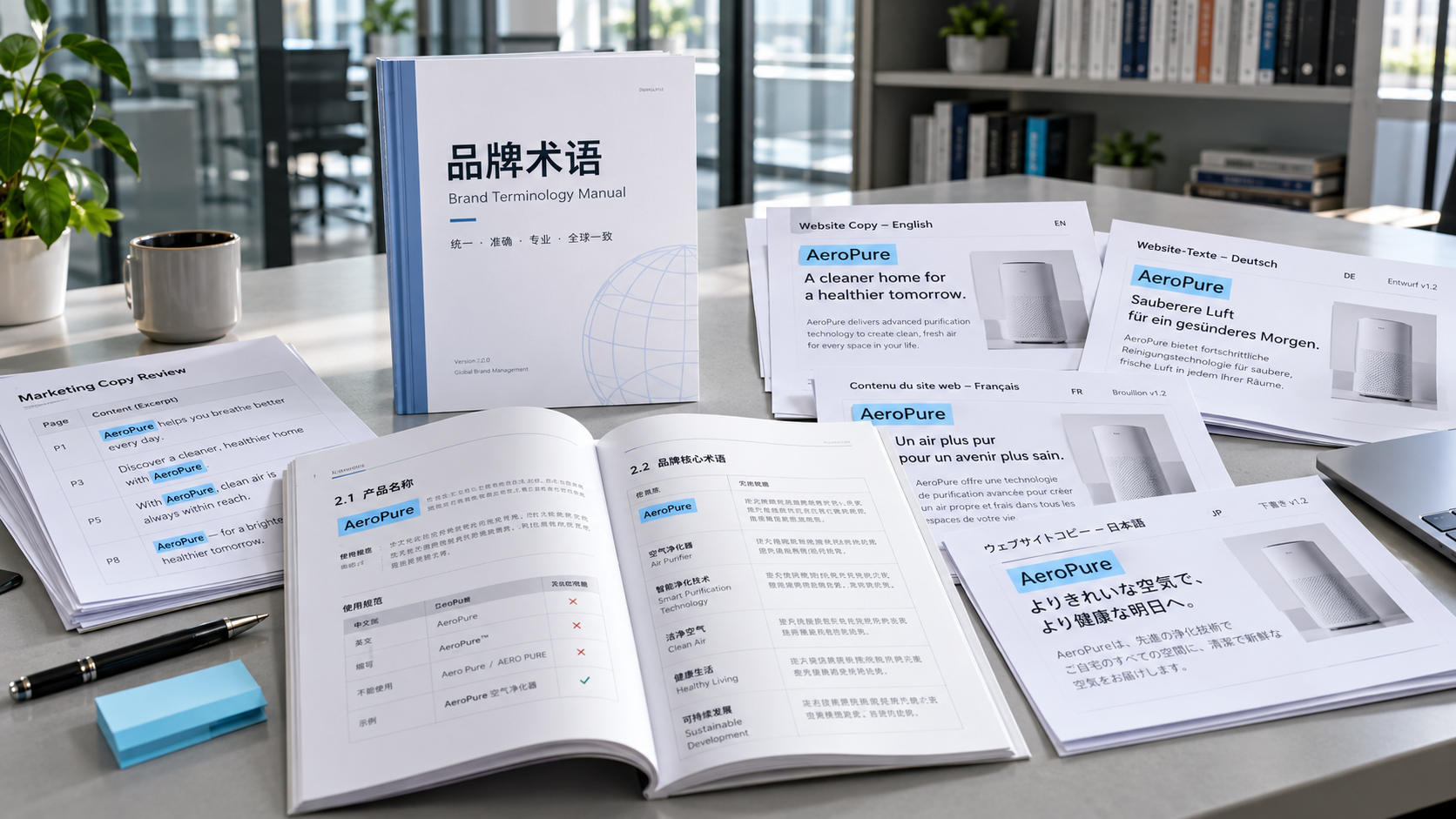
 Can an AI translation platform standardize brand terminology across multilingual websites?

Related Products
 Yiyingbao SaaS Intelligent Website Building and Marketing SystemYiyingbao SaaS Intelligent Website Building and Marketing System, AI-powered no-code website building, rapid creation of multilingual B2B international websites in 10 minutes, global server acceleration, AI-powered SEO optimization, helping businesses connect efficiently with global markets. The perfect integration of technology and operation makes building an international trade website remarkably simple
 AI+SEM Intelligent Advertising Marketing SystemAI+SEM drives intelligent ad creation, empowering full-funnel precision advertising marketing. The system automatically generates weekly/monthly reports, AI recommends keywords and target countries, monitors core metrics in real-time with intelligent alerts, and enables one-click high-conversion ad solutions to help quickly acquire customers and improve ROI.
 AI+SEO Dual-Engine System Optimization ServicesYiyingbao’s AI+SEO dual-engine optimization system helps foreign trade enterprises acquire high-quality organic traffic through AI-powered keyword research, content generation, and comprehensive technical optimization, significantly improving search rankings and conversion rates.
 AI+SNS Social Media Marketing SystemYingbao AI+SNS Social Media Marketing System - Precision social capture for the social media era. Supports one-click content synchronization across major platforms like Facebook and LinkedIn. AI intelligently rewrites posts for enhanced relevance. 24/7 AI customer service and user profiling analysis empower businesses to efficiently expand into global markets.
 AI+SEO营销解决方案易营宝AI+SEO营销解决方案,通过AI批量写作、智能生成TDK、精准关键词扩词等功能,全面优化网站SEO效果,提升流量与转化率。助力企业构建高效智能网站新生态。
 AI+SEM Advertising Marketing SolutionsAI+SEM Advertising Marketing Solution leverages AI technology to deeply empower SEM ad campaigns. It automatically generates weekly/monthly reports using AI, presenting account data across multiple dimensions for comprehensive insights into campaign performance and trends. The system precisely recommends keywords and target countries, intelligently generates high-conversion ad copy, and enables one-click activation of efficient campaign plans to help businesses rapidly acquire customers. Simultaneously, it monitors core metrics in real time, intelligently identifies abnormal fluctuations, and issues timely alerts to ensure stable, high-return advertising results.
 Domain Name ServicesEasyWin provides professional domain name services, including intelligent queries, one-stop registration, brand protection, and full lifecycle management, helping businesses build a digital brand image.
 EasyOperate B2C Cross-Border E-Commerce Platform & Independent WebsiteEasyStore B2C Cross-border E-commerce Independent Store is an intelligent website building and cross-border e-commerce integrated solution independently developed by EasyStore Information Technology (Beijing) Co., Ltd. The system is specially designed for small and medium-sized as well as large export enterprises, integrating 'website building, operation, marketing, advertising, and conversion' into one, helping enterprises quickly establish cross-border e-commerce independent stores to achieve brand globalization and global sales growth.
The platform supports multiple languages, multiple currencies, and multi-channel marketing, with built-in AI intelligent translation and SEO optimization systems, suitable for mainstream markets such as Southeast Asia, Europe and America, Latin America, and the Middle East, assisting Chinese manufacturing enterprises in efficiently deploying international e-commerce strategies. SSL证书易营宝提供专业SSL安全证书服务,包括单域名和泛域名证书,确保网站数据传输加密、身份验证和完整性保护,助力企业建立安全可信的在线业务环境。









