









- APEC Shenzhen Spotlight: Cross-Border E-Commerce Orders Promote Asia-Pacific Trade and Economic CooperationNov 08, 2026View details
- China-Europe Railway Express and CIIE Hold Business Matchmaking Event, Focusing on Cross-Border E-commerce B2B ExportsNov 07, 2026View details
- China’s Ministry of Commerce Responds to Additional Charges on Low-Value Imports Imposed by the EUNov 06, 2026View details
- Two Internet Development Reports Released at the 2026 World Internet ConferenceNov 05, 2026View details
- Internet Business Revenue of Enterprises Above the Designated Size Reached RMB 1.716 Trillion in the First Three Quarters, with Profits Up 17.6%Nov 05, 2026View details
- Shopify's Third-Quarter Revenue and GMV Fall Short of Expectations, Sending Shares Tumbling Before the Market OpensNov 04, 2026View details
Can AI content localization cause errors in brand terminology?
Can AI content localization result in errors with brand terminology? Yes, and this does not occur only in low-quality translations. AI can usually understand the meaning of a sentence quickly, but it may not know whether a term is a brand name, product model, feature name, or established industry expression. Especially in websites, advertising landing pages, product catalogs, and social media content, a mistranslated, incorrectly altered, or inconsistent term can affect brand recognition, customer understanding, and even create obstacles in sales communication.
However, this does not mean AI is unsuitable for localization. The real criterion is whether a company has established terminology rules, provided sufficient context, and set up human review before publication. Simply put, AI is suitable for handling a large volume of initial work, while brand terminology needs to be treated as a manageable content asset.
Why AI can easily mistranslate brand terminology
Ordinary words can usually be translated based on context, but brand terminology often has special constraints. An English word may mean “quick connection” in everyday contexts, yet be an untranslated feature name in a corporate product; a product name may look like an ordinary word, and AI may translate it freely as a descriptive term.
There are four main types of common errors:
- Brand names are translated or rewritten: Registered trademarks, product line names, and software module names are incorrectly localized, resulting in multiple versions appearing across different pages.
- Inconsistent terminology: A website translates it as “smart quotation,” while an advertisement changes it to “automatic quotation,” making it difficult for customers to determine whether they refer to the same feature.
- Misunderstanding of industry context: B2B manufacturing, cross-border e-commerce, software services, and consumer goods use different conventions of expression. A literal translation may be accurate but not match how the target market reads.
- Tone and meaning are overstated: “Supports a certain feature” is written as “guarantees results,” and “suitable for” is changed to “built for all businesses.” Such issues are not merely translation errors; they also involve marketing compliance and brand commitments.
Therefore, when evaluating whether AI localization is reliable, it is not enough to see whether individual sentences read smoothly. It is also necessary to examine terminology identity, scope of use, tone strength, and consistency across pages.
How do brand terminology risks differ across localization methods?
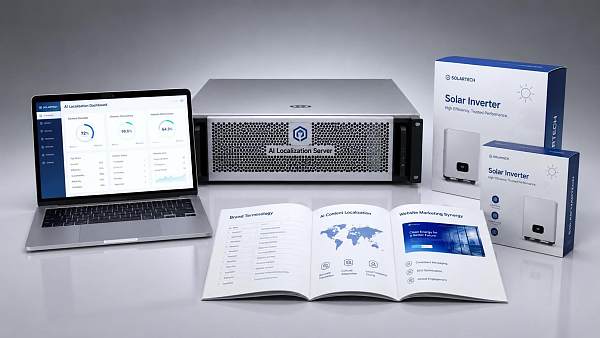
Many companies choose between “AI translation” and “human translation,” but a more practical way to compare them is by content risk. When generating product descriptions for dozens of markets in bulk, fully manual processing may involve high costs and long lead times. However, homepage brand slogans, core product names, and advertising promises are not suitable for direct publication without review. Combining AI with a terminology database and focused human review generally makes it easier to balance efficiency and accuracy.
A glossary is not simply a word list
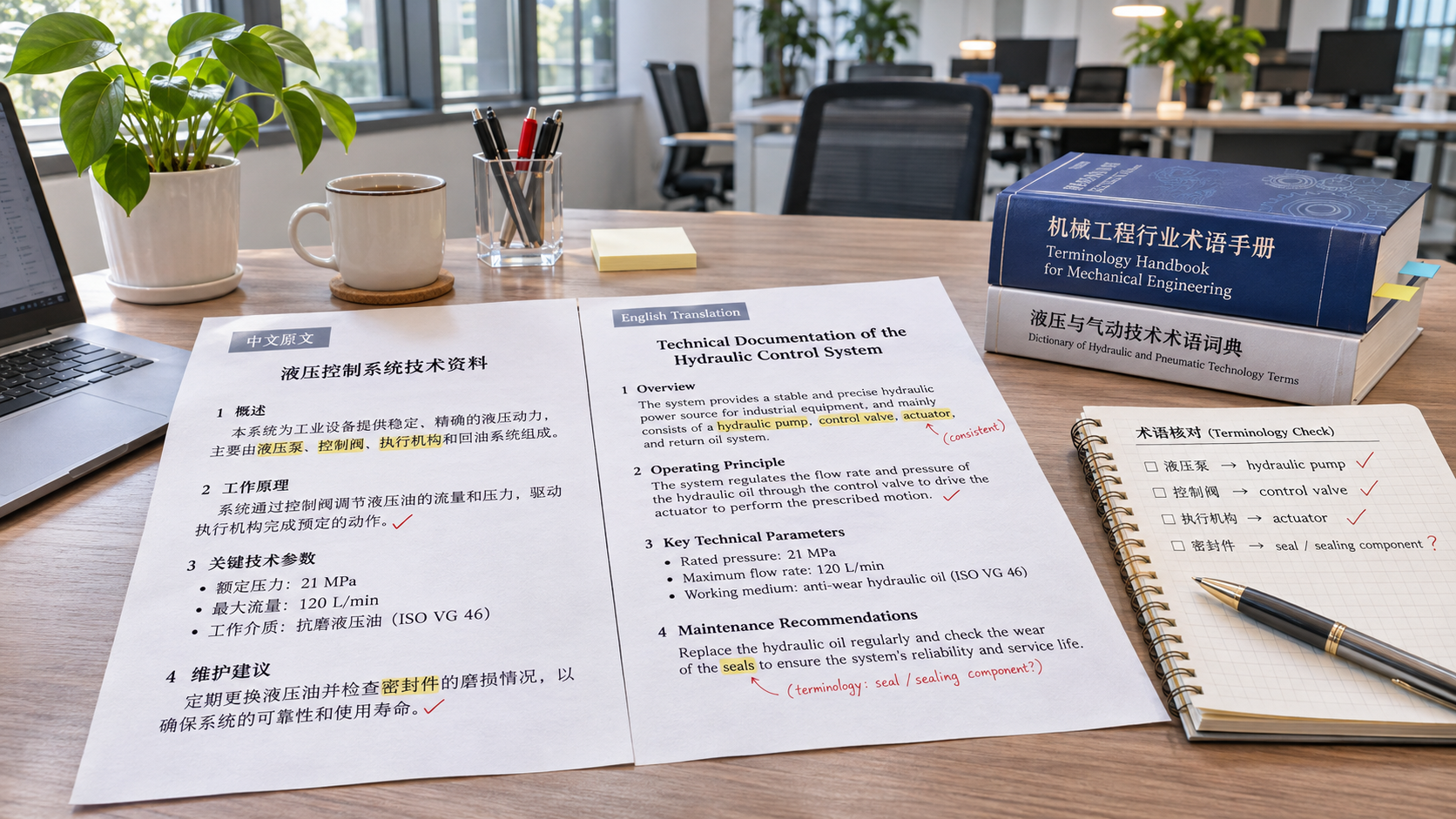
Effective brand terminology management should record at least four items: source text, approved translation, prohibited usage, and usage notes. For example, if a feature name must remain in English, it should be clearly marked as “Do not translate.” If a product line name needs to retain its brand spelling on German pages, this should also be included in the rules rather than left to an editor’s ad hoc judgment.
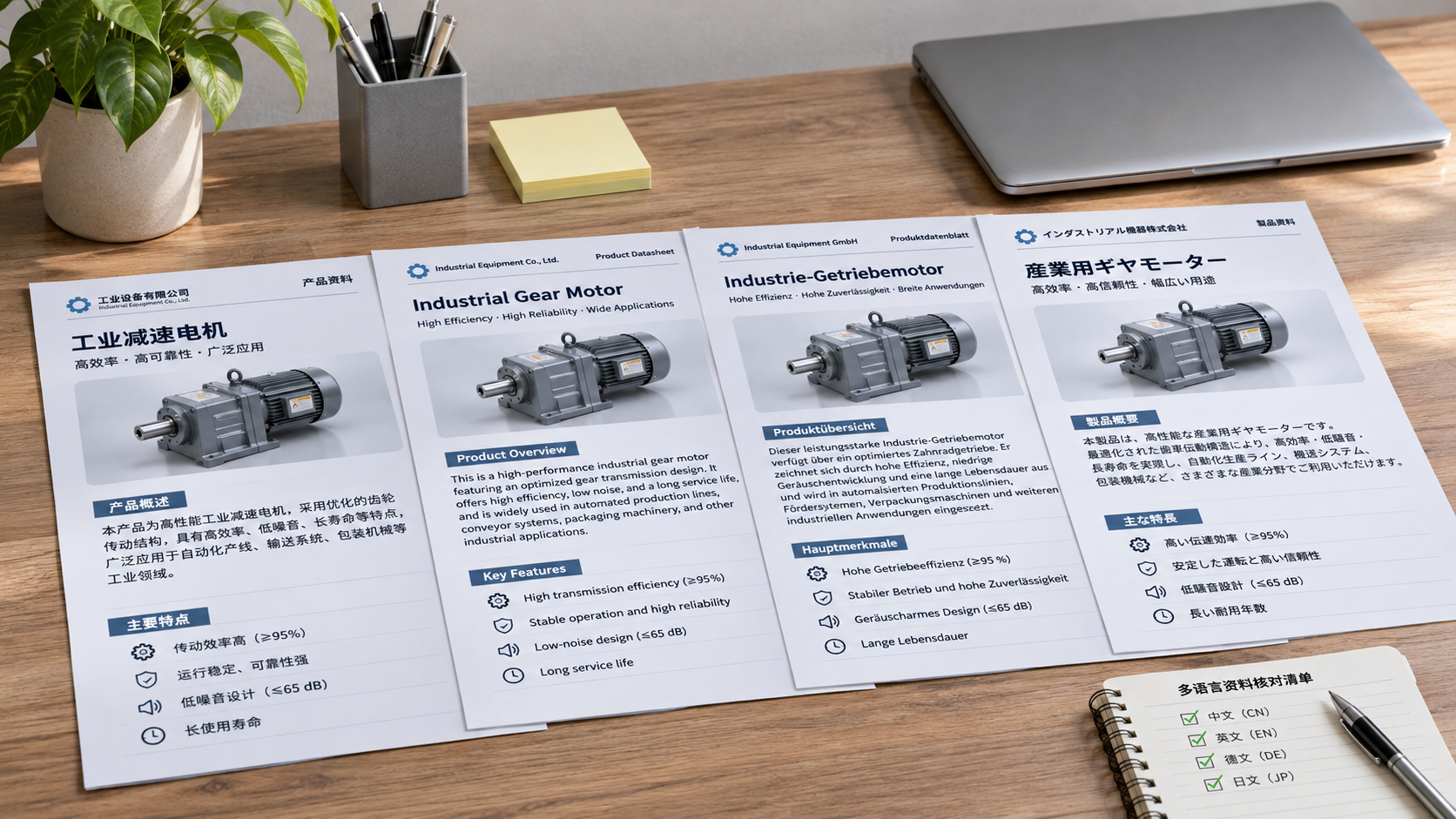
For foreign trade companies and teams expanding brands overseas, the glossary should also distinguish among different content types. Website product pages emphasize accuracy and clarity; Google Ads must comply with character limits and search phrasing; social media may allow more natural, conversational wording. The same English word does not necessarily need exactly the same sentence structure in these contexts, but core brand and product terms cannot be changed arbitrarily.
The glossary also requires ongoing maintenance. If a product is renamed, a feature is upgraded, or market positioning is adjusted, and old translations remain in the system, AI will continue using them. A more reliable approach is to retain versions, mark effective dates, and place deprecated terms on a prohibited list.
Which content requires human review?
Human review does not need to be distributed evenly across every sentence. Instead, it should prioritize high-risk content. The following areas are usually worth checking item by item:
- Brand and product names: Confirm capitalization, hyphens, trademark symbols, and whether the original wording needs to be retained.
- Feature and technical terminology: Check whether the same feature is named consistently across product pages, help centers, advertisements, and sales materials.
- Numbers, units, and conditions: Information such as capacity, dimensions, delivery time, and scope of application must not change due to language conversion.
- Marketing claims: The strength of words such as “improve,” “reduce,” “guarantee,” and “leading” must remain consistent with the original facts.
- Local cultural expression: Slogans, wordplay, holiday content, and social media copy need to be assessed by people familiar with the target market to determine whether they sound natural.
If a company uses AI to generate multilingual website content in bulk, it should also add “cross-page spot checks.” A single page may appear problem-free, but that does not mean the entire website has no terminology drift. You can randomly select the homepage, product pages, blog, forms, and advertising landing pages, and compare them against the glossary to check whether the same concept is expressed in different ways.
When can AI localization be used with confidence?
AI localization is highly usable when content has a clear structure, brand materials are complete, the number of terms is manageable, and there are review checkpoints in the publication process. For example, product parameter organization, regular section translation, initial SEO article drafts, and social media content variations can all be completed by AI first, with editors then handling key sections.
If a company does not have unified product naming and the Chinese source copy itself contains multiple expressions, directly asking AI to translate will often expand the problem across multiple language versions. In this case, the source-language content should first be organized, and standard wording for brand terms, product terms, and feature terms should be determined before bulk localization begins.
For companies that need to operate multilingual websites, Google SEO, advertising campaigns, and overseas social media simultaneously, terminology management and content publishing should ideally be integrated into the same process. EasyMarketing provides integrated services such as intelligent website building, SEO optimization, advertising marketing, and multilingual websites. The value of this type of platform solution lies not only in generating translations, but also in ensuring that website pages, marketing content, and different channels use the same set of brand expression rules. When selecting a similar solution, companies should focus on whether it supports terminology maintenance, content review, version management, and market-specific adjustments, rather than comparing generation speed alone.
A quick pre-publication assessment method
Before AI-localized content goes live, three questions can be used for a quick screening:
- Are brand names, product names, and feature names fully consistent with the master glossary?
- Can target customers accurately understand what the product does and which results are only conditional descriptions?
- After this text is placed on a website, in an advertisement, or on social media, does its tone suit the channel and local user habits?
If all three questions can be answered clearly, AI can usually serve as a stable production tool. If terminology has not been finalized, the source text is ambiguous, or the content involves core brand commitments, machine output should not be treated directly as the final version. Whether AI content localization produces brand terminology errors ultimately depends on whether a company upgrades “translation” into a complete process of “terminology management plus content review.”
Related Articles
 How can you evaluate the terminology accuracy of Yiyingbao’s AI translation engine?
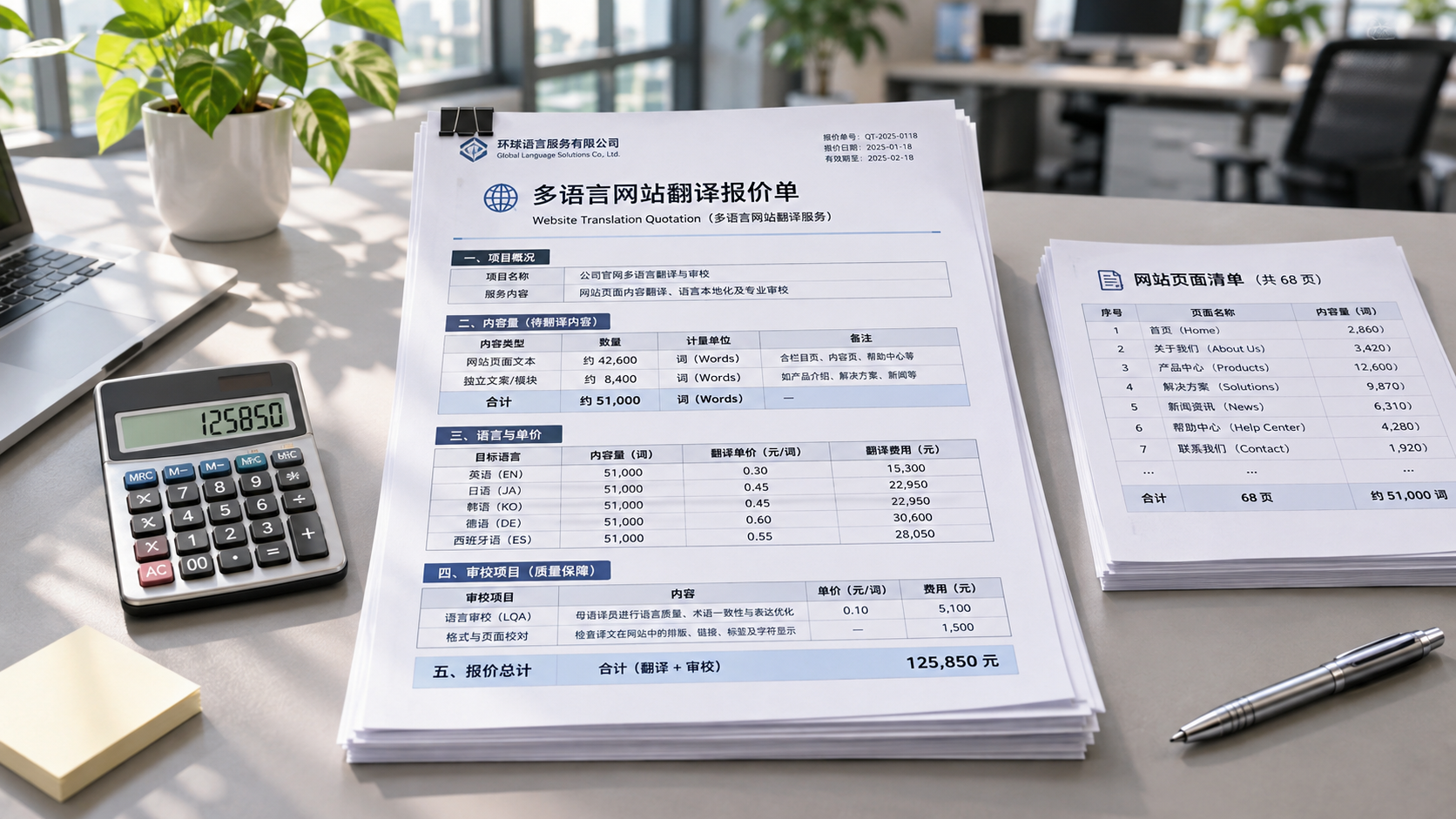
 How Are Translation Costs for Multilingual Website Solutions for International Trade Calculated?
 How do you set up a language switcher for multilingual pages in a smart website builder?
Related Products
 Yiyingbao SaaS Intelligent Website Building and Marketing SystemYiyingbao SaaS Intelligent Website Building and Marketing System, AI-powered no-code website building, rapid creation of multilingual B2B international websites in 10 minutes, global server acceleration, AI-powered SEO optimization, helping businesses connect efficiently with global markets. The perfect integration of technology and operation makes building an international trade website remarkably simple
 AI+SEM Intelligent Advertising Marketing SystemAI+SEM drives intelligent ad creation, empowering full-funnel precision advertising marketing. The system automatically generates weekly/monthly reports, AI recommends keywords and target countries, monitors core metrics in real-time with intelligent alerts, and enables one-click high-conversion ad solutions to help quickly acquire customers and improve ROI.
 AI+SEO Dual-Engine System Optimization ServicesYiyingbao’s AI+SEO dual-engine optimization system helps foreign trade enterprises acquire high-quality organic traffic through AI-powered keyword research, content generation, and comprehensive technical optimization, significantly improving search rankings and conversion rates.
 AI+SNS Social Media Marketing SystemYingbao AI+SNS Social Media Marketing System - Precision social capture for the social media era. Supports one-click content synchronization across major platforms like Facebook and LinkedIn. AI intelligently rewrites posts for enhanced relevance. 24/7 AI customer service and user profiling analysis empower businesses to efficiently expand into global markets.
 AI+SEO营销解决方案易营宝AI+SEO营销解决方案,通过AI批量写作、智能生成TDK、精准关键词扩词等功能,全面优化网站SEO效果,提升流量与转化率。助力企业构建高效智能网站新生态。
 AI+SEM Advertising Marketing SolutionsAI+SEM Advertising Marketing Solution leverages AI technology to deeply empower SEM ad campaigns. It automatically generates weekly/monthly reports using AI, presenting account data across multiple dimensions for comprehensive insights into campaign performance and trends. The system precisely recommends keywords and target countries, intelligently generates high-conversion ad copy, and enables one-click activation of efficient campaign plans to help businesses rapidly acquire customers. Simultaneously, it monitors core metrics in real time, intelligently identifies abnormal fluctuations, and issues timely alerts to ensure stable, high-return advertising results.
 Domain Name ServicesEasyWin provides professional domain name services, including intelligent queries, one-stop registration, brand protection, and full lifecycle management, helping businesses build a digital brand image.
 EasyOperate B2C Cross-Border E-Commerce Platform & Independent WebsiteEasyStore B2C Cross-border E-commerce Independent Store is an intelligent website building and cross-border e-commerce integrated solution independently developed by EasyStore Information Technology (Beijing) Co., Ltd. The system is specially designed for small and medium-sized as well as large export enterprises, integrating 'website building, operation, marketing, advertising, and conversion' into one, helping enterprises quickly establish cross-border e-commerce independent stores to achieve brand globalization and global sales growth.
The platform supports multiple languages, multiple currencies, and multi-channel marketing, with built-in AI intelligent translation and SEO optimization systems, suitable for mainstream markets such as Southeast Asia, Europe and America, Latin America, and the Middle East, assisting Chinese manufacturing enterprises in efficiently deploying international e-commerce strategies. SSL证书易营宝提供专业SSL安全证书服务,包括单域名和泛域名证书,确保网站数据传输加密、身份验证和完整性保护,助力企业建立安全可信的在线业务环境。









