









- Can the average annual growth rate reflect real opportunities in overseas markets?Oct 07, 2026View details
- Which customer acquisition channels will be affected by cross-border marketing trends in 2026?Sep 06, 2026View details
- Which homogenization risks should be considered in an analysis of the AI-powered website building industry?Aug 30, 2026View details
- How Will AI Marketing Trends 2026 Change Advertising Budget AllocationAug 28, 2026View details
- Is the EV SSL certificate market shrinking or upgrading? How should companies assess certificate procurement?Aug 11, 2026View details
- Why the old AMP SEO 2020 practices no longer work and what has changed in current optimization prioritiesAug 02, 2026View details
How Can an AI-Powered Multilingual Website Translation System Reduce the Risk of Terminology Errors?
How Can an AI Multilingual Website Translation System Reduce the Risk of Terminology Errors?
An AI multilingual website translation system can significantly improve the efficiency of launching overseas websites, but mistranslation of technical terms remains one of the main issues operators need to guard against. Errors in product models, material names, industry standards, or service terms can, at best, confuse customers and, at worst, damage lead quality and brand credibility.
The key to reducing risk is not repeatedly clicking “Translate again,” but building a manageable terminology database, setting content review priorities, and creating a closed-loop process through contextual understanding and human verification. For an international trade website, translation accuracy is itself part of conversion performance.
First, identify the content where mistranslations are least acceptable
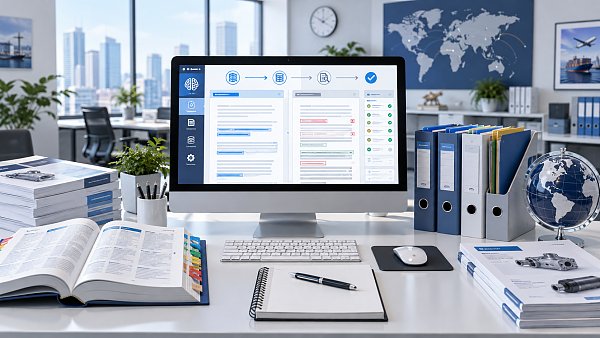
Operators should not handle every page to the same standard. Company introductions and news updates can prioritize efficiency, while product specifications, technical specifications, certification names, payment terms, shipping conditions, and after-sales commitments must prioritize accuracy.
For example, “stainless steel” may refer to stainless steel as a material in one product context, or be associated with a specific grade in another. “Tolerance” usually means a dimensional or manufacturing tolerance, not “putting up with” something in everyday usage. Literal translation without the page context can make technical content seem fluent while still sounding unfamiliar to industry professionals.
Before publication, it is advisable to classify website content into high, medium, and low risk levels. High-risk content includes product pages, downloadable materials, quotation pages, and compliance pages; medium-risk content includes case studies, solutions, and FAQs; low-risk content includes blogs, event news, and general brand stories.
High-risk pages should undergo human review and should not rely entirely on automatic machine publication. When targeting different markets such as Europe and the United States, the Middle East, Japan, and South Korea, operators should also check units, specification formats, trade terms, and compliance language to avoid reviewing words alone while overlooking their commercial meaning.
Build a terminology database to give the system a consistent translation reference
A terminology database is one of the most effective foundational tools for reducing mistranslation risk. It should be more than a simple bilingual word list: it should record the source-language term, the standard target-language translation, the relevant product line, applicable context, translations to avoid, and any necessary notes and examples.
Manufacturers can start by including product series names, component names, materials, processes, units of measurement, quality systems, and inspection items. Cross-border e-commerce brands should also include product category attributes, packaging specifications, key features, usage restrictions, and commonly searched platform keywords.
When entering terms, operators should retain the original forms of brand names, registered trademarks, product models, and internal codes. Some content should not be translated, such as the model “XH-200,” certification numbers, and specific technical abbreviations. The system should allow these to be designated as fixed, untranslated items.
The terminology database should also define rules for handling synonyms. For example, “供应商” might be translated as “supplier,” “vendor,” or “manufacturer”; the appropriate choice should depend on the company’s business positioning. Consistent terminology reduces variations across pages and helps overseas customers and search engines understand the website’s subject matter.
Use contextual understanding to avoid distortions caused by sentence-by-sentence translation
A high-quality AI multilingual website translation system should not translate isolated sentences alone. It should use page titles, category classifications, product attributes, and surrounding paragraphs to determine meaning. When uploading or editing content, operators should also preserve complete paragraphs and a clear content structure wherever possible.
The same word may need to be handled differently on a product page, in a technical document, and in marketing copy. “Performance” usually means “performance” in equipment specifications, but “results” or “effectiveness” may be more suitable in an advertising headline. The more complete the context, the more reliable the system’s judgment.
For this reason, it is not advisable to break a long Chinese text into scattered short sentences, translate them separately, and then manually piece them back together on the page. Although this may seem convenient for editing, it can lose logical connections, references, and consistency of tone, making English, Japanese, or other language pages sound awkward or even ambiguous.
For pages containing tables, specifications, and image-text modules, check whether the system can distinguish between body text, buttons, image captions, SEO titles, and Meta Descriptions. Each field has different length limits and communication goals, so body copy should not be copied directly into every field.
What should human reviewers check first?
Human reviewers do not need to pursue literary polish in every sentence, but they should focus on details that affect business outcomes. First, check proper nouns, product models, units, percentages, dates, currencies, and contact details to ensure that nothing has been omitted, misplaced, or reformatted.
Second, check whether the technical logic holds. For example, “支持定制” should not be mechanically translated as “support customization.” Expressions such as “customization available” or “custom solutions” may be more natural in overseas B2B communications, though the right choice still depends on the actual business commitment.
Third, check how natural the content sounds in the target market. Even if an AI-generated translation is grammatically correct, it may not match local buyers’ search and reading habits. Product headlines should balance core keywords with a clear product definition. Avoid copying Chinese rhetorical phrasing if it makes the information vague or causes keywords to be lost.
A “two-person division of responsibilities” can be used during review: business personnel confirm technical details and commitments, while operations personnel check page display, keywords, links, and CTA buttons. This helps ensure translators do not overlook product details and business personnel do not miss website SEO and user experience issues.
Use version control and feedback mechanisms to keep reducing recurring errors
Terminology risks do not disappear automatically after a website first goes live. When a company adds products, changes models, enters new markets, or updates certification information, existing translations may need to be revised accordingly. An AI multilingual website translation system should therefore retain page versions, revision histories, and terminology update dates.
When the sales team finds that overseas customers often misunderstand a term, or that a landing page has an unusually high bounce rate, operations personnel should review the corresponding translation. Customer emails, inquiry forms, search term reports, and customer service records are all valuable sources of evidence for assessing whether terminology is accurate and easy to understand.
For recurring issues, do not make temporary word changes on individual pages alone. Add the correction to the terminology database or translation rules so the system can carry the correct standard forward when generating new pages or adding new language versions, reducing the chance of the same errors recurring.
The publication process should also include spot checks. After each batch translation, randomly select pages from different product lines, languages, and page types for review. If frequently used terms are translated incorrectly, pause batch publication, correct the rules, and then continue generating content.
When choosing a system, prioritize controllability over translation speed
A genuinely useful system for operators should support custom terminology databases, designated untranslated terms, batch review, page-level editing, and multilingual version management. Tools that simply promise “one-click translation into dozens of languages” but do not allow terminology rules to be controlled often struggle to meet the needs of long-term corporate website operations.
Also consider whether the system can work alongside smart website building, SEO optimization, and overseas marketing workflows. Translated pages need to retain the correct heading hierarchy, URL conventions, image Alt information, and internal links so users can understand the content and search engines such as Google can index it effectively.
AI website-building and overseas marketing platforms such as 易营宝, which are designed for businesses expanding internationally, are better suited to managing multilingual content as part of website operations. Operators can maintain consistent terminology and brand language while building websites, updating content, optimizing SEO, and maintaining advertising landing pages.
Summary: Turn AI translation into a reviewable, continuously improving operational process
Reducing terminology errors with an AI multilingual website translation system does not mean completely replacing human review. It means letting AI generate content efficiently while terminology databases, contextual understanding, and human review work together to ensure accuracy. Clear review responsibilities must be established for high-risk content.
For day-to-day operations, start by identifying key terminology, then review pages according to their risk levels and continuously incorporate customer feedback into system rules. This helps build stable multilingual content quality over time. The more controlled the translation process, the more accurately an overseas website can communicate product value and generate genuine inquiries.
Related Articles

Related Products
 Yiyingbao SaaS Intelligent Website Building and Marketing SystemYiyingbao SaaS Intelligent Website Building and Marketing System, AI-powered no-code website building, rapid creation of multilingual B2B international websites in 10 minutes, global server acceleration, AI-powered SEO optimization, helping businesses connect efficiently with global markets. The perfect integration of technology and operation makes building an international trade website remarkably simple
 AI+SEM Intelligent Advertising Marketing SystemAI+SEM drives intelligent ad creation, empowering full-funnel precision advertising marketing. The system automatically generates weekly/monthly reports, AI recommends keywords and target countries, monitors core metrics in real-time with intelligent alerts, and enables one-click high-conversion ad solutions to help quickly acquire customers and improve ROI.
 AI+SEO Dual-Engine System Optimization ServicesYiyingbao’s AI+SEO dual-engine optimization system helps foreign trade enterprises acquire high-quality organic traffic through AI-powered keyword research, content generation, and comprehensive technical optimization, significantly improving search rankings and conversion rates.
 AI+SNS Social Media Marketing SystemYingbao AI+SNS Social Media Marketing System - Precision social capture for the social media era. Supports one-click content synchronization across major platforms like Facebook and LinkedIn. AI intelligently rewrites posts for enhanced relevance. 24/7 AI customer service and user profiling analysis empower businesses to efficiently expand into global markets.
 AI+SEO营销解决方案易营宝AI+SEO营销解决方案,通过AI批量写作、智能生成TDK、精准关键词扩词等功能,全面优化网站SEO效果,提升流量与转化率。助力企业构建高效智能网站新生态。
 AI+SEM Advertising Marketing SolutionsAI+SEM Advertising Marketing Solution leverages AI technology to deeply empower SEM ad campaigns. It automatically generates weekly/monthly reports using AI, presenting account data across multiple dimensions for comprehensive insights into campaign performance and trends. The system precisely recommends keywords and target countries, intelligently generates high-conversion ad copy, and enables one-click activation of efficient campaign plans to help businesses rapidly acquire customers. Simultaneously, it monitors core metrics in real time, intelligently identifies abnormal fluctuations, and issues timely alerts to ensure stable, high-return advertising results.
 Domain Name ServicesEasyWin provides professional domain name services, including intelligent queries, one-stop registration, brand protection, and full lifecycle management, helping businesses build a digital brand image.
 EasyOperate B2C Cross-Border E-Commerce Platform & Independent WebsiteEasyStore B2C Cross-border E-commerce Independent Store is an intelligent website building and cross-border e-commerce integrated solution independently developed by EasyStore Information Technology (Beijing) Co., Ltd. The system is specially designed for small and medium-sized as well as large export enterprises, integrating 'website building, operation, marketing, advertising, and conversion' into one, helping enterprises quickly establish cross-border e-commerce independent stores to achieve brand globalization and global sales growth.
The platform supports multiple languages, multiple currencies, and multi-channel marketing, with built-in AI intelligent translation and SEO optimization systems, suitable for mainstream markets such as Southeast Asia, Europe and America, Latin America, and the Middle East, assisting Chinese manufacturing enterprises in efficiently deploying international e-commerce strategies. SSL证书易营宝提供专业SSL安全证书服务,包括单域名和泛域名证书,确保网站数据传输加密、身份验证和完整性保护,助力企业建立安全可信的在线业务环境。









