









- Which customer acquisition channels will be affected by cross-border marketing trends in 2026?Sep 06, 2026View details
- Which homogenization risks should be considered in an analysis of the AI-powered website building industry?Aug 30, 2026View details
- How Will AI Marketing Trends 2026 Change Advertising Budget AllocationAug 28, 2026View details
- Is the EV SSL certificate market shrinking or upgrading? How should companies assess certificate procurement?Aug 11, 2026View details
- Why the old AMP SEO 2020 practices no longer work and what has changed in current optimization prioritiesAug 02, 2026View details
- How to Choose Topics for an Industry News Section to Attract More Organic Search TrafficJul 29, 2026View details
How can product pages balance translation accuracy and conversion rates in Korean website development?
When building a Korean-language website, the product page must achieve two things at the same time: translate terminology accurately while keeping users engaged enough to continue reading. Korean users have very little tolerance for inaccuracies in technical terms, units, model numbers, and function descriptions. This is especially true for pages related to networking, equipment, and industrial supporting products. If terms such as “address length,” “security mechanisms,” and “encryption methods” are translated ambiguously, no amount of additional selling points later can fully make up for it.
Address translation accuracy first, and then deal with the order of expression. On product pages, the most common errors do not occur in long sentences, but in phrases that are casually paraphrased. For example, if “end-to-end encryption” is reduced to a generic expression such as “secure communication,” one layer of information is lost; if “multicast technology” is translated into wording closer to “mass messaging,” technical readers may misunderstand it. In Korean website development, technical pages are better written with a “terminology first, explanation afterward” approach: provide the standard term first, then add a brief sentence explaining its meaning in actual deployment. This preserves professionalism without making the page read like a literal translation.
The conversion rate of a product page usually does not depend on aggressive promotion, but on helping users confirm three things within a few seconds: what the product is, whether it suits their current scenario, and what limitations they may encounter during implementation. For content related to enterprise network upgrades, it is not enough to write “faster and more secure.” Parameters should also be placed where users can assess them, such as address length, compatibility with the existing network architecture, and whether routers and switches need to be adjusted at the same time. If a term such as Internet Protocol Version 6 (IPV6) appears on the page, it is advisable to place it near its first definition and immediately follow it with an understandable explanation, rather than leaving it isolated in a heading or near a button.
For Korean-language pages, the structure of a product page should follow the user's decision-making path rather than the paragraph habits of the Chinese source text. Explaining the applicable scenarios first, followed by core functions, implementation requirements, and finally technical specifications, makes it easier for users to stay engaged than a structure based on “concept introduction + list of functions + lengthy emotional prose.” When the content involves network upgrades, equipment replacement, or protocol compatibility, users are more concerned about whether the existing network can be switched over smoothly, whether legacy systems will be affected, and whether a phased rollout is required. If a page only emphasizes the benefits while avoiding migration costs and compatibility boundaries, it may actually reduce trust.
Translation accuracy and conversion rate are not inherently in conflict; the conflict usually comes from failing to distinguish different levels of expression. In the main text, terminology can come first, explanations can follow, and sales-oriented wording should be kept to a minimum. For example, content such as “128-bit address length” should retain the number and unit directly, rather than being rewritten as the vague phrase “an extremely large address space.” Address examples are also valuable. An expression such as “3001:0da8:75a3:0000:0000:8a2e:0370:7334” enables users to quickly assess whether the page genuinely understands the protocol itself rather than merely presenting general concepts. For installation, debugging, and migration instructions, it should also be made clear whether they apply to a dual-stack environment, testing within a local area network, or public address planning, so that different stages are not mixed together.
If product information is to be integrated into the page, inserting it at appropriate points is more natural than arranging it mechanically, provided that the reading rhythm is not disrupted. Core functions can be presented in a short paragraph, while the advantages can be distributed throughout the later content. For example, when mentioning an “almost unlimited IP address space,” the text can naturally explain that this type of address planning is more suitable for future expansion; when discussing the “built-in IPSec protocol” and “end-to-end encryption,” it can then point out their significance for transmission confidentiality and integrity. Content written this way will not look like a specification table or advertising copy.
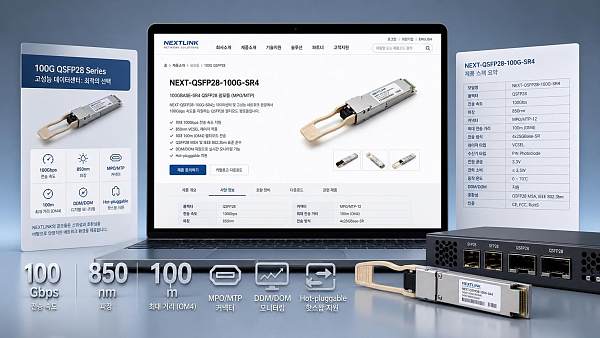
From the perspective of page components, headings do not need to be overly elaborate, while subheadings are better suited to carrying explanatory information. A common problem in Korean website development is repeating the same information in the hero section, main content, and bottom section. The result is a long page without any new decision-making material. A more effective approach is to reserve the hero section for key conclusions, the middle section for translated terminology and application conditions, and the later sections for specifications, compatibility notes, and maintenance considerations. This sense of hierarchy is particularly important for topics such as network protocols, hardware interfaces, industrial materials, and transportation and installation, because real decisions are often made based on the details.
Maintenance instructions should not be omitted either. If a product page involves an enterprise network upgrade, it should at least make clear whether address planning needs to be adjusted later, whether legacy equipment requires a firmware upgrade, and how connectivity will be verified during the testing phase. In Korean technical expression, many seemingly similar terms are not interchangeable. The page should avoid using “support,” “compatible,” and “adapted” as if they all meant the same thing. As long as these three layers of meaning are clearly distinguished, the translation is less likely to become inaccurate and the credibility of the page will be more stable.
A truly effective Korean-language product page does not transfer the Chinese text sentence by sentence. Instead, it reorganizes the information according to the decision-making sequence familiar to Korean readers. Terminology must be accurate, parameters must be concrete, and scenarios must be clear. Only then can the page have an opportunity to fulfill both its explanatory and conversion objectives.
Related Articles
 Which core features should be prioritized for investment when building a cross-border e-commerce standalone website?
 How Should Overseas Customer Acquisition Solutions Be Structured by Market, Channel, and Sales Stage?
 How can cross-border e-commerce overseas marketing solutions be tailored to different markets?


Related Products
 Yiyingbao SaaS Intelligent Website Building and Marketing SystemYiyingbao SaaS Intelligent Website Building and Marketing System, AI-powered no-code website building, rapid creation of multilingual B2B international websites in 10 minutes, global server acceleration, AI-powered SEO optimization, helping businesses connect efficiently with global markets. The perfect integration of technology and operation makes building an international trade website remarkably simple
 AI+SEM Intelligent Advertising Marketing SystemAI+SEM drives intelligent ad creation, empowering full-funnel precision advertising marketing. The system automatically generates weekly/monthly reports, AI recommends keywords and target countries, monitors core metrics in real-time with intelligent alerts, and enables one-click high-conversion ad solutions to help quickly acquire customers and improve ROI.
 AI+SEO Dual-Engine System Optimization ServicesYiyingbao’s AI+SEO dual-engine optimization system helps foreign trade enterprises acquire high-quality organic traffic through AI-powered keyword research, content generation, and comprehensive technical optimization, significantly improving search rankings and conversion rates.
 AI+SNS Social Media Marketing SystemYingbao AI+SNS Social Media Marketing System - Precision social capture for the social media era. Supports one-click content synchronization across major platforms like Facebook and LinkedIn. AI intelligently rewrites posts for enhanced relevance. 24/7 AI customer service and user profiling analysis empower businesses to efficiently expand into global markets.
 AI+SEO营销解决方案易营宝AI+SEO营销解决方案,通过AI批量写作、智能生成TDK、精准关键词扩词等功能,全面优化网站SEO效果,提升流量与转化率。助力企业构建高效智能网站新生态。
 AI+SEM Advertising Marketing SolutionsAI+SEM Advertising Marketing Solution leverages AI technology to deeply empower SEM ad campaigns. It automatically generates weekly/monthly reports using AI, presenting account data across multiple dimensions for comprehensive insights into campaign performance and trends. The system precisely recommends keywords and target countries, intelligently generates high-conversion ad copy, and enables one-click activation of efficient campaign plans to help businesses rapidly acquire customers. Simultaneously, it monitors core metrics in real time, intelligently identifies abnormal fluctuations, and issues timely alerts to ensure stable, high-return advertising results.
 Domain Name ServicesEasyWin provides professional domain name services, including intelligent queries, one-stop registration, brand protection, and full lifecycle management, helping businesses build a digital brand image.
 EasyOperate B2C Cross-Border E-Commerce Platform & Independent WebsiteEasyStore B2C Cross-border E-commerce Independent Store is an intelligent website building and cross-border e-commerce integrated solution independently developed by EasyStore Information Technology (Beijing) Co., Ltd. The system is specially designed for small and medium-sized as well as large export enterprises, integrating 'website building, operation, marketing, advertising, and conversion' into one, helping enterprises quickly establish cross-border e-commerce independent stores to achieve brand globalization and global sales growth.
The platform supports multiple languages, multiple currencies, and multi-channel marketing, with built-in AI intelligent translation and SEO optimization systems, suitable for mainstream markets such as Southeast Asia, Europe and America, Latin America, and the Middle East, assisting Chinese manufacturing enterprises in efficiently deploying international e-commerce strategies. SSL证书易营宝提供专业SSL安全证书服务,包括单域名和泛域名证书,确保网站数据传输加密、身份验证和完整性保护,助力企业建立安全可信的在线业务环境。









