









- Hengqin Cooperation Zone Shares Cross-Border E-Commerce Developments, Focusing on Macao-Hengqin Collaboration and International MarketsOct 24, 2026View details
- A Shenyang study highlights the development of the “cross-border e-commerce + industrial cluster” modelOct 24, 2026View details
- Three China Advertising Association GEO group standards take effect on October 23Oct 24, 2026View details
- Amazon Raises Fulfillment Fees Twice, Yet the Median Platform Fee Remains Around 40%Oct 22, 2026View details
- AliExpress and YouTube Partner to Expand Marketing Opportunities for Chinese Brands Going GlobalOct 22, 2026View details
- Publicis says AI marketing is developing at two speeds, with agentic AI helping win clientsOct 21, 2026View details
How to Choose an Overseas Server for a Photovoltaic and New Energy Foreign Trade Website
When opening the overseas website on Monday morning, there were no errors in the backend and the pages could load, but European customers reported that product images “took a long time to appear,” while the bounce rate of ad landing pages in the United States also began to show abnormalities. When building English-language sites, multilingual sites, or inquiry-generation sites, many photovoltaic and new energy companies first focus on page design and advertising budgets. Only when the website becomes slow in a certain market or search indexing becomes unstable do they realize that the problem may lie in the server location and deployment method.
Purchasing photovoltaic products often requires repeatedly reviewing module parameters, downloading specification sheets, comparing certification documents, and then submitting an inquiry. Slow page responses, interrupted downloads, or failed form submissions are not merely experience issues; they can also cause visitors who originally intended to make a purchase to leave directly. When choosing an overseas server for a photovoltaic and new energy foreign trade website, companies should not focus solely on the word “overseas,” but should assess where customers are located, what content the website carries, and how it will be promoted later.
Do Not Rush to Choose a Data Center: Who Does the Website Serve?
The closer the server is to visitors, the more likely it is to reduce access latency, but “being close” is not the only criterion. The actual situation of many companies is not straightforward: the website is maintained from headquarters in China, key markets are in the United States and Germany, and there are also plans to cover the Middle East or Southeast Asia. If a site is placed in a single region simply because hosting is inexpensive, the access experience in other markets may deteriorate significantly.
Start by breaking down your business objectives for the coming year: Which countries generate most inquiries? Where will Google Ads be targeted? Does the website have Russian, Spanish, Arabic, or other language versions? Does the resource center contain a large number of PDFs, installation manuals, and product videos? When target markets are concentrated, the server can be prioritized near the core customer region. When markets are dispersed, rather than repeatedly migrating the origin server, it is more suitable to consider stable overseas nodes combined with CDN content delivery.

Three Common Deployment Approaches: The Differences Go Beyond Speed
There is a common misconception here: interpreting a “US server” as the fastest choice for users worldwide. In reality, US nodes are often more suitable for North American users, but they are not inherently suited to every region. Another misconception is assuming that server location becomes irrelevant once a CDN is used. A CDN primarily accelerates cacheable static content; dynamic requests such as submitting inquiries, checking inventory, calling APIs, and logging into the backend still return to the origin site or related services. If the origin site is unstable, a CDN cannot completely conceal the problem.
Google Performance Is Not Determined by the Data Center Country Alone
Google does not automatically assign a higher ranking just because a website is deployed in a particular country. What truly tends to affect crawling and user experience includes frequent server inaccessibility, major fluctuations in response time, HTTPS certificate issues, failed page resource loading, and disorganized page structures across languages. For photovoltaic websites, with their numerous product models, extensive technical materials, and large images, these issues are more easily amplified.
When selecting a provider, confirm whether it can provide a stable operating environment, regular backups, anomaly monitoring, and recovery mechanisms. When testing pages, do not test only the homepage: also open product category pages, detail pages containing multiple images, PDF download pages, and inquiry forms. If multilingual versions are used, check whether language switching causes redirect errors, missing images, or forms that cannot be submitted. Search engines crawl the complete page journey, not just a single homepage with a good visual design.
Put “Compliance” into Specific Configurations
When targeting the European market, websites usually involve collecting visitor information, such as inquiry names, email addresses, phone numbers, company names, and message content. Server selection cannot replace privacy compliance work, but it affects data storage and processing arrangements. Websites should clearly state their privacy policy, Cookie usage information, form purpose, and contact details. If analytics, customer service, marketing automation, or advertising remarketing tools are integrated, the data processing methods of these tools should also be verified.
Many teams only add these elements after the website is built, resulting in last-minute rework during ad reviews, customer audits, or partner inquiries. A more prudent approach is to clarify before launch: where form data goes, who has backend access, how long backups are retained, how accounts of departing employees are reclaimed, and how recovery is handled after an incident. For technical materials, quotation documents, and other content unsuitable for public indexing, corresponding access and indexing rules should also be configured.
A Practical Decision-Making Process
If you are addressing the question of how to choose an overseas server for a photovoltaic and new energy foreign trade website, make decisions based on business priorities rather than comparing hosting package specifications first.
- List the countries you plan to prioritize for market development over the coming period, and distinguish between “primary inquiry markets” and “markets covered for display only.”
- Review website content: whether it includes a large number of high-resolution module images, videos, PDF certification documents, calculation tools, or e-commerce functions.
- After determining the origin server region, test actual loading, file downloads, language switching, and form submissions from different target countries.
- Check SSL certificate auto-renewal, backup frequency, log access, fault alerts, and technical support response mechanisms.
- After launch, continuously monitor traffic sources, page speed, and form records; when traffic in a particular region grows significantly, then evaluate CDN nodes or deployment adjustments.
For inquiry-generation sites focused primarily on North America, a North American origin site can usually better balance the experience of core visitors. When the European market is dominant, European regions can be evaluated first. If SEO, advertising, and social media traffic acquisition are carried out simultaneously in multiple regions, origin site stability and CDN configuration should be given equal importance. The least advisable approach is to purchase solely based on the broad label of “overseas server,” without conducting target-market testing or having backup and monitoring plans.
A server is not infrastructure that remains unchanged forever once selected. As website content grows, advertising regions expand, and traffic peaks emerge, configurations that were previously suitable may also need adjustment. First make server selection serve the market plan, then validate it with real access data; this is usually more reliable than blindly pursuing high specifications or a single data center.
Related Articles
 How Can an IDC SaaS Platform Improve User Satisfaction by Reducing Ticket Response Times?
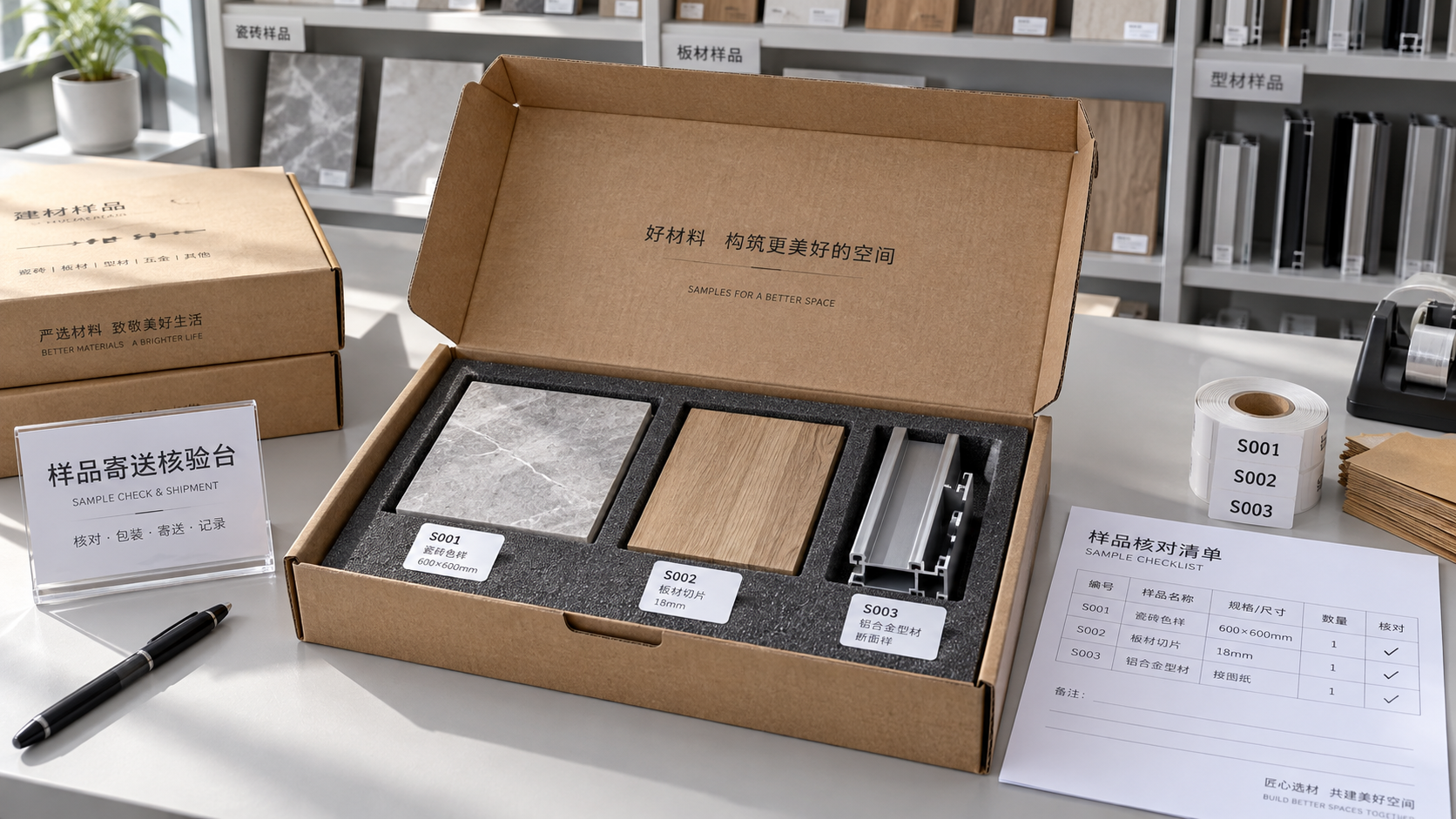
 How should a sample request process be designed for a building materials foreign trade website?
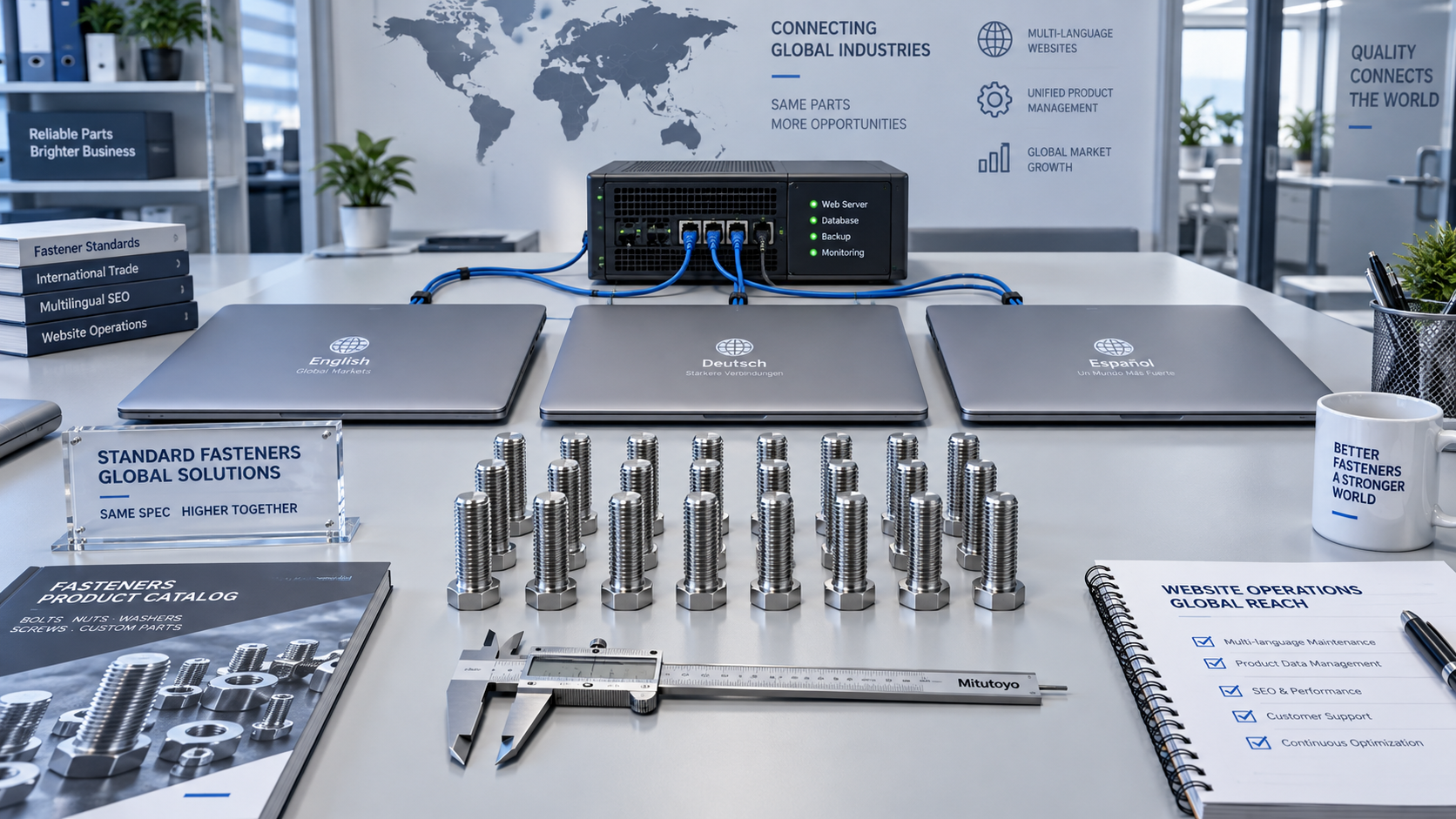
 How Can a Fastener Export Website Synchronize Specification Fields Across Languages?

Related Products
 Yiyingbao SaaS Intelligent Website Building and Marketing SystemYiyingbao SaaS Intelligent Website Building and Marketing System, AI-powered no-code website building, rapid creation of multilingual B2B international websites in 10 minutes, global server acceleration, AI-powered SEO optimization, helping businesses connect efficiently with global markets. The perfect integration of technology and operation makes building an international trade website remarkably simple
 AI+SEM Intelligent Advertising Marketing SystemAI+SEM drives intelligent ad creation, empowering full-funnel precision advertising marketing. The system automatically generates weekly/monthly reports, AI recommends keywords and target countries, monitors core metrics in real-time with intelligent alerts, and enables one-click high-conversion ad solutions to help quickly acquire customers and improve ROI.
 AI+SEO Dual-Engine System Optimization ServicesYiyingbao’s AI+SEO dual-engine optimization system helps foreign trade enterprises acquire high-quality organic traffic through AI-powered keyword research, content generation, and comprehensive technical optimization, significantly improving search rankings and conversion rates.
 AI+SNS Social Media Marketing SystemYingbao AI+SNS Social Media Marketing System - Precision social capture for the social media era. Supports one-click content synchronization across major platforms like Facebook and LinkedIn. AI intelligently rewrites posts for enhanced relevance. 24/7 AI customer service and user profiling analysis empower businesses to efficiently expand into global markets.
 AI+SEO营销解决方案易营宝AI+SEO营销解决方案,通过AI批量写作、智能生成TDK、精准关键词扩词等功能,全面优化网站SEO效果,提升流量与转化率。助力企业构建高效智能网站新生态。
 AI+SEM Advertising Marketing SolutionsAI+SEM Advertising Marketing Solution leverages AI technology to deeply empower SEM ad campaigns. It automatically generates weekly/monthly reports using AI, presenting account data across multiple dimensions for comprehensive insights into campaign performance and trends. The system precisely recommends keywords and target countries, intelligently generates high-conversion ad copy, and enables one-click activation of efficient campaign plans to help businesses rapidly acquire customers. Simultaneously, it monitors core metrics in real time, intelligently identifies abnormal fluctuations, and issues timely alerts to ensure stable, high-return advertising results.
 Domain Name ServicesEasyWin provides professional domain name services, including intelligent queries, one-stop registration, brand protection, and full lifecycle management, helping businesses build a digital brand image.
 EasyOperate B2C Cross-Border E-Commerce Platform & Independent WebsiteEasyStore B2C Cross-border E-commerce Independent Store is an intelligent website building and cross-border e-commerce integrated solution independently developed by EasyStore Information Technology (Beijing) Co., Ltd. The system is specially designed for small and medium-sized as well as large export enterprises, integrating 'website building, operation, marketing, advertising, and conversion' into one, helping enterprises quickly establish cross-border e-commerce independent stores to achieve brand globalization and global sales growth.
The platform supports multiple languages, multiple currencies, and multi-channel marketing, with built-in AI intelligent translation and SEO optimization systems, suitable for mainstream markets such as Southeast Asia, Europe and America, Latin America, and the Middle East, assisting Chinese manufacturing enterprises in efficiently deploying international e-commerce strategies. SSL证书易营宝提供专业SSL安全证书服务,包括单域名和泛域名证书,确保网站数据传输加密、身份验证和完整性保护,助力企业建立安全可信的在线业务环境。









