









- Which customer acquisition channels will be affected by cross-border marketing trends in 2026?Sep 06, 2026View details
- Which homogenization risks should be considered in an analysis of the AI-powered website building industry?Aug 30, 2026View details
- How Will AI Marketing Trends 2026 Change Advertising Budget AllocationAug 28, 2026View details
- Is the EV SSL certificate market shrinking or upgrading? How should companies assess certificate procurement?Aug 11, 2026View details
- Why the old AMP SEO 2020 practices no longer work and what has changed in current optimization prioritiesAug 02, 2026View details
- How to Choose Topics for an Industry News Section to Attract More Organic Search TrafficJul 29, 2026View details
How can multilingual product catalogs be managed to balance efficiency, accuracy, and the speed of adding new products?
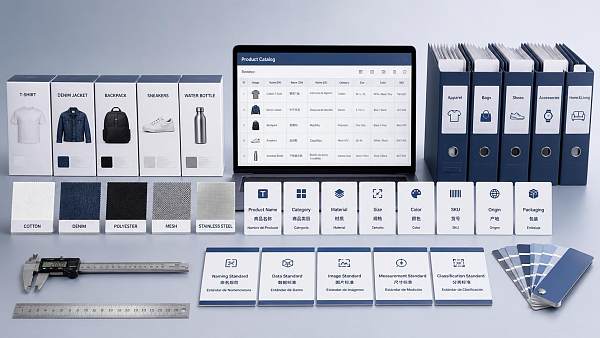
To properly manage multilingual product catalogs, the first step is to shift from processing scattered translation texts to managing product data. What really slows down product expansion is often not the language itself, but the fact that the same product is described in multiple versions across different pages, languages, and channels: inconsistent titles, confusing specification units, missing packaging details, and delivery times and installation conditions rewritten at will. As a result, new products take longer to launch, existing products are even more difficult to maintain, and discrepancies can easily arise in search indexing and advertising landing pages.
When dealing with these issues, the first step is usually not to add translations, but to break product information down into manageable fields. A sustainable catalog should at least distinguish between basic fields, localizable fields, and strictly controlled fields. For example, SKU, model, material grade, rated voltage, interface specifications, outer-carton dimensions, net and gross weight, and packing quantity are better treated as strictly controlled fields. Product titles, short selling-point phrases, application descriptions, and maintenance notes can be used as localizable fields. Delivery methods, minimum order requirements, applicable ambient temperature, installation surface requirements, and maintenance intervals should be retained separately rather than mixed into marketing copy. The value of doing this is straightforward: when adding a new language, there is no need to copy and modify the entire page; only the corresponding field content for that language needs to be completed.
Standardize the “source data” before discussing multilingual efficiency
Many catalogs become difficult to control because the Chinese source copy is unstable to begin with. The same product may be described on page A as a “stainless steel housing,” on page B as a “304 casing,” and on page C as a “corrosion-resistant metal body.” If the source text is not standardized first, the subsequent English, Spanish, and German versions will only amplify the confusion. This is especially important for product categories such as mechanical parts, electronic equipment, building material accessories, and finished home products, where materials, dimensions, tolerances, installation methods, and surface-treatment processes all require consistent wording.
A more reliable approach is to establish field-level writing guidelines for each category. For example:
- For material fields, specify the exact grade or generic material name, such as aluminum alloy, ABS, or SUS304, rather than simply writing “high-quality material.”
- Standardize the units and sequence for dimension fields, clearly specifying whether the dimensions are length × width × height or inner diameter, outer diameter, and wall thickness.
- List processing information separately, such as powder coating, anodizing, injection molding, and CNC precision machining, rather than mixing it with appearance descriptions.
- Describe application conditions as clearly as possible, such as for indoor use, not for prolonged immersion, recommended for installation on a flat wall, or requiring a matching 220V power supply or transformer.
When the source data is sufficiently clear, the question of how to manage multilingual product catalogs becomes a process issue rather than a matter of repeatedly putting out fires. Language versions will no longer overwrite one another, and the catalog will be more suitable for bulk import into websites, online stores, advertising asset libraries, or search-page templates.
Do not make the title carry all the information
When product expansion slows down, one common reason is that too much information has been packed into product titles. A title is expected to cover search terms while also including the model, specifications, material, and application scenario, eventually turning into a long, difficult-to-maintain string in every language. This not only affects readability but also makes it easier to lose key information during translation.
Titles are better suited to serving an identification function, while parameters should be returned to the specifications section. For products such as pipe fittings, valves, connectors, lighting fixtures, and packaging containers, the title only needs to consistently express the “product category + key specification + core distinguishing feature”; the remaining information should be assigned to fields. Otherwise, whenever the thread specification, color, power, or packing quantity changes, titles in multiple languages will all need to be modified, causing maintenance costs to rise rapidly.
If the catalog also involves search optimization, titles and descriptions should preferably be layered: the title handles standardized naming, the short description supplements it with applications and selling points, and the long description expands on installation, maintenance, transportation, or usage restrictions. This makes it easier to control translation granularity and reduces the situation where “one typo requires changing ten pages.”
Translation memory is useful, but it needs boundaries
A common mistake in multilingual catalogs is treating historical translations as directly reusable answers. In reality, many fields can only be reused partially. For example, “powder coated” applies to a powder-coating surface treatment, but if the source text changes to electrophoresis, brushing, or polishing, it cannot be reused. Likewise, if “for outdoor use” does not clearly specify a protection rating, sealing structure, or weather-resistance information, it should not be casually applied to all related products.
A more appropriate approach is to divide content into three levels:
- Highly reusable content: packaging units, transportation notes, basic installation warnings, and general material descriptions. This type of content can be included in a terminology database.
- Moderately reusable content: category-wide descriptions, such as the installation logic, maintenance methods, and compatibility conditions for a particular type of accessory. These can serve as templates, but still require verification before each launch.
- Low-reusability content: model differences, performance limits, hole spacing, load ranges, temperature conditions, and compatible interfaces. These must be confirmed item by item.
The purpose of this approach is to base translation speed on “confirmed content that can be reused,” rather than copying uncertain information along with it. Catalog accuracy is often determined by these boundary conditions: whether the rated load is static or dynamic, whether water resistance means everyday splashing or prolonged outdoor exposure, whether installation accessories are included in the package, and whether the product needs to be disassembled for shipping. Once any of these details are stated ambiguously in one language, subsequent pages will continue to reuse the error.
Change management should be applied to fields, not just pages
A page looking correctly updated does not mean that the catalog has actually been properly maintained. Product catalog updates should be recorded wherever possible as field changes, including who made the change, what was changed, which languages are affected, and which channels need to be synchronized. The following types of changes are especially easy to overlook:
- Changes in material, color, or accessory lists caused by changes in supply batches;
- Changes in outer-carton dimensions, volumetric weight, and transportation restrictions following changes in packaging methods;
- Changes in installation methods, such as from adhesive mounting to drilling, or from recessed installation to surface mounting;
- Updates to maintenance recommendations, such as restrictions on cleaning agents, lubrication intervals, and filter replacement frequency.
If copy is edited manually only on the front-end page, other language versions, product-detail modules, downloadable information pages, advertising landing pages, and on-site filter options will often not be updated at the same time. Over time, the catalog may appear to be growing, while becoming increasingly difficult to trust internally. A more reliable practice is to update the master data first and then have pages retrieve the data, rather than allowing pages to act as the data source.
At this point, inventory and catalogs often affect each other. Some control concepts concerning batches, packaging, and substitute part numbers share the same organizational logic emphasized in strategies for applying lean cost principles to corporate inventory management: first organize the granularity of information, then address turnover and expansion, which can significantly reduce errors.
Fast product expansion does not mean launching every language at once
When launching a new product, an inefficient approach often seen is requiring all target languages to be completed at the same time, with the result that nothing can go live. A more practical approach to catalog management is usually to define a “publishable status.” For example, core languages can first complete the title, specifications, packaging information, basic description, and necessary warnings, while secondary languages can later add the long description, application scenarios, and maintenance details. As long as the page status is clearly marked, subsequent completion will be more manageable than waiting for everything to be finished.
One easily overlooked point is that some fields can be postponed while others cannot. Content such as dimensions, power, interfaces, packing quantity, transportation restrictions, and installation conditions should not be omitted at launch. Long-form scenario descriptions, stylistic wording, and supplementary explanations, however, can be completed in phases. Catalog speed and accuracy are not entirely opposed; the key is distinguishing which information represents the minimum requirements for publication.
Category differences determine the management approach; one template cannot be applied to everything
The biggest risk for multilingual product catalogs is that a “unified template looks neat but is actually inconvenient to use.” Clothing fabrics, industrial accessories, home-improvement components, electronic accessories, and consumables have very different field requirements. Clothing, for example, focuses more on fabric composition, fabric weight, care instructions, and size conversion. Industrial accessories rely more on tolerances, connection standards, temperature resistance ranges, and compatible equipment. Building materials often involve substrate conditions, construction steps, curing times, and storage and transportation requirements.
If a template does not leave room for category differences, information will continually be added in the remarks field, eventually turning a structured catalog back into a long piece of prose. A more appropriate approach is to keep the general framework consistent while adding dedicated fields for key categories. This provides both consistency and ensures that search filtering, bulk export, translation reuse, and page data calls are not disrupted.
Some teams write application scenarios very broadly in an attempt to capture more search traffic, but this approach carries greater risks in multilingual environments. For example, if “suitable for outdoor use” does not specify shade, rain protection, salt-spray resistance, or temperature-difference conditions, it may be understood after translation as suitable for long-term exposure. If “compatible with multiple devices” does not list interface standards, hole positions, or power ranges, it can also lead to misuse. It is better for catalog content to be somewhat narrower than to expand its scope through vague descriptions.
The coordination sequence matters more than the number of tools
Catalog management is often held up not by whether someone is available to translate, but by a disorganized coordination sequence. Product materials enter translation before they are finalized, page layout begins before translation is complete, and after the page goes live, it is discovered that the specification diagrams, packaging images, and instructional copy are not from the same version. Once the sequence is wrong, rework increases several times over.
A practical approach is to require each product to go through at least the following checks: whether the original specifications are complete, whether the fields are correctly categorized, whether the terminology is consistent with the existing catalog, whether there is a risk of unit conversion, and whether there are restrictions related to transportation, installation, or maintenance. Only then should the product proceed to page publication. The process does not need to be overly complicated, but it must make it sufficiently clear who can change what and where the changes will have an impact.
Once the catalog is stable, adding languages, launching new websites, or creating new advertising pages becomes much easier. This is because what is truly being replicated is not page after page of copy, but a set of well-organized product facts. The wording can be adjusted according to the market and page requirements, while information that determines accuracy—such as materials, dimensions, interfaces, packaging, installation, and maintenance conditions—should always remain traceable, verifiable, and suitable for bulk updates.
If the current catalog is already disorganized, it is usually easier to select a high-frequency category, rebuild its fields, and then gradually backfill the old pages than to rebuild the entire website at once. Ultimately, multilingual catalog management is not about how quickly large amounts of copy can be produced, but about ensuring that errors do not expand along with the product range every time new products are added.
Related Articles



Related Products
 Yiyingbao SaaS Intelligent Website Building and Marketing SystemYiyingbao SaaS Intelligent Website Building and Marketing System, AI-powered no-code website building, rapid creation of multilingual B2B international websites in 10 minutes, global server acceleration, AI-powered SEO optimization, helping businesses connect efficiently with global markets. The perfect integration of technology and operation makes building an international trade website remarkably simple
 AI+SEM Intelligent Advertising Marketing SystemAI+SEM drives intelligent ad creation, empowering full-funnel precision advertising marketing. The system automatically generates weekly/monthly reports, AI recommends keywords and target countries, monitors core metrics in real-time with intelligent alerts, and enables one-click high-conversion ad solutions to help quickly acquire customers and improve ROI.
 AI+SEO Dual-Engine System Optimization ServicesYiyingbao’s AI+SEO dual-engine optimization system helps foreign trade enterprises acquire high-quality organic traffic through AI-powered keyword research, content generation, and comprehensive technical optimization, significantly improving search rankings and conversion rates.
 AI+SNS Social Media Marketing SystemYingbao AI+SNS Social Media Marketing System - Precision social capture for the social media era. Supports one-click content synchronization across major platforms like Facebook and LinkedIn. AI intelligently rewrites posts for enhanced relevance. 24/7 AI customer service and user profiling analysis empower businesses to efficiently expand into global markets.
 AI+SEO营销解决方案易营宝AI+SEO营销解决方案,通过AI批量写作、智能生成TDK、精准关键词扩词等功能,全面优化网站SEO效果,提升流量与转化率。助力企业构建高效智能网站新生态。
 AI+SEM Advertising Marketing SolutionsAI+SEM Advertising Marketing Solution leverages AI technology to deeply empower SEM ad campaigns. It automatically generates weekly/monthly reports using AI, presenting account data across multiple dimensions for comprehensive insights into campaign performance and trends. The system precisely recommends keywords and target countries, intelligently generates high-conversion ad copy, and enables one-click activation of efficient campaign plans to help businesses rapidly acquire customers. Simultaneously, it monitors core metrics in real time, intelligently identifies abnormal fluctuations, and issues timely alerts to ensure stable, high-return advertising results.
 Domain Name ServicesEasyWin provides professional domain name services, including intelligent queries, one-stop registration, brand protection, and full lifecycle management, helping businesses build a digital brand image.
 EasyOperate B2C Cross-Border E-Commerce Platform & Independent WebsiteEasyStore B2C Cross-border E-commerce Independent Store is an intelligent website building and cross-border e-commerce integrated solution independently developed by EasyStore Information Technology (Beijing) Co., Ltd. The system is specially designed for small and medium-sized as well as large export enterprises, integrating 'website building, operation, marketing, advertising, and conversion' into one, helping enterprises quickly establish cross-border e-commerce independent stores to achieve brand globalization and global sales growth.
The platform supports multiple languages, multiple currencies, and multi-channel marketing, with built-in AI intelligent translation and SEO optimization systems, suitable for mainstream markets such as Southeast Asia, Europe and America, Latin America, and the Middle East, assisting Chinese manufacturing enterprises in efficiently deploying international e-commerce strategies. SSL证书易营宝提供专业SSL安全证书服务,包括单域名和泛域名证书,确保网站数据传输加密、身份验证和完整性保护,助力企业建立安全可信的在线业务环境。









