









- Amazon Reportedly Sends Exclusivity Warning Letters to Multiplatform SellersNov 03, 2026View details
- New TikTok Shop Cross-Border Returns Rules for Southeast Asia Take Effect on November 5Nov 03, 2026View details
- U.S. Tightens De Minimis Exemption Channel and Revises Section 321 Data PilotNov 03, 2026View details
- Amazon FBA Fuel and Logistics Surcharge in 10 European Countries to Increase to 2% on November 2Nov 02, 2026View details
- EU Customs Code reform to take effect on November 1, with new handling fees for direct-mail small parcelsNov 01, 2026View details
- EU Plans to Raise Tax on Incoming Small Parcels to €5Oct 31, 2026View details
How Long Does It Take to Get Inquiries After Launching an Electronics Components Export Website?
How long does it take for an electronic components website targeting overseas markets to generate inquiries? There is no fixed answer that applies to every business. A website with existing overseas customers and promotional channels may receive inquiries soon after launch. A website starting from scratch and waiting for organic search traffic may take several months or even longer. The determining factor is not simply the act of launching a website, but whether target buyers can find the products, verify the supplier’s capabilities, and feel confident enough to submit their requirements.
Decision-makers should also distinguish between two goals: receiving the first inquiry and consistently receiving inquiries from buyers with purchasing intent. The first may come relatively quickly through existing customers or advertising. The second requires traffic, product information, and sales follow-up to work together.
How do lead-generation channels differ in the time they take to deliver results?
If a company already attends trade shows, manages overseas social media, or maintains relationships with existing customers, it can direct people to product pages and inquiry forms after the website goes live. In this case, the website is serving existing traffic. Whether it generates inquiries depends more on existing customer relationships and current purchasing needs, so the results cannot simply be attributed to the new website.
Search ads can generally generate visits and test feedback faster than waiting for organic search. Once ads are approved and the campaign is set up properly, they may reach buyers searching for a specific model or product category. However, clicks do not necessarily lead to inquiries. Broad keywords, a mismatch with the target market, or pages that fail to answer buyers’ purchasing questions can all lead to wasted spend. How long it takes to receive inquiries also depends on the budget, competition, and supply and demand for the product.
Google organic search is better assessed month by month rather than day by day. A new site first needs to be discovered and its pages processed by search engines, then gradually build visibility for relevant searches. Indexing does not guarantee rankings, nor does it mean buyers will visit right away. The timeline depends on the website’s foundation, content quality, search competition, and technical condition; there is no way to guarantee that inquiries will arrive in a particular month.
In practice, a company can use small-scale ad campaigns to test priority models and pages while developing long-term content. But if it does not have a stable supply of products or cannot respond promptly to overseas inquiries, rushing to expand advertising may not be worthwhile. Traffic that the sales team cannot handle is unlikely to turn into qualified opportunities.
What are buyers checking when they visit a product page?
Purchases of electronic components often start with a specific model, package, or key specification. When buyers land on a page, they usually want to quickly confirm whether the model is available, whether the specifications match their requirements, what documentation is available, and what the lead time and purchasing terms are. If a page has only a generic image and a claim of “reliable quality,” visitors with genuine needs may still turn to suppliers whose information is clearer.
Page content should reflect the company’s actual business. Agents or distributors can explain their brand authorization status, types of supply, and the batch information they can provide. Manufacturers with their own production facilities should clearly describe their product ranges, applications, and available technical documentation. Claims about being an original manufacturer, having products in stock, or supporting alternatives should reflect the facts and should not be worded ambiguously just to attract more clicks.
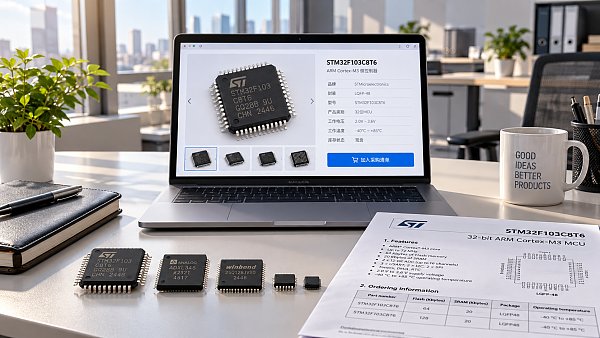
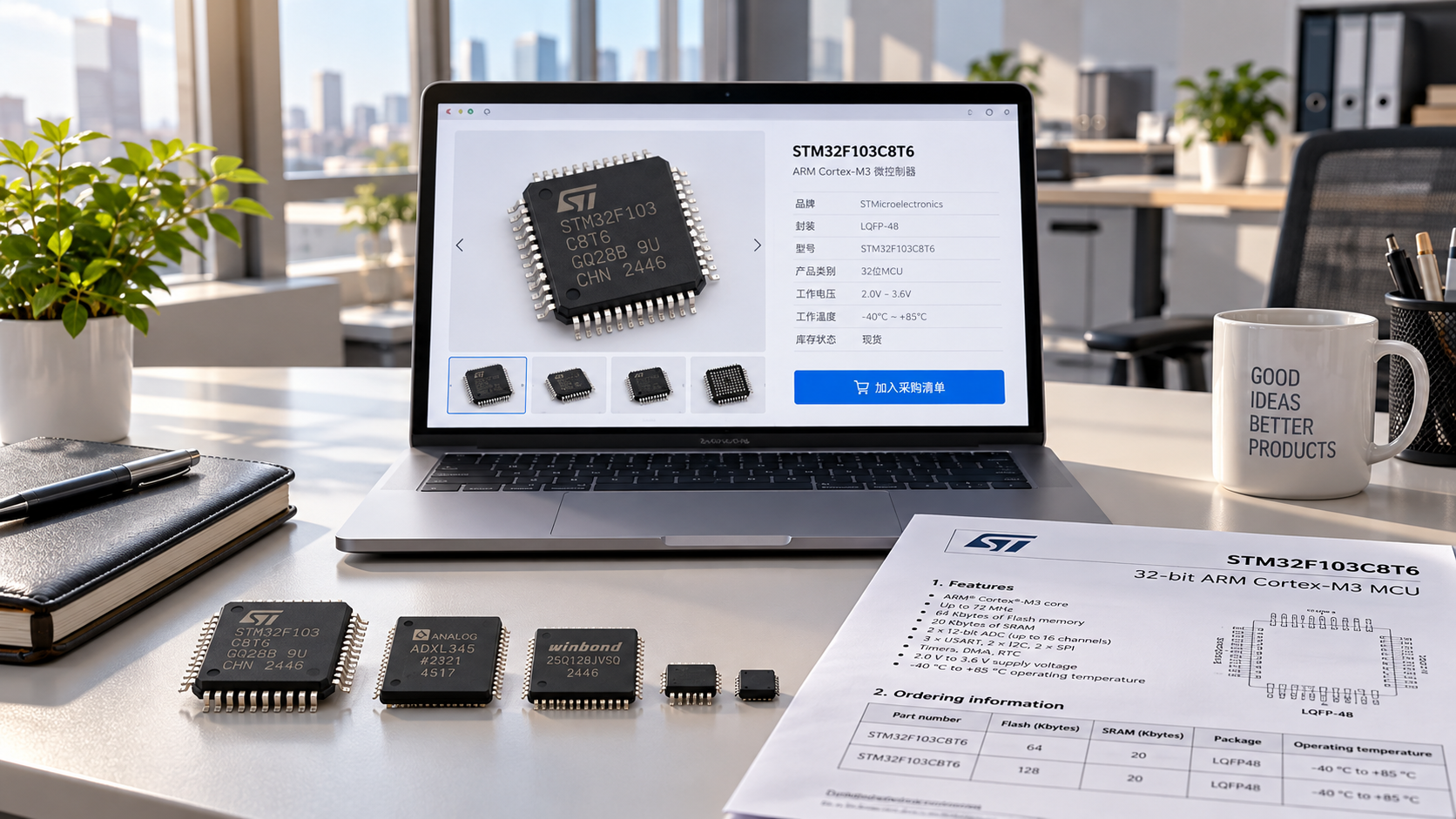
For example, when searching by model number, buyers may need to verify the manufacturer, complete part number, package, quantity, and lead time. A website can use this information to structure product pages and inquiry forms. For products that require technical selection, visitors should also have space to describe their application. When inventory and prices change quickly, there is no need to display figures that cannot be kept up to date; instead, make it clear that pricing and availability are subject to confirmation.
Downloads also require care. Datasheets, test documents, and compliance declarations should be checked for version, applicable products, and usage permissions. Documentation for one product series should not be presented as proof for every model. If requirements in a target market are relevant, verify them against the specific product and local regulations rather than making a blanket claim on the website that products “meet all standards.”
If you get visits but no inquiries, don’t rush to rebuild the website
First, check where visitors come from and which pages they view. Someone searching for “electronic components information” may be researching, while someone searching for a full part number and viewing supply information is usually showing clearer purchasing intent. If ads mainly attract the first type of visitor, the problem may not be the page design; the keywords may also be poorly matched to the business.
Next, check the inquiry process. Is the button easy to find on mobile? Does the form ask for too much information? Is there a confirmation after submission, and are inquiry emails being delivered correctly? A problem at any of these steps can lead a company to mistakenly believe that overseas customers have no demand. Before launch and after changing a form, it is worth testing submissions on different devices.
The quality of inquiries matters too. A message asking only about low prices, with no model or quantity details, is not necessarily useless, but sales will need to clarify the requirements. Inquiries that specify the target product, quantity, destination, and lead time are generally easier to assess for their purchasing potential. Don’t just count form submissions. Record the source, product, follow-up status, and final outcome, then review the results over time before deciding whether to increase the budget or revise the pages.
To shorten the wait, where should you focus your budget and effort first?
Companies with broad product lines should not simply fill the website with every model at launch. A more practical approach is to select products with relatively stable supply, complete documentation, and sales teams able to provide quotes promptly, then create the corresponding pages and content for the target markets. Popular models may have higher search volumes, but competition is usually stronger too. More specific product searches may bring less traffic, but can make it easier to assess whether the company is able to handle the resulting inquiries.
Before promotion begins, agree with the sales team on how inquiries will be handled: who receives them, how requirements will be confirmed, and when inventory and pricing will be checked and communicated. For inquiries that arrive outside business hours or require confirmation from the supply chain, the team can acknowledge receipt first and provide an expected response time. For customers in a hurry to buy, a clear update on progress is often more useful than a complete quote that arrives late.
If different teams handle website development and marketing, the company should clarify in advance who is responsible for page updates, data tracking, advertising accounts, and content maintenance. Easyenbao provides services including smart website building, search optimization, and ad placement, and may be worth considering for companies looking to coordinate their websites and promotional activities. However, regardless of the service model, the company itself remains responsible for verifying product information, supply commitments, and sales responsiveness.
When evaluating results after launch, start by asking three questions: Are target buyers reaching the priority pages? Do the pages answer their purchasing questions? Are incoming inquiries being followed up promptly? Identifying the specific point where things are falling short is more helpful in deciding where to invest next than simply asking, “How much longer do we have to wait?”
Related Articles
 How Long Does It Take to Get Inquiries After Launching an Electronics Components Export Website?
 How can building materials exporters reach overseas project procurement buyers?
 How Can Manufacturers Generate Qualified Inquiries Through Overseas Marketing?

Related Products
 Yiyingbao SaaS Intelligent Website Building and Marketing SystemYiyingbao SaaS Intelligent Website Building and Marketing System, AI-powered no-code website building, rapid creation of multilingual B2B international websites in 10 minutes, global server acceleration, AI-powered SEO optimization, helping businesses connect efficiently with global markets. The perfect integration of technology and operation makes building an international trade website remarkably simple
 AI+SEM Intelligent Advertising Marketing SystemAI+SEM drives intelligent ad creation, empowering full-funnel precision advertising marketing. The system automatically generates weekly/monthly reports, AI recommends keywords and target countries, monitors core metrics in real-time with intelligent alerts, and enables one-click high-conversion ad solutions to help quickly acquire customers and improve ROI.
 AI+SEO Dual-Engine System Optimization ServicesYiyingbao’s AI+SEO dual-engine optimization system helps foreign trade enterprises acquire high-quality organic traffic through AI-powered keyword research, content generation, and comprehensive technical optimization, significantly improving search rankings and conversion rates.
 AI+SNS Social Media Marketing SystemYingbao AI+SNS Social Media Marketing System - Precision social capture for the social media era. Supports one-click content synchronization across major platforms like Facebook and LinkedIn. AI intelligently rewrites posts for enhanced relevance. 24/7 AI customer service and user profiling analysis empower businesses to efficiently expand into global markets.
 AI+SEO营销解决方案易营宝AI+SEO营销解决方案,通过AI批量写作、智能生成TDK、精准关键词扩词等功能,全面优化网站SEO效果,提升流量与转化率。助力企业构建高效智能网站新生态。
 AI+SEM Advertising Marketing SolutionsAI+SEM Advertising Marketing Solution leverages AI technology to deeply empower SEM ad campaigns. It automatically generates weekly/monthly reports using AI, presenting account data across multiple dimensions for comprehensive insights into campaign performance and trends. The system precisely recommends keywords and target countries, intelligently generates high-conversion ad copy, and enables one-click activation of efficient campaign plans to help businesses rapidly acquire customers. Simultaneously, it monitors core metrics in real time, intelligently identifies abnormal fluctuations, and issues timely alerts to ensure stable, high-return advertising results.
 Domain Name ServicesEasyWin provides professional domain name services, including intelligent queries, one-stop registration, brand protection, and full lifecycle management, helping businesses build a digital brand image.
 EasyOperate B2C Cross-Border E-Commerce Platform & Independent WebsiteEasyStore B2C Cross-border E-commerce Independent Store is an intelligent website building and cross-border e-commerce integrated solution independently developed by EasyStore Information Technology (Beijing) Co., Ltd. The system is specially designed for small and medium-sized as well as large export enterprises, integrating 'website building, operation, marketing, advertising, and conversion' into one, helping enterprises quickly establish cross-border e-commerce independent stores to achieve brand globalization and global sales growth.
The platform supports multiple languages, multiple currencies, and multi-channel marketing, with built-in AI intelligent translation and SEO optimization systems, suitable for mainstream markets such as Southeast Asia, Europe and America, Latin America, and the Middle East, assisting Chinese manufacturing enterprises in efficiently deploying international e-commerce strategies. SSL证书易营宝提供专业SSL安全证书服务,包括单域名和泛域名证书,确保网站数据传输加密、身份验证和完整性保护,助力企业建立安全可信的在线业务环境。









