









- Can the average annual growth rate reflect real opportunities in overseas markets?Oct 07, 2026View details
- Which customer acquisition channels will be affected by cross-border marketing trends in 2026?Sep 06, 2026View details
- Which homogenization risks should be considered in an analysis of the AI-powered website building industry?Aug 30, 2026View details
- How Will AI Marketing Trends 2026 Change Advertising Budget AllocationAug 28, 2026View details
- Is the EV SSL certificate market shrinking or upgrading? How should companies assess certificate procurement?Aug 11, 2026View details
- Why the old AMP SEO 2020 practices no longer work and what has changed in current optimization prioritiesAug 02, 2026View details
Is B2B short-video marketing lead generation suitable for high-ticket industries?
When people talk about high-ticket industries, they often instinctively assume that short videos are only suitable for selling standardized products and not for complex decision-making. However, anyone with real market experience knows that whether B2B short-video marketing lead generation can work has never been about views. The key is whether you can use short videos to clearly explain your professional capabilities, build trust, and bring part of the otherwise lengthy communication process forward.
If your products have a high unit price, a long decision-making chain, and customers place greater emphasis on solution capabilities and delivery risks, short videos are not something you cannot do. They simply cannot be approached as a “traffic business.” Instead, they function more like a preliminary filter: first keeping unsuitable customers out, then directing more interested prospects to your website, forms, direct messages, or sales communication channels.
Is B2B short-video marketing lead generation suitable for high-ticket industries? Start with these three prerequisites
Here is a direct judgment: yes, it is suitable—but not every company should start immediately, and not every team can achieve results.
High-ticket industries commonly include manufacturing equipment, industrial components, enterprise software, engineering services, customized solutions, and cross-border B2B services. These industries share one characteristic: customers do not place an order after watching one video. Instead, they screen for trustworthy suppliers through continuous comparison. Therefore, the task of short videos is not to close deals directly, but to reduce unfamiliarity, establish professional awareness, and improve the quality of inquiries.
You can first check whether these three prerequisites are met:
- Your customers genuinely conduct preliminary research online rather than relying entirely on offline relationships.
- Your products or services can be clearly explained through scenarios, problems, cases, processes, and results, rather than only through verbal explanations from sales representatives.
- You have the capability to handle leads at the back end, such as a website, landing pages, forms, WhatsApp, WeCom, and a sales follow-up process, rather than ending the process after publishing a video.
The third prerequisite is the one most easily overlooked. Many companies do not fail because short videos are ineffective, but because the content and conversion path are disconnected. After watching the video, users do not know where to go next or what problems you can actually solve.
Therefore, for high-ticket industries, the focus of short-video marketing is not on “producing more,” but on “being able to handle the response.”
Why do high-ticket industries need short videos even more to build trust in advance?
Some corporate decision-makers may have concerns: will customers think that producing short videos is not serious enough? This concern is understandable, but the reality is that before contacting sales, customers have usually already searched, browsed, and compared online. Even if the final deal is closed through one-to-one communication, the initial impression is increasingly formed online.
In high-ticket transactions, customers are most afraid of three things: choosing the wrong supplier, facing excessive communication costs, and having no one take responsibility when problems arise during a project. Short videos can address these concerns in advance.
For example, if you manufacture industrial equipment, you can use short videos to demonstrate the equipment’s operating logic, applicable working conditions, common faults, installation details, and delivery process. If you provide enterprise-level services, you can explain how projects are implemented, common reasons for failure, differences between various solutions, and how budgets should be allocated. This type of content does not rely on exaggerated expressions or entertainment. Instead, it is more likely to attract people with genuine needs.
In simple terms, customers are not trying to see whether you “know how to make videos.” They want to determine whether you “understand the industry.”
In these scenarios, the value of short videos is mainly reflected in four areas:
- Making abstract capabilities visual and lowering the barrier to understanding.
- Allowing potential customers to establish basic trust before making contact.
- Helping sales teams screen leads and improve inquiry quality.
- Creating synergy with websites, SEO, and advertising instead of operating as an isolated channel.
Which high-ticket industries are more suitable for B2B short-video marketing lead generation?
If your business features a high professional barrier, a long decision-making cycle, and a need for explanation and proof, short videos are generally worth considering. They are particularly suitable for the following scenarios:
First, industries that need to showcase processes and details. Examples include machinery and equipment, production lines, factory manufacturing, engineering projects, and customized processing. These businesses are naturally suited to using video to demonstrate their capabilities because customers often care about real-world scenarios rather than vague copy.
Second, service industries that need to establish professional trust. Examples include enterprise digitalization, overseas marketing, technical services, and software solutions. Before making a purchase, customers repeatedly evaluate your methodology, execution capabilities, and delivery logic. Short videos are well suited to breaking down and explaining these elements.
Third, businesses whose target customers are widely distributed and cannot be reached frequently offline. This is especially relevant to foreign trade and companies expanding overseas. Their customers span different regions, time zones, and languages, making online content an important touchpoint in itself. In this situation, short videos are not optional; they are an important trust-building entry point beyond the website.
Conversely, if your team has not yet organized the questions customers ask most frequently, or if your sales process relies entirely on individual experience without standardized messaging, short videos may become merely a collection of materials after production and struggle to generate leads consistently.
What is truly unsuitable is not high-ticket pricing, but these approaches
Many unsuccessful cases are not caused by an unsuitable industry, but by incorrect methods.
The first common misconception is turning B2B short-video marketing lead generation into “general traffic content.” The headlines are lively, but the content is empty, and the people attracted are not target customers. Once views increase but inquiry quality remains poor, the sales team naturally feels that the initiative has no value.
The second is producing content solely from the perspective of a corporate promotional video. The visuals are polished and the slogans are plentiful, but after watching, customers still do not know what problems you solve. Content in high-ticket industries does not have to be flashy; what it cannot lack is useful information.
The third is focusing only on the account without creating a website-based conversion path. Especially when targeting overseas markets, short videos are only a means of reaching people. Actual inquiries, search indexing, and brand verification still require websites, landing pages, multilingual content, and search entry points. After seeing you in a short video, users often search for your brand and solutions, visit your website, and review your cases.
This is also why an integrated “website + marketing services” approach has greater practical value in high-ticket industries. Content alone leaves the lead-generation chain incomplete, while a website without traffic entry points is also unlikely to gain traction. Only by viewing short videos, independent websites, SEO, advertising, and social media as one connected chain can results become more stable.
How should short-video content be planned for high-ticket industries?
Here is an experienced judgment: do not pursue “viral content” at the beginning. First, create “high-quality explanations.”
Content more suitable for high-ticket industries can generally be divided into four categories:
- Question-and-answer content: addressing customers’ most common questions, misconceptions, and purchasing concerns.
- Scenario-based content: explaining clearly in which situations a product is suitable and when its use is not recommended.
- Case-analysis content: avoiding exaggerated results and focusing on the project background, challenges, solution, and delivery logic.
- Professional-opinion content: offering judgments on industry changes, platform rules, and purchasing trends.
For example, if you provide overseas marketing services, you do not necessarily need to film videos saying “we are highly professional.” Instead, you can specifically explain why foreign trade companies receive traffic but no inquiries, why independent websites are slow to be indexed, where to invest first when the advertising budget is limited, and how short-video content can work together with Google SEO. Although this type of content may not generate the highest traffic, it is more likely to attract people with genuine business needs.
If a company still lacks a content center and conversion tools, choosing a service system that simultaneously covers website development, SEO, advertising, social media, and short videos can reduce communication costs compared with finding separate suppliers for each service. Platforms such as Yiyingbao, which have long provided intelligent website development and overseas digital marketing services, may be suitable references for companies that need integrated implementation, especially in foreign trade, manufacturing, and overseas brand expansion scenarios. This is because the attention generated by short videos ultimately needs to be directed to a website and lead system capable of conversion.
Before making a decision, do not rush to ask whether it is “worth investing in.” Ask these questions first
Many management teams are most concerned about return on investment, and there is nothing wrong with that. However, when high-ticket industries use short videos, they should first confirm whether the method is right.
- Is your goal brand exposure, lead generation, or supporting sales conversion?
- Which platforms do your target customers usually use to obtain information?
- Can you consistently produce content with sound judgment rather than simply publishing a few videos as a trial?
- Where will customers be directed after watching the video—the website, a form, social media direct messages, or a sales consultant?
- Have you defined the criteria for an “effective lead” instead of looking only at views and likes?
Once these questions are clear, your budget can be spent more effectively. Otherwise, it is easy to encounter a situation in which the content team believes the data is good while the sales team feels that there are no customers. As a result, the organization’s assessment of the value of short videos becomes completely misaligned.
If summarized in one sentence, short videos in high-ticket industries are not intended to replace sales; they are intended to help sales teams spend less time on ineffective explanations and get closer to qualified customers.
How can you finally determine whether you should do it?
A practical standard is this: if customers need to understand, compare, verify, and build trust before making a purchase, you have a foundation for B2B short-video marketing lead generation. It may not be the only channel, but it is likely a front-end touchpoint that cannot be ignored today.
Companies truly worth investing in usually have several characteristics: a clearly defined target market, a certain amount of content material, a website or independent site capable of handling demand, and a willingness to incorporate short videos into an overall marketing system rather than treating them as a temporary experiment.
High-ticket industries are not opposed to short videos; they are opposed to low-quality messaging and fragmented operations. As long as the content is sufficiently professional and the chain is sufficiently complete, B2B short-video marketing lead generation is not only feasible but can often bring higher-quality inquiries and shorten the time required to build trust.
Frequently Asked Questions
Do high-ticket businesses have to pursue high view counts when using short videos?
Not necessarily. For these industries, precise reach and lead quality are usually more important than general traffic.
Can short videos directly generate sales?
A small number of standardized products can, but for most high-ticket businesses, the more common process is to “establish awareness first, then enter the sales conversion stage.”
Are only factories and equipment companies suitable for short videos?
No. Software, technical services, overseas marketing, and consulting businesses are also suitable; the content focus is simply different.
Should we create short videos first or build a website first?
From the perspective of the lead-generation chain, it is best to consider them together. Without a conversion page, short-video traffic can easily be wasted.
Is it still worth trying with a limited budget?
Yes, but you should first narrow the objective and prioritize validating the content direction and conversion process. It is not recommended to expand too broadly at the beginning.
Image Placeholder List
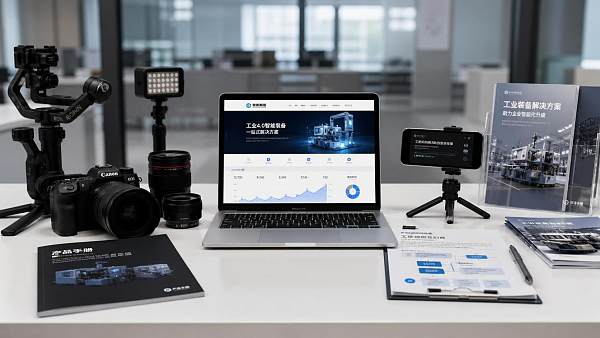
: Recommended placement: after “Why do high-ticket industries need short videos even more to build trust in advance?”; suggested image content: “Illustration of the short-video lead-generation journey for high-ticket industries, from short-video reach and website engagement to sales conversion”; alt text: Illustration of the B2B short-video marketing lead-generation journey for high-ticket industries
Recommended Internal Link Anchor Text
- How should foreign trade companies conduct short-video marketing: link to the short-video marketing solutions page
- B2B marketing website development: link to the website development services page
- Google SEO lead-generation solutions: link to the SEO services topic page
- How can an overseas independent website handle inquiries: link to the independent website operations guide
- Marketing solutions for manufacturers expanding overseas: link to the industry solutions page
Recommended External Authoritative Sources
- Official commercialization or business marketing documentation from major short-video platforms
- B2B purchasing behavior research reports published by industry associations
- Official content marketing and conversion-path resources from overseas search engines or advertising platforms
Related Articles



Related Products
 Yiyingbao SaaS Intelligent Website Building and Marketing SystemYiyingbao SaaS Intelligent Website Building and Marketing System, AI-powered no-code website building, rapid creation of multilingual B2B international websites in 10 minutes, global server acceleration, AI-powered SEO optimization, helping businesses connect efficiently with global markets. The perfect integration of technology and operation makes building an international trade website remarkably simple
 AI+SEM Intelligent Advertising Marketing SystemAI+SEM drives intelligent ad creation, empowering full-funnel precision advertising marketing. The system automatically generates weekly/monthly reports, AI recommends keywords and target countries, monitors core metrics in real-time with intelligent alerts, and enables one-click high-conversion ad solutions to help quickly acquire customers and improve ROI.
 AI+SEO Dual-Engine System Optimization ServicesYiyingbao’s AI+SEO dual-engine optimization system helps foreign trade enterprises acquire high-quality organic traffic through AI-powered keyword research, content generation, and comprehensive technical optimization, significantly improving search rankings and conversion rates.
 AI+SNS Social Media Marketing SystemYingbao AI+SNS Social Media Marketing System - Precision social capture for the social media era. Supports one-click content synchronization across major platforms like Facebook and LinkedIn. AI intelligently rewrites posts for enhanced relevance. 24/7 AI customer service and user profiling analysis empower businesses to efficiently expand into global markets.
 AI+SEO营销解决方案易营宝AI+SEO营销解决方案,通过AI批量写作、智能生成TDK、精准关键词扩词等功能,全面优化网站SEO效果,提升流量与转化率。助力企业构建高效智能网站新生态。
 AI+SEM Advertising Marketing SolutionsAI+SEM Advertising Marketing Solution leverages AI technology to deeply empower SEM ad campaigns. It automatically generates weekly/monthly reports using AI, presenting account data across multiple dimensions for comprehensive insights into campaign performance and trends. The system precisely recommends keywords and target countries, intelligently generates high-conversion ad copy, and enables one-click activation of efficient campaign plans to help businesses rapidly acquire customers. Simultaneously, it monitors core metrics in real time, intelligently identifies abnormal fluctuations, and issues timely alerts to ensure stable, high-return advertising results.
 Domain Name ServicesEasyWin provides professional domain name services, including intelligent queries, one-stop registration, brand protection, and full lifecycle management, helping businesses build a digital brand image.
 EasyOperate B2C Cross-Border E-Commerce Platform & Independent WebsiteEasyStore B2C Cross-border E-commerce Independent Store is an intelligent website building and cross-border e-commerce integrated solution independently developed by EasyStore Information Technology (Beijing) Co., Ltd. The system is specially designed for small and medium-sized as well as large export enterprises, integrating 'website building, operation, marketing, advertising, and conversion' into one, helping enterprises quickly establish cross-border e-commerce independent stores to achieve brand globalization and global sales growth.
The platform supports multiple languages, multiple currencies, and multi-channel marketing, with built-in AI intelligent translation and SEO optimization systems, suitable for mainstream markets such as Southeast Asia, Europe and America, Latin America, and the Middle East, assisting Chinese manufacturing enterprises in efficiently deploying international e-commerce strategies. SSL证书易营宝提供专业SSL安全证书服务,包括单域名和泛域名证书,确保网站数据传输加密、身份验证和完整性保护,助力企业建立安全可信的在线业务环境。









