









- Can the average annual growth rate reflect real opportunities in overseas markets?Oct 07, 2026View details
- Which customer acquisition channels will be affected by cross-border marketing trends in 2026?Sep 06, 2026View details
- Which homogenization risks should be considered in an analysis of the AI-powered website building industry?Aug 30, 2026View details
- How Will AI Marketing Trends 2026 Change Advertising Budget AllocationAug 28, 2026View details
- Is the EV SSL certificate market shrinking or upgrading? How should companies assess certificate procurement?Aug 11, 2026View details
- Why the old AMP SEO 2020 practices no longer work and what has changed in current optimization prioritiesAug 02, 2026View details
Which pages are AMP mobile websites suitable for? Analysis of news, landing pages, and blog scenarios
Is AMP Mobile Site Worth It? First See What Tasks the Page Needs to Handle
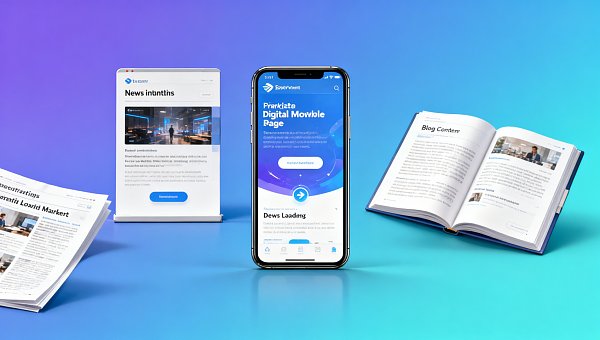
AMP mobile sites are often understood as “the faster, the better,” but when it comes to real-world implementation, the page’s purpose matters more than speed itself. If a page mainly handles information delivery, search intent, and mobile reading, an AMP mobile site is often more valuable; if a page relies on complex interactions, a multi-step login flow, or a large number of personalized components, the return is not necessarily ideal.
In the integrated practice of website and marketing services, different pages face different traffic sources, conversion paths, and content depths. Yibingbao’s long-term service for multilingual official websites, foreign trade marketing sites, cross-border independent sites, and ad landing pages usually does not treat an AMP mobile site as a site-wide unified action, but first breaks down the page type and then determines whether it is worth prioritizing.
This is also a point that many projects easily overlook: even though they are all mobile pages, news, blogs, topic pages, and product detail pages have completely different underlying goals. AMP mobile sites are suitable for pages where “fast loading can significantly improve results,” rather than for converting all pages at once.
In Actual Use, News and Information Pages Often See the Earliest Results
The characteristics of news and information pages are very clear: strong timeliness, relatively standard content structure, and traffic coming mostly from mobile search, information aggregation, and branded keyword expansion search. At this point, the value of an AMP mobile site is not only “faster loading,” but also reducing bounce rate, improving above-the-fold reading completion, and helping search visitors enter the main content more smoothly.
Especially for content such as brand going global, corporate updates, and industry insights, the page often carries the tasks of awareness building and search share capture. If the page loads slowly, users are very likely to leave before the first screen. The judgment focus for AMP mobile sites on this kind of page usually includes whether the content is mainly text and images, whether the module is stable, whether a complex form is needed, and whether it depends on a large amount of external scripts.
If the information page itself carries SEO continuous indexing, then speed optimization and structural standardization will directly affect long-term performance. For multi-site, multilingual content systems, this type of page is more suitable to be included in standardized template management rather than being independently developed each time.
When Adapting News Pages to AMP Mobile Sites, These Several Points Matter More
- Whether content updates are frequent and can form a continuous indexing entry.
- Whether the page is centered on reading rather than interactive functions.
- Whether the proportion of mobile search traffic is relatively high, especially in overseas access scenarios.
- Whether it needs to remain consistent with the original site in analytics, SEO tags, and ad data.
Ad Landing Pages Value Opening Speed More, But They Cannot Only Chase Speed
Many advertising projects will prioritize AMP mobile sites, and the reason is very direct: as ad click costs continue to rise, every extra second on the landing page may eat away at part of the conversion rate. Especially in mixed campaigns with Facebook ads, Google ads, and social media traffic, the mobile landing page often determines whether the first conversion happens.
But the judgment in this kind of scenario is not simply “the lighter, the better.” If the landing page depends on multi-step inquiry forms, complex product configuration, online chat plugins, retargeting scripts, or A/B testing components, AMP mobile sites need careful evaluation. Because the goal of an ad page is not to let the user finish reading, but to let the user smoothly complete the next action, and any change that limits interactivity may offset the gains from speed.
A more stable approach is to use AMP mobile sites for informational landing pages, campaign preheat pages, single-form collection pages, or brand introduction pages. If the conversion path is complex, a lightweight non-AMP page should be built first, and then script compression, reduced redirects, and optimized form structure should be added.
In some content-oriented industry topic pages, data-reading pages are also turned into lightweight access pages, such as policy research, white paper guides, or topic summary pages. A content entry like Discussion on the Development Strategy of Enterprise Internal Control System Construction is suitable for this approach. If the main goal is fast mobile browsing and continued reading guidance, then an AMP mobile site has certain adaptation room.
Blog Content Is Suitable for Long-Term Operations, But Structural Planning Matters More
Blog scenarios and news pages look similar, but the real focus is not the same. News is more oriented toward timeliness and hot topics, while blogs are more oriented toward sustained traffic, problem coverage, and long-tail keyword layout. When AMP mobile sites are used for blogs, the core value lies in stably supporting mobile search access, improving content touch efficiency, and leaving enough smooth reading paths for subsequent on-site conversions.
For foreign trade website building, multilingual SEO, and overseas marketing sites, blogs are often not isolated; they are important entry points for carrying industry issue keywords, solution keywords, and comparison keywords. If an AMP mobile site can work in coordination with category structure, internal linking strategy, and content tagging, it will be more meaningful than simply pursuing page acceleration.
However, blog pages are also easy to misjudge. Some site articles embed a large number of downloads, pop-ups, complex recommendations, and third-party tools; on the surface they are content pages, but in fact they bear heavier conversion and interaction tasks. If AMP mobile sites are forcibly applied to such pages, data tracking may become incomplete, or the user’s ability to continue browsing may be weakened.
Blog Pages Are More Suitable for This Kind of Planning
- Prioritize high-traffic knowledge articles for AMP mobile site testing.
- Keep a clear directory, related recommendations, and lightweight conversion entry points.
- Avoid too many pop-ups and reduce interruptions during reading.
- Ensure that the standard tags, structured data, and analytics code on multilingual pages remain consistent.
Putting Different Pages Together Makes Judgment Clearer
When deciding whether to use AMP mobile sites, it is best not to look at a single page in isolation, but to judge it within the traffic structure of the entire site. Because news, landing pages, and blogs may all benefit from mobile loading speed, but their goals are different: some pursue exposure, some fight for conversion, and some are responsible for long-term organic traffic accumulation.
A more common method of judgment is to divide it into three layers first: the first layer looks at traffic sources, the second layer looks at page tasks, and the third layer looks at implementation cost. If a page mainly comes from mobile organic search and the content structure is stable, AMP mobile sites usually have a higher priority; if a page heavily relies on marketing automation and complex interactions, an alternative solution should be evaluated first.
- Look at traffic: the more concentrated the search access is, the more obvious the value of AMP mobile sites becomes.
- Look at goals: reading completion, lead submission, and continued jump-through have different priorities.
- Look at cost: template maintenance, analytics compatibility, and content synchronization all need to be calculated.
- Look at cycle: short-term campaign pages and long-term SEO pages often have different priorities.
What Is Easy to Overlook Before Landing Is Not the Technology Itself, But the Adaptation Boundary
Many projects do not fail because AMP mobile sites are implemented incorrectly, but because the page selection is wrong. Common misjudgments include treating all mobile pages as the same need, looking only at loading scores and not at conversion paths, looking only at launch speed and not at subsequent maintenance, and looking only at template simplification while ignoring whether analytics and ad returns are complete.
In actual application, a platform like Yibingbao, which simultaneously covers smart website building, SEO optimization, ad placement, and GEO optimization, is better suited to judging the usage boundary of AMP mobile sites from a full-link perspective. Because after the page goes live, search crawling, ad data, social traffic承接, and multi-region access experience still need to be considered; blindly pursuing a single technical indicator often affects overall performance.
If the page content is more data-oriented or reading-oriented, it is also possible to appropriately connect and expand reading within the content ecosystem, for example by lightly linking the main article with topic content such as Discussion on the Development Strategy of Enterprise Internal Control System Construction. But the premise is still natural links, clear structure, and not damaging the core goal of the main page.
First Screen the Pages, Then Decide How to Deploy AMP Mobile Sites
If you are evaluating AMP mobile sites, there is no need to start by rebuilding the entire site. A more practical approach is to first sort out the three types of pages: news information, ad landing pages, and blog content, then separately confirm traffic sources, interaction complexity, content update frequency, and conversion goals before deciding on priorities.
Usually you can first select a batch of pages with a high proportion of mobile search, a stable structure, and fewer scripts for trial operation, and then observe the bounce rate, dwell time, lead submission rate, and indexing performance. If the effect is obvious, then expand to similar categories; if interaction is limited or analytics become inaccurate, the strategy should be adjusted in time rather than continuing to expand the scope.
In the end, AMP mobile sites are more like a page-level strategy than a one-size-fits-all answer. Putting the page back into a real business scenario for judgment is often more effective than simply looking at technical terms.
Related Articles


Related Products
 Yiyingbao SaaS Intelligent Website Building and Marketing SystemYiyingbao SaaS Intelligent Website Building and Marketing System, AI-powered no-code website building, rapid creation of multilingual B2B international websites in 10 minutes, global server acceleration, AI-powered SEO optimization, helping businesses connect efficiently with global markets. The perfect integration of technology and operation makes building an international trade website remarkably simple
 AI+SEM Intelligent Advertising Marketing SystemAI+SEM drives intelligent ad creation, empowering full-funnel precision advertising marketing. The system automatically generates weekly/monthly reports, AI recommends keywords and target countries, monitors core metrics in real-time with intelligent alerts, and enables one-click high-conversion ad solutions to help quickly acquire customers and improve ROI.
 AI+SEO Dual-Engine System Optimization ServicesYiyingbao’s AI+SEO dual-engine optimization system helps foreign trade enterprises acquire high-quality organic traffic through AI-powered keyword research, content generation, and comprehensive technical optimization, significantly improving search rankings and conversion rates.
 AI+SNS Social Media Marketing SystemYingbao AI+SNS Social Media Marketing System - Precision social capture for the social media era. Supports one-click content synchronization across major platforms like Facebook and LinkedIn. AI intelligently rewrites posts for enhanced relevance. 24/7 AI customer service and user profiling analysis empower businesses to efficiently expand into global markets.
 AI+SEO营销解决方案易营宝AI+SEO营销解决方案,通过AI批量写作、智能生成TDK、精准关键词扩词等功能,全面优化网站SEO效果,提升流量与转化率。助力企业构建高效智能网站新生态。
 AI+SEM Advertising Marketing SolutionsAI+SEM Advertising Marketing Solution leverages AI technology to deeply empower SEM ad campaigns. It automatically generates weekly/monthly reports using AI, presenting account data across multiple dimensions for comprehensive insights into campaign performance and trends. The system precisely recommends keywords and target countries, intelligently generates high-conversion ad copy, and enables one-click activation of efficient campaign plans to help businesses rapidly acquire customers. Simultaneously, it monitors core metrics in real time, intelligently identifies abnormal fluctuations, and issues timely alerts to ensure stable, high-return advertising results.
 Domain Name ServicesEasyWin provides professional domain name services, including intelligent queries, one-stop registration, brand protection, and full lifecycle management, helping businesses build a digital brand image.
 EasyOperate B2C Cross-Border E-Commerce Platform & Independent WebsiteEasyStore B2C Cross-border E-commerce Independent Store is an intelligent website building and cross-border e-commerce integrated solution independently developed by EasyStore Information Technology (Beijing) Co., Ltd. The system is specially designed for small and medium-sized as well as large export enterprises, integrating 'website building, operation, marketing, advertising, and conversion' into one, helping enterprises quickly establish cross-border e-commerce independent stores to achieve brand globalization and global sales growth.
The platform supports multiple languages, multiple currencies, and multi-channel marketing, with built-in AI intelligent translation and SEO optimization systems, suitable for mainstream markets such as Southeast Asia, Europe and America, Latin America, and the Middle East, assisting Chinese manufacturing enterprises in efficiently deploying international e-commerce strategies. SSL证书易营宝提供专业SSL安全证书服务,包括单域名和泛域名证书,确保网站数据传输加密、身份验证和完整性保护,助力企业建立安全可信的在线业务环境。









