









- 21st Century Business Herald: AI and CTV Become Core Growth Engines for Digital Marketing in Overseas MarketsNov 18, 2026View details
- China Presents 25 Cooperation Outcomes in Areas Including Cross-Border E-Commerce During APECNov 18, 2026View details
- AI Products Drive Hong Kong Exports Up 64.9% in September, Fastest Growth in Over 40 YearsNov 17, 2026View details
- National Bureau of Statistics: Foreign trade grew rapidly in October, providing stable support for global tradeNov 17, 2026View details
- The U.S. has ended the $800 de minimis exemption for non-postal shipments; express courier packages must be formally declared.Nov 16, 2026View details
- ASEAN Signs Digital Economy Framework Agreement, Moving Toward Harmonized Cross-Border E-Commerce RulesNov 15, 2026View details
How Long Does SEO Optimization for Export Websites Take to Generate Stable Inquiries?
How long does SEO optimization for an export website take to generate inquiries? The answer cannot be based solely on when a particular keyword reaches the first page. For companies focused on B2B lead generation, the more practical questions are whether target buyers can find the website, whether they can quickly understand the product value after entering it, and whether the inquiry path is clear enough. The first effective visits generated by SEO and a steady flow of inquiries often do not occur at the same time.
If the website has a sound foundation, clear product positioning, continuously updated content, and keywords that match purchasing needs, indexing, visibility, and a small amount of targeted traffic will usually appear first. Inquiries are more likely to become a continuous source only after multiple product pages, application pages, and industry-related content gradually gain search performance. Treating SEO as a project of simply waiting for rankings after launch often overlooks the factors that truly affect the timeline.
First distinguish between getting traffic, receiving inquiries, and generating stable leads
Many companies ask when evaluating services: “How many months will it take to get inquiries?” This is a reasonable question, but it needs to be broken down. Search engines must first crawl and understand the website structure, then determine whether pages can address users' search needs, before gradually providing visibility opportunities for different keywords. Even when traffic already exists, visitors may not necessarily be purchasing decision-makers.
For example, people searching for product names, specifications, application scenarios, certification requirements, and supply capabilities are generally closer to the inquiry stage than those searching only broad industry terms. If a website optimizes only for broad keywords, traffic may increase, but the sales team may not receive qualified opportunities. Conversely, pages built around long-tail purchasing keywords may not show significant traffic initially, but are more likely to generate follow-up inquiries.
Therefore, “consistently generating inquiries” does not mean occasionally receiving an email. It means that the website has developed a set of pages that cover different purchasing intents and can continuously attract organic search traffic from target markets.
What determines the timeline is not a service-period promise, but four practical conditions
Whether the website has an optimizable foundation
Common issues with older websites include unstable page loading, confusing product categories, excessive duplicate content, poor mobile experience, language versions that rely only on machine translation, or important pages that search engines cannot crawl properly. Unless these issues are resolved, the efficiency of subsequently adding content and backlinks will be very low.
A newly built website is not necessarily slower by nature. The key is whether the website-building stage has already considered indexable page structures, product attributes, URL logic, internationalization tags, and conversion entry points. SEO for export websites is not an additional task that begins only after the website is completed; the website architecture itself is part of optimization.
Whether keyword competitiveness matches purchasing intent
Broad terms such as “industrial machinery” and “medical equipment” are often highly competitive and have insufficiently clear intent. For most manufacturers, it is more suitable to start with product models, materials and processes, customization capabilities, application industries, target countries, or problem-solving solutions. Such terms may have lower search volume, but they are more likely to correspond to actual purchasing needs.
When selecting keywords, do not look only at estimated traffic in keyword tools. You should also review whether the actual search results page contains manufacturers, traders, platforms, informational articles, or advertising pages. If search results are consistently dominated by large platforms and authoritative media, the cost for an independent website to compete directly for the term will be high. If the results already contain many supplier product pages, this indicates that the term is closer to a commercial purchasing scenario and is worth prioritizing.

Whether content can answer overseas buyers' evaluation questions
Overseas buyers rarely submit an inquiry simply because of claims such as “high quality” and “competitive prices.” They evaluate whether the product can be used in their own scenario, whether the specifications match, whether customization is supported, whether delivery arrangements are clear, and whether the company is reliable. If SEO content merely rewrites product catalogs, it is difficult to satisfy the needs of both search engines and buyers.
A more effective content system usually includes clear product pages, series pages, application solution pages, parameter and selection guides, FAQ pages, and company information that explains manufacturing capabilities and service boundaries. Content does not need to pursue length; it should reduce buyers' questions before they submit an inquiry.
Whether the inquiry conversion path is complete
Rankings and traffic are at the front end of lead generation, while inquiries result from the entire conversion path. A lack of clear quotation request entry points, poorly designed form fields, inaccessible response channels, or untrustworthy contact information can all cause existing traffic to be lost. Especially for B2B products, users should be able to submit requirements and contact the company by email, telephone, or instant messaging, avoiding mandatory registration or overly long forms.
SEO inquiries should also be recorded separately from advertising and social media sources. Otherwise, even if leads increase, it will be impossible to determine how many qualified opportunities organic search has actually contributed, making it more difficult to decide whether future budgets should continue to be invested in content, technical optimization, or paid promotion.
When evaluating SEO services, focus on delivery logic rather than “guaranteed rankings”
The difference between service providers does not lie in whether they can write titles and publish articles, but in whether they can connect website development, keyword strategy, content production, technical optimization, and conversion tracking into an executable process. For export-oriented companies, it is particularly important to confirm the following:
- Whether they first clarify target markets, key products, profit structure, and purchasing roles before determining keyword priorities.
- Whether the optimization scope covers product pages, category pages, and application pages, rather than publishing only a small number of blog articles.
- Whether multilingual pages are independently organized according to market needs, avoiding simple duplication or internal competition.
- Whether they can explain which metrics are reviewed at each stage, such as indexing, visibility, targeted traffic, conversion paths, and qualified leads.
- Whether the website backend allows the company to continuously add products, maintain content, and review source data.
Promises such as “guaranteed first-page rankings in the short term,” “mass backlink building,” and “building dozens of pieces of content at one time” may sound straightforward, but they are not necessarily suitable for long-term operations. Search engines place greater importance on whether pages genuinely meet user needs. Excessive reliance on low-quality bulk activities may cause temporary traffic fluctuations and is also difficult to accumulate as the company's own digital assets.
Which companies are suitable for using SEO as a primary growth channel
Industries with longer product decision cycles, complex specifications, and customers who actively search for solutions are generally more suitable for ongoing SEO investment. Examples include industrial equipment, components, materials, custom processing, professional instruments, and business services. Users who enter a website through search often already have clear problems. If the website can provide sufficient information, inquiry quality is generally more controllable.
If products are highly homogeneous, highly seasonal, or the company needs to quickly validate a market in the short term, relying on SEO alone is not appropriate. In this case, Google Ads can be used to test keywords and landing pages, and high-conversion topics that have been validated can then be incorporated into SEO content. Social media content is more suitable for building brand awareness and showcasing application scenarios and manufacturing capabilities. Different channels are not substitutes for one another; the key is to assign each channel a different task.
Platforms such as Yiyingbao, which provide intelligent website building, Google SEO, advertising, overseas social media operations, and AI search visibility optimization, are more suitable for companies that want to manage website development and subsequent lead generation within the same operating system. When selecting such a solution, companies should still first confirm whether the service is built around their own product structure, language markets, and inquiry objectives, rather than merely comparing feature lists.
Before launching, clarify these three matters first
First, define priority markets. North America, Europe, Southeast Asia, and the Middle East differ in language, purchasing expressions, and product priorities. Focusing on core markets first usually makes it easier to establish an effective page system than expanding into many languages from the beginning.
Second, determine the products to prioritize for promotion. Not all products are suitable as primary SEO promotion targets. Priority should be given to categories with reasonable profit margins, stable supply, clear differentiators, and the ability of the sales team to follow up quickly.
Third, define a “qualified inquiry.” Does it require the prospect to provide a business email address and purchase quantity, or is an initial consultation sufficient? Different definitions affect form design, content depth, and performance evaluation. Without a unified standard, service providers, marketing teams, and sales teams can easily reach different conclusions about the results.
How long SEO optimization for an export website takes to consistently generate inquiries ultimately depends on whether the company treats it as a continuously developed lead-generation channel. Only by first establishing the website foundation, target keywords, content evidence, and conversion follow-up, and then using stage-by-stage data to assess whether the investment is effective, can a company avoid treating rankings as the only outcome and more easily gain overseas business opportunities that can accumulate over the long term.
Related Articles
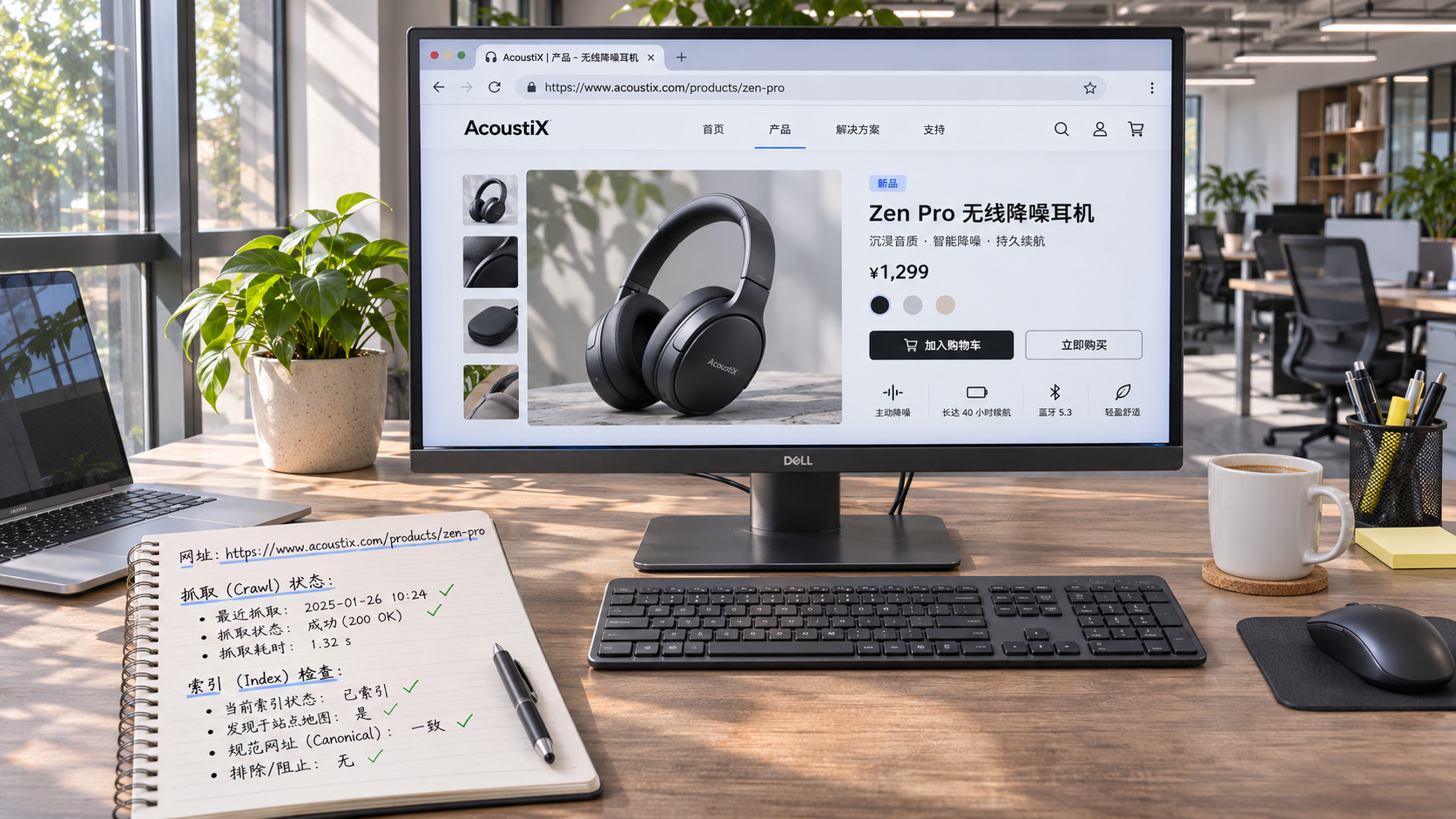
 How to troubleshoot when your website isn’t indexed by Google?
 How to Add Structured Data to Product Pages with JSON-LD
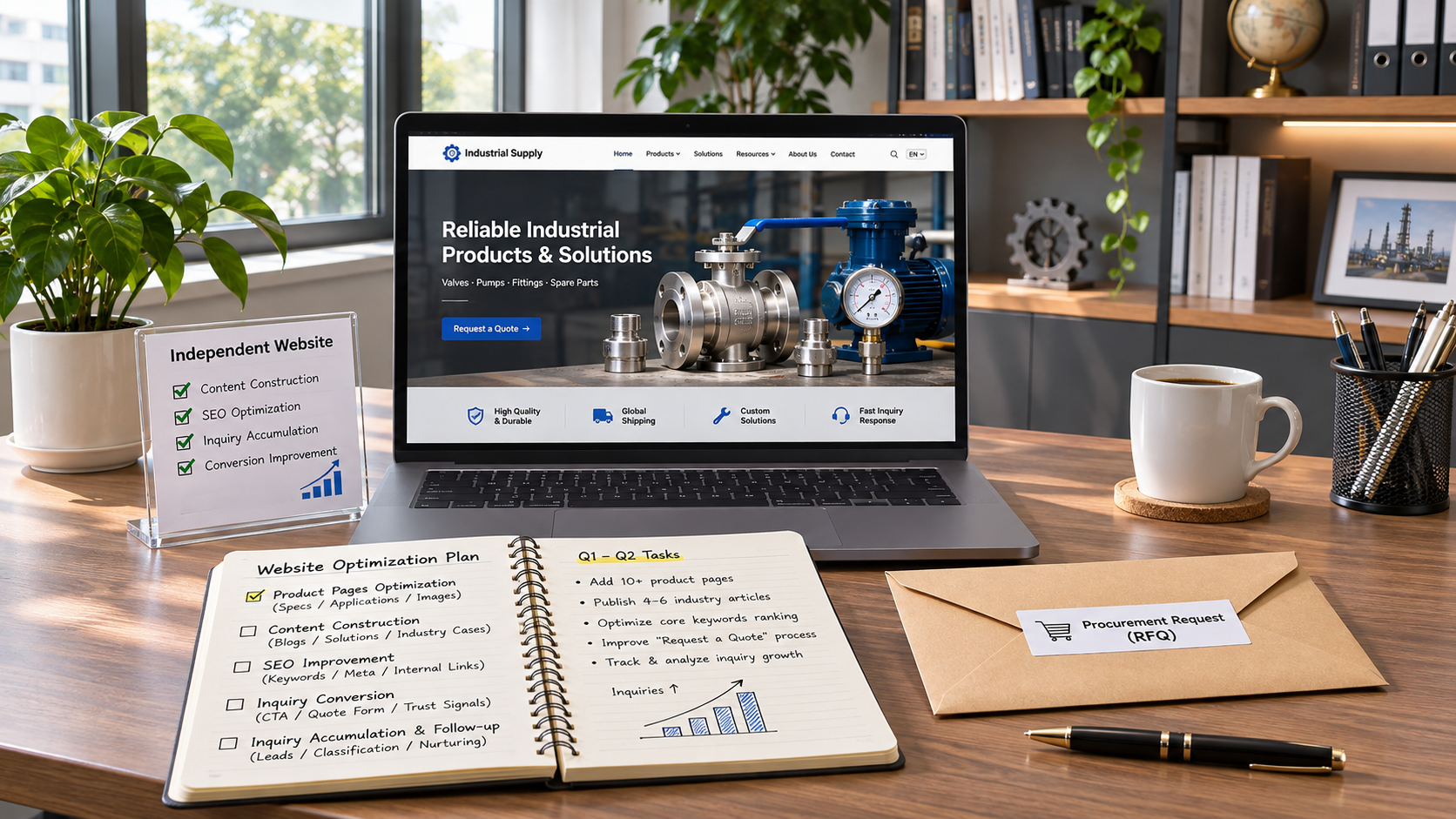
 How Long Does It Take to See an Increase in Inquiries from SEO for Your Website?
Related Products
 Yiyingbao SaaS Intelligent Website Building and Marketing SystemYiyingbao SaaS Intelligent Website Building and Marketing System, AI-powered no-code website building, rapid creation of multilingual B2B international websites in 10 minutes, global server acceleration, AI-powered SEO optimization, helping businesses connect efficiently with global markets. The perfect integration of technology and operation makes building an international trade website remarkably simple
 AI+SEM Intelligent Advertising Marketing SystemAI+SEM drives intelligent ad creation, empowering full-funnel precision advertising marketing. The system automatically generates weekly/monthly reports, AI recommends keywords and target countries, monitors core metrics in real-time with intelligent alerts, and enables one-click high-conversion ad solutions to help quickly acquire customers and improve ROI.
 AI+SEO Dual-Engine System Optimization ServicesYiyingbao’s AI+SEO dual-engine optimization system helps foreign trade enterprises acquire high-quality organic traffic through AI-powered keyword research, content generation, and comprehensive technical optimization, significantly improving search rankings and conversion rates.
 AI+SNS Social Media Marketing SystemYingbao AI+SNS Social Media Marketing System - Precision social capture for the social media era. Supports one-click content synchronization across major platforms like Facebook and LinkedIn. AI intelligently rewrites posts for enhanced relevance. 24/7 AI customer service and user profiling analysis empower businesses to efficiently expand into global markets.
 AI+SEO营销解决方案易营宝AI+SEO营销解决方案,通过AI批量写作、智能生成TDK、精准关键词扩词等功能,全面优化网站SEO效果,提升流量与转化率。助力企业构建高效智能网站新生态。
 AI+SEM Advertising Marketing SolutionsAI+SEM Advertising Marketing Solution leverages AI technology to deeply empower SEM ad campaigns. It automatically generates weekly/monthly reports using AI, presenting account data across multiple dimensions for comprehensive insights into campaign performance and trends. The system precisely recommends keywords and target countries, intelligently generates high-conversion ad copy, and enables one-click activation of efficient campaign plans to help businesses rapidly acquire customers. Simultaneously, it monitors core metrics in real time, intelligently identifies abnormal fluctuations, and issues timely alerts to ensure stable, high-return advertising results.
 Domain Name ServicesEasyWin provides professional domain name services, including intelligent queries, one-stop registration, brand protection, and full lifecycle management, helping businesses build a digital brand image.
 EasyOperate B2C Cross-Border E-Commerce Platform & Independent WebsiteEasyStore B2C Cross-border E-commerce Independent Store is an intelligent website building and cross-border e-commerce integrated solution independently developed by EasyStore Information Technology (Beijing) Co., Ltd. The system is specially designed for small and medium-sized as well as large export enterprises, integrating 'website building, operation, marketing, advertising, and conversion' into one, helping enterprises quickly establish cross-border e-commerce independent stores to achieve brand globalization and global sales growth.
The platform supports multiple languages, multiple currencies, and multi-channel marketing, with built-in AI intelligent translation and SEO optimization systems, suitable for mainstream markets such as Southeast Asia, Europe and America, Latin America, and the Middle East, assisting Chinese manufacturing enterprises in efficiently deploying international e-commerce strategies. SSL证书易营宝提供专业SSL安全证书服务,包括单域名和泛域名证书,确保网站数据传输加密、身份验证和完整性保护,助力企业建立安全可信的在线业务环境。









