









- AliExpress Global Double 11: Brand Sales Grow Nearly 50% in the First Week, U.S. GMV Rises 70%Nov 21, 2026View details
- Ministry of Commerce Reports E-commerce Development from January to October 2026, with Cross-Border Imports Performing StronglyNov 21, 2026View details
- Amazon Black Friday Orders Sluggish on Day One; NRF Forecasts 4.2 Million Fewer ParticipantsNov 21, 2026View details
- 21st Century Business Herald: AI and CTV Become Core Growth Engines for Digital Marketing in Overseas MarketsNov 18, 2026View details
- China Presents 25 Cooperation Outcomes in Areas Including Cross-Border E-Commerce During APECNov 18, 2026View details
- AI Products Drive Hong Kong Exports Up 64.9% in September, Fastest Growth in Over 40 YearsNov 17, 2026View details
How can you evaluate an independent SEO expert’s past results?
How Should You Evaluate an Independent SEO Expert’s Track Record Before Hiring?
How can procurement teams distinguish genuine results before hiring an independent SEO expert? A ranking screenshot or an upward traffic graph is usually not enough to tell the whole story. More useful questions include: Which pages and markets drove the growth? What work did the expert personally do? Did the traffic generate qualified inquiries? And can similar methods be applied to your own website?
An independent expert can offer direct communication and a more flexible working arrangement, but businesses also need to confirm whether their capabilities cover strategy, technical coordination, content execution, and performance reviews. When assessing past results, focus less on “how impressive the numbers look” and more on “whether the evidence is complete and responsibilities are clear.”
Review the Case Background Before the Growth Figures
The same increase in organic search traffic could come from a newly launched website gaining traction or from a mature website recovering after a redesign. The challenges, timelines, and resources involved differ. When reviewing a case, ask the expert to explain when the project began, the website’s starting point, the target countries or regions, the service period, and the team resources involved during the engagement.
For export-oriented manufacturers, it is also important to assess whether a case is comparable: Were the target customers end consumers or business buyers? Did the website sell standardized products, or did it rely on technical discussions to generate inquiries? Even substantial traffic from a consumer retail case does not necessarily indicate that the same approach will work for industrial products with longer purchasing cycles.
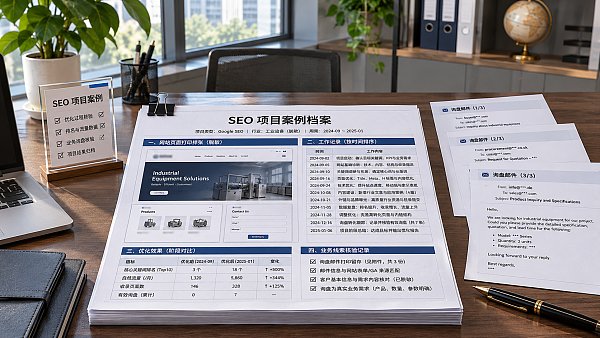
Ask for comparable before-and-after data, including the reporting period, organic search channels, target markets, and key landing pages. For seasonal businesses, compare results with the same period in the previous year rather than looking only at changes between two consecutive months. If client confidentiality applies, a redacted report is acceptable, but the timeframe, metric definitions, and data sources should still be provided.
Verify Rankings, Traffic, and Inquiries as a Connected Journey
Keyword rankings are useful as a reference, but ranking highly for a few brand terms or low-relevance keywords does not mean the business has gained more opportunities. Ask the expert to list representative search queries and explain the corresponding pages, search locations, reporting dates, and relevance to the products. They should also distinguish branded from non-branded terms. Rankings vary by location, device, and time, so a single screenshot should be interpreted with particular caution.
Next, check where the traffic comes from. Google Search Console can show search impressions, clicks, queries, and page performance; website analytics tools can help track visitor behavior after arrival. The two types of tools use different measurement methods, so their figures do not have to match exactly. However, if their trends differ substantially, ask for an explanation. Traffic estimates from third-party tools can help with comparisons but should not replace data from the website itself.
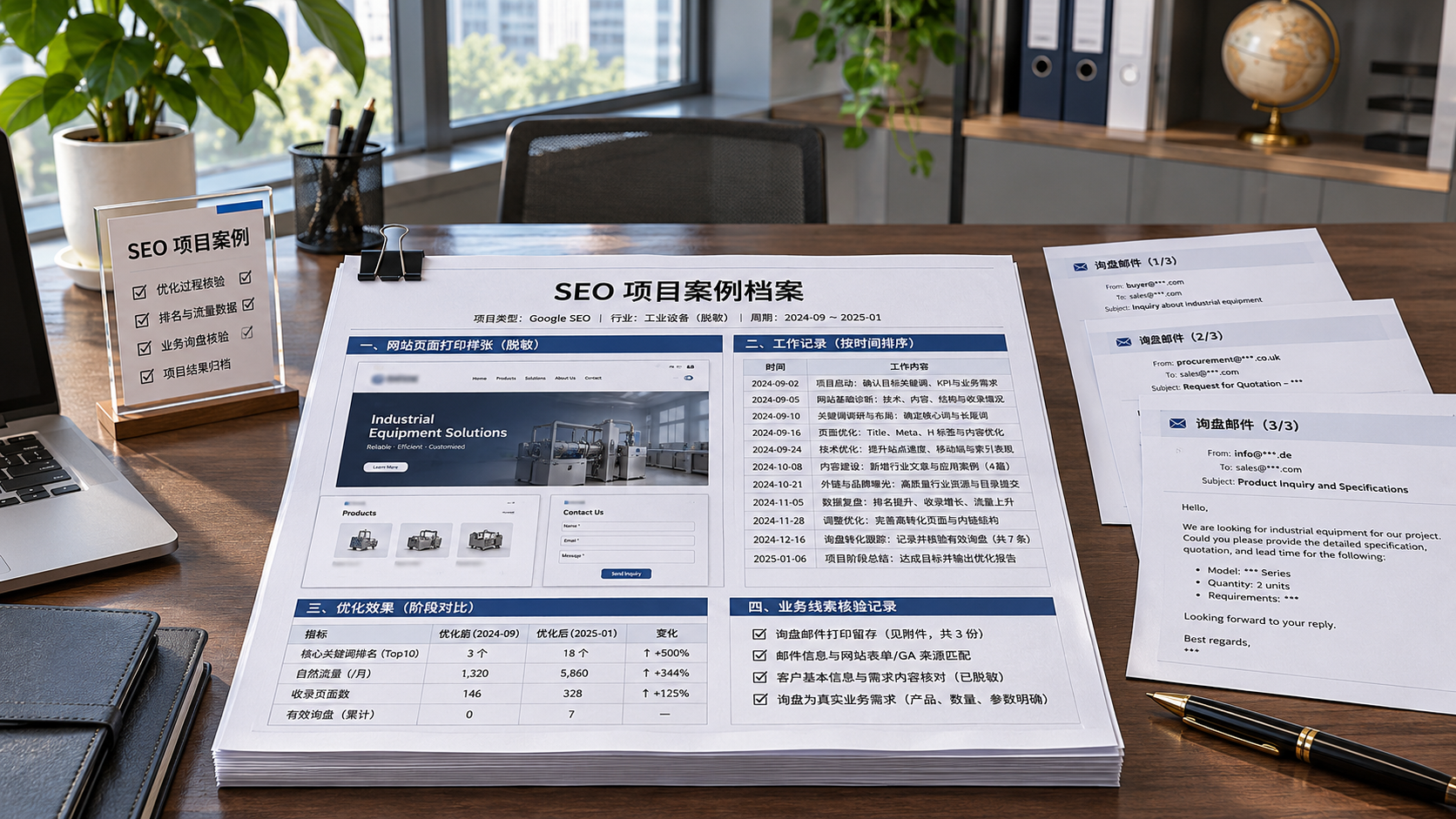
Conversion definitions matter even more. Form submissions, email clicks, and phone clicks can indicate potential leads, but they are not necessarily qualified inquiries. Ask whether spam was excluded, which countries inquiries came from, and whether the sales team confirmed customer needs. If the expert presents revenue figures, verify their sources and attribution method to avoid crediting organic search for every new order.
Break Down Attribution: Which Work Did the Expert Actually Do?
SEO projects are rarely completed by one person working alone. Developers may fix page issues, the business may provide product information, a content team may write copy, and advertising or brand campaigns may also affect search demand. A reliable expert can explain their specific responsibilities—for example, proposing a website structure, prioritizing content, following up on technical changes, or monitoring results—instead of making a vague claim such as “I grew the traffic.”
Choose a page with notable growth and ask the expert to walk you through the timeline: What issue did they identify? What changes did they recommend? Who implemented them? When did they go live, and what changed afterward? Also ask whether the website was redesigned, advertising was launched, the brand was promoted, or new products were introduced during the same period. These factors may have contributed to the results. Without a controlled comparison, an expert can explain plausible links but should not present correlation as proven causation.
If the client agrees, a brief reference call can also help. In addition to verifying results, ask about communication frequency, whether changes were completed on schedule, how problems were handled, and whether materials were handed over smoothly at the end of the engagement. Not being able to provide a reference does not necessarily indicate a lack of expertise, but there should be other verifiable work records.
Check That the Methods Are Safe and Practical to Implement
A strong track record does not necessarily mean the approach is suitable for a long-term engagement. Be cautious if an expert guarantees a number-one ranking within a set timeframe, refuses to explain the sources of backlinks, or recommends publishing large numbers of pages unrelated to the business. Practices such as buying links to manipulate rankings or using hidden text may violate search engine spam policies; if problems arise, the website owner bears the cost of recovery.
Also distinguish between “making recommendations” and “completing deliverables.” Can the expert check page indexing, redirects, duplicate content, and multilingual page settings? Does the website platform allow changes to titles, internal links, and page structure? If recommendations require developer support, who will schedule and approve the work? For websites serving multiple markets, also confirm who is responsible for translation, local search behavior, and maintaining different page versions.
This is also a point worth considering when comparing independent experts with integrated website and marketing services. An independent expert may suit a business that already has development and content teams but needs specialized strategy. If the website itself needs rebuilding and multilingual content, SEO, and advertising landing pages depend on one another, assess the cost of coordinating across teams. 易营宝 offers intelligent website building, multilingual websites, and overseas marketing services, which can serve as a point of reference when evaluating integrated solutions. However, the project scope, assigned personnel, and delivery terms should still be verified.
Include a Plan for Verifying Results in the Engagement Before Signing
A purchasing decision does not have to rely solely on past case studies. Consider starting with a clearly scoped audit or pilot: select a set of product pages and agree on a baseline review, issue prioritization, recommendations, and a review process. A pilot mainly helps assess analytical and collaborative capabilities; short-term ranking changes should not be the sole acceptance criterion, as search engine recrawling and market feedback take time.
The contract should specify the scope of work, reporting frequency, dependencies on both parties, and fee limits. Confirm that the company owns the website, analytics tools, and Search Console accounts. Agree before work begins on how content, data, documents, and newly created assets will be handed over. When customer data or website administration access is involved, grant permissions only as needed and set out confidentiality requirements and access revocation at the end of the engagement.
When making the final selection, assess case credibility, business relevance, method-related risks, and execution fit together in one evaluation. Someone who clearly explains limitations, is willing to provide verifiable records, and can specify who will do what next is often more worth discussing than someone who only presents impressive growth charts.
Related Articles
 How Should International Digital Agencies Develop SEO Strategies for Multiple Markets?
 How can you evaluate an independent SEO expert’s past results?
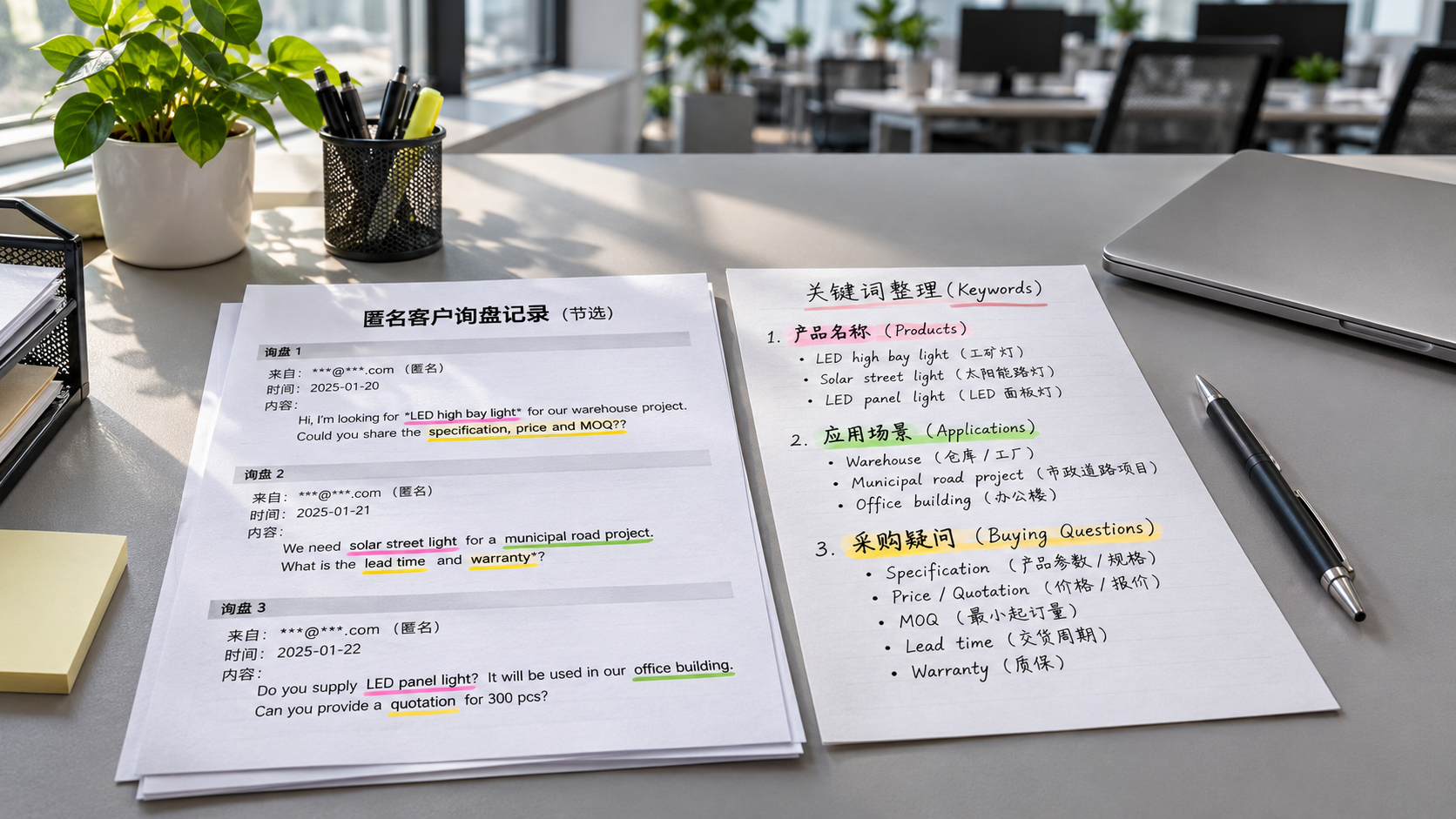
 How Can You Expand Keywords for a B2B Website Using Customer Inquiries?
Related Products
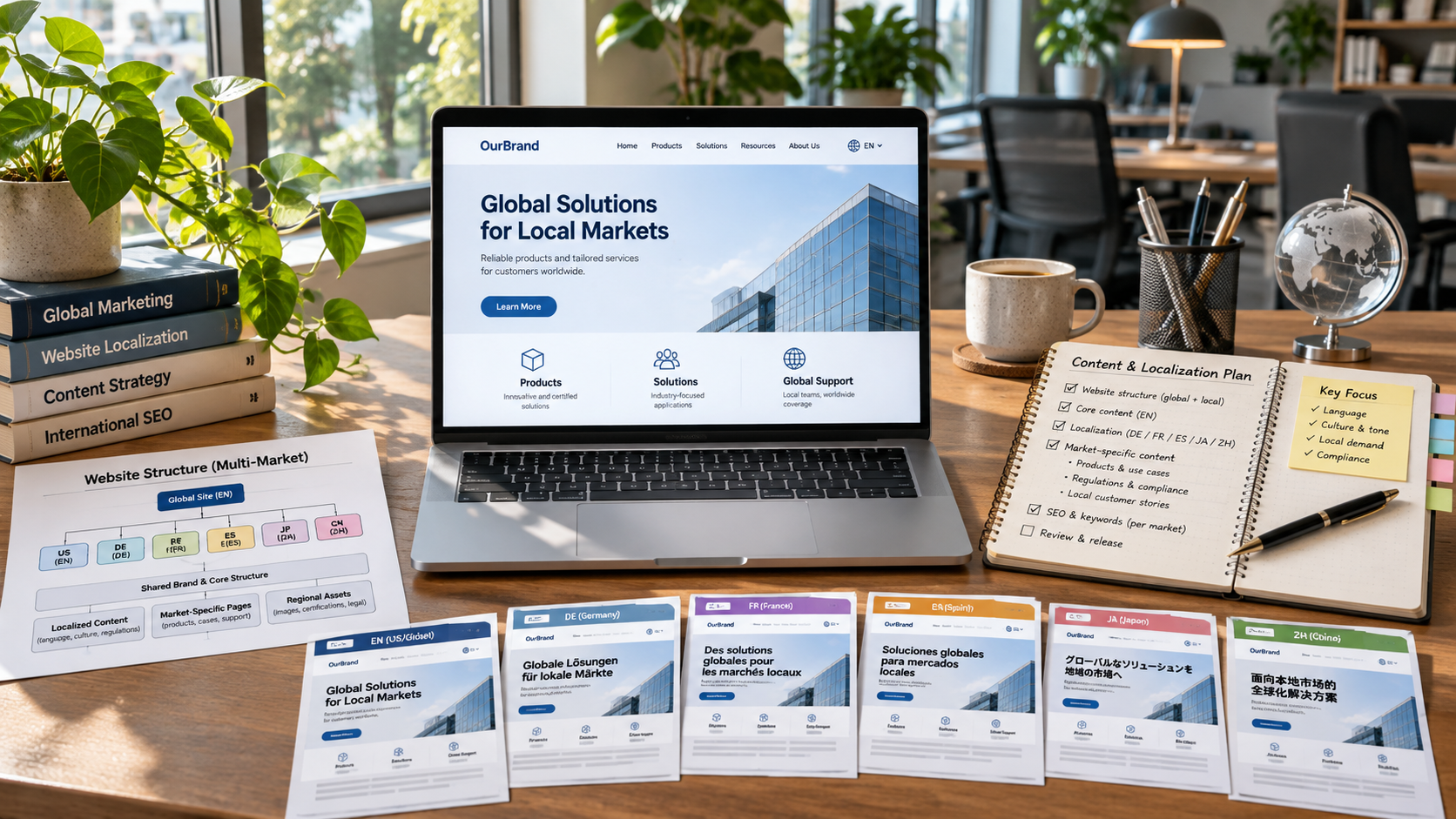
 Yiyingbao SaaS Intelligent Website Building and Marketing SystemYiyingbao SaaS Intelligent Website Building and Marketing System, AI-powered no-code website building, rapid creation of multilingual B2B international websites in 10 minutes, global server acceleration, AI-powered SEO optimization, helping businesses connect efficiently with global markets. The perfect integration of technology and operation makes building an international trade website remarkably simple
 AI+SEM Intelligent Advertising Marketing SystemAI+SEM drives intelligent ad creation, empowering full-funnel precision advertising marketing. The system automatically generates weekly/monthly reports, AI recommends keywords and target countries, monitors core metrics in real-time with intelligent alerts, and enables one-click high-conversion ad solutions to help quickly acquire customers and improve ROI.
 AI+SEO Dual-Engine System Optimization ServicesYiyingbao’s AI+SEO dual-engine optimization system helps foreign trade enterprises acquire high-quality organic traffic through AI-powered keyword research, content generation, and comprehensive technical optimization, significantly improving search rankings and conversion rates.
 AI+SNS Social Media Marketing SystemYingbao AI+SNS Social Media Marketing System - Precision social capture for the social media era. Supports one-click content synchronization across major platforms like Facebook and LinkedIn. AI intelligently rewrites posts for enhanced relevance. 24/7 AI customer service and user profiling analysis empower businesses to efficiently expand into global markets.
 AI+SEO营销解决方案易营宝AI+SEO营销解决方案,通过AI批量写作、智能生成TDK、精准关键词扩词等功能,全面优化网站SEO效果,提升流量与转化率。助力企业构建高效智能网站新生态。
 AI+SEM Advertising Marketing SolutionsAI+SEM Advertising Marketing Solution leverages AI technology to deeply empower SEM ad campaigns. It automatically generates weekly/monthly reports using AI, presenting account data across multiple dimensions for comprehensive insights into campaign performance and trends. The system precisely recommends keywords and target countries, intelligently generates high-conversion ad copy, and enables one-click activation of efficient campaign plans to help businesses rapidly acquire customers. Simultaneously, it monitors core metrics in real time, intelligently identifies abnormal fluctuations, and issues timely alerts to ensure stable, high-return advertising results.
 Domain Name ServicesEasyWin provides professional domain name services, including intelligent queries, one-stop registration, brand protection, and full lifecycle management, helping businesses build a digital brand image.
 EasyOperate B2C Cross-Border E-Commerce Platform & Independent WebsiteEasyStore B2C Cross-border E-commerce Independent Store is an intelligent website building and cross-border e-commerce integrated solution independently developed by EasyStore Information Technology (Beijing) Co., Ltd. The system is specially designed for small and medium-sized as well as large export enterprises, integrating 'website building, operation, marketing, advertising, and conversion' into one, helping enterprises quickly establish cross-border e-commerce independent stores to achieve brand globalization and global sales growth.
The platform supports multiple languages, multiple currencies, and multi-channel marketing, with built-in AI intelligent translation and SEO optimization systems, suitable for mainstream markets such as Southeast Asia, Europe and America, Latin America, and the Middle East, assisting Chinese manufacturing enterprises in efficiently deploying international e-commerce strategies. SSL证书易营宝提供专业SSL安全证书服务,包括单域名和泛域名证书,确保网站数据传输加密、身份验证和完整性保护,助力企业建立安全可信的在线业务环境。









