









- Can the average annual growth rate reflect real opportunities in overseas markets?Oct 07, 2026View details
- Which customer acquisition channels will be affected by cross-border marketing trends in 2026?Sep 06, 2026View details
- Which homogenization risks should be considered in an analysis of the AI-powered website building industry?Aug 30, 2026View details
- How Will AI Marketing Trends 2026 Change Advertising Budget AllocationAug 28, 2026View details
- Is the EV SSL certificate market shrinking or upgrading? How should companies assess certificate procurement?Aug 11, 2026View details
- Why the old AMP SEO 2020 practices no longer work and what has changed in current optimization prioritiesAug 02, 2026View details
Can keyword research services help B2B exporters identify high-intent keywords?
Can Keyword Research Services Help B2B Exporters Identify High-Intent Keywords?
Can keyword research services help generate inquiries for B2B exporters? Yes, but the focus should be more than search volume. It should be on identifying purchase intent, filtering for high-intent keywords, and matching them to conversion pages. A keyword list can be long without answering the question that matters most to your sales team: Are people searching these terms likely to buy products we can manufacture and deliver?
For export businesses, the value of paying for this service is not in how many keywords it exports. It is in helping the team avoid detours: which demand to pursue, which traffic to defer, and what content the website needs to address that demand.
High Intent Does Not Always Mean Including the Word “Supplier”
Purchase intent needs to be assessed in the context of the business. Take industrial pumps, for example. Someone searching for a product name might be looking for images or repair instructions—or preparing to make a purchase. A query that specifies material, fluid, flow rate, or customization requirements is more specific, but you still need to confirm that your company can meet those requirements. Do not label a keyword as high-value just because it is long or has low search volume.
Terms such as “manufacturer,” “bulk purchase,” and “contract manufacturing” can indicate purchasing interest, but they do not guarantee a sale. Some buyers first research product selection, compatibility, and technical information before choosing suppliers. Technical question keywords should not all be excluded, but they are generally better served by product selection guides than by direct inquiry pages, and should not be measured by the same criteria as direct quote-related keywords.
A more practical way to screen keywords is to assess whether the need is clear, whether the customer type is a good fit, and whether your company has a delivery advantage. For example, even if a retail parts keyword gets a lot of traffic, it may not be worth prioritizing for a factory that only handles bulk customization. Knowing when to rule out such keywords is a sign that the research is becoming more business-focused.
When Choosing a Service Provider, Start by Asking How It Evaluates a Group of Keywords
During the commercial evaluation, choose one of your main products and ask the service provider to present a small sample of its research instead of judging it by the length of its report. The sample should explain at least the target countries and languages, the basis for its intent assessment, how well the keywords fit your business, the recommended landing pages, and their priority. Search volume and competition metrics can be useful references, but the tool and methodology behind them should be specified; they should not be treated as actual buyer counts.
A useful question to ask is: “Why is this keyword ranked so highly?” If the only answer is “high volume, low difficulty,” the assessment is incomplete. A more reliable explanation will take the search results into account: Are they mainly manufacturers’ product pages, marketplaces, tutorials, or retail pages? The types of pages appearing in search results can help indicate user needs and what kind of pages a company should create, although results vary by region and over time.
Multilingual projects require particular care to avoid directly translating keyword lists. The same product may be described differently, and purchasing habits may vary across markets. Check local search results and the language used in customer emails and sales records. A very low search volume in a tool does not necessarily mean there is no demand; data for niche industrial products may be incomplete, so it should be assessed alongside business information.
The deliverables should also list keywords to “defer” and explain why—for example, the service region is not a match, the search intent is focused on personal repairs, or the required specifications cannot be met. Otherwise, when the team expands the keyword list in the next round, it may add unsuitable demand all over again.
Even the Right Keywords Will Not Generate Inquiries If the Pages Cannot Meet Their Needs
Suppose a visitor searches for custom equipment made from a corrosion-resistant material, but the landing page only covers the company’s history and shows generic images. The buyer still cannot tell whether it is worth getting in touch. What is missing is not more repetitions of the keyword, but information on suitable applications, parameter ranges, customization limits, and the details needed to request a quote. Any claims about performance or certifications must also be supported by genuine documentation.
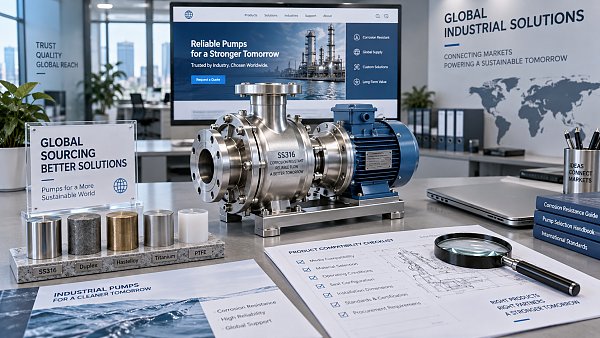
Keyword research should therefore lead to a “keyword group–page–conversion action” plan. Similar needs can be addressed on one comprehensive page; you do not need to create a separate page for every keyword. If different application requirements call for different technical explanations, consider creating separate pages. Inquiry forms should also be tailored to the product, asking where appropriate about the application, specifications, and order quantity instead of offering only a blank message box.
For a provider such as 易营宝 (Yiyingbao), which offers smart website building, Google SEO, and advertising services, its value lies in whether it can turn research findings into website structure, content, and landing pages—not merely supply a keyword database. Integrated services do not automatically deliver better results. The contract should still specify who updates the pages, who reviews technical information, and which changes are included in the fee.
For Acceptance, Look Beyond Rankings and Track Qualified Business Opportunities
For initial acceptance, check that the research rationale and page plan are clear. After launch, monitor impressions and clicks for relevant searches, on-site behavior, and qualified inquiries. Organic search usually cannot attribute every inquiry accurately to a specific keyword. It is more reliable to assess results using a combination of landing pages, channel records, and inquiry content rather than asking the service provider for precise attribution that cannot be verified.
The definition of a “qualified inquiry” should also be agreed in advance: whether the product needs match, the region is serviceable, the purchase volume is suitable, and the contact details are valid. Ad testing can provide additional search terms and conversion insights, but ad performance is not the same as organic ranking performance. If the test budget is insufficient, a small number of clicks should not be used to dismiss an entire group of demand.
Before signing, ask the service provider to select one of your main product categories and provide candidate keywords, reasons for excluding others, page change recommendations, and a plan for subsequent validation. If it can clearly explain “why to pursue this and not that,” and is willing to adjust priorities based on sales feedback, the service is more likely to help your company identify purchasing demand truly worth pursuing.
Related Articles


Related Products
 Yiyingbao SaaS Intelligent Website Building and Marketing SystemYiyingbao SaaS Intelligent Website Building and Marketing System, AI-powered no-code website building, rapid creation of multilingual B2B international websites in 10 minutes, global server acceleration, AI-powered SEO optimization, helping businesses connect efficiently with global markets. The perfect integration of technology and operation makes building an international trade website remarkably simple
 AI+SEM Intelligent Advertising Marketing SystemAI+SEM drives intelligent ad creation, empowering full-funnel precision advertising marketing. The system automatically generates weekly/monthly reports, AI recommends keywords and target countries, monitors core metrics in real-time with intelligent alerts, and enables one-click high-conversion ad solutions to help quickly acquire customers and improve ROI.
 AI+SEO Dual-Engine System Optimization ServicesYiyingbao’s AI+SEO dual-engine optimization system helps foreign trade enterprises acquire high-quality organic traffic through AI-powered keyword research, content generation, and comprehensive technical optimization, significantly improving search rankings and conversion rates.
 AI+SNS Social Media Marketing SystemYingbao AI+SNS Social Media Marketing System - Precision social capture for the social media era. Supports one-click content synchronization across major platforms like Facebook and LinkedIn. AI intelligently rewrites posts for enhanced relevance. 24/7 AI customer service and user profiling analysis empower businesses to efficiently expand into global markets.
 AI+SEO营销解决方案易营宝AI+SEO营销解决方案,通过AI批量写作、智能生成TDK、精准关键词扩词等功能,全面优化网站SEO效果,提升流量与转化率。助力企业构建高效智能网站新生态。
 AI+SEM Advertising Marketing SolutionsAI+SEM Advertising Marketing Solution leverages AI technology to deeply empower SEM ad campaigns. It automatically generates weekly/monthly reports using AI, presenting account data across multiple dimensions for comprehensive insights into campaign performance and trends. The system precisely recommends keywords and target countries, intelligently generates high-conversion ad copy, and enables one-click activation of efficient campaign plans to help businesses rapidly acquire customers. Simultaneously, it monitors core metrics in real time, intelligently identifies abnormal fluctuations, and issues timely alerts to ensure stable, high-return advertising results.
 Domain Name ServicesEasyWin provides professional domain name services, including intelligent queries, one-stop registration, brand protection, and full lifecycle management, helping businesses build a digital brand image.
 EasyOperate B2C Cross-Border E-Commerce Platform & Independent WebsiteEasyStore B2C Cross-border E-commerce Independent Store is an intelligent website building and cross-border e-commerce integrated solution independently developed by EasyStore Information Technology (Beijing) Co., Ltd. The system is specially designed for small and medium-sized as well as large export enterprises, integrating 'website building, operation, marketing, advertising, and conversion' into one, helping enterprises quickly establish cross-border e-commerce independent stores to achieve brand globalization and global sales growth.
The platform supports multiple languages, multiple currencies, and multi-channel marketing, with built-in AI intelligent translation and SEO optimization systems, suitable for mainstream markets such as Southeast Asia, Europe and America, Latin America, and the Middle East, assisting Chinese manufacturing enterprises in efficiently deploying international e-commerce strategies. SSL证书易营宝提供专业SSL安全证书服务,包括单域名和泛域名证书,确保网站数据传输加密、身份验证和完整性保护,助力企业建立安全可信的在线业务环境。









