









- China’s Ministry of Commerce Responds to Additional Charges on Low-Value Imports Imposed by the EUNov 06, 2026View details
- Two Internet Development Reports Released at the 2026 World Internet ConferenceNov 05, 2026View details
- Internet Business Revenue of Enterprises Above the Designated Size Reached RMB 1.716 Trillion in the First Three Quarters, with Profits Up 17.6%Nov 05, 2026View details
- Shopify's Third-Quarter Revenue and GMV Fall Short of Expectations, Sending Shares Tumbling Before the Market OpensNov 04, 2026View details
- Temu Sellers See a Decline in Traffic as the Platform’s Traffic Allocation ShiftsNov 04, 2026View details
- UK Regulator Requires E-Commerce Businesses to Clearly Display Total Prices Including Mandatory Delivery ChargesNov 04, 2026View details
Does Google Officially Offer Website SEO Management Services?
When searching for “seo services by google,” you may be looking for a hassle-free option: since you want your website to be visible in Google Search, can you simply ask Google itself to handle your SEO? The answer is that Google provides free search tools and official guidance, but generally does not offer ongoing, monthly SEO management services for businesses. Website owners need to handle day-to-day optimization themselves or hire a third-party provider to do it.
Understanding this distinction can help you avoid confusing search tools, advertising products, and outsourced services. It can also help you assess whether claims of “official Google SEO management” are credible.
What services do you actually find when searching for seo services by google?
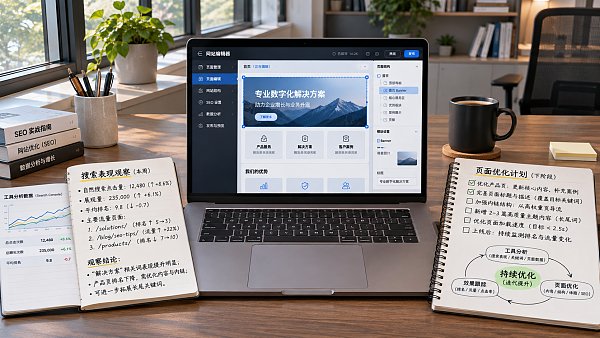
Google’s search-related resources are primarily designed to help website owners understand how search works, identify issues, and improve their websites—not to continually update pages, publish content, or develop keyword plans on behalf of businesses. Common resources include:
- Google Search Console: Helps you review your website’s performance in Google Search, page indexing, and certain technical issues. For example, after submitting a sitemap, you can check whether important pages have been discovered and indexed.
- Google Search Central: Provides search fundamentals, technical documentation, and content creation guidance to help you understand how your website should present information to search engines.
- PageSpeed Insights: Helps you understand page loading experience and performance improvement opportunities, but its recommendations still need to be assessed in the context of your website.
- Google Analytics: Helps analyze website traffic and user behavior. It is not a ranking tool, but it can help businesses understand how organic search visitors behave after arriving at their website.
Most of these resources are free to use, but “having tools” does not mean “having someone manage your SEO.” For example, if Search Console indicates that certain pages have not been indexed, the business still needs to investigate the cause: Is the page content duplicated, are there too few internal links, or is there a problem with the website settings? Tools can provide clues, but they do not make every decision or implement every change for the business.
What is the difference between Google Ads, official tools, and SEO management services?
All three may be part of a business’s international marketing plan, but their functions and payment models are different.
Google Ads is an advertising platform. Businesses can pay to have ads appear in eligible search results or other ad placements. Advertising and organic search rankings are separate systems; buying ads does not directly improve a website’s organic search rankings.
Google’s official search tools focus on data and guidance. They help website owners understand search performance and check for issues, but they do not guarantee that pages will be indexed or promise rankings.
Third-party SEO management is an ongoing service. Services typically include website audits, search demand research, on-page optimization, technical issue follow-up, and performance reviews. Who makes changes to the website, whether content is written for you, and whether multilingual support is included should all be defined in the agreement.
Therefore, businesses do not need to think of advertising and SEO as a simple either-or choice. Advertising is suited to generating paid traffic, while SEO focuses more on building organic search visibility. They can be used together, but their budgets and objectives should be set and evaluated separately.
Why do some people claim to offer “official Google SEO”?
Some claims may simply mean that the provider uses Google’s tools or participates in a partnership program related to advertising. Other promotions deliberately blur the distinction between “providing services for the Google platform” and “services provided officially by Google.” Using Google products or holding a certain advertising partner status does not mean Google has authorized a provider to offer official SEO management, nor does it provide any special advantage in organic rankings.
If you encounter any of the following claims, consider asking for more details:
- “Guaranteed number one on the first page”: Organic search results vary based on the query, location, and other factors. No third party can guarantee fixed rankings for every keyword.
- “Pay us and your pages will be indexed quickly”: Whether a page is indexed depends on many factors. Paying a third party is not an official way to get a web page indexed by Google.
- “We have an inside channel to change rankings”: Ask the provider to explain its methods and rationale. Be wary of unexplained practices and prohibited tactics such as hidden text or bulk spam links.
- “Hand over all your accounts and we’ll manage everything”: Businesses should retain ownership of their domain, website, and key data accounts, and grant appropriate access based on the work required.
Being cautious does not mean all outsourcing is risky. It means breaking down vague claims about “official resources” into verifiable service details: who will do the work, what they will change, how they will report results, and who will own the materials when the engagement ends.
Where should businesses start with Google SEO?
For businesses just starting to generate leads overseas, it is more important to first make sure their website can serve their target customers than to rush into looking for ranking guarantees. Suppose a manufacturer wants to generate inquiries from overseas. Even if users find its product page, visits may not lead to meaningful conversations if the page lacks specifications, application scenarios, contact options, or content in the languages required by the target market.
You can assess your needs in the following areas:
- Check your website’s fundamentals. Confirm that important pages are accessible, the mobile experience is good, and the site structure is clear. Use Search Console to monitor indexing.
- Understand how customers search. In addition to product names, consider how people search for applications, materials, specifications, and purchasing questions. Avoid organizing content solely around the terminology your business uses internally.
- Improve key pages. Ensure product, category, and solution pages answer users’ real questions and provide a clear next step, such as submitting an inquiry or viewing related products.
- Plan multilingual content. When targeting different countries, consider more than just translating text. Take local search habits, the relationships between language versions, and page maintenance costs into account.
- Monitor results over time. Analyze organic search impressions and clicks, visits to key pages, and inquiries together, rather than focusing on the ranking of a single keyword.
SEO usually takes time to show results. The timeframe depends on factors such as the website’s current condition, the competitive landscape, and how the work is carried out. A sound plan should include periodic reviews, but a ranking on a particular date should not be treated as a guaranteed outcome.
What should you clarify before choosing a third-party provider?
For international trade businesses, manufacturers, and cross-border sellers, SEO is often connected with website development, content, advertising landing pages, and inquiry management. When choosing a provider, ask them to review your existing website and explain which issues should be addressed first, what work requires your cooperation, and whether their recommendations can be implemented on the website.
Also confirm whether the scope covers your target markets and languages, what data will be included in reports, and how content and website changes will be delivered. If the service includes link building, ask about the sources and methods to avoid accumulating low-quality links for short-term results.
For example, Yiyingbao offers services such as intelligent website building, multilingual website development, and Google SEO optimization. Businesses looking to plan website development and overseas marketing together may wish to learn more and compare these services. Whether an integrated service is needed should depend on the current state of the website, internal staffing, and lead generation goals. Be sure to confirm the specific scope of work before entering into an agreement.
Ultimately, Google officially provides tools, documentation, and search-related products; it does not provide an SEO team to manage every business’s website. By first distinguishing official support from third-party execution, then verifying the proposed plan and account permissions, you can make a more informed decision about which tasks to handle in-house and which to entrust to an external team.
Related Articles
 How to Choose Target Keywords for SEO in Industry Lead Generation
 Does Google Officially Offer Website SEO Management Services?
 How Should You Evaluate the Results of Managed Google SEO Services?

Related Products
 Yiyingbao SaaS Intelligent Website Building and Marketing SystemYiyingbao SaaS Intelligent Website Building and Marketing System, AI-powered no-code website building, rapid creation of multilingual B2B international websites in 10 minutes, global server acceleration, AI-powered SEO optimization, helping businesses connect efficiently with global markets. The perfect integration of technology and operation makes building an international trade website remarkably simple
 AI+SEM Intelligent Advertising Marketing SystemAI+SEM drives intelligent ad creation, empowering full-funnel precision advertising marketing. The system automatically generates weekly/monthly reports, AI recommends keywords and target countries, monitors core metrics in real-time with intelligent alerts, and enables one-click high-conversion ad solutions to help quickly acquire customers and improve ROI.
 AI+SEO Dual-Engine System Optimization ServicesYiyingbao’s AI+SEO dual-engine optimization system helps foreign trade enterprises acquire high-quality organic traffic through AI-powered keyword research, content generation, and comprehensive technical optimization, significantly improving search rankings and conversion rates.
 AI+SNS Social Media Marketing SystemYingbao AI+SNS Social Media Marketing System - Precision social capture for the social media era. Supports one-click content synchronization across major platforms like Facebook and LinkedIn. AI intelligently rewrites posts for enhanced relevance. 24/7 AI customer service and user profiling analysis empower businesses to efficiently expand into global markets.
 AI+SEO营销解决方案易营宝AI+SEO营销解决方案,通过AI批量写作、智能生成TDK、精准关键词扩词等功能,全面优化网站SEO效果,提升流量与转化率。助力企业构建高效智能网站新生态。
 AI+SEM Advertising Marketing SolutionsAI+SEM Advertising Marketing Solution leverages AI technology to deeply empower SEM ad campaigns. It automatically generates weekly/monthly reports using AI, presenting account data across multiple dimensions for comprehensive insights into campaign performance and trends. The system precisely recommends keywords and target countries, intelligently generates high-conversion ad copy, and enables one-click activation of efficient campaign plans to help businesses rapidly acquire customers. Simultaneously, it monitors core metrics in real time, intelligently identifies abnormal fluctuations, and issues timely alerts to ensure stable, high-return advertising results.
 Domain Name ServicesEasyWin provides professional domain name services, including intelligent queries, one-stop registration, brand protection, and full lifecycle management, helping businesses build a digital brand image.
 EasyOperate B2C Cross-Border E-Commerce Platform & Independent WebsiteEasyStore B2C Cross-border E-commerce Independent Store is an intelligent website building and cross-border e-commerce integrated solution independently developed by EasyStore Information Technology (Beijing) Co., Ltd. The system is specially designed for small and medium-sized as well as large export enterprises, integrating 'website building, operation, marketing, advertising, and conversion' into one, helping enterprises quickly establish cross-border e-commerce independent stores to achieve brand globalization and global sales growth.
The platform supports multiple languages, multiple currencies, and multi-channel marketing, with built-in AI intelligent translation and SEO optimization systems, suitable for mainstream markets such as Southeast Asia, Europe and America, Latin America, and the Middle East, assisting Chinese manufacturing enterprises in efficiently deploying international e-commerce strategies. SSL证书易营宝提供专业SSL安全证书服务,包括单域名和泛域名证书,确保网站数据传输加密、身份验证和完整性保护,助力企业建立安全可信的在线业务环境。









