









- 21st Century Business Herald: AI and CTV Become Core Growth Engines for Digital Marketing in Overseas MarketsNov 18, 2026View details
- China Presents 25 Cooperation Outcomes in Areas Including Cross-Border E-Commerce During APECNov 18, 2026View details
- AI Products Drive Hong Kong Exports Up 64.9% in September, Fastest Growth in Over 40 YearsNov 17, 2026View details
- National Bureau of Statistics: Foreign trade grew rapidly in October, providing stable support for global tradeNov 17, 2026View details
- The U.S. has ended the $800 de minimis exemption for non-postal shipments; express courier packages must be formally declared.Nov 16, 2026View details
- ASEAN Signs Digital Economy Framework Agreement, Moving Toward Harmonized Cross-Border E-Commerce RulesNov 15, 2026View details
Is the delayed effectiveness of product page SEO optimization related to insufficient localized keyword coverage?
Product Page SEO Results Lagging? Before Changing the Code, Check Whether Your Keywords Are “Speaking the Wrong Language”
Technical evaluators often encounter a typical situation: the product page structure is compliant, TDK is complete, internal links are clear, and loading speed meets standards, yet the organic traffic curve in Google Search Console remains as flat as a frozen lake—with no improvement for three consecutive months. At this point, it is easy to fall into two misconceptions: either suspect that the algorithm has changed again, or switch directly to ads to make up for the shortfall. In fact, in many cases, the issue is not at the technical implementation level, but at the more fundamental semantic level: your product page is simply not speaking in the target market’s “native language.”
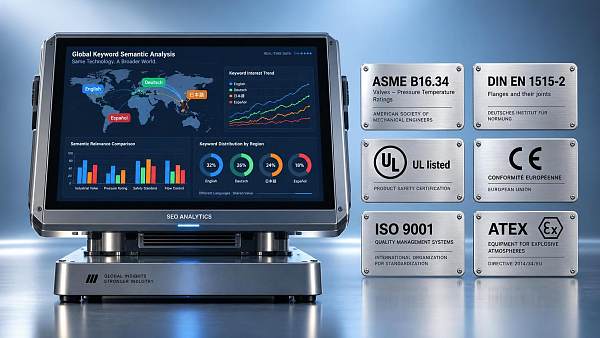
We have served many manufacturing clients. For example, a valve manufacturer in Zhejiang optimized “high-pressure stainless steel gate valve” as its primary keyword on its English website. Six months later, it found that the high-frequency search term actually used by B2B buyers in Europe and the United States was “ASME B16.34 rated gate valve for steam service.” The former is a direct translation of product parameters, while the latter is a complete expression of intent entered by engineers in real procurement scenarios. The difference is not spelling, but context.
Localized Keywords Are Not Translation, but Intent Rewriting
Many technical teams understand “localized keyword coverage” as asking a translation company to convert Chinese product descriptions into English, German, or Spanish. This is far from enough. Truly localized keywords must meet three conditions simultaneously: align with local search habits, match the procurement decision-making path, and be embedded in the industry terminology system. For example, in Germany, “Edelstahl-Absperrventil” (stainless steel stop valve) is a general term, but industrial buyers more often search for “DIN EN 1515-2 zertifiziertes Absperrventil”—a combination of certification standard and functional term. Omitting “DIN EN 1515-2” is equivalent to becoming invisible to professional buyers.
Across the 27 major overseas markets Yiyingbao has worked in over the past decade, Russian-speaking markets and the Japanese and Korean markets are the most sensitive to keyword semantic deviations. When Russian users search for “промышленный фильтр” (industrial filter), what they actually want is a compressed air filtration system with ISO 8573-1 certification; when Japanese customers search for “産業用フィルター,” they often assume that JIS B 8391 compliance is included. If a product page merely piles up literally translated terms, search engines cannot establish the trust signal that “this page can solve the user’s real problem.”
Why Do Product Pages Most Easily Stumble Here?
Because product pages naturally carry a “manufacturer’s perspective.” Engineers write specifications, sales teams write selling points, and marketing departments write slogans—but no one stands in front of the screen of an overseas buyer researching information at three in the morning, thinking about what terms they would actually type. We once helped an LED module factory in Dongguan conduct a diagnosis: all product page titles on its English website were “High Brightness SMD LED Module,” but according to Google Trends, the term most frequently searched by North American lighting integrators was “UL listed LED module for troffer retrofit.” UL certification, application scenario, and retrofit requirement—none of these three elements can be missing. Yet the original pages did not even mention UL certification status, let alone incorporate long-tail keywords.
This type of issue is especially hidden on multilingual websites. The backend may show a 98% indexing rate for the Spanish site, but the actual click-through rate from Spanish customers is less than 0.3%—because the machine-translated “módulo LED de alta luminosidad” used on the homepage is simply not the term local distributors use. In daily practice, they say “módulo LED certificado CE para remodelación de oficinas.” A semantic gap is more fatal than slow server response.
How Can You Tell Whether Localized Keywords Are Holding You Back?
Do not look only at search volume data provided by keyword tools. There are three truly effective validation methods:
First, reverse-engineer competitors’ actual traffic keywords. Use Ahrefs or Semrush to review the “Top organic keywords” of the Top 3 competitors in the target country, focusing on terms that appear in product page URLs—these are localized terms with conversion intent that have already been validated by the market.
Second, check the “Queries” report in Search Console. Filter records from the past 90 days by country and product page URL, and see which terms generated impressions but no clicks. If “stainless steel valve” has high impressions but a CTR below 1%, it most likely means that the search intent for this term is vague locally and needs to be broken down into more specific scenario-based terms.
Third, manually simulate the procurement path. As a target customer, search for your product’s core function + application scenario + certification requirements on local domains such as Google.co.uk / Google.de / Google.jp, and record the titles and descriptions appearing on the first three pages. Is your product page title more precise than theirs? Does the description answer questions that are not clearly addressed in the first-page results?
Yiyingbao’s AI+SEO system includes a built-in GEO generation engine. It does not merely translate keywords; instead, it dynamically generates semantic keyword clusters aligned with the decision-making chain based on local procurement documents, popular industry forum posts, and B2B platform category trees. For example, for the Middle East market, the system automatically associates regionally relevant terms such as “SASO certified,” “GCC standard,” and “Dubai Municipality approved,” rather than simply applying general European and American keyword databases.
An Often-Overlooked Intersection
Insufficient localized keyword coverage is often deeply tied to website architecture. For example, one client promoted a smart water pump in Southeast Asia and placed all models under /product/pump-xxx on its Thai website. However, Thai buyers are accustomed to searching by application category: “น้ำบาดาล ปั๊มสำหรับบ้าน” (household groundwater pump) and “ปั๊มน้ำอุตสาหกรรม” (industrial water pump). Yet its product pages neither provided application-based navigation nor naturally incorporated these scenario-based terms into the content—the result was that no matter how detailed the single-page optimization was, it could not escape the dilemma of “no entry point to be found.”
Therefore, when product page SEO results lag behind, it is advisable to pause technical troubleshooting and spend two hours conducting a local search intent calibration: open Google for the target country, search for three core product terms in the local language, take screenshots of the first five results, and mark the certifications, standards, materials, application scenarios, and industry terms appearing in each title. Then compare them with your product pages to identify which category of information anchor is missing. In many cases, revising the copy on one page delivers results faster than adjusting server configurations for three months.
Incidentally, content such as Reflections on Advancing Financial Management Informatization in Public Institutions in the Era of Big Data faces the same issue of localized terminology adaptation in internal system deployments for multinational enterprises—for example, “budget execution rate” corresponds to “Haushaltsvollzugquote” in Germany, while in Brazil it needs to be associated with provisions of the “Lei de Responsabilidade Fiscal.” Semantic alignment is always the first threshold for digital implementation.
One final reminder: there is no universally applicable keyword list. A term that works in Poland today may fail in the Czech Republic; search habits for the same product may also differ by more than 30% between Saudi Arabia and the UAE. Rather than blindly trusting tool data, treat Search Console as your local buyer and check every day what terms they are actually typing.
Related Articles
 How to troubleshoot when your website isn’t indexed by Google?
 How to Add Structured Data to Product Pages with JSON-LD
 How Long Does It Take to See an Increase in Inquiries from SEO for Your Website?
Related Products
 Yiyingbao SaaS Intelligent Website Building and Marketing SystemYiyingbao SaaS Intelligent Website Building and Marketing System, AI-powered no-code website building, rapid creation of multilingual B2B international websites in 10 minutes, global server acceleration, AI-powered SEO optimization, helping businesses connect efficiently with global markets. The perfect integration of technology and operation makes building an international trade website remarkably simple
 AI+SEM Intelligent Advertising Marketing SystemAI+SEM drives intelligent ad creation, empowering full-funnel precision advertising marketing. The system automatically generates weekly/monthly reports, AI recommends keywords and target countries, monitors core metrics in real-time with intelligent alerts, and enables one-click high-conversion ad solutions to help quickly acquire customers and improve ROI.
 AI+SEO Dual-Engine System Optimization ServicesYiyingbao’s AI+SEO dual-engine optimization system helps foreign trade enterprises acquire high-quality organic traffic through AI-powered keyword research, content generation, and comprehensive technical optimization, significantly improving search rankings and conversion rates.
 AI+SNS Social Media Marketing SystemYingbao AI+SNS Social Media Marketing System - Precision social capture for the social media era. Supports one-click content synchronization across major platforms like Facebook and LinkedIn. AI intelligently rewrites posts for enhanced relevance. 24/7 AI customer service and user profiling analysis empower businesses to efficiently expand into global markets.
 AI+SEO营销解决方案易营宝AI+SEO营销解决方案,通过AI批量写作、智能生成TDK、精准关键词扩词等功能,全面优化网站SEO效果,提升流量与转化率。助力企业构建高效智能网站新生态。
 AI+SEM Advertising Marketing SolutionsAI+SEM Advertising Marketing Solution leverages AI technology to deeply empower SEM ad campaigns. It automatically generates weekly/monthly reports using AI, presenting account data across multiple dimensions for comprehensive insights into campaign performance and trends. The system precisely recommends keywords and target countries, intelligently generates high-conversion ad copy, and enables one-click activation of efficient campaign plans to help businesses rapidly acquire customers. Simultaneously, it monitors core metrics in real time, intelligently identifies abnormal fluctuations, and issues timely alerts to ensure stable, high-return advertising results.
 Domain Name ServicesEasyWin provides professional domain name services, including intelligent queries, one-stop registration, brand protection, and full lifecycle management, helping businesses build a digital brand image.
 EasyOperate B2C Cross-Border E-Commerce Platform & Independent WebsiteEasyStore B2C Cross-border E-commerce Independent Store is an intelligent website building and cross-border e-commerce integrated solution independently developed by EasyStore Information Technology (Beijing) Co., Ltd. The system is specially designed for small and medium-sized as well as large export enterprises, integrating 'website building, operation, marketing, advertising, and conversion' into one, helping enterprises quickly establish cross-border e-commerce independent stores to achieve brand globalization and global sales growth.
The platform supports multiple languages, multiple currencies, and multi-channel marketing, with built-in AI intelligent translation and SEO optimization systems, suitable for mainstream markets such as Southeast Asia, Europe and America, Latin America, and the Middle East, assisting Chinese manufacturing enterprises in efficiently deploying international e-commerce strategies. SSL证书易营宝提供专业SSL安全证书服务,包括单域名和泛域名证书,确保网站数据传输加密、身份验证和完整性保护,助力企业建立安全可信的在线业务环境。









