- Fujian Announces the First Batch of Provincial-Level Cross-Border E-Commerce Industrial Parks and Key Brands for CultivationNov 14, 2026View details
- Amazon Global Store Announces the Launch of the 2026 Black Friday Global Shopping SeasonNov 14, 2026View details
- CCTV.com Examines APEC’s Role in China’s Foreign TradeNov 12, 2026View details
- China’s Tariff Commission of the State Council Adjusts Additional Tariffs on U.S. Goods: 24% Tariff Suspended for Two MonthsNov 10, 2026View details
- APEC Shenzhen Spotlight: Cross-Border E-Commerce Orders Promote Asia-Pacific Trade and Economic CooperationNov 08, 2026View details
- China-Europe Railway Express and CIIE Hold Business Matchmaking Event, Focusing on Cross-Border E-commerce B2B ExportsNov 07, 2026View details
How should your website structure be adjusted to adapt to generative search?
Adapting a website for generative search is not primarily about building a separate set of pages for AI. It is about making important content easy to crawl, understand, and connect. When addressing the question “comment structurer son site web pour l'optimiser pour la recherche générative ?”, start by checking three things: whether pages have clearly defined roles, whether related pages can be reached through links, and whether key facts are presented in a readable, verifiable form. Structural optimization can help content be discovered and understood, but it cannot guarantee that it will be cited in generative answers.
Organize pages around user questions, not internal departments
Generative search may need to draw information from multiple pages. When a website is clearly structured, search systems can more easily distinguish what a company offers, the use cases for its products, and how different pieces of content relate to one another. Users can also more easily continue searching and verify information after landing on a page.
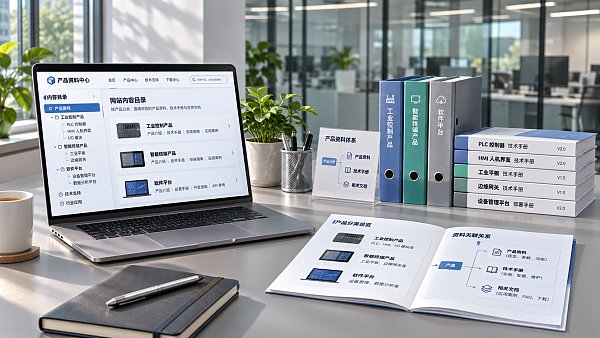
For an export-oriented manufacturer, for example, content can be organized into “product categories—individual products—applications and technical resources.” Category pages help users compare different products; product pages answer questions about specifications, suitability, and procurement; technical resource pages explain installation, maintenance, or selection methods. Company information, credentials, and contact details can provide traceable background through navigation or links to related content.
Pages do not need to be mechanically limited to a particular directory depth, but important pages should be reachable through clear links from the homepage, navigation, or related pages. Do not hide core products solely in on-site search results, a members-only resource library, or a complex filtering interface. If the same information appears on multiple pages, make clear which page provides the full explanation, while other pages offer a brief description and link to it.
Make pages able to answer questions independently while connecting to context
Each important page should have a clear topic, and its title and main heading should accurately describe its content. Product pages should provide more than model numbers and promotional claims; they should also cover the intended use, key parameters, limitations, and any necessary explanations. For example, when describing industrial equipment, operating environment, power requirements, and compatibility conditions are usually more helpful to readers than “outstanding performance.”
For information that may be extracted on its own, make the subject and conditions clear nearby. “Suitable for outdoor installation” can be ambiguous if it does not specify protection requirements or applicable models. Parameter tables should also indicate units, applicable models, and any necessary test conditions. Key data shown in images should also be provided in the body text or in a readable table.
Internal links should reflect relationships, not simply increase the number of links. Product pages can link to relevant selection guides, installation instructions, and accessory pages; when a guide mentions a specific product, it should link back to the corresponding product page. Descriptive link text such as “View installation requirements” is easier for both people and search systems to understand than repeatedly using “click here.”
It is equally important to keep these relationships accurate. A general selection guide can link to multiple products, but it should not imply that every product meets every condition described in the guide. For discontinued products or products whose specifications have changed, update the page information and, where appropriate, point to replacement products or updated documentation.
Structured data must match visible content
Structured data uses standardized fields to describe entities on a page and their relationships, such as a product name, brand, or breadcrumb navigation. It can help systems that support the relevant markup understand content, but it is not an instruction to cite a page in generative search, nor can it replace clear body text.
When implementing structured data, first choose types that match the actual page content. Product detail pages can use Product markup, while breadcrumb navigation can use BreadcrumbList. Do not indiscriminately add article, product, and review markup to every page just to cover more types. Do not invent prices, reviews, or stock information solely for markup if they are not publicly displayed on the page.
After launch, check whether the markup can be parsed, whether the fields match the current page, and whether the markup is updated when product information changes. On multilingual sites, names, currencies, and page URLs should match the corresponding language versions. Passing structured data validation only means that the markup can be recognized under the applicable rules; it does not mean that the page will receive a particular search result display or citation.
Multilingual websites: plan translation, regional versions, and link relationships together
A common issue for international websites is not a lack of language versions, but unclear relationships between them: a French page linking back to the English homepage, extensive duplication across regional pages, or specifications and units that are not synchronized across languages. This can make it harder for users to assess information and for search systems to identify corresponding pages.
Provide a stable, directly accessible URL for each language or regional version, and, when users switch versions, point them to the corresponding page with the same content whenever possible. Where appropriate, use hreflang to indicate language or regional relationships, and keep the references between versions consistent. If no corresponding translation exists, there is no need to force a one-to-one relationship. Do not force redirects based solely on a visitor’s location, preventing other versions from being accessed normally.
Canonical URLs are primarily used to indicate the preferred version among duplicate or similar pages. They should not be used to point all language pages to a single language version. Even when language versions describe the same product, each should generally point to the canonical URL appropriate for that version.
Multilingual content maintenance can use 易营宝 AI Translation Center to generate language versions, with dynamic content synchronization and human editing to manage updates. Technical parameters, industry terminology, and regional usage should still be reviewed by people familiar with the product and target language. Translation tools cannot replace the configuration of URLs, links, and language annotations.
Check crawling, rendering, and content consistency before launch
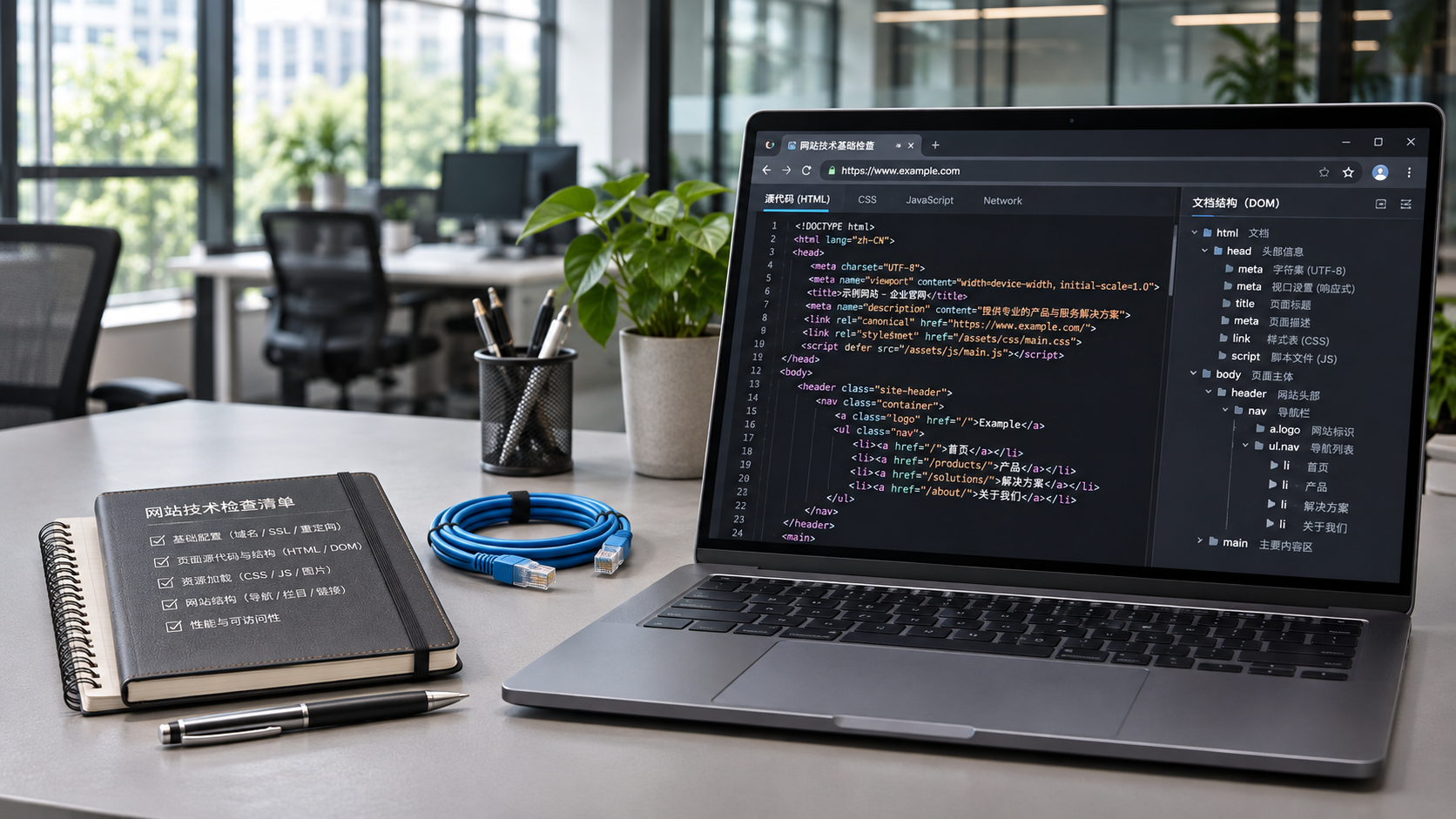
Once the page structure has been designed, confirm that search systems can actually access the content. robots.txt communicates access restrictions to crawlers that follow its rules; noindex controls whether a page is included in search indexes that support the directive. These serve different purposes. If a page is blocked by robots.txt, search systems may not be able to read its noindex directive, so blocking crawling should not be treated as a reliable way to prevent indexing.
Key body text, navigation, and links should be readable after the page is rendered. If content depends heavily on JavaScript, loads only after interaction, or requires a login to view, test whether the target crawlers can access the complete content. Access methods and control rules may vary across search products and their crawlers; do not assume that allowing one crawler will cover all generative search services.
An XML sitemap can help search systems discover URLs, but it cannot replace internal links or guarantee indexing. As far as possible, include only canonical pages that you want discovered, and promptly address inactive URLs, redirect chains, and incorrect canonical references.
For acceptance testing, sample core product pages and check them in this order: page accessibility, readable body content, reachable internal links, corresponding language versions, and consistency between markup and body text. Then use the crawl and indexing reports provided by search platforms to monitor changes. For generative answers, you can also periodically check how your brand and pages appear for relevant queries, but analyze this alongside organic search traffic, qualified visits, and inquiry quality. Avoid judging overall performance solely by whether a link appears in a particular answer.
Related Articles
 How Can GEO Optimization Increase the Chances of Content Being Cited in AI Search Results?
 OpenAI tests Business in ChatGPT, allowing merchants to create profiles and business agents
 Google: Technical SEO Remains an Important Foundation for AI Search Visibility

Related Products
 Yiyingbao SaaS Intelligent Website Building and Marketing SystemYiyingbao SaaS Intelligent Website Building and Marketing System, AI-powered no-code website building, rapid creation of multilingual B2B international websites in 10 minutes, global server acceleration, AI-powered SEO optimization, helping businesses connect efficiently with global markets. The perfect integration of technology and operation makes building an international trade website remarkably simple
 AI+SEM Intelligent Advertising Marketing SystemAI+SEM drives intelligent ad creation, empowering full-funnel precision advertising marketing. The system automatically generates weekly/monthly reports, AI recommends keywords and target countries, monitors core metrics in real-time with intelligent alerts, and enables one-click high-conversion ad solutions to help quickly acquire customers and improve ROI.
 AI+SEO Dual-Engine System Optimization ServicesYiyingbao’s AI+SEO dual-engine optimization system helps foreign trade enterprises acquire high-quality organic traffic through AI-powered keyword research, content generation, and comprehensive technical optimization, significantly improving search rankings and conversion rates.
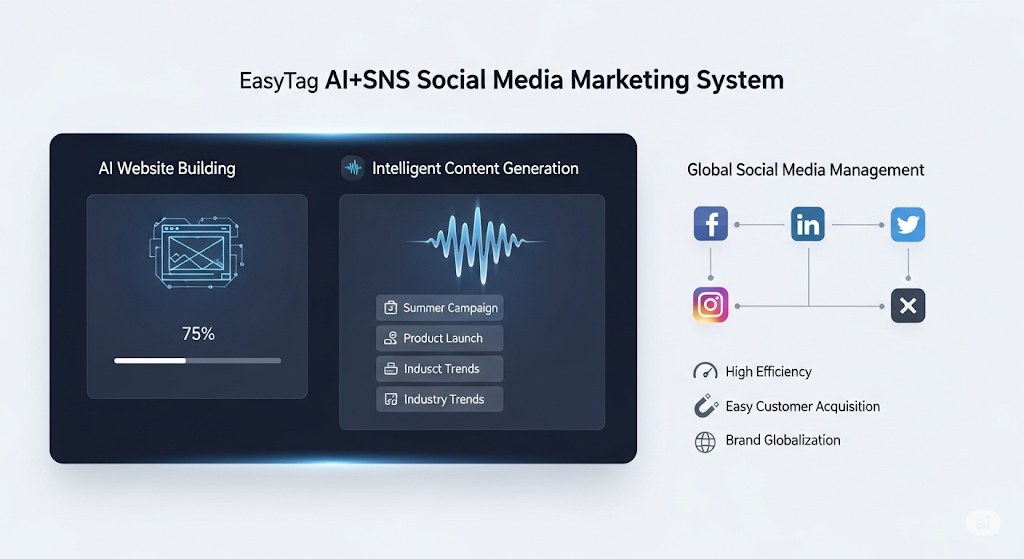
 AI+SNS Social Media Marketing SystemYingbao AI+SNS Social Media Marketing System - Precision social capture for the social media era. Supports one-click content synchronization across major platforms like Facebook and LinkedIn. AI intelligently rewrites posts for enhanced relevance. 24/7 AI customer service and user profiling analysis empower businesses to efficiently expand into global markets.
 AI+SEO营销解决方案易营宝AI+SEO营销解决方案,通过AI批量写作、智能生成TDK、精准关键词扩词等功能,全面优化网站SEO效果,提升流量与转化率。助力企业构建高效智能网站新生态。
 AI+SEM Advertising Marketing SolutionsAI+SEM Advertising Marketing Solution leverages AI technology to deeply empower SEM ad campaigns. It automatically generates weekly/monthly reports using AI, presenting account data across multiple dimensions for comprehensive insights into campaign performance and trends. The system precisely recommends keywords and target countries, intelligently generates high-conversion ad copy, and enables one-click activation of efficient campaign plans to help businesses rapidly acquire customers. Simultaneously, it monitors core metrics in real time, intelligently identifies abnormal fluctuations, and issues timely alerts to ensure stable, high-return advertising results.
 Domain Name ServicesEasyWin provides professional domain name services, including intelligent queries, one-stop registration, brand protection, and full lifecycle management, helping businesses build a digital brand image.
 EasyOperate B2C Cross-Border E-Commerce Platform & Independent WebsiteEasyStore B2C Cross-border E-commerce Independent Store is an intelligent website building and cross-border e-commerce integrated solution independently developed by EasyStore Information Technology (Beijing) Co., Ltd. The system is specially designed for small and medium-sized as well as large export enterprises, integrating 'website building, operation, marketing, advertising, and conversion' into one, helping enterprises quickly establish cross-border e-commerce independent stores to achieve brand globalization and global sales growth.
The platform supports multiple languages, multiple currencies, and multi-channel marketing, with built-in AI intelligent translation and SEO optimization systems, suitable for mainstream markets such as Southeast Asia, Europe and America, Latin America, and the Middle East, assisting Chinese manufacturing enterprises in efficiently deploying international e-commerce strategies. SSL证书易营宝提供专业SSL安全证书服务,包括单域名和泛域名证书,确保网站数据传输加密、身份验证和完整性保护,助力企业建立安全可信的在线业务环境。