









- General Administration of Customs Issues New Rules on Import and Export Cosmetic Labeling, Effective December 1Nov 26, 2026View details
- U.S. to Announce Section 301 Investigation Findings on 16 Economies, Potentially Proposing New TariffsNov 26, 2026View details
- Hapag-Lloyd’s $4.2 billion acquisition of ZIM faces a closing delay; ZIM reports third-quarter net profit of $830 millionNov 24, 2026View details
- SCFI falls for a third straight week to 3,503.78 points, with blank sailings on trans-Pacific routes rising to 10Nov 24, 2026View details
- Lazada 11.11 Mega Sale: LazMall Contributes Nearly Two-Thirds of GMVNov 23, 2026View details
- Shein’s European Revenue Falls 16% as Tighter Rules on Low-Value Direct Shipments Take EffectNov 23, 2026View details
Which E-Commerce Content Is More Likely to Appear in AI-Generated Answers: A Practical Guide to Product Page Writing

Whether a product page can appear in AI-generated answers depends not on packing in more terms such as “AI” or “intelligent recommendations,” but on whether the page can be accurately broken down by systems into verifiable product facts. When AI answers questions such as “What is this product suitable for?”, “What are the differences between this model and another model?”, or “Can a certain specification be purchased in a particular region?”, it needs to extract clear entities, attributes, applicable conditions, limitations, and source signals from the webpage. Pages containing only marketing slogans, stacked selling points, or specifications hidden in images are generally unlikely to become stable citation sources.
“What kind of shopping mall content performs well in AI generation engines?” does not refer to a single page technique, but rather to a set of writing and page-organization practices that make product information crawlable, understandable, and cross-verifiable. For e-commerce operators, the priority is not “how to cater to AI,” but “whether the page already provides answers that can be directly cited when users ask specific questions.”
AI Is More Likely to Cite Product Information That Answers Specific Questions
Traditional search results can tolerate pages that merely match keywords; generative answers need to combine information from multiple sources into a complete response. Therefore, product page content should at least enable systems to clearly identify what is being sold, its core specifications, who or which scenarios it is suitable for, how it differs from similar products, and what prerequisites apply to purchase or use.
For example, “high-strength outdoor backpack” is a broad description; “a 40L water-repellent hiking backpack suitable for 2–3-day trips, with a separate laptop compartment and not recommended for professional climbing loads” explains capacity, purpose, performance boundaries, and limitations at the same time. The latter is closer to the questions users may ask in AI search and is easier to extract as an answer snippet.
The beginning of a product page does not need to contain a lengthy brand story. A more effective approach is to define the product with a concise, complete description:
- Retain the category, model or series, and key specifications in the product name;
- Use one or two sentences to explain the task the product solves rather than repeating “high quality” or “best-selling”;
- Place purchase-determining attributes first, such as material, dimensions, power, compatible models, and applicable environment;
- For products with limitations, clearly state unsuitable applications and necessary conditions.
This type of information not only affects whether AI understands the page, but also reduces bounces, inquiries, and returns caused by mismatched user expectations.
A Title Is Not an Ad Space, but an Entry Point for Identifying the Product Entity
Many online stores use titles such as “New Product Recommendations,” “Best-Seller Bundle,” or internal reference numbers only. Although this approach may support short-term campaigns, it weakens the page’s long-term discoverability. The page title, main heading, breadcrumb navigation, and product name in structured data should consistently refer to the same entity. One should not use a series name in one place, promotional copy in another, and only an SKU elsewhere.
A relatively stable naming convention is usually “brand or series + category + key specification + model or compatible object.” Key specifications should be variables that genuinely affect selection. When selling industrial fittings, connection standards, diameter, and material are more important than “factory direct supply”; when selling skincare products, volume, suitable skin types, and primary ingredients provide more informational value than “brightening miracle.”
Variant products are especially prone to errors. If color, capacity, size, and connector specifications under the same link all affect price and availability, the page needs to clearly identify the differences corresponding to each variant. Do not state “multiple specifications available” in the main description and then require users to guess from a drop-down menu. If AI cannot associate attributes with specific variants, it may provide incorrect pricing, sizing, or compatibility information.

Attribute Tables Should Support Comparison Rather Than Copy the Manual
Specification tables are an important source for AI to understand products, but common issues include inconsistent field names, missing units, unstated key conditions, or mixed parameters for different models. Comparable information should use consistent fields, such as “rated power,” “input voltage,” “net weight,” “protection rating,” “compatible equipment,” and “package contents.” Numerical values should include units, and ranges should specify testing or operating conditions.
“10-hour battery life” is less useful than “up to approximately 10 hours of battery life at standard brightness with Bluetooth turned off”; “heat resistant” is less reliable than “recommended for continuous use in environments not exceeding a specified temperature, with contact-medium conditions stated.” This does not mean putting all technical documentation above the fold, but rather fully stating the conditions that may change a purchase decision.
The same attribute logic applies to non-physical products such as digital materials, courses, and reports. Take Research on Optimizing Financial Analysis of Highway Maintenance Enterprises from a Big Data-Driven Perspective as an example. If the page provides only the title, AI will have difficulty answering its research subject, content scope, delivery format, or applicable scenarios. If publication or update information, a table-of-contents summary, file format, usage rights, and topic tags are added, the page’s comprehensibility will improve significantly. A product page’s “specifications” do not necessarily refer to dimensions and weight; they may also refer to content boundaries and delivery boundaries.
Scenario Content Must Lead to Selection Criteria
Scenario descriptions are often written as emotional copy, such as “meeting diverse needs” or “suitable for all occasions.” Such statements are difficult to substantiate and cannot assist with selection. More valuable scenario content should include the task, environment, and constraints.
For example, an office monitor can state that it is “suitable for extended document processing and multi-window office work,” while specifying its interfaces, stand adjustment, resolution, and system compatibility. Food packaging materials can state the contact objects they are suitable for, temperature range, sealing method, and storage conditions. If a product is not suitable for medical use, contact with children, high-humidity environments, or specific regional voltages, this should also be stated directly. AI engines are more inclined to cite content with clear boundaries rather than infer that it is “suitable for everyone.”
A Q&A section can address real decision-making questions, but its answers must be consistent with product details. High-value questions commonly concern compatibility, installation difficulty, consumable replacement, delivery time, warranty, cleaning and maintenance, and certification documents. Do not repeatedly embed keywords through large numbers of similar questions and answers, and do not answer with performance claims that the page cannot substantiate.
Trust Information Determines Whether Content Can Be Cited with Confidence
Generative systems do not consider only a smoothly written description. When product information is contradictory, its source is unclear, or updates are uncontrolled, the page’s citation value declines. During operations, special attention should be paid to whether prices, inventory, specifications, shipping coverage, and promotional information come from the same data source; whether discontinued models have replacement-product information on old pages; and whether different language versions accurately convert units of measurement, plug standards, and compliance information.
Review content should not display only star ratings. Reviews that include conditions of use, such as “installed on a certain device” or “how a particular size fits the actual space,” are more helpful for understanding the product. However, the original meaning of genuine reviews must be retained, and user feedback should not be rewritten as product-side commitments.
For safety, health, performance certification, or regulatory applicability, vague icons cannot replace facts. The page should state the product model covered by the certification or test, the applicable market, and valid certificate information; information that cannot be confirmed should preferably not be included. Especially in cross-border sales, plugs, voltage, ingredient restrictions, shipping restrictions, and return and exchange policies may directly affect the accuracy of AI answers.
Readability and Technical Accessibility Need to Be Checked Together
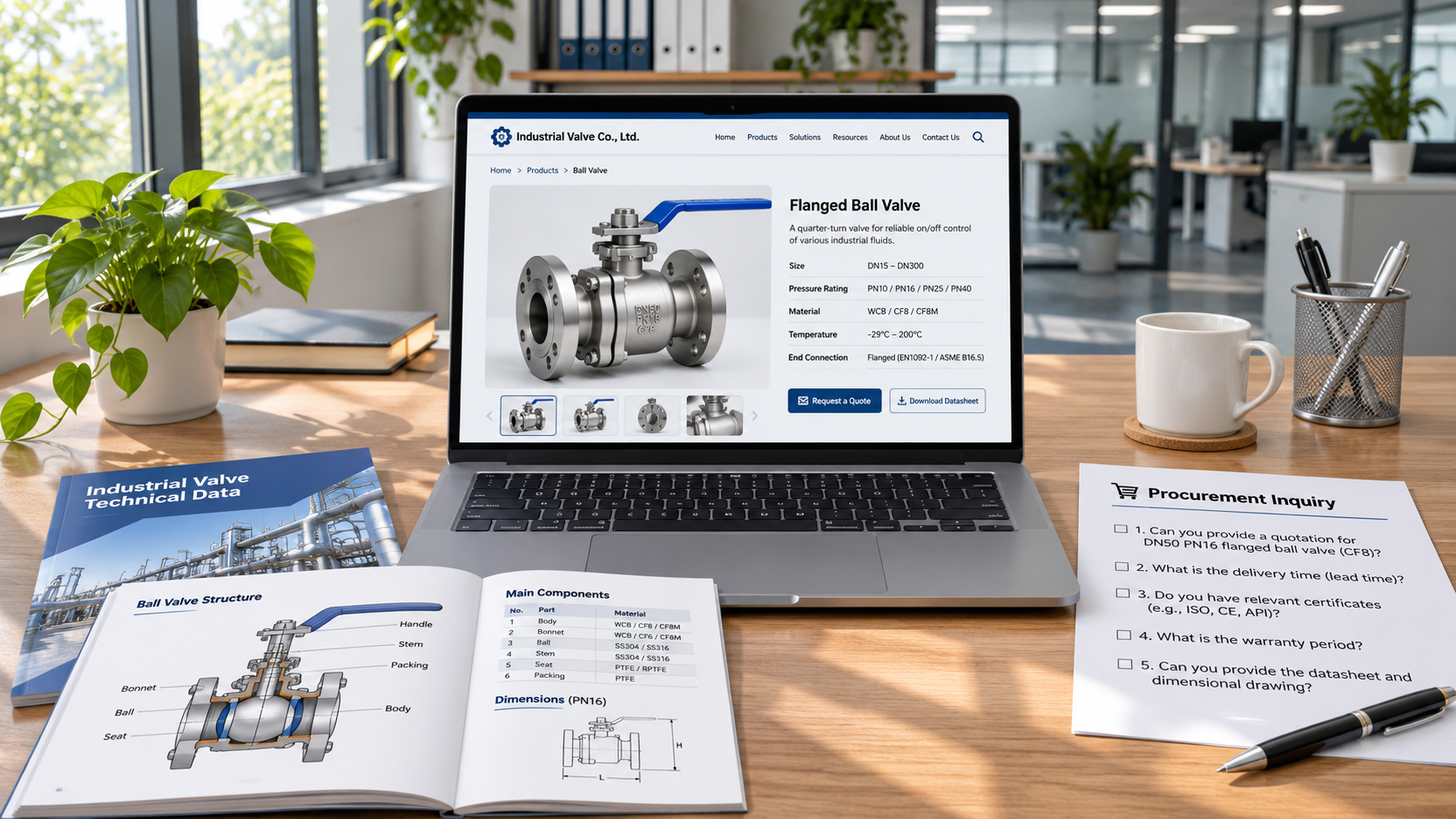
Even when product information is complete, crawling and understanding may still be hindered if core specifications rely on images, collapsible modules fail to load, or content is displayed only after login. Product names, main descriptions, specifications, price status, and inventory status should be presented as normal page text; dimension diagrams, ingredient lists, and instructions in images should have corresponding text versions. Implementing correct Product structured data for products helps machines identify fields such as name, image, offer, and review, but structured data cannot replace page body content, nor should it contain information inconsistent with visible content.
It is also necessary to avoid generating large numbers of near-duplicate URLs for the same product through filter parameters, tracking links, or different sorting options. Canonical links, clear variant logic, and accessible product detail pages help reduce the risk of systems misidentifying the primary version among duplicate pages. Multilingual online stores should ensure that every language page has an independent, natural product description rather than merely replacing the title while retaining inapplicable units, scenarios, and after-sales terms.
Product pages that truly have an opportunity to appear in AI-generated answers are usually not the pages that “write the most,” but those where every key piece of information can answer a purchase question and where the answers do not contradict one another. Only by transforming a page from a promotional display page into a verifiable product specification can visibility and conversion be built on the same information foundation.
Related Articles
 How Long Does AI Search Optimization Take to Show Results? What Factors Affect the Timeline?
 Google, ChatGPT, and other platforms are starting to provide promo codes directly in search results
 How do the optimization priorities of AI SEO and traditional SEO differ?


Related Products
 Yiyingbao SaaS Intelligent Website Building and Marketing SystemYiyingbao SaaS Intelligent Website Building and Marketing System, AI-powered no-code website building, rapid creation of multilingual B2B international websites in 10 minutes, global server acceleration, AI-powered SEO optimization, helping businesses connect efficiently with global markets. The perfect integration of technology and operation makes building an international trade website remarkably simple
 AI+SEM Intelligent Advertising Marketing SystemAI+SEM drives intelligent ad creation, empowering full-funnel precision advertising marketing. The system automatically generates weekly/monthly reports, AI recommends keywords and target countries, monitors core metrics in real-time with intelligent alerts, and enables one-click high-conversion ad solutions to help quickly acquire customers and improve ROI.
 AI+SEO Dual-Engine System Optimization ServicesYiyingbao’s AI+SEO dual-engine optimization system helps foreign trade enterprises acquire high-quality organic traffic through AI-powered keyword research, content generation, and comprehensive technical optimization, significantly improving search rankings and conversion rates.
 AI+SNS Social Media Marketing SystemYingbao AI+SNS Social Media Marketing System - Precision social capture for the social media era. Supports one-click content synchronization across major platforms like Facebook and LinkedIn. AI intelligently rewrites posts for enhanced relevance. 24/7 AI customer service and user profiling analysis empower businesses to efficiently expand into global markets.
 AI+SEO营销解决方案易营宝AI+SEO营销解决方案,通过AI批量写作、智能生成TDK、精准关键词扩词等功能,全面优化网站SEO效果,提升流量与转化率。助力企业构建高效智能网站新生态。
 AI+SEM Advertising Marketing SolutionsAI+SEM Advertising Marketing Solution leverages AI technology to deeply empower SEM ad campaigns. It automatically generates weekly/monthly reports using AI, presenting account data across multiple dimensions for comprehensive insights into campaign performance and trends. The system precisely recommends keywords and target countries, intelligently generates high-conversion ad copy, and enables one-click activation of efficient campaign plans to help businesses rapidly acquire customers. Simultaneously, it monitors core metrics in real time, intelligently identifies abnormal fluctuations, and issues timely alerts to ensure stable, high-return advertising results.
 Domain Name ServicesEasyWin provides professional domain name services, including intelligent queries, one-stop registration, brand protection, and full lifecycle management, helping businesses build a digital brand image.
 EasyOperate B2C Cross-Border E-Commerce Platform & Independent WebsiteEasyStore B2C Cross-border E-commerce Independent Store is an intelligent website building and cross-border e-commerce integrated solution independently developed by EasyStore Information Technology (Beijing) Co., Ltd. The system is specially designed for small and medium-sized as well as large export enterprises, integrating 'website building, operation, marketing, advertising, and conversion' into one, helping enterprises quickly establish cross-border e-commerce independent stores to achieve brand globalization and global sales growth.
The platform supports multiple languages, multiple currencies, and multi-channel marketing, with built-in AI intelligent translation and SEO optimization systems, suitable for mainstream markets such as Southeast Asia, Europe and America, Latin America, and the Middle East, assisting Chinese manufacturing enterprises in efficiently deploying international e-commerce strategies. SSL证书易营宝提供专业SSL安全证书服务,包括单域名和泛域名证书,确保网站数据传输加密、身份验证和完整性保护,助力企业建立安全可信的在线业务环境。









