









- Hapag-Lloyd’s $4.2 billion acquisition of ZIM faces a closing delay; ZIM reports third-quarter net profit of $830 millionNov 24, 2026View details
- SCFI falls for a third straight week to 3,503.78 points, with blank sailings on trans-Pacific routes rising to 10Nov 24, 2026View details
- Lazada 11.11 Mega Sale: LazMall Contributes Nearly Two-Thirds of GMVNov 23, 2026View details
- Shein’s European Revenue Falls 16% as Tighter Rules on Low-Value Direct Shipments Take EffectNov 23, 2026View details
- EU Low-Value Parcel Rules Impact Cargo Flows: Air Freight Volume from China to Europe Down 17% in OctoberNov 23, 2026View details
- Indonesia and the EU Sign Comprehensive Economic Partnership Agreement, 90.4% of Tariff Lines to Become Duty-Free ImmediatelyNov 23, 2026View details
Start with AI search experience design to ensure your company information is recommended more consistently
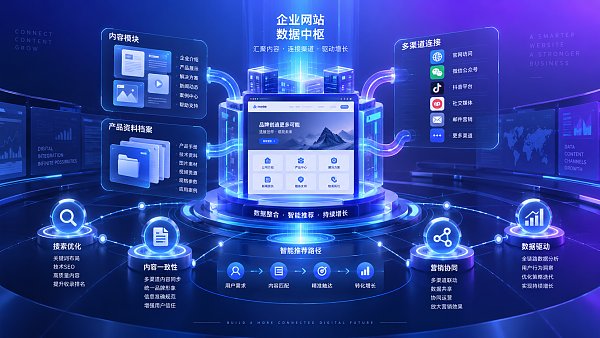
Start with AI Search Experience Design to Make Your Business Information More Consistently Recommended
In response to the emerging trend of AI search recommendations, project leaders often consider this question: How can we ensure that our company is clearly visible in AI search results? Please share effective strategies from the perspective of AI search experience design. Put simply, it means: “How can we make our company easier to find in AI search results and consistently recommended?” This cannot be solved simply by targeting a few keywords or publishing several articles. When AI provides answers, it places greater importance on whether information is complete, consistent, sufficiently specific, and capable of directly helping the user make a decision.
For manufacturing companies, foreign trade project teams, and cross-border brands, an official website is often both an entry point for customers to verify supply capabilities and an important source for AI to understand a company's identity, product scope, and service regions. If a website contains only generalized statements such as “high quality,” “professional service,” and “years of experience,” AI may still find it difficult to determine exactly what problems the company is suited to solve, even after crawling the pages. What is truly worth investing in is AI search experience design: organizing company information around users' question paths into content that can be understood, verified, and cited.
What AI Recommends Is Not Webpage Ranking, but “Answerability”
In traditional search, users enter a core keyword, browse several links, and make their own selections. AI search is more like receiving a task first and then assembling a relatively reliable answer from public information. For example, when an overseas buyer asks, “How should I choose an industrial equipment supplier suitable for high-humidity environments?” they may not search directly for a company name. Instead, they may continue asking about materials, certifications, lead times, after-sales service regions, customization capabilities, and risk factors.
This means that company content cannot stop at product catalogs. Project leaders need to break down in advance the questions customers may ask during project initiation, comparison, procurement, and before and after delivery: What operating conditions does the product address? What are the boundaries of its suitable and unsuitable applications? What technical parameters must customers provide? What factors affect quotations and lead times? What documentation should be confirmed in advance when exporting to different markets? The clearer this information is, the easier it is for AI to identify the company as a candidate information source for a specific niche issue.
A common misconception is to interpret AI visibility as “the more content, the better.” In fact, duplicate pages, contradictory product parameters, and English materials that have not been updated for a long time can instead reduce information credibility. AI experience design is first an information governance task, and only then a content production task.
Standardize Company Facts First, Then Arrange Content Entry Points
It is recommended that project teams first conduct a “company fact inventory.” It does not need to be complicated, but the company name, main business, contact channels, service markets, and capability descriptions on the official website, social media profiles, product brochures, and advertising landing pages should at least remain consistent. This is particularly important for companies where group entities, factories, and trading companies coexist. The role of each entity should be clearly defined to avoid stating on the same page that the company is a manufacturer while also implying that it covers every stage of the supply chain.
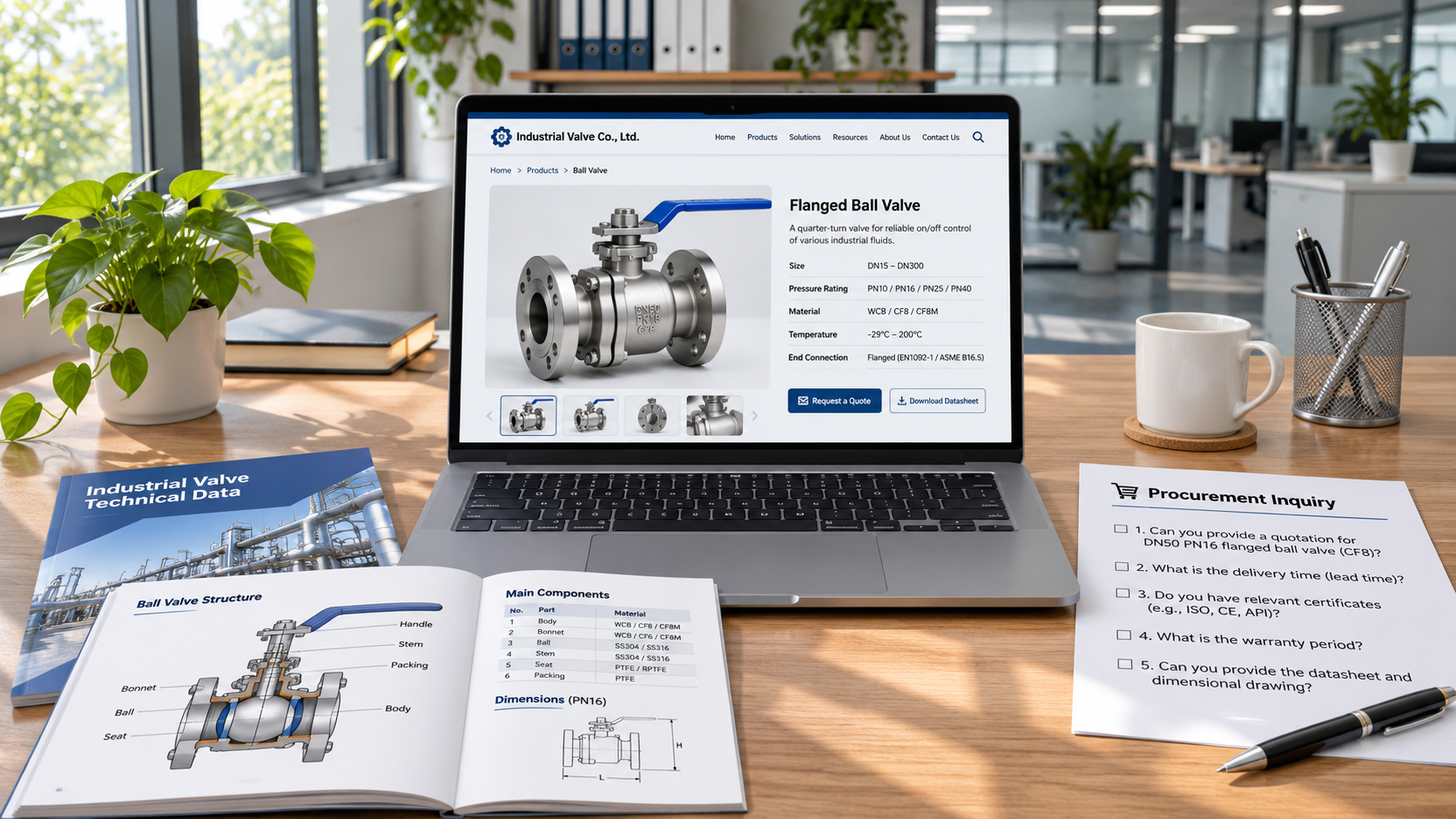
Next, divide content into different entry points. The homepage should explain “who you are, whom you serve, and what your core capabilities are”; product pages should clearly explain specification logic, application conditions, and the information required for inquiries; industry solution pages should address specific scenarios; and knowledge content should handle buyers' comparison and troubleshooting questions. For B2B projects, “How can I confirm whether the equipment interface is compatible with the existing production line?” is usually closer to an actual decision than “What advantages does the equipment offer?”
Multilingual development should not be limited to machine translation either. North American customers may first focus on delivery and after-sales response, while European customers more often verify the completeness of documentation and compliance suitability. Customers in the Middle East, Latin America, or Russian-speaking regions may be more sensitive to payment, installation support, and local communication. The page structure can remain consistent, but FAQs, case materials, and calls to action should be adjusted according to actual market conditions. Commitments that lack sufficient supporting documentation are better left unwritten than overstated.
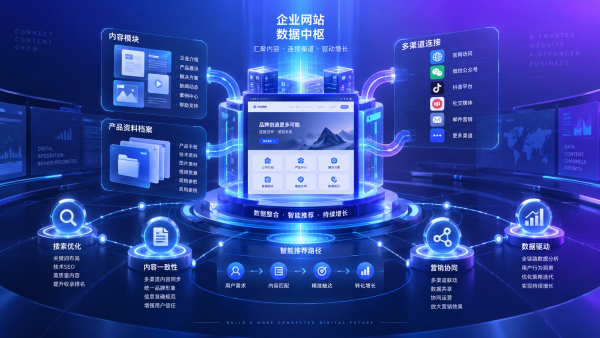
Break Down Complex Projects into Question-and-Answer Paths That AI Can Understand
The mistake most easily made in project-based business is placing all capabilities on one long page. Customers cannot understand it, and AI also struggles to extract key points. A more practical approach is to establish content units around actual decision-making stages: explain input requirements before selection, comparison factors during the evaluation stage, coordination matters during implementation, and risk reminders during acceptance or long-term operation and maintenance. Each unit should include a clear question and an actionable answer.
For example, if a company wants to obtain overseas engineering inquiries, the page should not merely state “customization supported.” It should explain what information is typically needed for customization assessment, such as installation space, target capacity, medium characteristics, local power conditions, and interface requirements. It should also indicate which requirements must be confirmed by engineering personnel. This type of expression may appear less promotional, but it better aligns with the reading habits of professional buyers and can also reduce invalid inquiries.
In international business, intellectual property, trademark use, the external distribution of technical materials, and the boundaries of cooperation may also be involved when AI answers questions about corporate risks. If a company is at the stage of technology globalization or multinational cooperation, it can manage risk governance separately from market content and refer to specialized materials such as Developing an Early Warning System for Foreign-Related Patent Risks for Enterprises in the Context of the Digital Economy to establish internal material review and early warning mechanisms. The focus here is not to place compliance language on the homepage, but to avoid conflicts between promotional materials and the actual status of rights or authorization scope.
Websites, Advertising, and Social Media Cannot Tell Different Stories
The AI search experience does not occur only on the official website. Users may first see a short video on social media and then verify the company through search. They may also click an advertisement to enter a landing page, then look for product descriptions, company information, and third-party signals. If an advertisement emphasizes “fast delivery,” but the official website does not explain its applicable scope, or if social media showcases a capability but the corresponding product page cannot be found, users will hesitate and AI will also struggle to form a stable assessment.
The value of integrated website and marketing services lies in connecting channel promises back to verifiable on-site information. Yiyingbao Information Technology (Beijing) Co., Ltd. has long served foreign trade enterprises, manufacturing factories, cross-border sellers, and brand globalization teams, forming coordination around intelligent website building, multilingual websites, search optimization, advertising placement, social media operations, and GEO generative engine optimization. For project leaders, what matters is not covering as many channels as possible, but ensuring that every traffic acquisition effort leads to a page matching the user's question and can be validated by subsequent data.
In actual implementation, three signals can be checked regularly: whether search results and AI answers accurately describe the company's main business direction; whether high-frequency landing pages answer the questions visitors are likely to ask next; and whether inquiries from different channels are concentrated within project scopes the company can genuinely deliver. The first two signals focus on content, while the last is the business validation. Only when inquiry quality gradually improves does being “recommended” become meaningful.
Stable Visibility Depends on Ongoing Adjustment, Not a One-Time Redesign
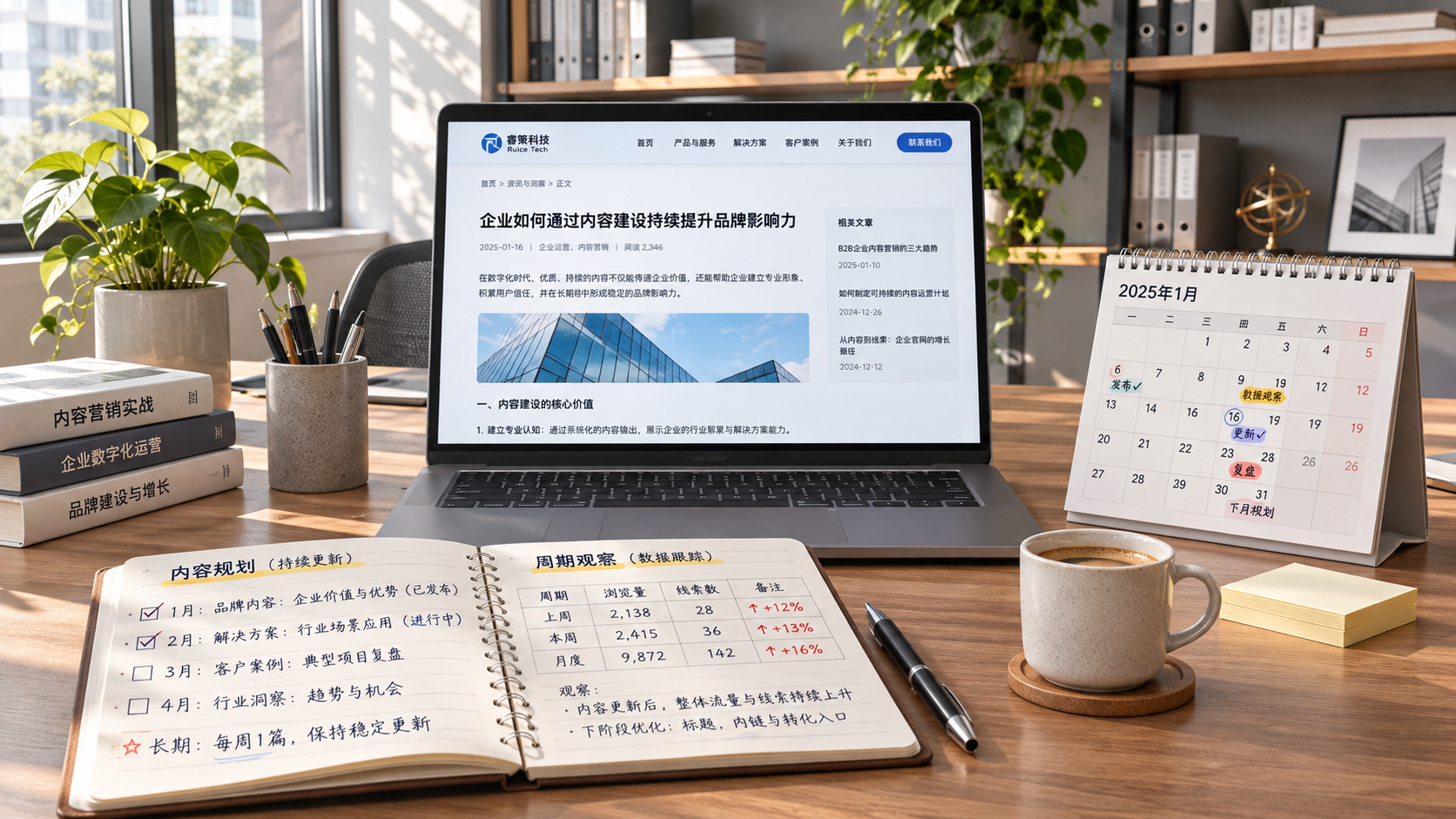
AI search results adjust with users' wording, page updates, and changes in information sources. There is no solution that remains permanently effective after a single implementation. A more practical rhythm is to collect questions from actual inquiries and sales communications every month, and identify those that recur and can be answered through public content; review key pages every quarter to ensure they remain aligned with products, delivery, and market strategies; and promptly address outdated pages when technical updates, discontinued models, or service region changes occur, rather than allowing them to remain indefinitely.
For companies seeking stable recommendations in AI search, the ultimate foundation is not “catering to algorithms,” but ensuring that every key page can withstand continuous questions from procurement, engineering, and compliance personnel. First explain company facts clearly, then answer project-related questions specifically, and finally ensure that the website, advertising, and social media use the same set of credible information. This path may not be fast, but it is better suited to companies that require long-term customer acquisition and cross-border delivery.
Related Articles
 How Long Does AI Search Optimization Take to Show Results? What Factors Affect the Timeline?
 Google, ChatGPT, and other platforms are starting to provide promo codes directly in search results
 How do the optimization priorities of AI SEO and traditional SEO differ?

Related Products
 Yiyingbao SaaS Intelligent Website Building and Marketing SystemYiyingbao SaaS Intelligent Website Building and Marketing System, AI-powered no-code website building, rapid creation of multilingual B2B international websites in 10 minutes, global server acceleration, AI-powered SEO optimization, helping businesses connect efficiently with global markets. The perfect integration of technology and operation makes building an international trade website remarkably simple
 AI+SEM Intelligent Advertising Marketing SystemAI+SEM drives intelligent ad creation, empowering full-funnel precision advertising marketing. The system automatically generates weekly/monthly reports, AI recommends keywords and target countries, monitors core metrics in real-time with intelligent alerts, and enables one-click high-conversion ad solutions to help quickly acquire customers and improve ROI.
 AI+SEO Dual-Engine System Optimization ServicesYiyingbao’s AI+SEO dual-engine optimization system helps foreign trade enterprises acquire high-quality organic traffic through AI-powered keyword research, content generation, and comprehensive technical optimization, significantly improving search rankings and conversion rates.
 AI+SNS Social Media Marketing SystemYingbao AI+SNS Social Media Marketing System - Precision social capture for the social media era. Supports one-click content synchronization across major platforms like Facebook and LinkedIn. AI intelligently rewrites posts for enhanced relevance. 24/7 AI customer service and user profiling analysis empower businesses to efficiently expand into global markets.
 AI+SEO营销解决方案易营宝AI+SEO营销解决方案,通过AI批量写作、智能生成TDK、精准关键词扩词等功能,全面优化网站SEO效果,提升流量与转化率。助力企业构建高效智能网站新生态。
 AI+SEM Advertising Marketing SolutionsAI+SEM Advertising Marketing Solution leverages AI technology to deeply empower SEM ad campaigns. It automatically generates weekly/monthly reports using AI, presenting account data across multiple dimensions for comprehensive insights into campaign performance and trends. The system precisely recommends keywords and target countries, intelligently generates high-conversion ad copy, and enables one-click activation of efficient campaign plans to help businesses rapidly acquire customers. Simultaneously, it monitors core metrics in real time, intelligently identifies abnormal fluctuations, and issues timely alerts to ensure stable, high-return advertising results.
 Domain Name ServicesEasyWin provides professional domain name services, including intelligent queries, one-stop registration, brand protection, and full lifecycle management, helping businesses build a digital brand image.
 EasyOperate B2C Cross-Border E-Commerce Platform & Independent WebsiteEasyStore B2C Cross-border E-commerce Independent Store is an intelligent website building and cross-border e-commerce integrated solution independently developed by EasyStore Information Technology (Beijing) Co., Ltd. The system is specially designed for small and medium-sized as well as large export enterprises, integrating 'website building, operation, marketing, advertising, and conversion' into one, helping enterprises quickly establish cross-border e-commerce independent stores to achieve brand globalization and global sales growth.
The platform supports multiple languages, multiple currencies, and multi-channel marketing, with built-in AI intelligent translation and SEO optimization systems, suitable for mainstream markets such as Southeast Asia, Europe and America, Latin America, and the Middle East, assisting Chinese manufacturing enterprises in efficiently deploying international e-commerce strategies. SSL证书易营宝提供专业SSL安全证书服务,包括单域名和泛域名证书,确保网站数据传输加密、身份验证和完整性保护,助力企业建立安全可信的在线业务环境。









