









- Which customer acquisition channels will be affected by cross-border marketing trends in 2026?Sep 06, 2026View details
- Which homogenization risks should be considered in an analysis of the AI-powered website building industry?Aug 30, 2026View details
- How Will AI Marketing Trends 2026 Change Advertising Budget AllocationAug 28, 2026View details
- Is the EV SSL certificate market shrinking or upgrading? How should companies assess certificate procurement?Aug 11, 2026View details
- Why the old AMP SEO 2020 practices no longer work and what has changed in current optimization prioritiesAug 02, 2026View details
- How to Choose Topics for an Industry News Section to Attract More Organic Search TrafficJul 29, 2026View details
Can Q&A content platforms generate organic inquiries?
Whether it can generate qualified inbound inquiries depends on breaking the issue down first. Q&A content platforms do have the potential to capture search traffic, especially for queries involving clear scenarios, specifications, lead times, compatibility conditions, troubleshooting, and purchasing constraints. However, if the content merely puts common questions together on one page without sufficient page support, verified information, conversion entry points, and follow-up tracking, the traffic may stop at being “seen” and find it difficult to progress to “submitting an inquiry”.
The most common misjudgment in selection is equating “people are searching for it” directly with “it can generate leads”. The actual situation is usually more nuanced. Natural inquiries often come from high-intent questions, such as the temperature resistance range of a material, whether a particular processing method is suitable for mass production, how different packaging specifications affect volumetric weight for sea freight, whether the installation environment requires dust and moisture protection, whether a substitute model is compatible with the interfaces of older equipment, how long the maintenance cycle is, and whether sample and bulk-order specifications are consistent. These queries may not have high search volumes, but they are closer to actual transaction points. If a Q&A content development platform cannot consistently cover such specific questions, having a large number of pages may still fail to generate effective leads.
First, check whether the content can truly be identified by search engines
For many Q&A content platforms, the problem lies not in the writing but in the page structure. Search engines do not crawl the fact that there are “many questions”; they crawl whether the page clearly communicates its topic, whether it has an independent URL, whether the title corresponds to a genuine question, whether the body provides a complete answer, whether duplicate content exists, and whether internal links connect related questions. If all questions are placed on one long page that continually expands and collapses, or are dynamically loaded by front-end scripts without crawlable text, indexing will be restricted.
This is particularly important in an integrated website and marketing services scenario. Q&A pages should not exist in isolation. They need to form a hierarchy with product pages, solution pages, landing pages, case study pages, and technical documents. For example, a question such as “What is the difference in corrosion resistance between 304 and 316?” should link to a materials information page; “Is fumigation required for wooden crates shipped to Europe?” can direct users to packaging and delivery information; and “Is a base required before equipment installation?” should lead to an installation preparation page. Without these relationships, even if Q&A pages are indexed, they often remain at the information consumption level.
Another common issue is duplicate content. To pursue scale, many platforms create large numbers of rewritten pages around the same core keyword: Can it be customized? Is made-to-order production supported? Can it be manufactured according to drawings? Can the factory process customer-supplied samples? These pages compete with one another, and search engines often retain only a few of them. The rest consume crawling resources while diluting topical authority.
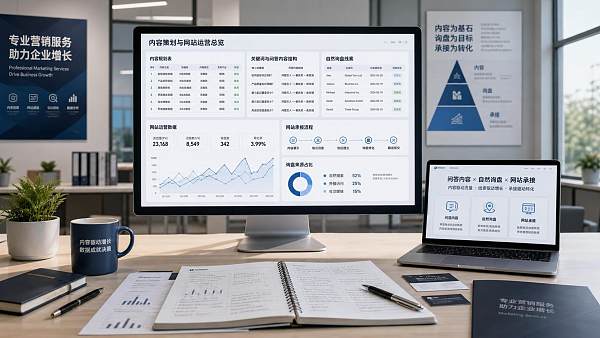
Natural inquiries depend on whether the answers are sufficiently actionable
What truly encourages an inquiry is not a general explanation, but content that enables visitors to determine whether “this is suitable for my situation”. This actionability usually comes from details: the dimensional tolerance range, how surface treatment affects outdoor service life, whether the minimum order quantity changes with the process, which processes become bottlenecks for urgent orders, which components need to be packed separately during transportation, and which points need to be checked before restarting equipment after a long shutdown.
If a Q&A page only provides conceptual answers such as “it depends on the requirements”, “arrangements will be made according to the actual situation”, or “the specific details are subject to the solution”, it sounds more like customer service wording than content that can accumulate search value. The basis for generating natural inquiries is that the answers are specific enough to shorten the first round of communication. Even when an exact value cannot be provided, the answer should state the conditions for making a judgment, such as operating temperature, load type, frequency of use, installation space, power supply conditions, the language version required for the target market, and whether the advertising landing page requires an independent tracking script. When the conditions are clearly explained, inquiry quality is usually higher than when the focus is merely on superficial clicks.
The value of a Q&A content development platform lies not in “automatic generation”, but in “continuous correction”
Many systems can quickly produce large numbers of Q&A pages, but this step itself is not scarce. What matters more is whether the platform supports subsequent adjustments: which questions have been indexed but rank poorly, which keywords generate clicks but have short dwell times, which pages receive visits but do not trigger form submissions, phone calls, WhatsApp messages, or email actions, and which questions need additional images, specification tables, or delivery information. Without this operational capability, content remains at the publishing stage instead of entering an optimization cycle.
From an evaluation perspective, a Q&A content development platform should be able to manage at least four types of collaboration points. First, it should collect question sources rather than relying solely on subjective assumptions. Ideally, it should be able to incorporate frequently used expressions from on-site search queries, customer service records, sales communication notes, advertising search-term reports, social media comments, and inquiry forms. Second, it should support content classification by distinguishing questions suitable for short answers, questions requiring illustrations, and questions that must be connected to dedicated topic pages. Third, it should retain version update capabilities, because specifications, lead times, packaging standards, and compatible models may change. Fourth, it should support conversion tracking; otherwise, it is difficult to know which types of questions are genuinely closer to the initial stage of a purchase.
This is even more important for multilingual websites. Q&A content is not complete once Chinese has been translated into another language. Different regions vary significantly in how they phrase questions. Some markets more commonly ask about application scenarios, while others focus more on model numbers and specifications. Some care about certifications and packaging documents, while others pay more attention to delivery methods, after-sales parts, and local installation conditions. If translation is limited to literal conversion, both search matching and trust building will suffer.
Which questions are more likely to convert into natural inquiries?
Generally, three types of content deserve priority. The first is “final-decision” questions, commonly involving compatibility, customization, replacement options, lead-time planning, sample availability, and whether documents can be provided according to the requirements of the target country. The second is “risk-elimination” questions, such as how to prevent transport damage, whether the product will rust in a humid environment, what installation error is permissible, whether additional heat dissipation is required during long-term operation, and whether an advertising landing page should share a domain with the official website. The third is “cost-assessment” questions. These do not necessarily discuss price directly, but explain which conditions affect costs, such as material upgrades, the number of sampling rounds, mold modifications, reinforced packaging, the allocation of taxes and fees, the number of deployment languages, and the scope of deep customization for page templates.
By contrast, some seemingly popular questions may not generate inquiries, such as overly broad industry definitions, basic introductory knowledge, and trend discussions that are relatively distant from actual purchasing. They can serve a traffic-acquisition purpose, but should not become the content focus. If website resources are limited, it is generally more reasonable to invest time in Q&A content that is closer to the transaction action.
What is often missing from a page is not text, but trust anchors
Natural inquiries are rarely triggered by a single paragraph of answers. Visitors need to determine within a short time whether the information is reliable. Therefore, Q&A pages should ideally include verifiable forms of content, such as specification tables, structural explanations, applicable boundaries, installation prerequisites, maintenance intervals, differences in shipping methods, illustrations of common mistakes, and links to related documents. This does not necessarily need to be extensive, but it must not consist solely of vague descriptions.
For example, when answering “Can installation be carried out during the rainy season?”, simply writing “adjustments can be made according to the environment” has little practical value. If the answer adds whether sheltered conditions are available, whether the ground has been leveled, whether fasteners require rust-prevention treatment, and whether power-on commissioning is affected by humidity, the information changes from promotional language into actionable content. Similarly, for the question “Is Q&A content useful for an independent website?”, the basis for assessing inquiry quality becomes more complete if the page further explains the relationship between indexing, internal links, language versions, lead attribution, and form field design.
When evaluating, do not look only at the content backend; also assess the website’s ability to handle and convert traffic
Whether a Q&A content platform can generate natural inquiries ultimately depends on its conversion support. Page loading speed, mobile layout and readability, the length of form fields, whether related pages can be automatically recommended according to the question topic, whether contact details can be displayed without interrupting reading, and whether advertising landing pages and organic search pages can be managed separately will all affect the outcome. The separation of the content system from the website system is a common reason why project performance becomes unstable at a later stage.
If the website already has smart website-building or SEO/GEO modules, the ideal situation is for Q&A pages to be directly incorporated into the same template, structured-field, tracking, and multilingual management system. The value of this approach is not the accumulation of features, but the reduction of interruptions in the publishing process: editors know what to write, technical staff know how to facilitate indexing, marketers know how to track performance, and sales teams know which pages generate leads with clearer intent.
Therefore, the answer is not simply yes or no. A Q&A content development platform can become an entry point for natural inquiries, but only if it produces content assets that can be identified by search engines, enable visitors to make quick judgments, and allow them to continue navigating within the website. If any of these three elements is missing, the final result is often an increase in content volume rather than an increase in effective inquiries.
Related Articles


Related Products
 Yiyingbao SaaS Intelligent Website Building and Marketing SystemYiyingbao SaaS Intelligent Website Building and Marketing System, AI-powered no-code website building, rapid creation of multilingual B2B international websites in 10 minutes, global server acceleration, AI-powered SEO optimization, helping businesses connect efficiently with global markets. The perfect integration of technology and operation makes building an international trade website remarkably simple
 AI+SEM Intelligent Advertising Marketing SystemAI+SEM drives intelligent ad creation, empowering full-funnel precision advertising marketing. The system automatically generates weekly/monthly reports, AI recommends keywords and target countries, monitors core metrics in real-time with intelligent alerts, and enables one-click high-conversion ad solutions to help quickly acquire customers and improve ROI.
 AI+SEO Dual-Engine System Optimization ServicesYiyingbao’s AI+SEO dual-engine optimization system helps foreign trade enterprises acquire high-quality organic traffic through AI-powered keyword research, content generation, and comprehensive technical optimization, significantly improving search rankings and conversion rates.
 AI+SNS Social Media Marketing SystemYingbao AI+SNS Social Media Marketing System - Precision social capture for the social media era. Supports one-click content synchronization across major platforms like Facebook and LinkedIn. AI intelligently rewrites posts for enhanced relevance. 24/7 AI customer service and user profiling analysis empower businesses to efficiently expand into global markets.
 AI+SEO营销解决方案易营宝AI+SEO营销解决方案,通过AI批量写作、智能生成TDK、精准关键词扩词等功能,全面优化网站SEO效果,提升流量与转化率。助力企业构建高效智能网站新生态。
 AI+SEM Advertising Marketing SolutionsAI+SEM Advertising Marketing Solution leverages AI technology to deeply empower SEM ad campaigns. It automatically generates weekly/monthly reports using AI, presenting account data across multiple dimensions for comprehensive insights into campaign performance and trends. The system precisely recommends keywords and target countries, intelligently generates high-conversion ad copy, and enables one-click activation of efficient campaign plans to help businesses rapidly acquire customers. Simultaneously, it monitors core metrics in real time, intelligently identifies abnormal fluctuations, and issues timely alerts to ensure stable, high-return advertising results.
 Domain Name ServicesEasyWin provides professional domain name services, including intelligent queries, one-stop registration, brand protection, and full lifecycle management, helping businesses build a digital brand image.
 EasyOperate B2C Cross-Border E-Commerce Platform & Independent WebsiteEasyStore B2C Cross-border E-commerce Independent Store is an intelligent website building and cross-border e-commerce integrated solution independently developed by EasyStore Information Technology (Beijing) Co., Ltd. The system is specially designed for small and medium-sized as well as large export enterprises, integrating 'website building, operation, marketing, advertising, and conversion' into one, helping enterprises quickly establish cross-border e-commerce independent stores to achieve brand globalization and global sales growth.
The platform supports multiple languages, multiple currencies, and multi-channel marketing, with built-in AI intelligent translation and SEO optimization systems, suitable for mainstream markets such as Southeast Asia, Europe and America, Latin America, and the Middle East, assisting Chinese manufacturing enterprises in efficiently deploying international e-commerce strategies. SSL证书易营宝提供专业SSL安全证书服务,包括单域名和泛域名证书,确保网站数据传输加密、身份验证和完整性保护,助力企业建立安全可信的在线业务环境。









