









- The U.S. has ended the $800 de minimis exemption for non-postal shipments; express courier packages must be formally declared.Nov 16, 2026View details
- ASEAN Signs Digital Economy Framework Agreement, Moving Toward Harmonized Cross-Border E-Commerce RulesNov 15, 2026View details
- Shenzhen Becomes the First City in Mainland China to Exceed RMB 5 Trillion in Foreign TradeNov 15, 2026View details
- Fujian Announces the First Batch of Provincial-Level Cross-Border E-Commerce Industrial Parks and Key Brands for CultivationNov 14, 2026View details
- Amazon Global Store Announces the Launch of the 2026 Black Friday Global Shopping SeasonNov 14, 2026View details
- CCTV.com Examines APEC’s Role in China’s Foreign TradeNov 12, 2026View details
What Is AI Generative Search Optimization: Why Corporate Websites Need to Restructure Their Content
When users no longer enter just a few keywords but directly ask questions such as “What applications is this type of equipment suitable for?”, “What certifications does a supplier have?”, or “What are the differences between various materials?”, the competition facing a corporate website is no longer limited to rankings on search results pages. It also includes whether it can become a reliable source of information in AI-generated answers. AI generative search optimization involves adjusting website content, page relationships, and factual presentation in response to this shift, making it easier for generative search systems to understand, extract, and cite company information.
It does not mean making AI “recommend” a particular brand, nor does it mean repeatedly adding terms such as “AI” or “GEO” to a page. The more practical goal is to ensure that, when users ask specific questions, the website can provide complete, clear, and verifiable answers, while enabling search systems to identify who provided the answer, under what conditions it applies, and which products or services it relates to.
Generative search optimization improves the conditions for being understood and cited
Traditional SEO focuses more on whether a webpage can achieve higher rankings for keywords. Keywords, page titles, backlinks, loading speed, and content relevance remain important, but generative search adds another layer to the process: it looks for information across multiple webpages that can answer a question, then organizes it into a comprehensive answer.
Therefore, a corporate website cannot stop at an introductory approach of simply stating “what we offer.” It also needs to answer the questions users are genuinely likely to ask next. For example, if an export machinery company only states “high-quality equipment, supporting global markets,” the information is too general. If it can explain the industries the equipment is suited for, the selection logic for key specifications, installation requirements, delivery scope, after-sales response methods, and common maintenance issues, the content becomes closer to the “answer units” required by generative search.
Here, “citation” does not necessarily appear as a complete URL. Sometimes, a system may summarize a brand’s viewpoint, extract parameter descriptions, or use a webpage as a reference source for an answer. The clearer and more contextualized the website content is, the greater its opportunity to enter this information chain.
Why website content structure needs to be restructured
The problem with many corporate websites is not too few pages, but rather that information is fragmented too extensively or all piled onto a single page. Product pages contain only images, models, and a single selling point; solution pages are filled with industry slogans; and news pages are merely records of events. It is difficult for people to quickly confirm key information, and search systems also struggle to determine what question a page actually answers.
Generative search requires content relationships with clearer hierarchy. A topic should not consist only of isolated product pages, but should form an understandable structure: a core service page explains the scope, product or solution pages explain capabilities, industry pages describe specific scenarios, knowledge content answers procurement, usage, and comparison questions, while case studies or qualification pages provide verifiable supporting evidence. Pages should establish relationships through natural internal links, rather than placing all links together in the footer.

Taking multilingual corporate websites as an example, English, German, and Japanese pages should not simply be machine translations. Buyers in different markets may have different concerns, industry terminology, and procurement processes. If all language versions apply the same Chinese-style expressions, the content may not accurately match local users’ questions even if it is indexed. Content restructuring should consider language localization while maintaining consistency in product names, parameter specifications, company entities, and service boundaries.
Shift from “introducing the company” to “answering questions”
Restructuring does not mean overturning the existing website. Instead, it means first identifying the points where both visitors and search systems are most likely to get stuck. The following types of pages can usually be reviewed first:
- Product pages: In addition to models and selling points, they should explain target users, conditions of use, optional configurations, delivery contents, and differences from similar products. Technical information should be explained in a way users can understand, rather than merely listing terminology.
- Service pages: Explain where the service begins and where it ends. For example, whether website development services include multilingual content planning, data tracking, basic SEO setup, or ongoing operational support.
- Industry pages: Do not simply replace the industry name. They should explain customer acquisition paths, decision-making chains, common content needs within the industry, and what supporting materials the website should highlight.
- Knowledge content: Develop content around real decision-making questions, such as “What inquiry fields does a B2B corporate website need?”, “How should an independent website and a marketplace store divide responsibilities?”, and “Why can’t overseas customers find product information?” This type of content can capture early-stage research traffic and also provide semantic support for core service pages.
The beginning of a page should state the topic and conclusion as early as possible, followed by conditions, explanations, and extended content. This makes it easier for readers to assess the information quickly and for systems to capture the complete meaning. Compared with a long block of brand copy without headings, clear subheadings, concise paragraphs, lists, and structured parameters are generally more conducive to understanding.
Content structure is not a formatting exercise, but information governance
Some teams interpret AI generative search optimization as adding FAQs, Schema markup, or generating articles in bulk. These actions can be taken, but the prerequisite is reliable source information. Structured data can help machines identify the attributes of products, organizations, articles, and Q&A, but it cannot compensate for content that is vague, conflicting, or outdated.
What is more worthwhile to address first is information governance: whether the same product has consistent names across different pages; whether contact details, service scope, and qualification descriptions are consistent; whether parameters have clear units and applicable conditions; whether page update dates are visible; and whether important conclusions can be supported by corresponding evidence. For manufacturing and foreign trade companies, these details directly affect overseas buyers’ judgments and whether AI systems are willing to use the information as a basis for answers.
It is also important to avoid writing every point as an absolute promise. Statements such as “suitable for all industries,” “guaranteed rankings,” or “fastest delivery” lack necessary conditions and can weaken content credibility. A better approach is to explain the scope of applicability: what types of companies are more suitable, which prerequisites must be met, and which needs should use another solution.
How SEO, GEO, and social media content work together
AI generative search optimization is often categorized as GEO, or Generative Engine Optimization. However, it is not a replacement for Google SEO. Search visibility, the quality of corporate website content, and consistent brand messaging across the public web remain fundamental; GEO places greater emphasis on making content understandable, retrievable, and composable by generative systems.
A corporate website is not the only source of information. For companies expanding overseas, social media content on LinkedIn, Facebook, YouTube, and similar platforms affects how brand information is distributed across the web. Content suitable for social media can be broken down from the website knowledge base, product updates, and industry insights, but it should be rewritten for each platform’s audience rather than simply copying links and long-form articles. The website is responsible for consolidating complete information and conversion paths, while social media is responsible for reach, engagement, and traffic return. Only when both use consistent product descriptions and thematic messaging can content assets support one another.
When multi-platform content needs to be managed consistently, the AI+SNS All-Intelligent Social Media Marketing System can serve as a reference option for operational tools. Its capabilities for account binding, content synchronization, and multilingual post adaptation are suitable for teams that need to maintain a content rhythm between independent websites and multiple overseas social media platforms. However, tools solve distribution efficiency; whether the original website content is accurate and genuinely addresses customer questions still needs to be clarified by the company first.
Which companies should prioritize this work
Companies with complex products, long decision cycles, and a need for cross-language communication generally have a greater need to restructure their content. For example, manufacturing plants need to explain specifications and applications; foreign trade B2B companies need to demonstrate capabilities, processes, and cooperation terms; and cross-border brands need to explain product differences, usage methods, and after-sales policies. This information is already needed for customer decision-making, but in the past it was often scattered across sales materials, emails, and communications with business personnel.
Conversely, if a corporate website has only a very limited range of stable business, customers mainly come through offline referrals, and there are no short-term plans for content operations or overseas customer acquisition, there is no need to build an extensive knowledge base from the start. First clarify the homepage, core product pages, service pages, and contact conversion paths, then continuously add content based on customer inquiries. This will make the investment more reasonable.
Before getting started, confirm three questions
- What do customers ask most often before submitting an inquiry? Prioritize organizing recurring questions from sales, customer service, and trade show communications, rather than imagining keywords out of thin air.
- Which information on the website must be answered clearly by the company? Product specifications, service boundaries, delivery processes, target markets, and contact information generally should not be left for users to guess.
- Can the existing content support a complete topic? If an article only explains concepts and does not link to product or service pages, even if traffic arrives, it will be difficult to generate effective follow-up actions.
Yingyingbao provides services including intelligent website development, multilingual website development, SEO, advertising, and social media operations for foreign trade companies, manufacturing plants, cross-border e-commerce sellers, and brands expanding overseas. For companies preparing to improve AI search visibility, a more suitable approach is usually not to purchase a standalone “GEO content” service, but to examine website architecture, content production, multilingual expression, search optimization, and channel distribution within the same customer acquisition framework.
The starting point of AI generative search optimization is not pursuing new acronyms, but turning a corporate website from a brochure into a business information base that can be retrieved, understood, and cited. Only by first clearly documenting the information customers genuinely need to verify, and then gradually improving page relationships and content update mechanisms, can traditional search traffic and generative search entry points work together effectively.
Related Articles
 China Glass Network: AI Search Influences B2B Supplier Shortlists, Bringing GEO into Focus
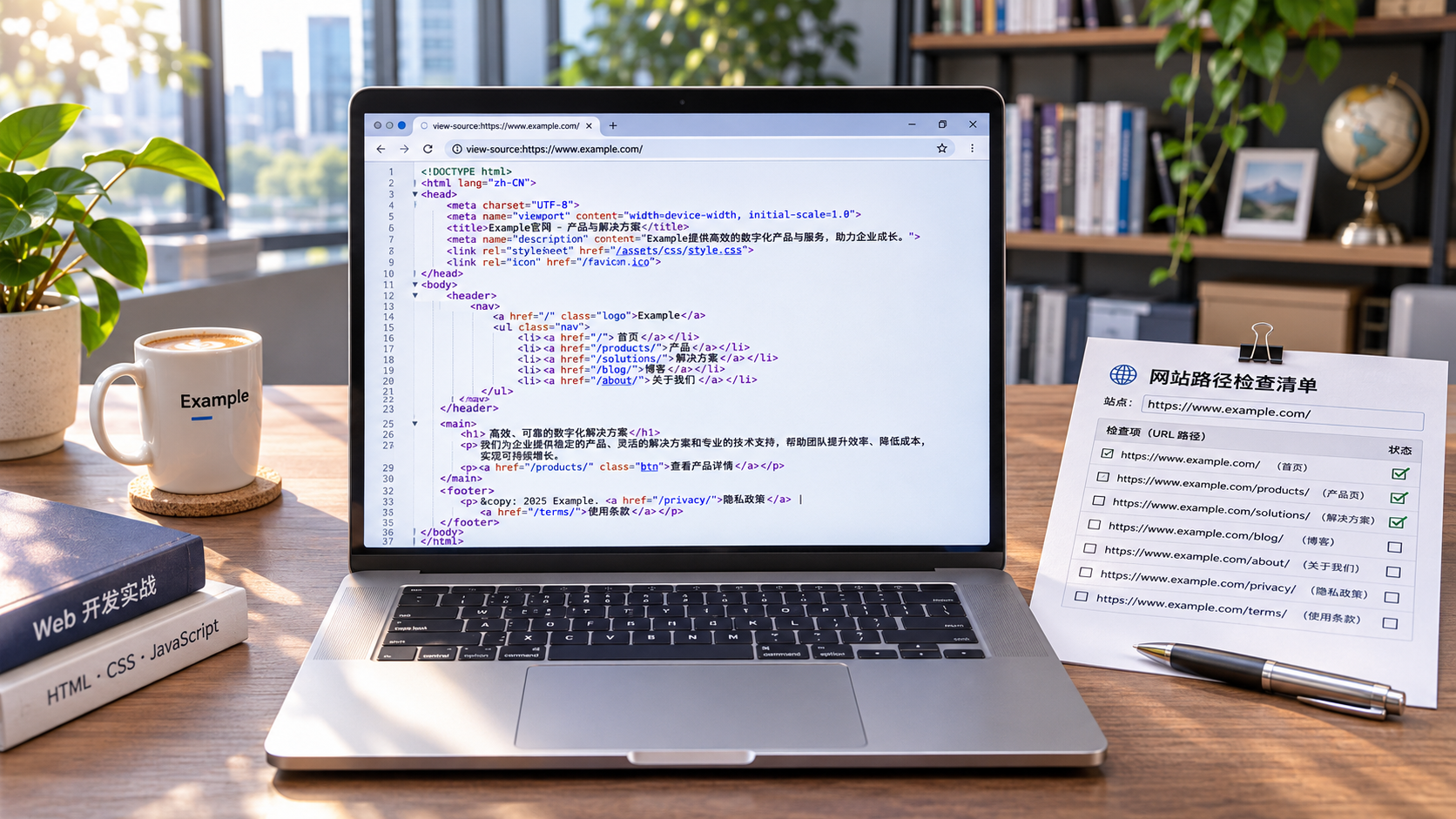
 How to check whether a page can be crawled for AI search optimization?
 How Can GEO Optimization Increase the Chances of Content Being Cited in AI Search Results?

Related Products
 Yiyingbao SaaS Intelligent Website Building and Marketing SystemYiyingbao SaaS Intelligent Website Building and Marketing System, AI-powered no-code website building, rapid creation of multilingual B2B international websites in 10 minutes, global server acceleration, AI-powered SEO optimization, helping businesses connect efficiently with global markets. The perfect integration of technology and operation makes building an international trade website remarkably simple
 AI+SEM Intelligent Advertising Marketing SystemAI+SEM drives intelligent ad creation, empowering full-funnel precision advertising marketing. The system automatically generates weekly/monthly reports, AI recommends keywords and target countries, monitors core metrics in real-time with intelligent alerts, and enables one-click high-conversion ad solutions to help quickly acquire customers and improve ROI.
 AI+SEO Dual-Engine System Optimization ServicesYiyingbao’s AI+SEO dual-engine optimization system helps foreign trade enterprises acquire high-quality organic traffic through AI-powered keyword research, content generation, and comprehensive technical optimization, significantly improving search rankings and conversion rates.
 AI+SNS Social Media Marketing SystemYingbao AI+SNS Social Media Marketing System - Precision social capture for the social media era. Supports one-click content synchronization across major platforms like Facebook and LinkedIn. AI intelligently rewrites posts for enhanced relevance. 24/7 AI customer service and user profiling analysis empower businesses to efficiently expand into global markets.
 AI+SEO营销解决方案易营宝AI+SEO营销解决方案,通过AI批量写作、智能生成TDK、精准关键词扩词等功能,全面优化网站SEO效果,提升流量与转化率。助力企业构建高效智能网站新生态。
 AI+SEM Advertising Marketing SolutionsAI+SEM Advertising Marketing Solution leverages AI technology to deeply empower SEM ad campaigns. It automatically generates weekly/monthly reports using AI, presenting account data across multiple dimensions for comprehensive insights into campaign performance and trends. The system precisely recommends keywords and target countries, intelligently generates high-conversion ad copy, and enables one-click activation of efficient campaign plans to help businesses rapidly acquire customers. Simultaneously, it monitors core metrics in real time, intelligently identifies abnormal fluctuations, and issues timely alerts to ensure stable, high-return advertising results.
 Domain Name ServicesEasyWin provides professional domain name services, including intelligent queries, one-stop registration, brand protection, and full lifecycle management, helping businesses build a digital brand image.
 EasyOperate B2C Cross-Border E-Commerce Platform & Independent WebsiteEasyStore B2C Cross-border E-commerce Independent Store is an intelligent website building and cross-border e-commerce integrated solution independently developed by EasyStore Information Technology (Beijing) Co., Ltd. The system is specially designed for small and medium-sized as well as large export enterprises, integrating 'website building, operation, marketing, advertising, and conversion' into one, helping enterprises quickly establish cross-border e-commerce independent stores to achieve brand globalization and global sales growth.
The platform supports multiple languages, multiple currencies, and multi-channel marketing, with built-in AI intelligent translation and SEO optimization systems, suitable for mainstream markets such as Southeast Asia, Europe and America, Latin America, and the Middle East, assisting Chinese manufacturing enterprises in efficiently deploying international e-commerce strategies. SSL证书易营宝提供专业SSL安全证书服务,包括单域名和泛域名证书,确保网站数据传输加密、身份验证和完整性保护,助力企业建立安全可信的在线业务环境。









