









- Can the average annual growth rate reflect real opportunities in overseas markets?Oct 07, 2026View details
- Which customer acquisition channels will be affected by cross-border marketing trends in 2026?Sep 06, 2026View details
- Which homogenization risks should be considered in an analysis of the AI-powered website building industry?Aug 30, 2026View details
- How Will AI Marketing Trends 2026 Change Advertising Budget AllocationAug 28, 2026View details
- Is the EV SSL certificate market shrinking or upgrading? How should companies assess certificate procurement?Aug 11, 2026View details
- Why the old AMP SEO 2020 practices no longer work and what has changed in current optimization prioritiesAug 02, 2026View details
Can Yiyingbao’s Multilingual Ad Creative Generation Keep Brand Terminology Consistent?
Whether YiYingBao’s multilingual ad creative generation can maintain consistent brand terminology depends on whether brand rules are applied throughout the generation, editing, and publishing process. Fluent multilingual output only means that the copy reads smoothly. Keeping product names, key selling points, and service commitments consistent also requires terminology controls, style guidelines, and cross-language checks. When evaluating solutions, make these capabilities a key focus of demonstrations and acceptance testing.
YiYingBao covers services including intelligent website building, overseas advertising, and social media marketing, making it suitable for evaluation alongside website and promotional content. For businesses operating multilingual websites and ads at the same time, consistency matters not only across languages but also across ads, landing pages, and product pages: if an ad says “customization is available,” the landing page must not claim that “all specifications can be customized.”
Consistent Brand Terminology Does Not Mean Word-for-Word Equivalence in Every Language
The content that needs to remain fixed falls mainly into three categories: brand and product line names, technical terminology and specifications, and purchase-related commitments. These determine whether users are seeing the same product and the same service. For example, “recyclable” and “made with recycled materials” mean different things, and “technical support is available” cannot automatically be expanded to “24/7 technical support.” Even if such changes make the copy sound more appealing, they constitute a shift in meaning.
The tone of advertising, however, should allow room for localization. An industrial brand that emphasizes reliability and professionalism can use different sentence structures in different markets, but should not suddenly adopt an exaggerated promotional tone. Calls to action can also be adapted to local conventions, as long as they still prompt the same action, such as requesting a quote, applying for a sample, or booking a demo.
A sound criterion is that facts and brand positioning remain consistent while wording can vary moderately. Locking every sentence into a literal translation may reduce readability, while allowing unrestricted rewriting can easily put brand commitments out of control.
When Evaluating YiYingBao’s Multilingual Ad Creative Generation, Start by Checking How the Rules Are Applied
A brand introduction alone is not enough to constrain bulk creative generation. More useful inputs are actionable rules: which names must be retained in the original language, which terms have approved translations, which expressions are prohibited, and what tone applies to each product line. During evaluation, check whether the rules can be saved, reused, and applied across different languages and creative formats.
Terminology management also needs to account for context. The same Chinese term may require different translations in product features and after-sales service; even within the same language, wording may vary by region. A simple bilingual glossary can easily conflate regional and product-specific differences. In a demo, include the product line, target market, and scope of application, then check whether the generated content follows the relevant rules.
Style guidelines work best when they include positive and negative examples. “Professional and trustworthy” is too broad. It can be made more actionable with guidance such as “describe specific functions, avoid unsupported superlatives, and do not add performance commitments,” along with approved copy for reference. Also check how conflicts between rules are handled: when a platform limits headline length, does the system adjust the sentence structure or remove important information such as the product name or service conditions?
If these requirements depend mainly on prompts entered each time, include repeated setup and manual review in the cost of use. Whether the rules remain in effect when team members change, tasks switch, or content is generated in bulk is a better indicator of long-term usability than the quality of a one-off demo.
Use a Set of Error-Prone Creative Assets for Acceptance Testing
A demo should not rely on a simple slogan alone. Prepare real product information that includes brand names, product line names, technical terms, service limitations, and prohibited expressions, covering the languages planned for advertising. Use the same information to generate search ad headlines, social media copy, and the first screen of an ad landing page, then shorten and rewrite the content to see whether it drifts over multiple rounds of processing.
Test materials should retain conditions that are easy to omit. For example, changing “free samples are available for specified models” to “get a free sample” broadens the scope of the commitment. Then update the sample policy and check whether newly generated assets follow the new rule and whether the old assets can be identified.
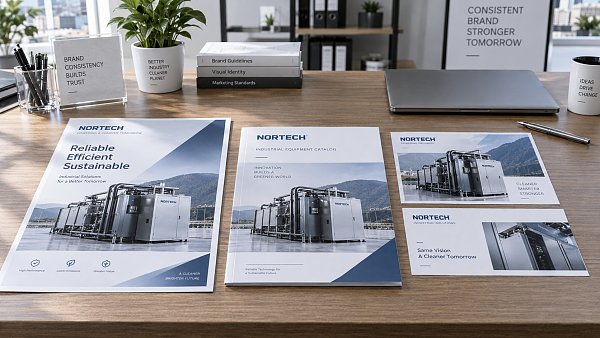
For acceptance testing, results can be grouped into three categories:
- Must be blocked: Incorrect brand names, changed product specifications, unsupported commitments, and removed service limitations.
- Needs revision: Inconsistent terminology, a tone that deviates from brand guidelines, and inconsistencies between ad and landing page wording.
- Acceptable: Adjustments to word order, sentence structure, and calls to action to suit local conventions, provided the original meaning is unchanged.
This classification helps prevent copy preferences from being confused with factual errors. Agree on the acceptance criteria before testing, and record the number of revisions, time spent on manual work, and types of issues. Only then can you determine whether generation efficiency offsets review costs.
Cross-Language Checks Cannot Rely on Back-Translation Alone
Translating foreign-language copy back into Chinese can help reveal expanded commitments or omitted information, but back-translation may also make an incorrect expression sound reasonable again. Brand names, model numbers, figures, units, and approved terminology are suitable for rule-based checks; meaning, tone, and local usage need to be reviewed by someone familiar with the target language.
Text in images, video subtitles, and voice-over scripts should also be included in the same review process. Reviewing only the body copy may miss an outdated slogan in an image or an incorrect product name in subtitles. The deliverables should also specify which asset formats are covered by the review and whether changes require another review.
When Is It Suitable for Routine Production?
Multilingual generation is better suited to bulk first drafts, version expansion, and channel adaptation when product information is relatively stable, brand rules are clear, and someone is responsible for target-language review. If product lines change frequently, commitments vary significantly by region, or language review resources are limited, it is better to start with a small number of markets and asset types.
The value of integrating website and marketing services should also be reflected in specific workflows: after terminology is updated, can the website, landing pages, and ads use the same version? Are approved assets documented? Can new and old versions be distinguished? These should be explicitly included in the scope of delivery; content synchronization should not be assumed based on the phrase “all-in-one” alone.
Before entering procurement discussions, it is best to obtain a set of sample materials generated and reviewed according to the company’s brand rules, while clarifying who is responsible for maintaining the rules, blocking exceptions, and giving final approval for publication. The solution is ready for routine production only if it can consistently retain correct names, accurate commitments, and the brand’s tone of voice, while keeping manual revisions within a manageable range for the team.
Related Articles


Related Products
 Yiyingbao SaaS Intelligent Website Building and Marketing SystemYiyingbao SaaS Intelligent Website Building and Marketing System, AI-powered no-code website building, rapid creation of multilingual B2B international websites in 10 minutes, global server acceleration, AI-powered SEO optimization, helping businesses connect efficiently with global markets. The perfect integration of technology and operation makes building an international trade website remarkably simple
 AI+SEM Intelligent Advertising Marketing SystemAI+SEM drives intelligent ad creation, empowering full-funnel precision advertising marketing. The system automatically generates weekly/monthly reports, AI recommends keywords and target countries, monitors core metrics in real-time with intelligent alerts, and enables one-click high-conversion ad solutions to help quickly acquire customers and improve ROI.
 AI+SEO Dual-Engine System Optimization ServicesYiyingbao’s AI+SEO dual-engine optimization system helps foreign trade enterprises acquire high-quality organic traffic through AI-powered keyword research, content generation, and comprehensive technical optimization, significantly improving search rankings and conversion rates.
 AI+SNS Social Media Marketing SystemYingbao AI+SNS Social Media Marketing System - Precision social capture for the social media era. Supports one-click content synchronization across major platforms like Facebook and LinkedIn. AI intelligently rewrites posts for enhanced relevance. 24/7 AI customer service and user profiling analysis empower businesses to efficiently expand into global markets.
 AI+SEO营销解决方案易营宝AI+SEO营销解决方案,通过AI批量写作、智能生成TDK、精准关键词扩词等功能,全面优化网站SEO效果,提升流量与转化率。助力企业构建高效智能网站新生态。
 AI+SEM Advertising Marketing SolutionsAI+SEM Advertising Marketing Solution leverages AI technology to deeply empower SEM ad campaigns. It automatically generates weekly/monthly reports using AI, presenting account data across multiple dimensions for comprehensive insights into campaign performance and trends. The system precisely recommends keywords and target countries, intelligently generates high-conversion ad copy, and enables one-click activation of efficient campaign plans to help businesses rapidly acquire customers. Simultaneously, it monitors core metrics in real time, intelligently identifies abnormal fluctuations, and issues timely alerts to ensure stable, high-return advertising results.
 Domain Name ServicesEasyWin provides professional domain name services, including intelligent queries, one-stop registration, brand protection, and full lifecycle management, helping businesses build a digital brand image.
 EasyOperate B2C Cross-Border E-Commerce Platform & Independent WebsiteEasyStore B2C Cross-border E-commerce Independent Store is an intelligent website building and cross-border e-commerce integrated solution independently developed by EasyStore Information Technology (Beijing) Co., Ltd. The system is specially designed for small and medium-sized as well as large export enterprises, integrating 'website building, operation, marketing, advertising, and conversion' into one, helping enterprises quickly establish cross-border e-commerce independent stores to achieve brand globalization and global sales growth.
The platform supports multiple languages, multiple currencies, and multi-channel marketing, with built-in AI intelligent translation and SEO optimization systems, suitable for mainstream markets such as Southeast Asia, Europe and America, Latin America, and the Middle East, assisting Chinese manufacturing enterprises in efficiently deploying international e-commerce strategies. SSL证书易营宝提供专业SSL安全证书服务,包括单域名和泛域名证书,确保网站数据传输加密、身份验证和完整性保护,助力企业建立安全可信的在线业务环境。









