









- Hengqin Cooperation Zone Shares Cross-Border E-Commerce Developments, Focusing on Macao-Hengqin Collaboration and International MarketsOct 24, 2026View details
- A Shenyang study highlights the development of the “cross-border e-commerce + industrial cluster” modelOct 24, 2026View details
- Three China Advertising Association GEO group standards take effect on October 23Oct 24, 2026View details
- Amazon Raises Fulfillment Fees Twice, Yet the Median Platform Fee Remains Around 40%Oct 22, 2026View details
- AliExpress and YouTube Partner to Expand Marketing Opportunities for Chinese Brands Going GlobalOct 22, 2026View details
- Publicis says AI marketing is developing at two speeds, with agentic AI helping win clientsOct 21, 2026View details
What Needs to Be Completed Before Integrating a Marketing-Focused Export Website with Google Ads
What Should Be Prepared Before Connecting a Marketing-Focused Foreign Trade Website to Google Ads
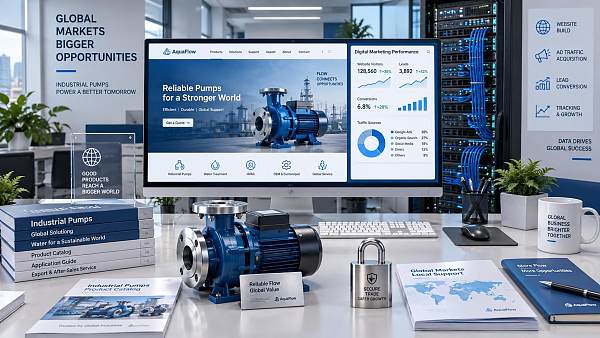
Can a marketing-focused foreign trade website connect to Google Ads? Technically, almost any website with an independent domain name and normal accessibility can run ads. However, in terms of lead generation results, being able to connect is not the same as being suitable for spending ad budget. Many foreign trade companies rush to launch ads as soon as their websites go live, only to get clicks but very few inquiries, while the sales team cannot determine where the leads came from. The issue is usually not Google Ads itself, but rather several missing key pieces between the website, data, and sales follow-up.
This is especially true for B2B manufacturing, equipment exports, customized components, and similar businesses, where customer decision-making cycles are not short. A single click may lead a visitor to first review product specifications, then check factory capabilities, certification documents, and delivery scope, before submitting an inquiry days or even weeks later. If the website only serves to “showcase the company” and does not provide a clear next step for ad traffic, even a highly refined advertising account will struggle to consistently determine which keywords truly generate business opportunities.
First Assess Whether the Website Can Handle Paid Traffic
Visitors brought in by ads are usually more urgent than those from organic search, but they are also more discerning. When users search for “industrial water pump supplier” and enter a page, they will leave if they cannot find product types, application scenarios, key specifications, or contact options within seconds. This cannot simply be attributed to imprecise keywords; in many cases, the landing page is still designed according to the logic of a Chinese corporate website: a large brand image, company news, and deeply layered navigation, but no answers to the purchasing questions overseas buyers care about first.
A marketing-focused foreign trade website suitable for Google Ads should at least enable visitors to quickly confirm four things: what you sell; whether it suits their industry or application; whether you can meet basic technical and delivery requirements; and how to obtain a quotation, sample, catalog, or technical response. For non-standard products, do not only include “Contact Us”; you should also set form fields that match the business, such as estimated purchase quantity, target market, technical requirements, and drawing uploads. Do not include too many fields, as requiring more than ten pieces of information during the first contact can instead lead to the loss of valid leads.
Page loading speed, mobile readability, and HTTPS should not be addressed only after advertising begins. Some buyers may check suppliers on their phones at trade shows, in warehouses, or while traveling; oversized images, pop-ups blocking content, and forms that cannot be submitted on mobile devices will all directly affect the quality of ad traffic. Whether an ad account can pass review is one matter; whether users are willing to continue learning about your business is another.
Do Not Simply Copy the Website Homepage for Landing Pages
A foreign trade website homepage is suitable for building an overall understanding, while an advertising landing page should address a clear search intent. For example, when advertising a type of packaging equipment, there is no need to send visitors first to the homepage and then ask them to find products among dozens of categories; a more reasonable approach is to direct them to the relevant equipment page, where applicable materials, key specification ranges, optional configurations, production or quality inspection information, and inquiry options are displayed directly. If keywords correspond to “manufacturer,” “supplier,” or “custom,” the page should also show factory capabilities, customization processes, and cooperation methods, rather than merely listing product images.
A common mistake is using the same page to serve all countries, all industries, and all purchasing stages at the same time. In practice, landing pages can be divided by ad group: product keywords lead to product detail pages, solution keywords lead to application solution pages, and brand keywords return to brand or official website pages. When targeting different markets such as North America, Europe, and the Middle East, language versions, units of measurement, and delivery or service descriptions should also be checked consistently. Multilingual content does not mean using machine translation and publishing it in bulk; incorrect terminology, inconsistent currencies, and contact details that do not match the target region will all reduce trust.
Define Conversion Tracking Before Launching Ads—Do Not Focus Only on Clicks
Before using Google Ads, one of the most easily overlooked issues is what counts as a valid conversion. Form submissions can certainly be tracked, but for foreign trade businesses, WhatsApp clicks, email clicks, phone calls, sample downloads, quotation page visits, and even time spent on key pages may all be valuable behavioral signals. However, these signals should not be viewed together with formal inquiries; otherwise, the account may be misled by large numbers of low-threshold actions, and optimization efforts may become distorted.
In actual projects, it is recommended that website development, advertising optimization, and sales follow-up personnel jointly define conversion levels. In the initial stage, high-quality forms, phone calls, and instant messaging inquiries can be used as primary goals; once a certain amount of lead evaluation data has been accumulated, sales-side outcomes such as “valid demand” and “quoted” can then be fed back to adjust keyword and geographic strategies. This approach is closer to real business decision-making than watching cost per click.
Check the Account, Domain, and Content Credibility Together
Many companies view Google Ads as an independent traffic tool. In reality, both ad review and user trust depend on the website’s basic information. Whether domain access is stable, whether the privacy policy and contact details are complete, whether company entity information is consistent throughout, and whether products contain exaggerated or unverifiable claims should all be checked in advance. For categories such as medical, financial, adult, and regulated chemicals, additional confirmation must be made based on specific markets and advertising policies; experience from other industries cannot simply be applied directly.
At the content level, it is also not advisable to prepare only a few product images. For products with higher unit prices or greater purchasing risks, customers will often continue to review FAQs, application cases, quality control processes, packaging and shipping instructions, downloadable materials, and after-sales service boundaries. If there are no genuine materials that can be publicly disclosed, there is no need to force together “global customer cases”; clearly explaining verifiable manufacturing capabilities, product information, and communication processes is usually more reliable. Advertising is responsible for bringing people in, while content is responsible for resolving concerns; the two cannot be separated.
Separating Website Development and Advertising Services Often Creates Another Round of Rework
For business evaluation, the focus is not only on comparing website development quotes or advertising agency fees, but also on confirming whether the service provider can connect the website, tracking, content, and subsequent optimization. It is not impossible for one party to develop the website and another to run the ads, but tracking permissions, response times for page changes, material updates, and ownership of lead data must be clarified in advance. Otherwise, when the advertising team identifies a landing page issue, changing a page may require multiple layers of communication, which can easily slow down the optimization pace.
Since its establishment in 2013, Yiyingbao Information Technology (Beijing) Co., Ltd. has provided integrated services around intelligent website development, SEO optimization, social media marketing, and advertising. Its cloud-based intelligent website development, cross-border e-commerce mall, and AI advertising marketing capabilities for foreign trade enterprises, manufacturing factories, cross-border sellers, and brand globalization projects are suitable for teams that need to plan multilingual websites, advertising landing pages, and overseas customer acquisition channels in a unified manner. For companies planning to develop Google SEO, Google Ads, and social media lead generation at the same time, the value of this collaborative approach is not that it “stacks up more functions,” but that it reduces rework caused by discovering after website launch that tracking is unavailable, pages are unsuitable, or content cannot be reused.
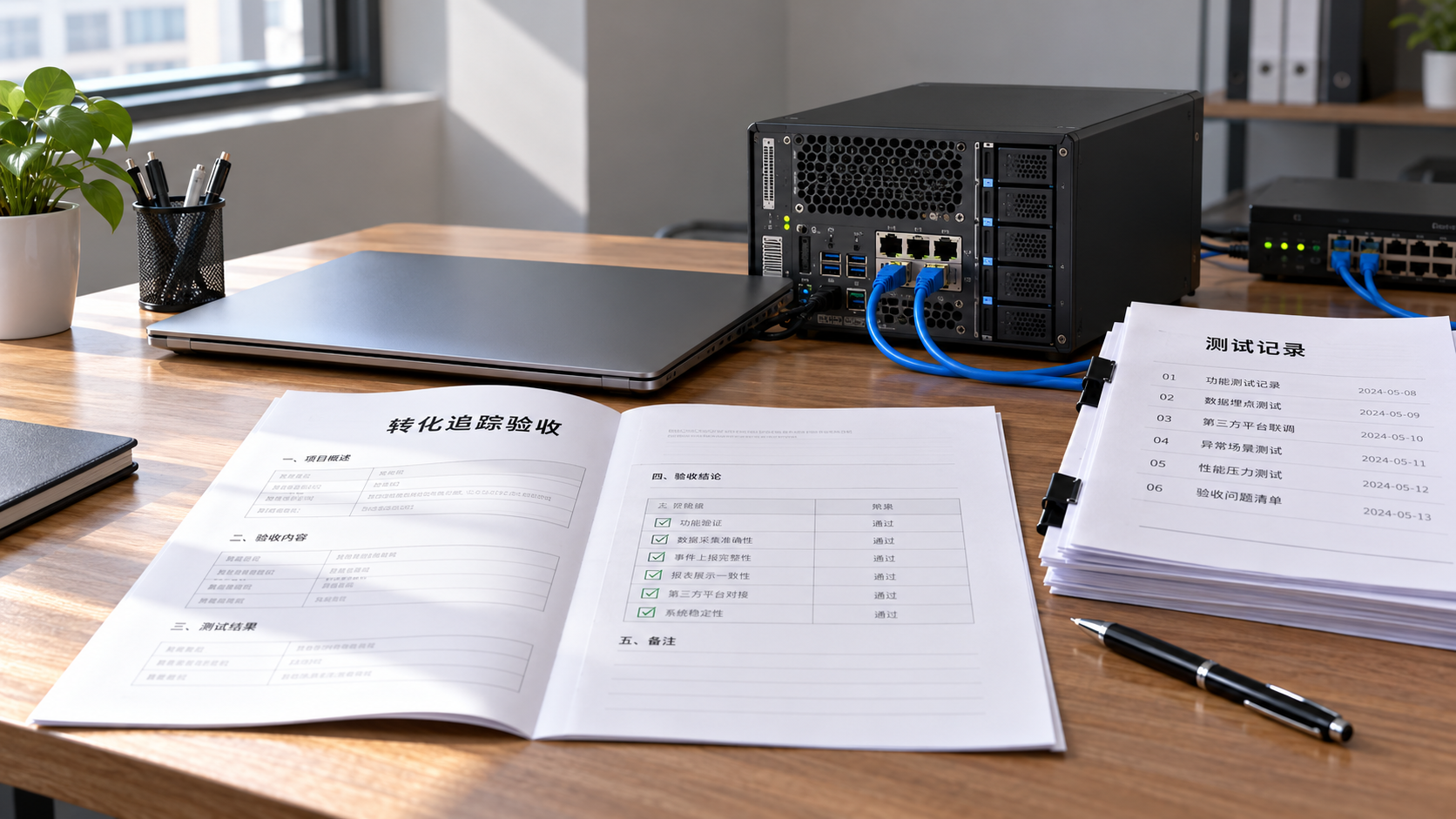
Before truly launching ads, a small-scale acceptance test can be conducted: enter the page through an ad link, and complete browsing, form submission, and instant consultation on both desktop and mobile devices; confirm that the sales team can receive leads and identify their sources; then check whether the language, units, and contact paths displayed to visitors from target countries are natural. This process may appear basic, but it can expose most issues in advance. A marketing-focused foreign trade website can certainly connect to Google Ads, but only when the website can receive, record, and follow up on traffic does the advertising budget have a foundation for continuous optimization.
Related Articles
 How Can You Exclude Existing Customers from Facebook Ad Retargeting?
 How can you evaluate a landing page agency's conversion tracking capabilities?
 How much does it cost to run Google paid ads in Japan?

Related Products
 Yiyingbao SaaS Intelligent Website Building and Marketing SystemYiyingbao SaaS Intelligent Website Building and Marketing System, AI-powered no-code website building, rapid creation of multilingual B2B international websites in 10 minutes, global server acceleration, AI-powered SEO optimization, helping businesses connect efficiently with global markets. The perfect integration of technology and operation makes building an international trade website remarkably simple
 AI+SEM Intelligent Advertising Marketing SystemAI+SEM drives intelligent ad creation, empowering full-funnel precision advertising marketing. The system automatically generates weekly/monthly reports, AI recommends keywords and target countries, monitors core metrics in real-time with intelligent alerts, and enables one-click high-conversion ad solutions to help quickly acquire customers and improve ROI.
 AI+SEO Dual-Engine System Optimization ServicesYiyingbao’s AI+SEO dual-engine optimization system helps foreign trade enterprises acquire high-quality organic traffic through AI-powered keyword research, content generation, and comprehensive technical optimization, significantly improving search rankings and conversion rates.
 AI+SNS Social Media Marketing SystemYingbao AI+SNS Social Media Marketing System - Precision social capture for the social media era. Supports one-click content synchronization across major platforms like Facebook and LinkedIn. AI intelligently rewrites posts for enhanced relevance. 24/7 AI customer service and user profiling analysis empower businesses to efficiently expand into global markets.
 AI+SEO营销解决方案易营宝AI+SEO营销解决方案,通过AI批量写作、智能生成TDK、精准关键词扩词等功能,全面优化网站SEO效果,提升流量与转化率。助力企业构建高效智能网站新生态。
 AI+SEM Advertising Marketing SolutionsAI+SEM Advertising Marketing Solution leverages AI technology to deeply empower SEM ad campaigns. It automatically generates weekly/monthly reports using AI, presenting account data across multiple dimensions for comprehensive insights into campaign performance and trends. The system precisely recommends keywords and target countries, intelligently generates high-conversion ad copy, and enables one-click activation of efficient campaign plans to help businesses rapidly acquire customers. Simultaneously, it monitors core metrics in real time, intelligently identifies abnormal fluctuations, and issues timely alerts to ensure stable, high-return advertising results.
 Domain Name ServicesEasyWin provides professional domain name services, including intelligent queries, one-stop registration, brand protection, and full lifecycle management, helping businesses build a digital brand image.
 EasyOperate B2C Cross-Border E-Commerce Platform & Independent WebsiteEasyStore B2C Cross-border E-commerce Independent Store is an intelligent website building and cross-border e-commerce integrated solution independently developed by EasyStore Information Technology (Beijing) Co., Ltd. The system is specially designed for small and medium-sized as well as large export enterprises, integrating 'website building, operation, marketing, advertising, and conversion' into one, helping enterprises quickly establish cross-border e-commerce independent stores to achieve brand globalization and global sales growth.
The platform supports multiple languages, multiple currencies, and multi-channel marketing, with built-in AI intelligent translation and SEO optimization systems, suitable for mainstream markets such as Southeast Asia, Europe and America, Latin America, and the Middle East, assisting Chinese manufacturing enterprises in efficiently deploying international e-commerce strategies. SSL证书易营宝提供专业SSL安全证书服务,包括单域名和泛域名证书,确保网站数据传输加密、身份验证和完整性保护,助力企业建立安全可信的在线业务环境。









