









- Amazon Raises Fulfillment Fees Twice, Yet the Median Platform Fee Remains Around 40%Oct 22, 2026View details
- AliExpress and YouTube Partner to Expand Marketing Opportunities for Chinese Brands Going GlobalOct 22, 2026View details
- Publicis says AI marketing is developing at two speeds, with agentic AI helping win clientsOct 21, 2026View details
- Salesforce Plans to Acquire Braze for $5.66 Billion to Enhance AI Marketing CapabilitiesOct 21, 2026View details
- Levanta’s Inaugural China Summit Held in Shenzhen, Focusing on AI and Cross-Border Brand GrowthOct 20, 2026View details
- The October Edition of the 2026 GGE Shenzhen Cross-Border E-Commerce Expo OpensOct 20, 2026View details
Can content automatically generated by a website builder be published directly?
Can website-building tools automatically generate high-quality content? They can help you write a usable first draft, but “generated” does not mean “ready to publish.” This is especially true for international trade websites: the copy must not only read well, but also accurately describe your products, answer overseas buyers’ questions, and reflect what you can actually deliver. Whether content is ready to go live depends not on whether it was generated by AI, but on whether its facts have been verified, its search intent assessed, and its localization checked.
For the people responsible for building the website, a safer approach is to let the tool organize information and draft copy, while leaving the publishing decision to someone who knows the business. The time saved should come from reducing repetitive writing—not from skipping review.
Where can automatically generated content seem right but actually be wrong?
Most website-building tools are good at organizing language based on product names, industry materials, and page templates. If the input is sufficiently complete, they can quickly generate company profiles, product descriptions, article drafts, and even versions in multiple languages. But fluent copy is no proof that its claims are reliable.
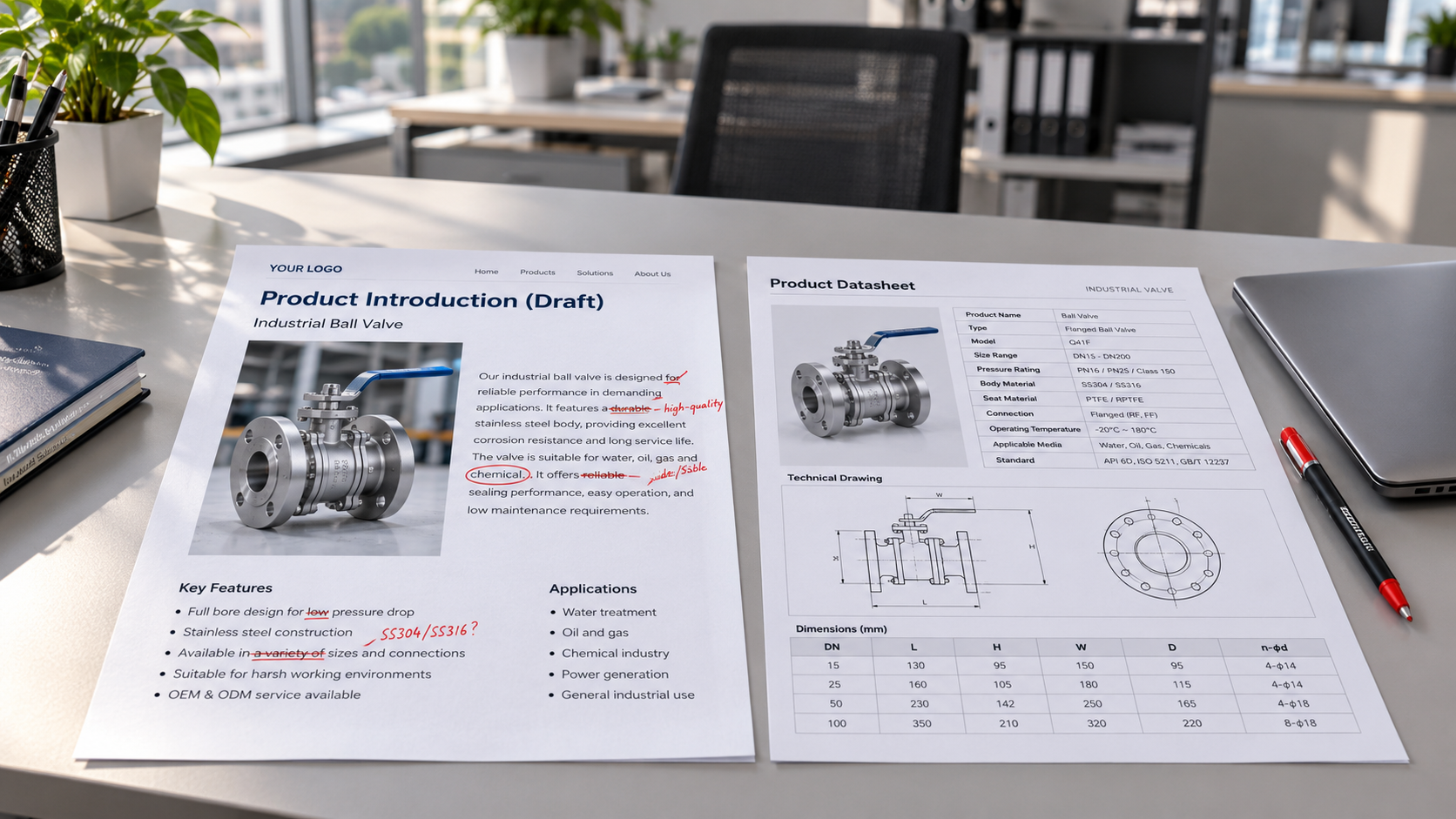
For example, if you enter only “stainless steel industrial valves,” the generated copy might add a temperature range, suitable media, or certification information. These claims may sound reasonable in the industry, but they may not apply to your products. If a buyer selects a product based on them, the mistake is more than a copywriting problem—it could also affect lead quality and subsequent transactions.
Another common issue is content that contains no obvious errors but sounds just like competitors. The whole page repeatedly emphasizes quality, service, and delivery times, without explaining model differences, usage limitations, or purchasing terms. After reading it, users still do not know whether they should contact you. This kind of content can fill a page, but it does little to help users make a decision.
Can website-building tools automatically generate high-quality content? Start by looking at the information they have
The quality of generated content often depends on the quality of the input. Instead of simply asking for “a professional product description,” first give the tool business information that can be verified:
- Product facts: Models, materials, dimensions, performance specifications, application conditions, and scenarios in which the product should not be used.
- Purchasing information: Minimum order quantities, customization options, sample arrangements, packaging, and delivery details. Clearly mark any unconfirmed information as pending confirmation.
- Target readers: Whether the content is for purchasing managers, engineers, or end consumers, and which country or region you serve.
- Page objective: Whether the page is intended to explain a concept, support product selection, or encourage quote requests. Do not make one page serve every purpose.
You can also set a constraint: “Use only the information provided. Do not infer certifications or performance claims, and list any missing information separately.” This cannot guarantee there will be no errors, but it can reduce the scope for the tool to fill in facts on its own and make the subsequent review more efficient.
Before publishing, review the content from the buyer’s perspective
You do not need to rewrite every first draft from scratch. Preview the page and follow the buyer’s path—from search, to landing on the page, to reading and making an inquiry. Reviewing it this way usually makes it easier to spot issues that could actually affect results.
Can visitors from search find the answer right away?
Someone searching for “how to choose an industrial valve” usually needs selection criteria, not a long company history. Someone searching for a specific model is more likely to care about specifications, compatibility requirements, and how to request a quote. Check whether the page title, opening, and subheadings all address the same question. Use keywords naturally; there is no need to repeat them in every paragraph.
If the opening takes too long to answer the question, or the page combines a selection guide, company profile, and promotional information, the focus should be adjusted—even if the writing is fluent.
Can key claims be substantiated?
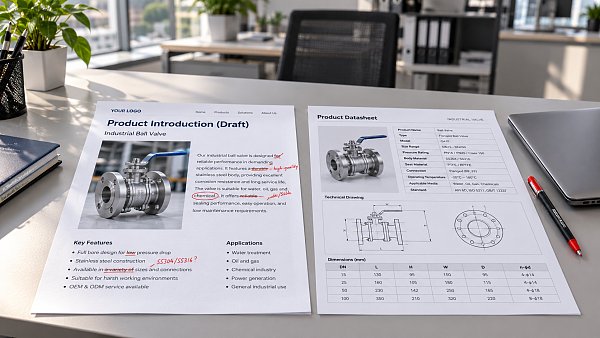
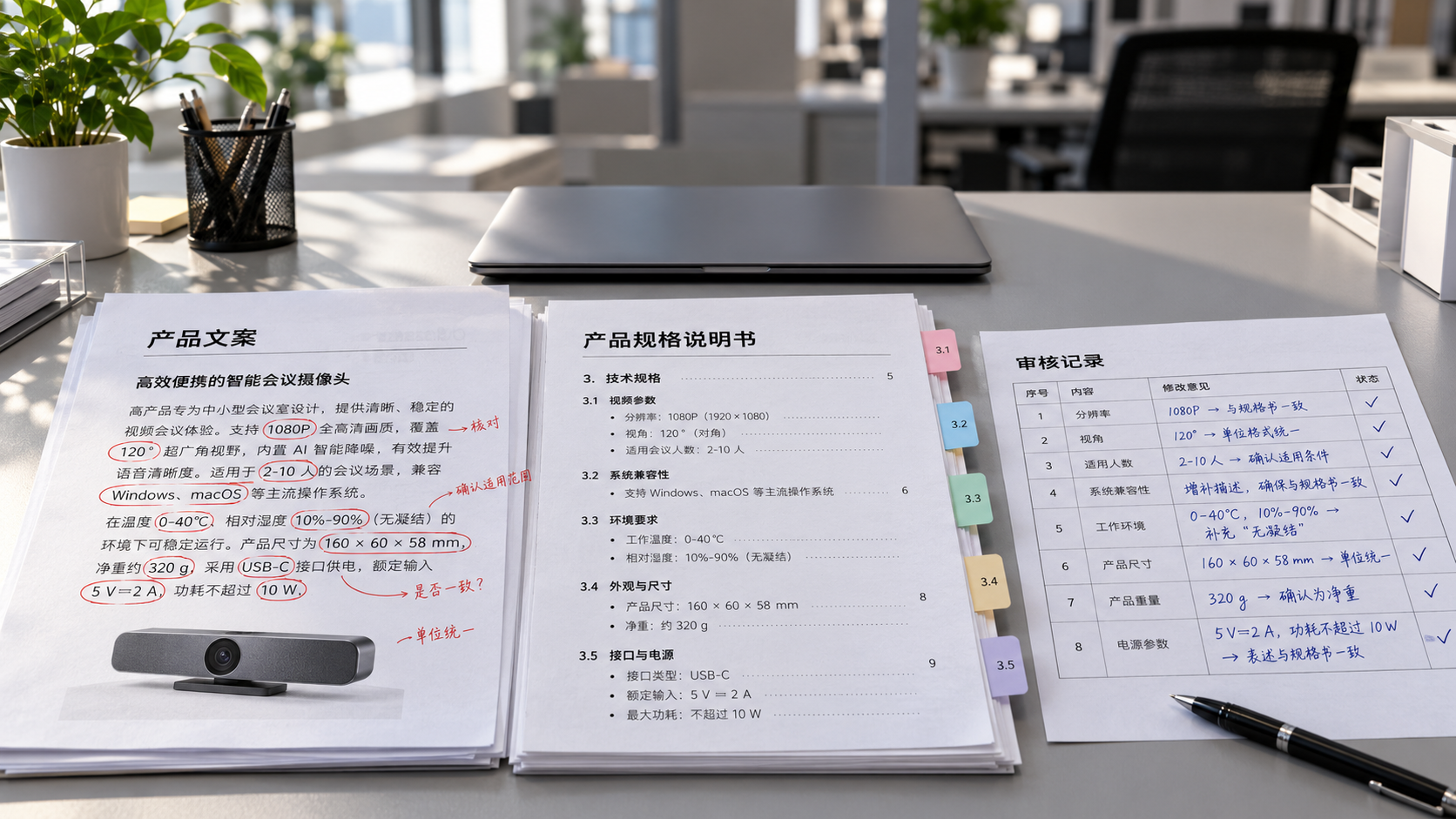
Mark specifications, certifications, prices, delivery times, warranties, and performance claims, then verify each one against product information or with the person responsible for the business. Pay particular attention to absolute statements such as “suitable for all environments” or “guaranteed to improve rankings.” If there is no reliable basis for a claim, delete it, revise it, or hold it back from publication. Do not assume it is correct just because the tool states it confidently.
Could buyers misunderstand the content in another language?
For a multilingual website, checking whether the translation reads smoothly is not enough. Units of measurement, date formats, industry terminology, and details about shipping costs, taxes, and after-sales service should all fit the target market. For example, “customization available” should specify what can be customized; “fast delivery” is better replaced with details about confirmed conditions than left as a vague promise.
Product pages and advertising landing pages directly affect inquiries and purchases, so they should ideally be reviewed by someone familiar with local communication styles and the business. Machine translation can be a starting point, but it should not replace localization review of key pages.
Even if the content is sound, does the page work properly?
Check that the page is easy to read on mobile devices, the images match the products, the links work, and the form can be submitted. Also confirm that the page can be indexed, the title matches the body text, and test content has not accidentally been made public. Content quality and technical crawlability are separate matters; overlooking either can affect the page’s performance after launch.
What can be published after a light review, and what requires a thorough check?
Content based on clear information and involving low risk can go through a lightweight review. For example, a section introduction or general operating instructions generated from confirmed information can be scheduled for publication once the facts, wording, and links have been checked. Content involving product performance, transaction terms, certifications, or safety should be confirmed by the relevant person in charge; simply polishing the wording is not enough.
There is also no need to make every article sound “completely unlike it was written by AI.” Instead of repeatedly swapping in synonyms, add genuine information that can be shared publicly: common product-selection questions from customers, differences between products, and points to note in the service process. These details are more useful than vague attempts at originality.
For teams using platforms such as 易营宝 that connect intelligent website building, SEO, and overseas marketing, content generation, business review, and ongoing site maintenance can be brought into a single workflow. The tool improves production efficiency, product and sales staff verify business facts, and operations staff check search intent and page experience—so generated content is not left unchecked.
Going live is not the finish line. It is worth continuing to monitor whether the page is indexed, which search terms bring users to it, and whether inquiries are a good fit. If traffic does not arrive immediately, that does not necessarily mean the content needs to be rewritten. First, distinguish between factors such as indexing, competition, and content relevance.
Therefore, automatically generated content can be a starting point for publication, but it should not automatically qualify for publication. Content worth publishing is factually sound, easy for buyers to understand, and presented on a page that works smoothly.
Related Articles
 Can content automatically generated by a website builder be published directly?
 How can you verify the factual accuracy of AI-assisted product content?
 Can an export website built with AI be migrated to another platform?

Related Products
 Yiyingbao SaaS Intelligent Website Building and Marketing SystemYiyingbao SaaS Intelligent Website Building and Marketing System, AI-powered no-code website building, rapid creation of multilingual B2B international websites in 10 minutes, global server acceleration, AI-powered SEO optimization, helping businesses connect efficiently with global markets. The perfect integration of technology and operation makes building an international trade website remarkably simple
 AI+SEM Intelligent Advertising Marketing SystemAI+SEM drives intelligent ad creation, empowering full-funnel precision advertising marketing. The system automatically generates weekly/monthly reports, AI recommends keywords and target countries, monitors core metrics in real-time with intelligent alerts, and enables one-click high-conversion ad solutions to help quickly acquire customers and improve ROI.
 AI+SEO Dual-Engine System Optimization ServicesYiyingbao’s AI+SEO dual-engine optimization system helps foreign trade enterprises acquire high-quality organic traffic through AI-powered keyword research, content generation, and comprehensive technical optimization, significantly improving search rankings and conversion rates.
 AI+SNS Social Media Marketing SystemYingbao AI+SNS Social Media Marketing System - Precision social capture for the social media era. Supports one-click content synchronization across major platforms like Facebook and LinkedIn. AI intelligently rewrites posts for enhanced relevance. 24/7 AI customer service and user profiling analysis empower businesses to efficiently expand into global markets.
 AI+SEO营销解决方案易营宝AI+SEO营销解决方案,通过AI批量写作、智能生成TDK、精准关键词扩词等功能,全面优化网站SEO效果,提升流量与转化率。助力企业构建高效智能网站新生态。
 AI+SEM Advertising Marketing SolutionsAI+SEM Advertising Marketing Solution leverages AI technology to deeply empower SEM ad campaigns. It automatically generates weekly/monthly reports using AI, presenting account data across multiple dimensions for comprehensive insights into campaign performance and trends. The system precisely recommends keywords and target countries, intelligently generates high-conversion ad copy, and enables one-click activation of efficient campaign plans to help businesses rapidly acquire customers. Simultaneously, it monitors core metrics in real time, intelligently identifies abnormal fluctuations, and issues timely alerts to ensure stable, high-return advertising results.
 Domain Name ServicesEasyWin provides professional domain name services, including intelligent queries, one-stop registration, brand protection, and full lifecycle management, helping businesses build a digital brand image.
 EasyOperate B2C Cross-Border E-Commerce Platform & Independent WebsiteEasyStore B2C Cross-border E-commerce Independent Store is an intelligent website building and cross-border e-commerce integrated solution independently developed by EasyStore Information Technology (Beijing) Co., Ltd. The system is specially designed for small and medium-sized as well as large export enterprises, integrating 'website building, operation, marketing, advertising, and conversion' into one, helping enterprises quickly establish cross-border e-commerce independent stores to achieve brand globalization and global sales growth.
The platform supports multiple languages, multiple currencies, and multi-channel marketing, with built-in AI intelligent translation and SEO optimization systems, suitable for mainstream markets such as Southeast Asia, Europe and America, Latin America, and the Middle East, assisting Chinese manufacturing enterprises in efficiently deploying international e-commerce strategies. SSL证书易营宝提供专业SSL安全证书服务,包括单域名和泛域名证书,确保网站数据传输加密、身份验证和完整性保护,助力企业建立安全可信的在线业务环境。









