









- Hengqin Cooperation Zone Shares Cross-Border E-Commerce Developments, Focusing on Macao-Hengqin Collaboration and International MarketsOct 24, 2026View details
- A Shenyang study highlights the development of the “cross-border e-commerce + industrial cluster” modelOct 24, 2026View details
- Three China Advertising Association GEO group standards take effect on October 23Oct 24, 2026View details
- Amazon Raises Fulfillment Fees Twice, Yet the Median Platform Fee Remains Around 40%Oct 22, 2026View details
- AliExpress and YouTube Partner to Expand Marketing Opportunities for Chinese Brands Going GlobalOct 22, 2026View details
- Publicis says AI marketing is developing at two speeds, with agentic AI helping win clientsOct 21, 2026View details
How can foreign trade marketing content be efficiently distributed across multiple platforms? The key is a unified content source.

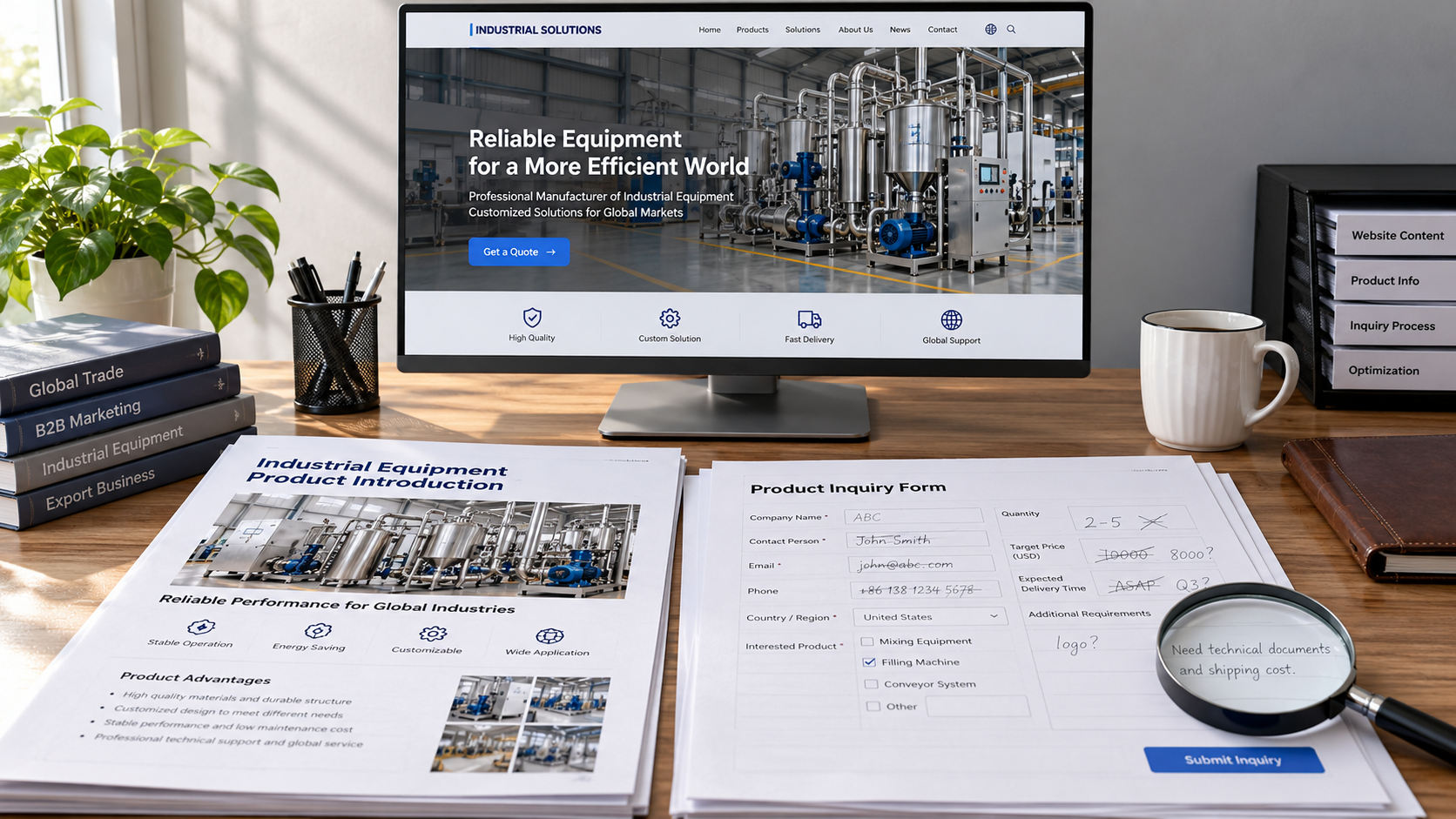
To distribute foreign trade marketing content efficiently across multiple platforms, the key is not "how many platforms you publish to at the same time," but establishing a unified content source first. In other words, use product pages, industry articles, case materials, technical documents, and campaign landing pages on the website as the central content repository, then redistribute them according to the characteristics of channels such as Google Search, LinkedIn, Facebook, email, and advertising.
If content is edited by different people in different back-end systems, common outcomes include: website parameters have been updated while social media still shares old specifications; ads direct traffic to discontinued pages; product descriptions differ across English, German, and Spanish; and an article has been revised three times but it is still impossible to determine which version is the latest. It may appear that content is being published frequently, but it actually increases maintenance costs and weakens customers' perception of the brand's professionalism.
Use the official website as the content master version, not the endpoint of distribution
When foreign trade companies create content, the official website should serve as the "information confirmation center." Product models, application scenarios, technical parameters, inquiry entry points, downloadable materials, and multilingual pages should first be fully established on the website; social media, advertising, and email should be responsible for discovery, reach, and traffic generation.
The value of this approach is that, regardless of which channel a customer enters from, they can ultimately return to a page with complete information that can be continuously updated. This is particularly important for B2B inquiry-based businesses. Procurement personnel may first see an industry perspective on LinkedIn, then search for the company name, review product pages, download a catalog, and initiate communication through a form or email. If the content across these stages is disconnected, even high exposure may not translate into qualified leads.
A unified content source does not mean copying the same paragraph across all channels. It means first defining a reviewed set of core information, then allowing different platforms to use different forms of expression. For example, a website article about industrial equipment maintenance can be broken down into problem-focused short social media posts, scenario-based selling points in advertisements, material recommendations in emails, and links for sales personnel to use in follow-up. The core facts remain consistent, while the presentation format can differ.
Break one set of content into multi-channel assets by first distinguishing "information levels"
Low efficiency is often not caused by slow writing, but by having to start from scratch every time to develop topics, find materials, translate, and format content. A more practical approach is to divide content into three levels: foundational facts, explanatory content, and channel assets.
- Foundational facts: Product names, models, applicable industries, specification ranges, delivery capabilities, certifications, or material links. This part must be based on the content in the website back end to avoid conflicting information across channels.
- Explanatory content: Application solutions, selection logic, frequently asked questions, process comparisons, and purchasing considerations. This type of content is suitable for accumulating in website articles, product detail pages, or resource centers, and is also more beneficial for long-term SEO indexing.
- Channel assets: Social media headlines, short video scripts, ad copy, image descriptions, and email subject lines. These materials can vary around the same topic, but they should not independently redefine the product's value.
For example, when a company prepares to promote equipment for food packaging lines, the content master version should first answer: What production problem does it solve? Which packaging formats is it suitable for? What should customers compare when selecting it? How can they obtain parameters or a quotation next? Then decide how to publish through different channels: Google Ads should emphasize clear purchase intent and link directly to the product page; LinkedIn can focus on production efficiency or packaging stability; Facebook is better suited to attracting initial interest through on-site visuals, short videos, or application results; and emails can send selection materials to existing leads.
The difference is that channels no longer each "produce content" independently, but instead communicate at different stages around the same marketing theme.
Before distributing content, confirm four fields that do not change frequently
When establishing a unified content source, there is no need to build a complex content management process from the start. In practice, simply standardizing the following four categories of information can already reduce substantial rework:
- Page ownership: Every promotional item must have a corresponding official website landing page. Social media posts, advertisements, and emails may differ, but they cannot lack a clear destination page.
- Language version: Do not directly synchronize machine-translated results to all channels. Different markets may have different product terminology, measurement units, delivery-time expressions, and purchasing priorities. At a minimum, the language of the landing page and traffic-driving copy must be consistent.
- Call to action: Inquiry forms, WhatsApp, email, sample requests, or catalog downloads should retain one primary action based on the page objective, rather than stacking too many entry points on the same page.
- Version status: After a product is discontinued, parameters are adjusted, a promotion ends, or a page is redesigned, it should be clear which ad groups, pinned social media content, and email automation workflows need to be updated accordingly.
Version status is the item most easily overlooked. Many teams treat "publishing" as the end, but for foreign trade marketing, maintenance must continue after publication. Advertising and social media content in particular can have delayed distribution. Continuing to drive traffic after an old page becomes invalid not only wastes budget but also gives potential customers the impression that the information is unreliable.
Websites, SEO, social media, and advertising should not use the same set of metrics
A unified content source solves content consistency; it does not mean all channels should be evaluated in the same way. Directly comparing social media readership with inquiry volume, or using short-term advertising conversions to judge whether SEO content is effective, can easily lead to incorrect adjustments.
Therefore, when scheduling, operations personnel can advance around a monthly theme rather than finding separate topics for each platform. For example, this month, around "selection and application of a certain type of product," create one main article, supplementary modules for two product pages, several social media assets, and a set of advertising landing pages. Website content is responsible for depth, social media for continuous presence, advertising for validating demand, and email for following up on existing interest.
Which practices appear convenient but actually slow down distribution efficiency?
The first is treating all platforms as content repositories and copying and pasting full text. Social media users generally do not read lengthy technical explanations in their feeds, and advertising platforms do not generate higher-quality clicks simply because the copy is longer. A more reasonable approach is to retain one specific issue, one application value, and one clear link, allowing those who need deeper information to return to the official website.
The second is publishing content first and adding the landing page later. This is particularly common in new product promotions, trade show warm-ups, and ad testing. Without a destination page, it is impossible to determine what content customers are interested in afterward, and it is also difficult for sales personnel to continue follow-up.
The third is understanding "unification" as using only one template. In multilingual, multi-market business, what should be unified are product facts, the boundaries of brand expression, and the conversion path—not making copy for every market exactly the same. Content for engineering procurement can place greater emphasis on parameters and compatibility; content for distributors may need to explain market positioning, marketing material support, or product portfolios.
When selecting a system, first assess whether content can flow smoothly
When websites, advertising, social media, and SEO are managed separately by different tools or service teams, a unified content source can easily remain only at the spreadsheet level. When choosing website-building and marketing systems, it is advisable to first review several practical questions: Can product content be maintained centrally? Are multilingual pages easy to update? Can advertising landing pages be created quickly? Can independent links and conversion entry points be retained for different channels? After content is modified, is it easy to synchronize related promotional tasks?
For companies that need to build overseas independent websites, conduct search optimization, and continuously operate advertising and social media at the same time, integrated solutions such as Yiyingbao that cover intelligent website building, multilingual websites, SEO, advertising, and overseas social media operations are suitable for reducing collaboration costs caused by fragmented back-end systems. Its value is not in replacing all content decisions, but in enabling website pages, promotional assets, and customer acquisition channels to operate collaboratively around the same set of content assets.
Before implementation, simply select one product line or one key market for a trial run: establish the main landing page, organize reusable content modules, clarify the traffic-driving link and responsible person for each channel, then use one publishing cycle to check version consistency. Once the process runs smoothly, expanding to more languages, products, and markets is usually more likely to achieve stable efficiency than covering every platform from the beginning.
Related Articles
 How can you prevent AI product description generation platforms from fabricating product specifications?
 Is AI conversion rate optimization suitable for low-traffic websites?
 Can AI marketing tools automatically follow up on website inquiries?


Related Products
 Yiyingbao SaaS Intelligent Website Building and Marketing SystemYiyingbao SaaS Intelligent Website Building and Marketing System, AI-powered no-code website building, rapid creation of multilingual B2B international websites in 10 minutes, global server acceleration, AI-powered SEO optimization, helping businesses connect efficiently with global markets. The perfect integration of technology and operation makes building an international trade website remarkably simple
 AI+SEM Intelligent Advertising Marketing SystemAI+SEM drives intelligent ad creation, empowering full-funnel precision advertising marketing. The system automatically generates weekly/monthly reports, AI recommends keywords and target countries, monitors core metrics in real-time with intelligent alerts, and enables one-click high-conversion ad solutions to help quickly acquire customers and improve ROI.
 AI+SEO Dual-Engine System Optimization ServicesYiyingbao’s AI+SEO dual-engine optimization system helps foreign trade enterprises acquire high-quality organic traffic through AI-powered keyword research, content generation, and comprehensive technical optimization, significantly improving search rankings and conversion rates.
 AI+SNS Social Media Marketing SystemYingbao AI+SNS Social Media Marketing System - Precision social capture for the social media era. Supports one-click content synchronization across major platforms like Facebook and LinkedIn. AI intelligently rewrites posts for enhanced relevance. 24/7 AI customer service and user profiling analysis empower businesses to efficiently expand into global markets.
 AI+SEO营销解决方案易营宝AI+SEO营销解决方案,通过AI批量写作、智能生成TDK、精准关键词扩词等功能,全面优化网站SEO效果,提升流量与转化率。助力企业构建高效智能网站新生态。
 AI+SEM Advertising Marketing SolutionsAI+SEM Advertising Marketing Solution leverages AI technology to deeply empower SEM ad campaigns. It automatically generates weekly/monthly reports using AI, presenting account data across multiple dimensions for comprehensive insights into campaign performance and trends. The system precisely recommends keywords and target countries, intelligently generates high-conversion ad copy, and enables one-click activation of efficient campaign plans to help businesses rapidly acquire customers. Simultaneously, it monitors core metrics in real time, intelligently identifies abnormal fluctuations, and issues timely alerts to ensure stable, high-return advertising results.
 Domain Name ServicesEasyWin provides professional domain name services, including intelligent queries, one-stop registration, brand protection, and full lifecycle management, helping businesses build a digital brand image.
 EasyOperate B2C Cross-Border E-Commerce Platform & Independent WebsiteEasyStore B2C Cross-border E-commerce Independent Store is an intelligent website building and cross-border e-commerce integrated solution independently developed by EasyStore Information Technology (Beijing) Co., Ltd. The system is specially designed for small and medium-sized as well as large export enterprises, integrating 'website building, operation, marketing, advertising, and conversion' into one, helping enterprises quickly establish cross-border e-commerce independent stores to achieve brand globalization and global sales growth.
The platform supports multiple languages, multiple currencies, and multi-channel marketing, with built-in AI intelligent translation and SEO optimization systems, suitable for mainstream markets such as Southeast Asia, Europe and America, Latin America, and the Middle East, assisting Chinese manufacturing enterprises in efficiently deploying international e-commerce strategies. SSL证书易营宝提供专业SSL安全证书服务,包括单域名和泛域名证书,确保网站数据传输加密、身份验证和完整性保护,助力企业建立安全可信的在线业务环境。









