









- Why the old AMP SEO 2020 practices no longer work and what has changed in current optimization prioritiesAug 02, 2026View details
- How to Choose Topics for an Industry News Section to Attract More Organic Search TrafficJul 29, 2026View details
- Digital Marketing Shenzhen Market Insights: Why Are Companies Expanding Overseas Looking for Growth Teams in Shenzhen?Jul 31, 2026View details
- Can Zhejiang foreign trade independent websites still be developed today? Look at changes in traffic and lead generationJul 28, 2026View details
- What New Signals Are Emerging in Enterprise Services SaaS Marketing ReportsJul 27, 2026View details
- What Does a Global Traffic Ecosystem Service Provider Do? What Are the Differences from a Single Advertising AgencyJul 16, 2026View details
Is AI conversion rate optimization reliable? Which pages and lead generation scenarios is it suitable for?
AI for conversion rate optimization: reliability comes not from “automatic redesign,” but from finding valid evidence faster
When people mention optimizacion conversiones ia, they often first think, “Can AI directly increase a page’s conversion rate?” This understanding is overly optimistic. What AI can reliably do in conversion rate optimization is not replace business judgment or generate a high-converting page out of thin air, but turn a process that previously relied on experience and repeated manual trial and error into a systematic process that identifies problems faster, forms hypotheses faster, and verifies results faster.
In other words, AI is more like an amplifier. If there are fundamental problems with the quality of the page’s traffic, product-market fit, pricing strategy, or delivery capabilities, AI cannot turn poor traffic into high-quality leads. However, if a company already has a certain traffic base and knows who its target customers are, AI can indeed significantly shorten the optimization cycle in areas such as headline messaging, form paths, content ordering, trust information presentation, audience segmentation, and advertising landing page adaptation.
Which pages are suitable, and which are not
Based on actual website and marketing service projects, AI-powered conversion rate optimization is most suitable for three types of pages: first, advertising landing pages with a single objective; second, product pages with relatively stable information structures; and third, lead-generation pages designed to obtain inquiries, schedule consultations, or download materials. They share one common feature: the conversion action is clear, the user path is short, and the observable data is relatively complete.
For example, the core task of a landing page is often not to “comprehensively introduce the company,” but to enable a particular type of traffic to complete an action within a very short time. What AI can do here is not limited to generating copy. It can also adjust the above-the-fold promise, selling-point order, and call-to-action button copy based on different keyword intents, advertising groups, and regional language versions. The value of this type of optimization is often reflected in reducing bounce rates, increasing form-start rates, or reducing invalid clicks.
Product pages are also suitable, provided that the product information is sufficiently structured. For example, for industrial equipment, standardized components, and cross-border e-commerce SKU pages, parameters, certifications, application scenarios, and delivery conditions are relatively clear. AI can help determine which information should appear first and which concerns need to be addressed in advance on the page. Conversely, for highly customized and complex solution pages that rely heavily on offline demonstrations and involve long decision-making chains, the room for improvement usually lies not only in the page itself, but also in the sales process and trust-building stage. In such cases, responsibility cannot be placed entirely on AI.
The scenarios that are less suitable are also clear: traffic samples that are too small, unclear conversion definitions, frequently changing page objectives, and incomplete backend data tracking. Without foundational data, AI can only provide suggestions that “look reasonable,” which may not produce stable results.
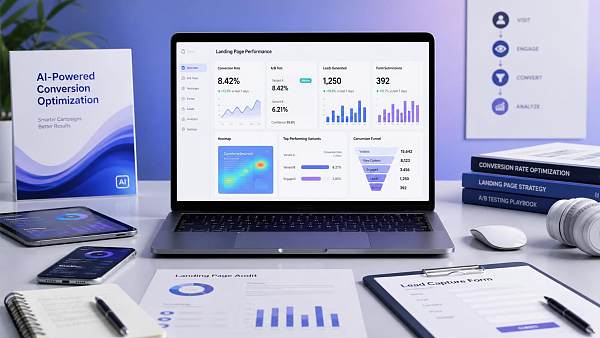
When assessing reliability, look at lead quality first, not just the number of form submissions
A common mistake in business evaluations is to interpret conversion rate optimization as “getting more people to fill out forms.” This can create significant deviations in some industries. Especially in B2B international trade, manufacturing inquiries, and overseas project-based services, what truly matters is not the number of submissions, but whether the leads match the target market, whether the purchasing stage is clear, whether the needs are genuine, and whether subsequent sales can effectively handle them.
Therefore, to assess whether optimizacion conversiones ia is reliable, at least four levels should be considered: whether page conversion data has improved; whether lead qualification rates have changed; whether customer acquisition costs have become healthier; and whether the likelihood of conversion after sales follow-up has increased. The first two metrics are more front-end oriented, while the latter two are closer to business results. Looking only at page-level data can easily lead to mistaking a “superficially high conversion rate caused by a low threshold” for successful optimization.
This is also why many companies need integrated coordination among website development, SEO, advertising, and conversion optimization. If traffic sources, page content, and form mechanisms are executed separately by different teams, the final result is often limited to partial metrics. Platforms such as 易营宝, which handle intelligent website development, SEO, advertising, and AI optimization within the same workflow, provide value not merely because they offer “many functions,” but because they enable page performance, channel intent, and lead results to be viewed from the same perspective. This is more practically meaningful when evaluating solutions.
Lead-generation scenarios where AI optimization is genuinely worthwhile
When broken down by business scenario, AI is more suitable for participating in the following types of lead-generation tasks.
These scenarios share one prerequisite: the page receives traffic with “clear intent.” If the traffic itself is broad—for example, initial exposure from social media or visits during the early stage of content discovery—the users have not yet entered the comparison stage. No matter how much AI optimizes the form, it may still fail to generate meaningful lead results.
When selecting a solution, distinguish between buying a tool and acquiring continuous optimization capabilities
When the market discusses AI conversion rate optimization, it often mixes three types of offerings together: content generation tools, page testing tools, and methodology platforms that include services. They can all involve the word “optimization,” but their capability boundaries are different.
If a solution only provides headline suggestions, button copy suggestions, and heatmap analysis summaries, it is closer to an auxiliary tool. If it can connect to tracking data, automatically distribute traffic among versions, identify differences among users from different sources, and then provide iteration plans, it is closer to a genuine optimization system. If it also combines website development, SEO, advertising, and multilingual content operations, it is essentially a growth-journey service rather than merely a standalone plugin.
This is especially important for cross-border and overseas customer acquisition. Page conversion is not determined by the page alone; it is also affected by domain trust, loading speed, multilingual quality, form usability, advertising relevance, SEO landing page content, and even website compliance status. For example, when a company builds an official website or business presentation site under a domestic entity, if domestic access and launch compliance are involved, it may also need to address filing requirements. Such procedures are not themselves part of conversion rate optimization, but they affect the website launch schedule and operational viability. When such needs arise, services such as Domestic ICP Filing Service Number address matters including preliminary document review, information submission, verification coordination, and regulatory authority review within the website filing process. They are based on the Measures for the Administration of Filing of Non-Commercial Internet Information Services and the Administrative Measures for Internet Information Services. This is different from conversion optimization, but it often appears within the same project chain.
Several common misconceptions that can derail an evaluation
One common misconception is that AI necessarily understands users better than humans. In reality, AI is good at identifying patterns from existing data, but it does not inherently understand your customers’ purchasing logic. It can indicate that “visitors from a certain country care more about delivery times” or that “visitors entering through a certain type of keyword are more likely to click the case study section.” However, whether fields should be reduced, whether prices should be moved forward, or whether more qualification certificates should be added still requires business judgment.
Another misconception is that deploying A/B testing automatically means optimization is being carried out. Testing is only a method; the test itself does not necessarily have value. Without a clear hypothesis, sufficient sample size, and the exclusion of channel fluctuations, the results can easily become distorted. B2B websites in particular tend to have limited traffic. If every module is turned into an experiment, the final outcome may be noise rather than conclusions.
There is also a more subtle situation: companies treat AI as a means of “compensating for poor traffic quality.” In reality, if keywords are selected incorrectly, advertising targeting is inaccurate, or social media audiences are poorly defined, the optimization potential on the page will quickly be exhausted. This is why many projects eventually return to a more fundamental question: Is the page receiving the right people, or is it desperately trying to recover the wrong ones?
When evaluating a solution, ask questions at this level
If a company is evaluating a relevant solution, rather than listening to context-free claims such as “AI can increase conversion rates by how much,” it should focus on whether the service provider can answer several specific questions: What data is used to generate recommendations? Can it distinguish among different channels and language versions? Is the optimization target the number of forms, qualified leads, or early-stage indicators of conversion? Is there a way to view page performance together with SEO, advertising, and social media traffic? When the sample size is insufficient, will it continue optimizing automatically, or switch to human strategic judgment?
Once these questions are examined in depth, the differences among many solutions become apparent. A reliable system will not present AI as a universal replacement. Instead, it will clearly explain which processes are suitable for automation and which must retain human judgment, which pages can produce results quickly, and which pages must first address content, technical, or compliance fundamentals.
Therefore, is AI-powered conversion rate optimization reliable? The answer is not simply “yes” or “no.” For landing pages, product pages, and inquiry pages with clear objectives, trackable data, and relatively strong traffic intent, it is already a practical optimization tool. For businesses with high average order values, long decision cycles, and strong sales dependence, it is more suitable as decision support rather than as a promise of results. When selecting a solution, examining its boundaries, data, and ability to coordinate the full journey is generally closer to the real answer than focusing on demonstration effects.
Related Articles
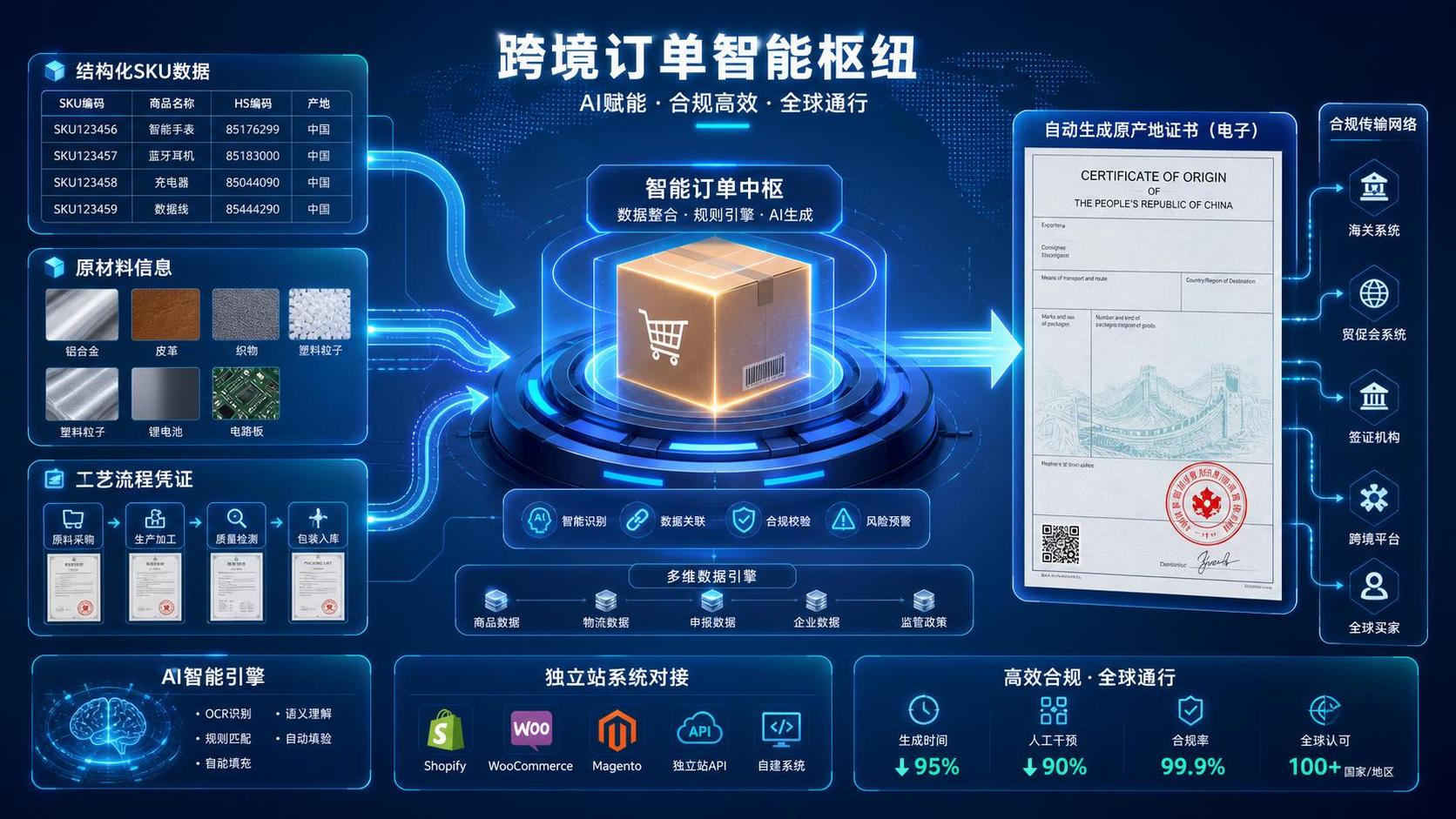
 RCEP rules of origin upgraded: independent website order systems required to integrate AI-generated e-CO
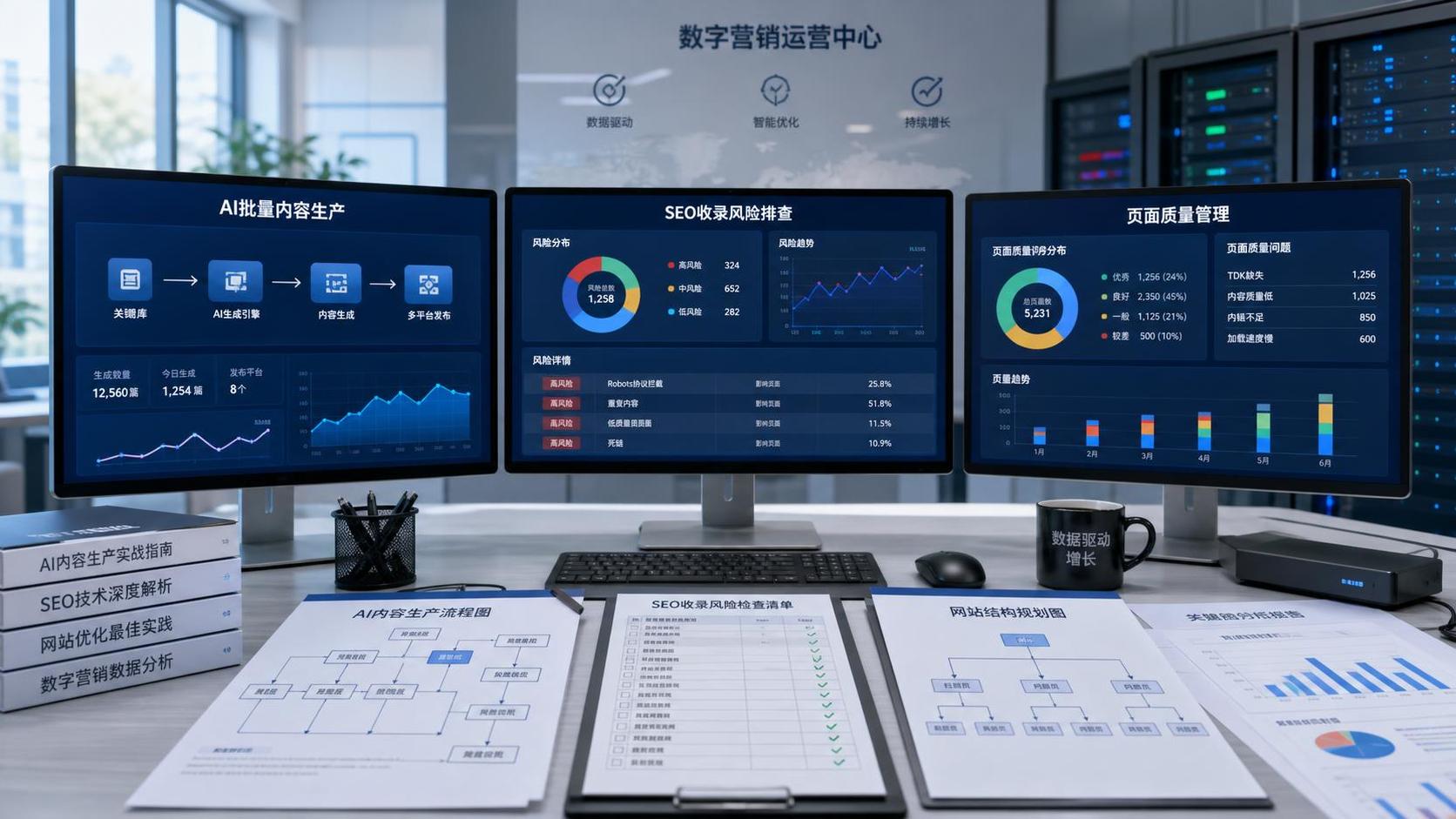
 Is AI-generated content at scale reliable? Which pages are most likely to create indexing risks?
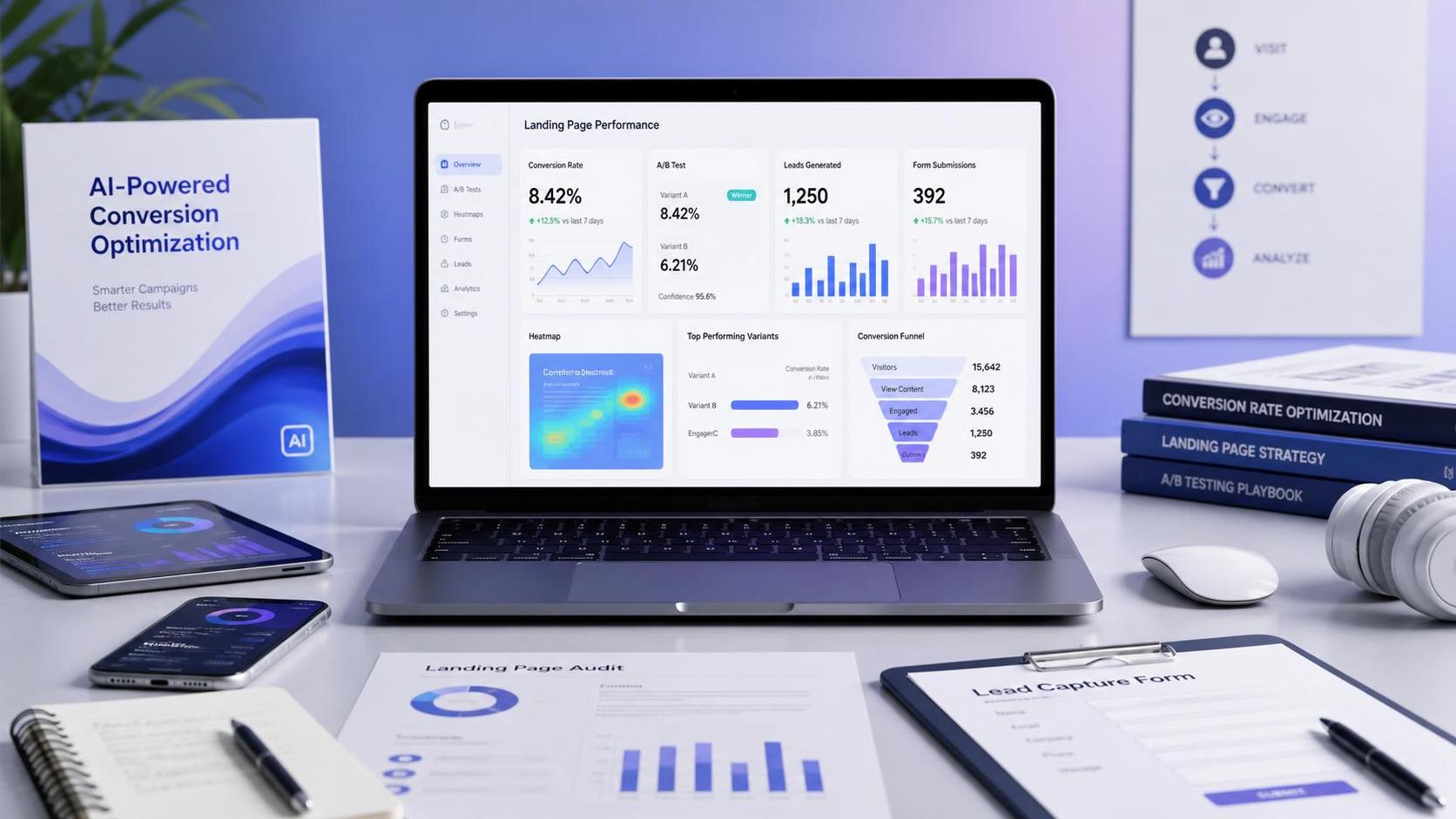
 Is AI conversion rate optimization reliable? Which pages and lead generation scenarios is it suitable for?
Related Products
 Yiyingbao SaaS Intelligent Website Building and Marketing SystemYiyingbao SaaS Intelligent Website Building and Marketing System, AI-powered no-code website building, rapid creation of multilingual B2B international websites in 10 minutes, global server acceleration, AI-powered SEO optimization, helping businesses connect efficiently with global markets. The perfect integration of technology and operation makes building an international trade website remarkably simple
 AI+SEM Intelligent Advertising Marketing SystemAI+SEM drives intelligent ad creation, empowering full-funnel precision advertising marketing. The system automatically generates weekly/monthly reports, AI recommends keywords and target countries, monitors core metrics in real-time with intelligent alerts, and enables one-click high-conversion ad solutions to help quickly acquire customers and improve ROI.
 AI+SEO Dual-Engine System Optimization ServicesYiyingbao’s AI+SEO dual-engine optimization system helps foreign trade enterprises acquire high-quality organic traffic through AI-powered keyword research, content generation, and comprehensive technical optimization, significantly improving search rankings and conversion rates.
 AI+SNS Social Media Marketing SystemYingbao AI+SNS Social Media Marketing System - Precision social capture for the social media era. Supports one-click content synchronization across major platforms like Facebook and LinkedIn. AI intelligently rewrites posts for enhanced relevance. 24/7 AI customer service and user profiling analysis empower businesses to efficiently expand into global markets.
 AI+SEO营销解决方案易营宝AI+SEO营销解决方案,通过AI批量写作、智能生成TDK、精准关键词扩词等功能,全面优化网站SEO效果,提升流量与转化率。助力企业构建高效智能网站新生态。
 AI+SEM Advertising Marketing SolutionsAI+SEM Advertising Marketing Solution leverages AI technology to deeply empower SEM ad campaigns. It automatically generates weekly/monthly reports using AI, presenting account data across multiple dimensions for comprehensive insights into campaign performance and trends. The system precisely recommends keywords and target countries, intelligently generates high-conversion ad copy, and enables one-click activation of efficient campaign plans to help businesses rapidly acquire customers. Simultaneously, it monitors core metrics in real time, intelligently identifies abnormal fluctuations, and issues timely alerts to ensure stable, high-return advertising results.
 Domain Name ServicesEasyWin provides professional domain name services, including intelligent queries, one-stop registration, brand protection, and full lifecycle management, helping businesses build a digital brand image.
 EasyOperate B2C Cross-Border E-Commerce Platform & Independent WebsiteEasyStore B2C Cross-border E-commerce Independent Store is an intelligent website building and cross-border e-commerce integrated solution independently developed by EasyStore Information Technology (Beijing) Co., Ltd. The system is specially designed for small and medium-sized as well as large export enterprises, integrating 'website building, operation, marketing, advertising, and conversion' into one, helping enterprises quickly establish cross-border e-commerce independent stores to achieve brand globalization and global sales growth.
The platform supports multiple languages, multiple currencies, and multi-channel marketing, with built-in AI intelligent translation and SEO optimization systems, suitable for mainstream markets such as Southeast Asia, Europe and America, Latin America, and the Middle East, assisting Chinese manufacturing enterprises in efficiently deploying international e-commerce strategies. SSL证书易营宝提供专业SSL安全证书服务,包括单域名和泛域名证书,确保网站数据传输加密、身份验证和完整性保护,助力企业建立安全可信的在线业务环境。









