









- CCTV.com Examines APEC’s Role in China’s Foreign TradeNov 12, 2026View details
- China’s Tariff Commission of the State Council Adjusts Additional Tariffs on U.S. Goods: 24% Tariff Suspended for Two MonthsNov 10, 2026View details
- APEC Shenzhen Spotlight: Cross-Border E-Commerce Orders Promote Asia-Pacific Trade and Economic CooperationNov 08, 2026View details
- China-Europe Railway Express and CIIE Hold Business Matchmaking Event, Focusing on Cross-Border E-commerce B2B ExportsNov 07, 2026View details
- China’s Ministry of Commerce Responds to Additional Charges on Low-Value Imports Imposed by the EUNov 06, 2026View details
- Two Internet Development Reports Released at the 2026 World Internet ConferenceNov 05, 2026View details
How Can AI Content Distribution Marketing Match the Audiences of Different Channels?
For the same product, a purchasing manager may search for technical specifications, a social media user may prefer to see how it is used first, while someone who clicks an ad expects to quickly confirm whether the product meets their needs. If you post the same content across every channel without adapting it, you may reach plenty of people, but fewer may be willing to learn more. The key to AI-powered content distribution marketing is not publishing faster, but adapting the messaging, entry point, and next step to audience intent.
Identify audience needs before deciding how to write
Differences between channels reflect the different stages users are at in their decision-making process. Search users often have a specific question in mind; social media users may not yet know your brand; and ad audiences may be drawn in by a particular need or benefit. Start by asking AI to categorize existing customer inquiries, website search terms, sales conversation records, and social media comments, then identify the questions different groups bring up repeatedly.
For example, an industrial equipment exporter could divide its audience into purchasing managers, technical engineers, and distributors. Purchasing managers care about lead times, supply capacity, and communication efficiency; technical engineers need specifications, operating conditions, and maintenance information; distributors may care more about product range and partnership terms. When asking AI to generate a first draft, provide this background for each audience instead of simply entering “Introduce our equipment.”
Consider creating a brief content task sheet that specifies at least the target audience, channel, core question, verifiable information, and desired action. The more specific these details are, the easier it will be to keep subsequent revisions on track and facilitate human review.
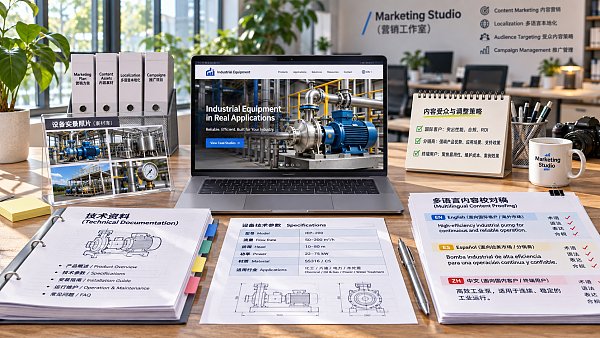
How can you adapt one piece of content into versions people want to read on different channels?
Start with a verified “master copy” containing product uses, applications, technical specifications, frequently asked questions, and supporting materials approved for public use. Then ask AI to reorganize the information for each channel, rather than simply replacing a few headlines.
Search: Answer specific questions and provide a path to learn more
For search engines such as Google, content should align with what users are actually looking for. For example, an article explaining “how to choose the right equipment for a production line” is more likely to reach readers in the selection stage than a broad overview of the equipment. The article can cover operating conditions, key specifications, selection steps, and common questions, then link to relevant product or inquiry pages.
When using AI to organize search topics, do not treat keyword frequency as the only goal. First verify that the questions are genuine and the specifications are accurate, then check that the headline and body address the same question. Multilingual content should not be translated sentence by sentence; it should be reviewed and localized to reflect the terminology, units of measurement, and communication conventions of the target market.
Overseas social media: Capture attention first, then encourage people to learn more
Users scrolling through social media feeds usually do not have the patience to read a full product description. Start with a familiar scenario, such as “With limited production-line space, which dimensions should you confirm first when selecting equipment?” Pair it with a short video, on-site photos, or a brief text-and-image post, and highlight one question worth discussing.
The same topic can focus on industry experience and equipment selection advice on platforms geared toward professional networking, or showcase product use and details on visually oriented platforms. AI can generate different opening lines and copy lengths, but business staff should verify the actual results shown in images, videos, and captions. End posts by inviting users to view a selection guide, rather than directly soliciting inquiries every time.
Advertising: Align the promise, landing page, and audience needs
Ad copy needs to explain “who it is for, what problem it solves, and what users will see after clicking” within limited space. If an ad highlights customization services, the landing page should clearly show what can be customized, how to discuss requirements, and what information is needed, rather than sending visitors to a crowded homepage.
You can ask AI to generate different versions for the same audience, emphasizing application scenarios, selection support, or product specifications, then compare their performance using testing methods allowed by the platform. Claims about lead times, performance, and certifications must be based on verifiable company information. Otherwise, the copy may attract clicks only for users to find no supporting evidence on the page.
From generation to publication: Give AI a workflow it can follow
- Organize your source materials. Collect approved product information, sales FAQs, and brand guidelines, and indicate which information can be made public and which needs updating. If outdated specifications are added to the resource library, AI may repeatedly use them across different channels.
- Define distribution tasks. Specify the target market, audience role, channel, content length, and desired action for each version. For example: “Rewrite the equipment selection guide as a short social media post for factory purchasing staff in Southeast Asia, and guide them to the English product page.”
- Generate and review. Check facts, terminology, tone, and links, paying particular attention to figures, customer reviews, and industry conclusions that AI may add on its own. Remove claims that cannot be verified or provide supporting evidence.
- Schedule and track. Plan publication according to each channel’s cadence and use clear link tags for different sources. Distinguish search, social media, and advertising traffic in an appropriate analytics tool rather than looking only at total visits.
- Review and reuse. Add user comments, inquiry questions, and page performance data back to the resource library. Frequently asked questions can be developed into search articles, while clearly explained passages can be adapted into social media content or landing page sections for ads.
During implementation, comply with the advertising and content policies of each platform and pay attention to personal data handling requirements. Do not enter customer contact details, contracts, or sensitive communication records into external AI tools without authorization.
Measure audience fit, not just impressions
Different channels serve different purposes, so they should be evaluated by different criteria. For search content, consider organic visits to relevant pages, whether users continue browsing product information, and the number of qualified inquiries. For social media, look beyond engagement and consider whether discussions come from the target market and job roles. For advertising, assess post-click page behavior, form submissions, and lead quality together.
If an ad gets many clicks but few form submissions, first check whether the ad promise matches the landing page and whether the form asks for too much information. If an article receives steady traffic but few visitors click through to product pages, check whether it lacks a clear next step. When evaluating results, also consider sample size and conversion cycles; avoid replacing content based solely on short-term fluctuations.
For teams managing multilingual websites, search, advertising, and overseas social media at the same time, fragmented content and channel management can lead to inconsistent information. Yiyingbao provides services including intelligent website building, multilingual websites, SEO, advertising, and overseas social media operations, and can be considered when planning website content and coordinating customer acquisition across multiple channels. In practice, companies should continue to adjust their approach based on target markets, product information, and lead feedback.
Effective AI-powered content distribution marketing means answering questions in ways that feel familiar to each audience: some people need a selection guide, some want to see real-world applications first, and others are ready to submit an inquiry. By addressing these differences, content has a better chance of turning an initial touchpoint into a valuable conversation.
Related Articles
 How Can AI Content Distribution Marketing Match the Audiences of Different Channels?
 How Can You Avoid Duplicate Content After Generating Articles in Bulk with AI?
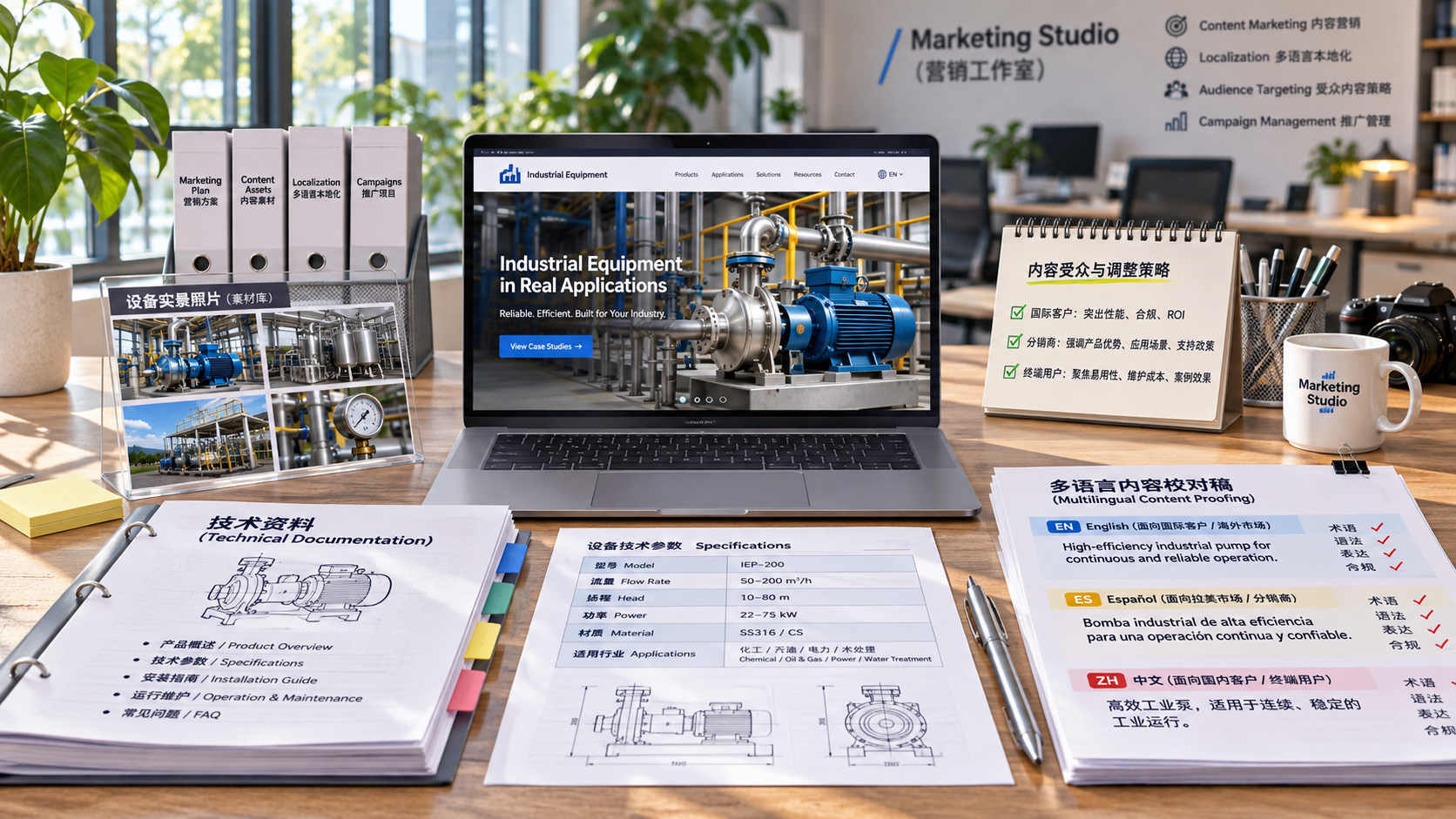
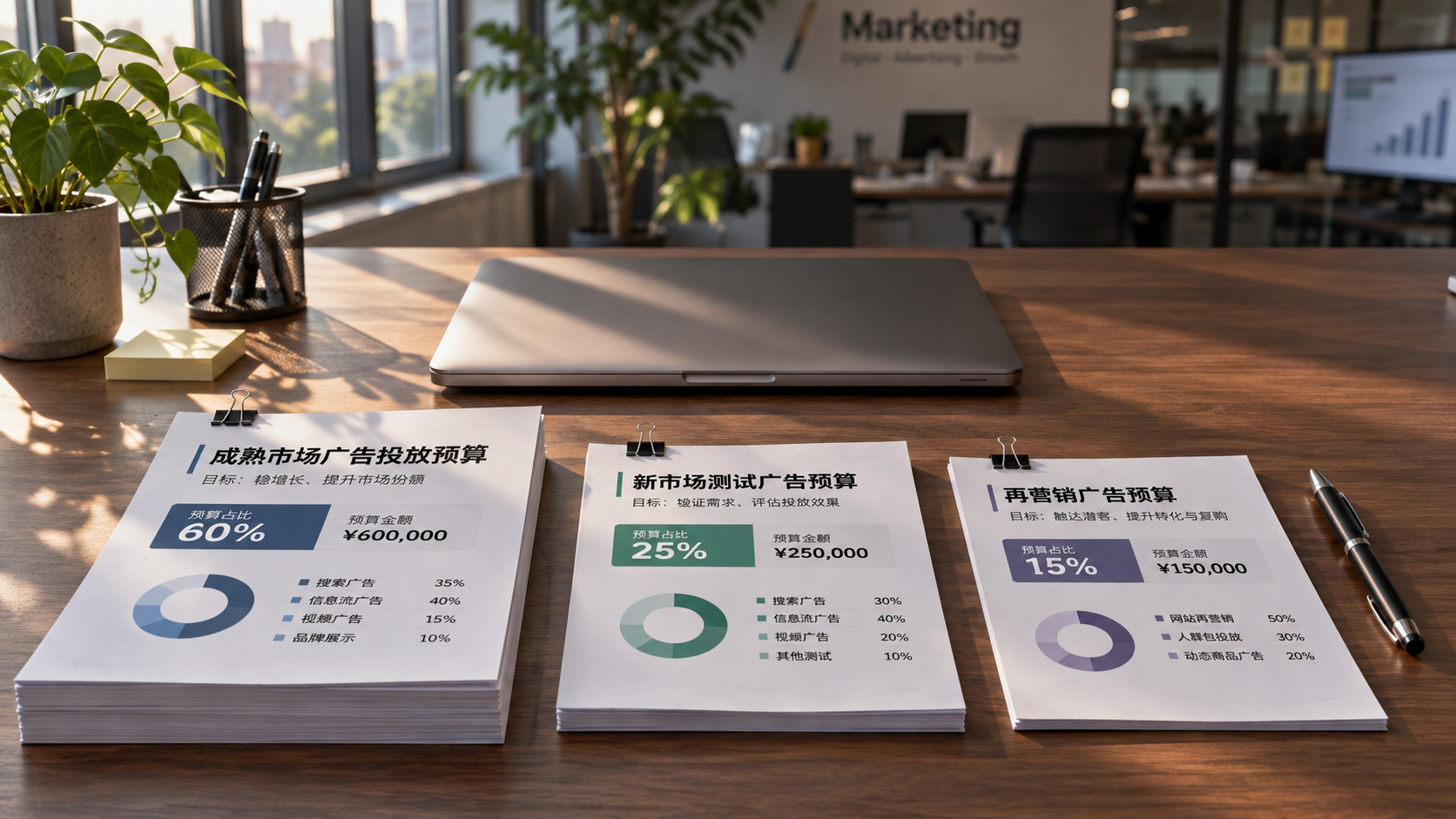
 How Should You Allocate Your Budget for AI Advertising? The Boundaries Between Automation and Human Intervention

Related Products
 Yiyingbao SaaS Intelligent Website Building and Marketing SystemYiyingbao SaaS Intelligent Website Building and Marketing System, AI-powered no-code website building, rapid creation of multilingual B2B international websites in 10 minutes, global server acceleration, AI-powered SEO optimization, helping businesses connect efficiently with global markets. The perfect integration of technology and operation makes building an international trade website remarkably simple
 AI+SEM Intelligent Advertising Marketing SystemAI+SEM drives intelligent ad creation, empowering full-funnel precision advertising marketing. The system automatically generates weekly/monthly reports, AI recommends keywords and target countries, monitors core metrics in real-time with intelligent alerts, and enables one-click high-conversion ad solutions to help quickly acquire customers and improve ROI.
 AI+SEO Dual-Engine System Optimization ServicesYiyingbao’s AI+SEO dual-engine optimization system helps foreign trade enterprises acquire high-quality organic traffic through AI-powered keyword research, content generation, and comprehensive technical optimization, significantly improving search rankings and conversion rates.
 AI+SNS Social Media Marketing SystemYingbao AI+SNS Social Media Marketing System - Precision social capture for the social media era. Supports one-click content synchronization across major platforms like Facebook and LinkedIn. AI intelligently rewrites posts for enhanced relevance. 24/7 AI customer service and user profiling analysis empower businesses to efficiently expand into global markets.
 AI+SEO营销解决方案易营宝AI+SEO营销解决方案,通过AI批量写作、智能生成TDK、精准关键词扩词等功能,全面优化网站SEO效果,提升流量与转化率。助力企业构建高效智能网站新生态。
 AI+SEM Advertising Marketing SolutionsAI+SEM Advertising Marketing Solution leverages AI technology to deeply empower SEM ad campaigns. It automatically generates weekly/monthly reports using AI, presenting account data across multiple dimensions for comprehensive insights into campaign performance and trends. The system precisely recommends keywords and target countries, intelligently generates high-conversion ad copy, and enables one-click activation of efficient campaign plans to help businesses rapidly acquire customers. Simultaneously, it monitors core metrics in real time, intelligently identifies abnormal fluctuations, and issues timely alerts to ensure stable, high-return advertising results.
 Domain Name ServicesEasyWin provides professional domain name services, including intelligent queries, one-stop registration, brand protection, and full lifecycle management, helping businesses build a digital brand image.
 EasyOperate B2C Cross-Border E-Commerce Platform & Independent WebsiteEasyStore B2C Cross-border E-commerce Independent Store is an intelligent website building and cross-border e-commerce integrated solution independently developed by EasyStore Information Technology (Beijing) Co., Ltd. The system is specially designed for small and medium-sized as well as large export enterprises, integrating 'website building, operation, marketing, advertising, and conversion' into one, helping enterprises quickly establish cross-border e-commerce independent stores to achieve brand globalization and global sales growth.
The platform supports multiple languages, multiple currencies, and multi-channel marketing, with built-in AI intelligent translation and SEO optimization systems, suitable for mainstream markets such as Southeast Asia, Europe and America, Latin America, and the Middle East, assisting Chinese manufacturing enterprises in efficiently deploying international e-commerce strategies. SSL证书易营宝提供专业SSL安全证书服务,包括单域名和泛域名证书,确保网站数据传输加密、身份验证和完整性保护,助力企业建立安全可信的在线业务环境。









