









- Which customer acquisition channels will be affected by cross-border marketing trends in 2026?Sep 06, 2026View details
- Which homogenization risks should be considered in an analysis of the AI-powered website building industry?Aug 30, 2026View details
- How Will AI Marketing Trends 2026 Change Advertising Budget AllocationAug 28, 2026View details
- Is the EV SSL certificate market shrinking or upgrading? How should companies assess certificate procurement?Aug 11, 2026View details
- Why the old AMP SEO 2020 practices no longer work and what has changed in current optimization prioritiesAug 02, 2026View details
- How to Choose Topics for an Industry News Section to Attract More Organic Search TrafficJul 29, 2026View details
Which companies are AI marketing engine foreign trade lead generation suitable for? Analysis of qualification line quality and automated processes
AI marketing engines are not only suitable for large enterprises. For foreign trade factories, brand-globalization companies, and cross-border sellers, what truly determines results is not company size, but whether they have a clear market, stable product supply, and the ability to handle leads and continuous conversions. This article will help business decision-makers make clearer choices from three dimensions: applicable company types, lead quality, and the value of automation processes.
What kinds of businesses are better suited to using AI marketing engines for foreign trade lead generation?
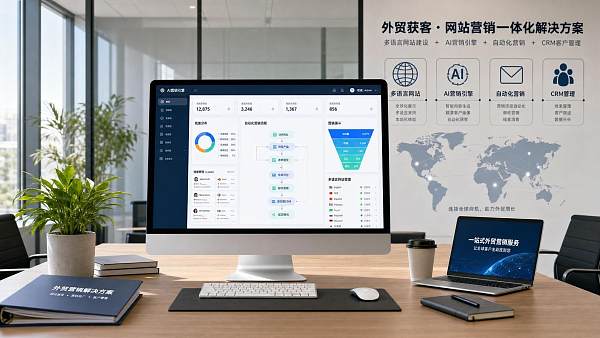
When many companies hear about AI marketing engines for foreign trade lead generation, their first reaction is that they are expensive, complex, and seem more suitable for large companies with sufficient budgets. In fact, the companies best suited to deploying this type of system are often those that want to improve lead generation efficiency, reduce dependence on manual labor, and quickly establish a stable growth mechanism.
The first type is manufacturing factories with a certain export foundation. Such companies usually have mature products, supply chains, and delivery capabilities, but overseas customer development still relies on exhibitions, referrals from existing customers, or direct outreach by salespeople. Lead sources are unstable, and growth potential is easily limited.
The second type is brand-globalization companies. They place greater emphasis on long-term brand building, independent-site traffic accumulation, and multi-channel reach. They hope to create synergy among SEO, advertising, social media, and content marketing rather than relying on a single platform for placement. This is exactly a typical scenario where AI marketing engines can deliver value.
The third type is cross-border e-commerce sellers, especially those who want to shift from platform traffic to independent-site operations. These companies need to identify target customers more efficiently, optimize ad conversion paths, and improve inquiry, lead, and repeat purchase rates through automation tools.
There is also a type of company that is often overlooked: small and medium-sized foreign trade companies in the early stage of overseas market expansion. They have limited manpower and insufficient marketing experience. If they rely entirely on manual step-by-step system setup, the cycle is long and the cost of trial and error is high. With the help of AI systems, they can instead quickly fill in their marketing infrastructure.
Therefore, whether a company is suitable should not be judged only by size, but by three key conditions: whether it has a clear overseas target market, whether it needs continuous lead generation, and whether it is willing to build digital marketing capabilities that can accumulate over the long term. These three points are more critical than the budget itself.
What decision-makers care about most is not “whether there are leads,” but “whether the leads are worth following up”
The most common problem in foreign trade lead generation is not a complete lack of inquiries, but too many low-quality inquiries. Many companies invest in advertising, build websites, and receive some forms and inquiries, but eventually find that the customers have weak purchase intent, unclear needs, or are not even the target market customers.
Therefore, when evaluating AI marketing engines for foreign trade lead generation, the first thing to look at is not the quantity of leads, but the quality of leads. For decision-makers, high-quality leads should at least meet several standards: the customer identity is relatively clear, the need matches the product, the region fits the target market, the purchase intent is real, and there is a certain probability of closing the deal.
The advantage of AI marketing engines lies in the fact that they can intervene at multiple stages, from keyword strategy, audience targeting, page content, and behavior recognition to lead screening, reducing invalid traffic at the source and concentrating more budget on audiences likely to convert, rather than simply pursuing clicks and form submissions.
For example, in Google SEO and advertising scenarios, AI can help companies identify search terms with stronger purchase intent rather than only covering words with large traffic but severe ambiguity. In social media marketing, the system can also continuously optimize targeting and content direction based on audience behavior and interaction data.
Going a step further, a truly mature AI marketing system will not treat every lead equally. Instead, it will score leads based on dimensions such as source channel, visit path, dwell behavior, and submitted content, enabling the sales team to prioritize the more valuable customers and improve overall closing efficiency.
This is also why more and more companies are beginning to value “lead screening capability.” If a system can only bring more leads but cannot help the business team identify priorities, it will ultimately only increase the sales burden rather than truly improve foreign trade lead quality.
Why is automation becoming the core competitive advantage in foreign trade lead generation?
Traditional foreign trade development relies on manual labor, and the biggest problem is not slowness, but instability. Different salespeople have different execution standards, follow-up rhythms vary, and customer information recording methods differ, causing many leads to be lost at the very beginning, making it difficult for companies to establish a replicable and sustainable customer acquisition mechanism.
Another major value of AI marketing engines for foreign trade lead generation is that they connect originally fragmented processes, enabling automation collaboration from traffic acquisition, visitor identification, content engagement, lead collection, to sales allocation, reducing human discontinuity and improving conversion continuity.
For example, after an overseas visitor enters the website through Google search, the system can determine whether the visitor is more interested in products, pricing, delivery time, or cooperation models based on their page browsing, dwell time, and click behavior, and then automatically trigger corresponding content recommendations, form guidance, or remarketing actions.
If a visitor does not submit an inquiry immediately, the system can still use ad retargeting, email marketing, or social media follow-up to extend a single visit into multiple touchpoints. The significance of doing this is not only to increase exposure, but also to extend effective influence within the customer’s decision-making window.
For enterprise managers, automation has three most direct meanings. First, it reduces dependence on the experience of individual sales and operations staff. Second, it improves lead response speed and reduces follow-up delays. Third, it makes marketing investment and conversion paths more visible, facilitating later optimization of budget allocation.
Especially in the case of multilingual official websites, landing pages, SEO pages, and social media content running in parallel, a lack of automation often means traffic is fragmented, data cannot flow back, and in the end the company does many actions but still cannot tell which part actually brought in high-quality customers.
Before deploying an AI marketing engine, what real-world issues should a company assess first?
Not every company should deploy a large-scale system immediately. For decision-makers, a more practical approach is to first determine whether the company has the necessary conditions for implementation. If product positioning is unclear, the target market is vague, and the website content foundation is weak, even advanced tools will find it difficult to quickly produce ideal results.
First, check whether the product is suitable for online lead generation. If the product is highly standardized, has clear application scenarios, and customers can initially understand its value through search and content, then an AI marketing system is more likely to work. On the contrary, in industries that rely heavily on offline, in-depth relationships, the conversion cycle is usually longer.
Second, check whether the company is willing to continue investing. This investment includes not only budget, but also content updates, page optimization, sales coordination, and data review. An AI marketing engine is not a one-time project, but a foundational system that helps a company build long-term growth capabilities, and it only works best with continuous operations.
Third, assess internal lead-handling capacity. If leads come in but there is no one to follow up in time, no standardized allocation mechanism, and no unified scripts and tag management, then even the best traffic will be wasted. The customer acquisition system and sales process must be built in sync and cannot be disconnected from each other.
Fourth, check whether the overseas market strategy is clear. Different regions differ significantly in search habits, platform preferences, content expression, and advertising costs. If a company’s target market is too scattered, budget and content resources can easily become thinly spread, affecting overall lead generation efficiency and data accumulation speed.
Therefore, the truly mature way to judge is not to ask “Is an AI marketing engine useful?”, but rather “What does my company most urgently need to solve right now: traffic issues, lead issues, or conversion-process issues?” Only by identifying the right problem can system deployment have a clear direction.
What capabilities should companies pay more attention to when choosing a service provider?
Many services on the market talk about AI, but what decision-makers need to focus on is not how advanced the concept sounds, but whether the service provider can connect website building, SEO, advertising, content, data, and conversion processes to form a truly integrated capability for foreign trade growth.
For foreign trade companies, a single tool usually cannot solve the problem. If the website has no conversion structure, SEO traffic is difficult to accumulate; if the ad landing page is not aligned, budget will be wasted; if social media content and the inquiry system are disconnected, customer leads are also hard to manage in a unified way. Therefore, integrated capability is more important than a single-point capability.
Taking 易营宝 as an example of an AI-driven enterprise SaaS smart website-building and overseas marketing platform, its value lies not only in providing a single promotion service, but in forming a complete chain through intelligent website building, multilingual sites, Google SEO, ad placement, social media operations, and GEO optimization.
The advantage of this model is that companies do not need to connect with multiple teams separately, nor do they need to repeatedly integrate data across different systems. Instead, they can focus on the same overseas growth objective and continuously optimize website indexing, ad conversion, social traffic, and AI search visibility to improve overall efficiency.
For enterprise management, when choosing a service provider, it is recommended to focus on four aspects: whether they understand the foreign trade industry, whether they have multi-channel collaboration capabilities, whether they can provide data visualization and process support, and whether they can combine the company’s stage to deliver an executable growth plan.
Conclusion: Whether it is suitable depends on whether the company is ready to do “long-term, effective customer acquisition”
Returning to the original question, which companies are suitable for AI marketing engines for foreign trade lead generation? The answer is not “larger companies are more suitable,” but rather companies with a clear market direction, a desire to improve lead quality, a willingness to build an automated customer acquisition system, and a certain level of lead-handling capacity are more suitable.
For business decision-makers, the key when evaluating such systems should not be limited to technical concepts, but should focus on actual business outcomes, including whether they can reduce invalid traffic, improve the ratio of high-quality inquiries, shorten follow-up paths, and gradually turn marketing investment into a replicable growth asset.
If a company is currently facing single-channel lead acquisition, low sales follow-up efficiency, rising ad costs, or weak website conversion, then introducing an AI marketing engine is very likely not just adding flowers to a brocade, but an important step in rebuilding its overseas customer acquisition system. The key is that the system must be truly aligned with business objectives rather than remaining at the tool level.
Related Articles



Related Products
 Yiyingbao SaaS Intelligent Website Building and Marketing SystemYiyingbao SaaS Intelligent Website Building and Marketing System, AI-powered no-code website building, rapid creation of multilingual B2B international websites in 10 minutes, global server acceleration, AI-powered SEO optimization, helping businesses connect efficiently with global markets. The perfect integration of technology and operation makes building an international trade website remarkably simple
 AI+SEM Intelligent Advertising Marketing SystemAI+SEM drives intelligent ad creation, empowering full-funnel precision advertising marketing. The system automatically generates weekly/monthly reports, AI recommends keywords and target countries, monitors core metrics in real-time with intelligent alerts, and enables one-click high-conversion ad solutions to help quickly acquire customers and improve ROI.
 AI+SEO Dual-Engine System Optimization ServicesYiyingbao’s AI+SEO dual-engine optimization system helps foreign trade enterprises acquire high-quality organic traffic through AI-powered keyword research, content generation, and comprehensive technical optimization, significantly improving search rankings and conversion rates.
 AI+SNS Social Media Marketing SystemYingbao AI+SNS Social Media Marketing System - Precision social capture for the social media era. Supports one-click content synchronization across major platforms like Facebook and LinkedIn. AI intelligently rewrites posts for enhanced relevance. 24/7 AI customer service and user profiling analysis empower businesses to efficiently expand into global markets.
 AI+SEO营销解决方案易营宝AI+SEO营销解决方案,通过AI批量写作、智能生成TDK、精准关键词扩词等功能,全面优化网站SEO效果,提升流量与转化率。助力企业构建高效智能网站新生态。
 AI+SEM Advertising Marketing SolutionsAI+SEM Advertising Marketing Solution leverages AI technology to deeply empower SEM ad campaigns. It automatically generates weekly/monthly reports using AI, presenting account data across multiple dimensions for comprehensive insights into campaign performance and trends. The system precisely recommends keywords and target countries, intelligently generates high-conversion ad copy, and enables one-click activation of efficient campaign plans to help businesses rapidly acquire customers. Simultaneously, it monitors core metrics in real time, intelligently identifies abnormal fluctuations, and issues timely alerts to ensure stable, high-return advertising results.
 Domain Name ServicesEasyWin provides professional domain name services, including intelligent queries, one-stop registration, brand protection, and full lifecycle management, helping businesses build a digital brand image.
 EasyOperate B2C Cross-Border E-Commerce Platform & Independent WebsiteEasyStore B2C Cross-border E-commerce Independent Store is an intelligent website building and cross-border e-commerce integrated solution independently developed by EasyStore Information Technology (Beijing) Co., Ltd. The system is specially designed for small and medium-sized as well as large export enterprises, integrating 'website building, operation, marketing, advertising, and conversion' into one, helping enterprises quickly establish cross-border e-commerce independent stores to achieve brand globalization and global sales growth.
The platform supports multiple languages, multiple currencies, and multi-channel marketing, with built-in AI intelligent translation and SEO optimization systems, suitable for mainstream markets such as Southeast Asia, Europe and America, Latin America, and the Middle East, assisting Chinese manufacturing enterprises in efficiently deploying international e-commerce strategies. SSL证书易营宝提供专业SSL安全证书服务,包括单域名和泛域名证书,确保网站数据传输加密、身份验证和完整性保护,助力企业建立安全可信的在线业务环境。









