









- 21st Century Business Herald: AI and CTV Become Core Growth Engines for Digital Marketing in Overseas MarketsNov 18, 2026View details
- China Presents 25 Cooperation Outcomes in Areas Including Cross-Border E-Commerce During APECNov 18, 2026View details
- AI Products Drive Hong Kong Exports Up 64.9% in September, Fastest Growth in Over 40 YearsNov 17, 2026View details
- National Bureau of Statistics: Foreign trade grew rapidly in October, providing stable support for global tradeNov 17, 2026View details
- The U.S. has ended the $800 de minimis exemption for non-postal shipments; express courier packages must be formally declared.Nov 16, 2026View details
- ASEAN Signs Digital Economy Framework Agreement, Moving Toward Harmonized Cross-Border E-Commerce RulesNov 15, 2026View details
How to Control Duplicate Content Before Automatically Publishing AI-Generated Articles in Bulk
AI-generated articles published automatically in bulk can significantly reduce repetitive work in topic selection, writing, and uploading, but “automatic publishing” does not mean content review can be skipped. When a website launches a large number of similar pages at once, the common consequence is not simply a decline in keyword rankings. Rather, search engines may struggle to determine which page is more worthy of indexing, while crawl resources for existing pages may also be diverted by low-value content.
Controlling duplicate content is not mainly about changing a few words in each article. Before publishing, it is essential to confirm: whether each page has an independent search intent, unique incremental information, and a clear page role. Only when these three conditions are met is AI-generated content more likely to become an effective content asset; if it only rewrites sentence structures, the risks of bulk publishing still remain.
First distinguish: is it the wording that is duplicated, or the page value?
In practice, it is easy to understand “duplicate content” as text that is completely identical. In fact, risks more often arise from highly overlapping page topics. For example, if the same website consecutively publishes “Precautions for Exporting Industrial Water Pumps,” “Key Points for Overseas Sales of Industrial Water Pumps,” and “Foreign Trade Promotion Methods for Industrial Water Pumps,” and all the articles introduce product advantages, inquiry channels, and standard certifications, the information provided by the pages remains similar even if the wording differs.
Conversely, mentioning the same product in two articles does not necessarily create a problem. One article may address “how to select materials,” while another explains “how to troubleshoot excessive noise after installation.” They serve different questions, and their content can complement each other.
Do not mass-produce “word-swapped” content from the same prompt
When AI-generated articles are automatically published in bulk, the most common root problem is overly uniform prompt templates. For example, if only product names, country names, or industry names are replaced, the model will typically follow a similar structure: an opening definition, several advantages, purchasing advice, and a concluding summary. The number of pages increases, but the boundaries of the content do not expand.
A more practical approach is to first create a “content task list,” then have AI complete the tasks separately. Tasks can be divided by purchasing stage, usage issues, product attributes, and regional differences, rather than being mechanically divided by keywords.
- Pre-purchase content: how to compare specifications, which items are easily omitted in quotations, and what the applicable conditions are.
- In-use content: installation, maintenance, troubleshooting, replacement cycles, and operational misconceptions.
- Decision-making content: differences among processes, materials, configurations, or service methods.
- Market content: delivery, language expression, application scenarios, and inquiry habits in different regions.
One topic should have only one primary question. If an article attempts to cover product introductions, selection, installation, maintenance, and export promotion, each part will usually be covered only superficially and can easily overlap with other pages. It is better to split the content into several articles with clear boundaries and then establish a reading path through internal links.

Establish three levels of deduplication before publishing, rather than running only one similarity check
Text similarity tools are valuable, but they can only identify literal duplication and cannot determine whether two articles are competing for the same search demand. A more reliable process usually includes the following three levels.
Level 1: Topic deduplication
Before generation, record the primary question, target page type, main keywords, and planned source materials for each topic. If two topics have the same primary question, they should be merged as a priority. For example, if “How to Choose a Cross-Border E-Commerce Store System” and “How to Choose an Independent Website System for Cross-Border E-Commerce” target the same type of decision-maker and use the same comparison dimensions, there is no need to publish two separate general articles.
Level 2: Structural deduplication
Even when topics differ, avoid using the same paragraph framework for every article. AI can be instructed to select different structures based on the task: troubleshooting articles can follow “symptom—cause—resolution sequence”; selection articles can follow “conditions—exclusion criteria—comparison dimensions”; and process articles can follow the actual sequence of operations. Only when the structure changes with the question will the generated results be less likely to resemble rewritten versions of the same article.
Level 3: Semantic and factual review
Before automatic publishing, spot-check the title, opening paragraph, subheadings, conclusion, and key explanatory paragraphs. This is not only about checking the duplication rate; it is also necessary to check for vague clichés, contradictory descriptions, or the repeated presentation of the same fact across multiple articles. For content such as product specifications, service scope, and delivery commitments, a unified knowledge base should be used as input to prevent AI from filling in information on its own.
If the system supports a similarity threshold, it can be used as one of the interception criteria: content with excessively high similarity should enter a review queue rather than being deleted directly. This is because high similarity can sometimes result from necessary terminology, model numbers, or standard expressions, and whether content is duplicate must still be determined based on page intent.
Set publishing tiers for automatic publishing; do not launch all content under the same rules
Content risks are not the same. Core product pages, conversion pages, multilingual landing pages, and large-scale regional pages usually have a broader impact and are suitable for manual review. Standard knowledge articles can enter a scheduled publishing queue after passing basic rules. This retains efficiency while preventing a batch of incorrect content from affecting the quality of the entire website.
- After generation, first check whether the title conflicts with existing pages to avoid repeated synonymous titles.
- Check whether the opening paragraph directly answers the title rather than applying a generic industry introduction.
- Verify that the article includes at least one piece of information specific to the topic, such as decision criteria, steps, limitations, or comparisons.
- Check for similar passages between the main text and content already published on the website, and mark the source pages.
- Set reasonable publishing times for approved content to avoid launching a large number of pages on the same topic within a short period.
- After publishing, monitor indexing, crawling, and page performance, and merge, update, or remove content that has no long-term value.
Among these measures, “publishing in batches” is not intended to create artificial scarcity, but to leave room for operations personnel to check and correct issues. After hundreds of articles are launched at once, if it is discovered that the prompt direction is incorrect, category tags are disorganized, or internal links point abnormally, the cost of remediation will increase significantly.
Multilingual websites should especially avoid “translating and then copying”
Overseas marketing websites often require multilingual content. Here, duplication issues occur not only within the same language, but also when Chinese drafts are translated sentence by sentence into multiple languages and then copied onto pages for different countries. Different languages do not necessarily mean that pages have independent value.
Regional pages should add information that local users genuinely need, such as common application industries, units of measurement, delivery methods, language conventions, inquiry channels, or relevant product combinations. If only the country name is inserted into the title and main text, the pages will lack localized content and can easily result in a large number of template pages. When there are few language versions or insufficient materials, prioritizing the maintenance of a small number of high-quality core pages is usually more appropriate than rapidly expanding a large number of thin pages.
Which content is not suitable for direct automatic publishing?
Content involving prices, contract terms, certifications, medical health, safety operations, financial returns, and similar matters should not be automatically published based solely on AI-generated output. Even if such pages are not duplicate, inaccurate wording may create communication and business risks. Product models, inventory, delivery lead times, and promotional information also change quickly and should be retrieved from maintainable data sources or placed in a manual confirmation process.
For platforms that integrate intelligent website building, SEO, and multilingual content management, key considerations when selecting one include whether it supports topic management, content review, version tracking, internal link management, and multilingual page maintenance. Taking service systems such as Yiyingbao, which are designed for overseas independent website development and promotion, as an example, if content production can be managed in the same workflow as website pages, SEO optimization, and multilingual operations, operators can more easily identify conflicts between pages on the same topic instead of cleaning them up one by one after publication.
The most important thing to confirm before publishing
Do not first ask, “What is the text duplication rate between this article and the previous page?” Instead, first ask: Why should users open this page separately rather than read the page that already exists on the website?
Being able to answer this question clearly indicates that the topic, content angle, and page value are generally valid; if it cannot be answered, then even if the article is fluent and contains all relevant keywords, it is more suitable to be merged into an existing page. The value of AI lies in expanding content production capacity, while a website’s long-term performance depends on whether each publication adds new and useful information.
Related Articles
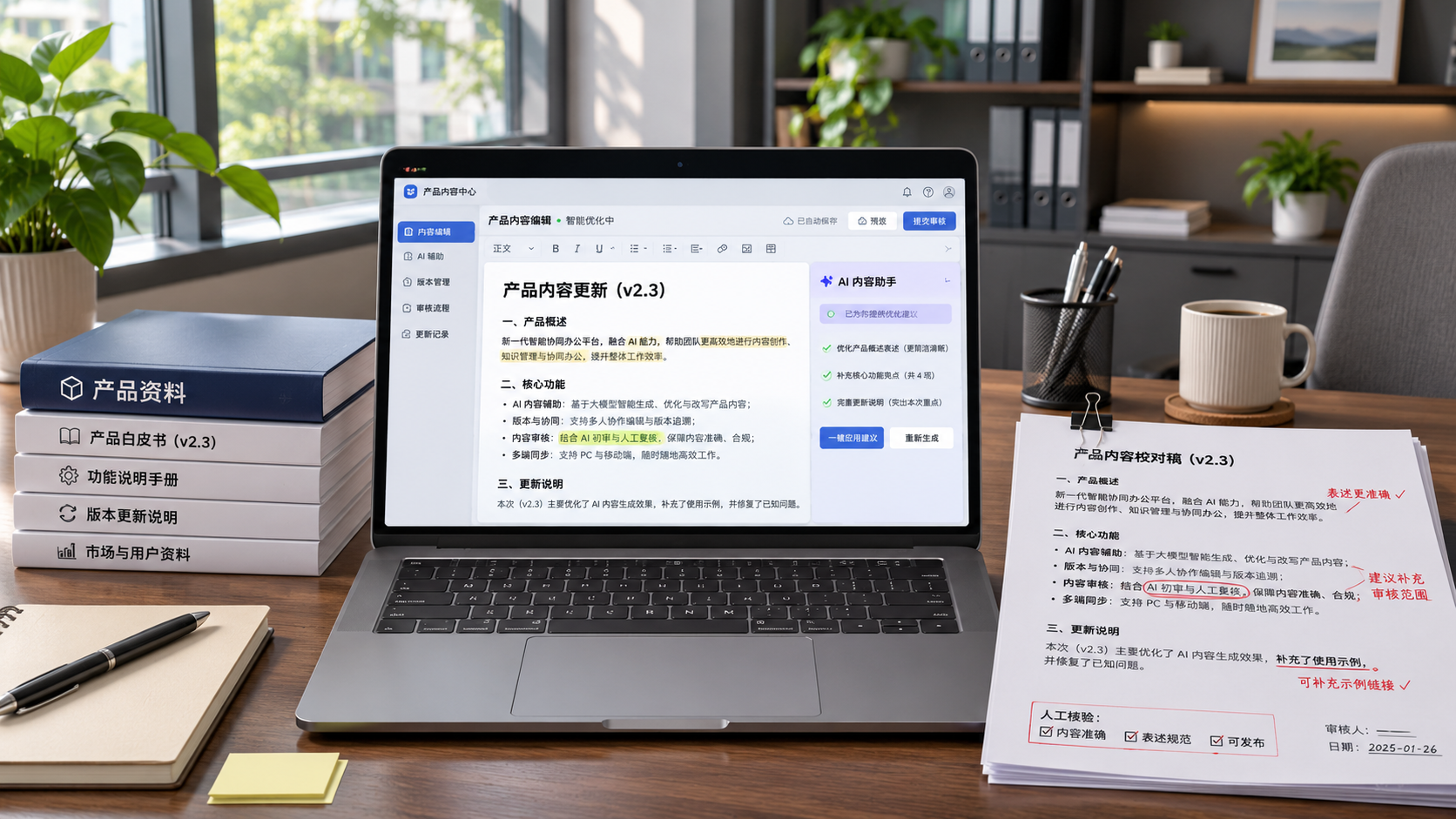
 How Do AI Marketing Cases Reflect Changes in Content Production?
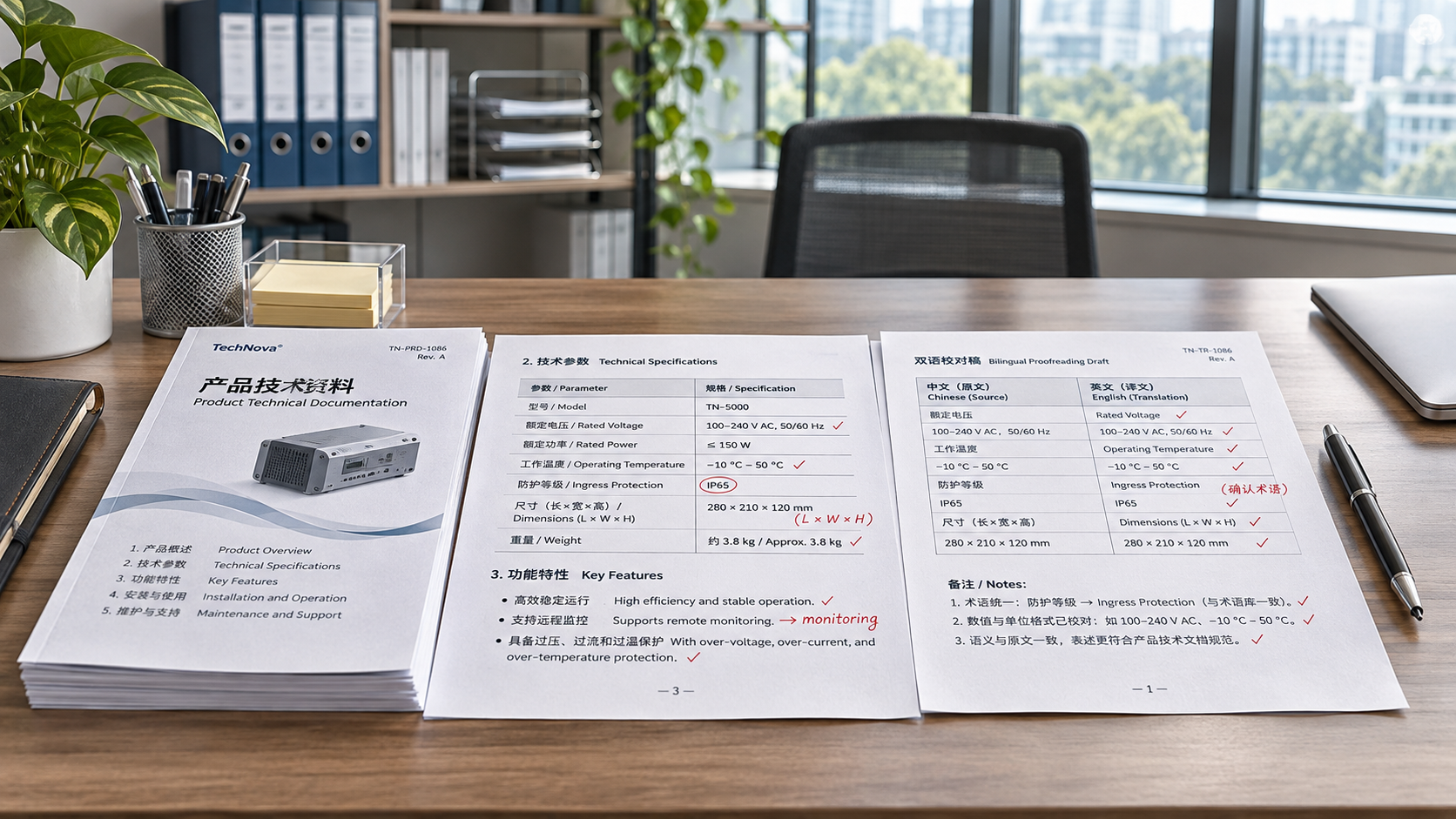
 AI Content Generation for Export Websites: How to Prevent Errors in Product Specifications and Translation
 How Can AI Drive Website Content Updates as an Engine of Innovation?
Related Products
 Yiyingbao SaaS Intelligent Website Building and Marketing SystemYiyingbao SaaS Intelligent Website Building and Marketing System, AI-powered no-code website building, rapid creation of multilingual B2B international websites in 10 minutes, global server acceleration, AI-powered SEO optimization, helping businesses connect efficiently with global markets. The perfect integration of technology and operation makes building an international trade website remarkably simple
 AI+SEM Intelligent Advertising Marketing SystemAI+SEM drives intelligent ad creation, empowering full-funnel precision advertising marketing. The system automatically generates weekly/monthly reports, AI recommends keywords and target countries, monitors core metrics in real-time with intelligent alerts, and enables one-click high-conversion ad solutions to help quickly acquire customers and improve ROI.
 AI+SEO Dual-Engine System Optimization ServicesYiyingbao’s AI+SEO dual-engine optimization system helps foreign trade enterprises acquire high-quality organic traffic through AI-powered keyword research, content generation, and comprehensive technical optimization, significantly improving search rankings and conversion rates.
 AI+SNS Social Media Marketing SystemYingbao AI+SNS Social Media Marketing System - Precision social capture for the social media era. Supports one-click content synchronization across major platforms like Facebook and LinkedIn. AI intelligently rewrites posts for enhanced relevance. 24/7 AI customer service and user profiling analysis empower businesses to efficiently expand into global markets.
 AI+SEO营销解决方案易营宝AI+SEO营销解决方案,通过AI批量写作、智能生成TDK、精准关键词扩词等功能,全面优化网站SEO效果,提升流量与转化率。助力企业构建高效智能网站新生态。
 AI+SEM Advertising Marketing SolutionsAI+SEM Advertising Marketing Solution leverages AI technology to deeply empower SEM ad campaigns. It automatically generates weekly/monthly reports using AI, presenting account data across multiple dimensions for comprehensive insights into campaign performance and trends. The system precisely recommends keywords and target countries, intelligently generates high-conversion ad copy, and enables one-click activation of efficient campaign plans to help businesses rapidly acquire customers. Simultaneously, it monitors core metrics in real time, intelligently identifies abnormal fluctuations, and issues timely alerts to ensure stable, high-return advertising results.
 Domain Name ServicesEasyWin provides professional domain name services, including intelligent queries, one-stop registration, brand protection, and full lifecycle management, helping businesses build a digital brand image.
 EasyOperate B2C Cross-Border E-Commerce Platform & Independent WebsiteEasyStore B2C Cross-border E-commerce Independent Store is an intelligent website building and cross-border e-commerce integrated solution independently developed by EasyStore Information Technology (Beijing) Co., Ltd. The system is specially designed for small and medium-sized as well as large export enterprises, integrating 'website building, operation, marketing, advertising, and conversion' into one, helping enterprises quickly establish cross-border e-commerce independent stores to achieve brand globalization and global sales growth.
The platform supports multiple languages, multiple currencies, and multi-channel marketing, with built-in AI intelligent translation and SEO optimization systems, suitable for mainstream markets such as Southeast Asia, Europe and America, Latin America, and the Middle East, assisting Chinese manufacturing enterprises in efficiently deploying international e-commerce strategies. SSL证书易营宝提供专业SSL安全证书服务,包括单域名和泛域名证书,确保网站数据传输加密、身份验证和完整性保护,助力企业建立安全可信的在线业务环境。









