









- Which customer acquisition channels will be affected by cross-border marketing trends in 2026?Sep 06, 2026View details
- Which homogenization risks should be considered in an analysis of the AI-powered website building industry?Aug 30, 2026View details
- How Will AI Marketing Trends 2026 Change Advertising Budget AllocationAug 28, 2026View details
- Is the EV SSL certificate market shrinking or upgrading? How should companies assess certificate procurement?Aug 11, 2026View details
- Why the old AMP SEO 2020 practices no longer work and what has changed in current optimization prioritiesAug 02, 2026View details
- How to Choose Topics for an Industry News Section to Attract More Organic Search TrafficJul 29, 2026View details
- Digital Marketing Shenzhen Market Insights: Why Are Companies Expanding Overseas Looking for Growth Teams in Shenzhen?Jul 31, 2026View details
- Can Zhejiang foreign trade independent websites still be developed today? Look at changes in traffic and lead generationJul 28, 2026View details
What page issues should be investigated when Yandex SEO rankings fail to improve?
When Yandex SEO rankings fail to improve, it does not necessarily mean the optimization direction is entirely wrong. For operators, the priority is to confirm whether pages can be crawled normally, whether they genuinely meet the needs of Russian-speaking users, and whether the site's technical performance is holding back rankings.
Many websites focus only on keyword density, backlink quantity, or update frequency, while overlooking the page's indexing status, regional signals, content quality, and mobile experience. Investigating these fundamental issues first is usually more effective than continuing to publish content.
First, Determine: Where Yandex SEO Rankings Are Usually Getting Stuck
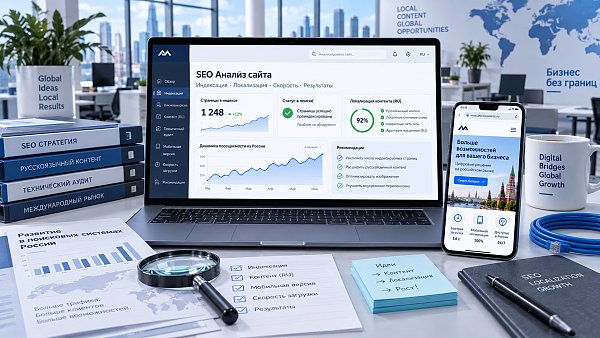
Users who search for “Yandex SEO rankings” and are concerned that rankings have not improved are not primarily looking to understand basic concepts; they want actionable diagnostic methods. They want to determine whether the issue lies in indexing, page content, technical configuration, or whether competing pages better match search intent.
Yandex places greater emphasis on localized experiences, user behavior, and actual page usability. Even if a website has been translated into Russian, pages can still struggle to achieve stable rankings if the content reads like machine translation, contact information appears unreliable, or loading speeds are slow.
When investigating, it is recommended to first select three to five target keywords and record their corresponding landing pages, current rankings, indexing status, click-through rates, and on-page engagement. Do not modify all pages at once; otherwise, it will be difficult to determine which adjustment caused the change later.
For foreign trade companies or cross-border brands, the focus of Yandex SEO optimization should be on the visitor journey of customers in Russian-speaking markets. Whether users can understand the product, verify supply capabilities, and find contact options often has a greater impact on the long-term value of a page than keyword stuffing.
Check Whether Pages Are Indexed First to Avoid Optimizing Ineffective Pages
When rankings do not improve, the first step should be to check whether the target URL has entered the Yandex index. You can use Yandex Webmaster to review page crawling, indexing, and exclusion reasons, or use site:domain together with the page title or core terms for additional confirmation.
If a page has not been indexed, continuing to optimize its title and body content will usually not improve rankings. Common causes include robots.txt restrictions, meta robots set to noindex, incorrect canonical tag targets, or the page being identified by the system as duplicate content.
Multilingual websites are especially prone to canonicalization issues. For example, if the canonical tag on a Russian page incorrectly points to an English page, Yandex may treat the Russian version as a non-primary page, preventing the target URL from accumulating authority and making it difficult to rank for Russian keywords.
You should also check whether the page has issues such as frequent redirects, empty content after opening, or abnormal server responses. A stable 200 status code, an independently accessible URL, and submission through an XML sitemap are basic prerequisites for a page to participate in Yandex SEO rankings.
Check Whether Russian Content Truly Matches User Search Intent
Many pages already have Russian versions but still lack rankings. The reason is often that the content has only been converted linguistically, without being localized in expression. Yandex can identify low-quality translations, duplicate paragraphs, and pages with insufficient relevance to the query.
Operators should first search for the target keywords and observe the content structure of top-ranking pages. Are users looking for product specifications, suppliers, prices, delivery times, technical solutions, or after-sales support? Pages must prioritize addressing these actual needs.
For example, on product pages for B2B manufacturing companies, Russian titles should not contain only the product name. They should also explain application scenarios, specification ranges, customization capabilities, minimum order quantities, certification information, and delivery capabilities, enabling procurement personnel to quickly determine whether the supplier is worth contacting.
Core keywords, model terms, industry terms, and region-related terms can appear naturally in the body content, but avoid repeatedly and mechanically using phrases such as “Yandex SEO rankings.” More importantly, ensure that the title, opening paragraph, subheadings, and product information create a clear and consistent topical signal.
Check Whether Titles, Descriptions, and Page Hierarchy Are Clear
The title tag is an important entry point for Yandex to understand the topic of a page. Each page should have a unique title, avoiding the use of the same title across multiple product pages. The title should include the core product or service term and add distinctive information about specifications, uses, or target markets.
Although the description may not directly determine rankings, it affects users' willingness to click in search results. The description should briefly explain what problem the page can solve and retain product advantages, delivery scope, or contact options, while avoiding directly copying generic promotional language from the body text.
The H1, H2, and body content hierarchy on the page should also align with the user's reading journey. Keep only one clear H1 on each page, then use subheadings to separate product features, technical specifications, applicable industries, delivery methods, and frequently asked questions, making the page easier to crawl and browse.
If the same keyword is optimized across multiple pages at the same time, keyword cannibalization may occur. In this case, retain the primary page that best matches search intent, and revise the remaining pages to focus on specific models, application scenarios, or related support content, preventing internal pages from competing with each other.
Focus on Investigating Mobile Speed and Page Usability
A large number of users in Russian-speaking markets access search results through mobile devices, so the mobile experience directly affects Yandex SEO ranking performance. A page displaying normally on desktop does not mean it is free of issues on mobile, such as text that is too small, buttons that are difficult to tap, or horizontal content overflow.
Focus on checking above-the-fold loading time, image size, the number of scripts, and server response speed. Uncompressed product images, a large number of carousel banners loading on the homepage, and excessive third-party tracking code can all slow page loading and increase the likelihood of users leaving.
Contact forms also need to be checked. If a form has too many fields, the verification code cannot be used, or the phone format does not support international numbers, users may be unable to submit an inquiry even after reaching the page. Search engines indirectly assess whether a page provides an effective experience through visitor behavior.
For websites targeting Russia and Russian-speaking markets, access speed should also be tested under local network conditions. Server distance, CDN coverage, and resource loading sources all affect the actual experience, so decisions should not be based solely on test results from domestic office networks.
Strengthen Regional Signals and Corporate Credibility Information
Yandex is sensitive to regional and commercial information, especially for keywords with purchasing, service, pricing, or supplier intent. If a page lacks a clear business identity, contact information, and service scope, both users and search engines will find it difficult to establish trust.
Websites should display the company name, business address, contact email, telephone number, or instant messaging methods on Russian-language pages, while ensuring that the information is consistent throughout. Cross-border businesses can also explain their experience serving Russian-speaking markets, logistics methods, and settlement support.
Product pages should avoid displaying only images and brief selling points. Procurement-oriented users typically also care about materials, dimensions, certifications, packaging, production lead times, sample policies, and after-sales arrangements. This information can both improve conversions and strengthen the completeness of page information.
If the business covers multiple countries and regions, do not stack all regional terms onto one page. Clear service pages or industry pages can be created for different markets in Russian-speaking regions, giving each page a clear topic and improving Yandex's assessment of page relevance.
Use Data to Determine Whether Adjustments Are Effective Instead of Redesigning Frequently
After completing a page investigation, it is not advisable to modify titles daily or substantially replace body content. Changes in Yandex crawling, indexing, and rankings take time, and frequent redesigns may cause the system to continuously reassess pages while also interfering with the team's ability to evaluate optimization results.
It is recommended to use two to four weeks as an observation cycle and continuously record page indexing, keyword rankings, impressions, click-through rates, organic traffic, and inquiry data. If rankings improve but click-through rates remain low, titles and descriptions usually need optimization; if traffic increases but no inquiries are received, content and conversion paths should be checked.
For pages with no impressions over a long period, prioritize investigating indexing, keyword selection, and content topics; for pages with impressions but low rankings, focus on adding content depth, internal links, and credibility information; for pages with stable rankings but no conversions, optimize inquiry entry points.
Improving Yandex SEO rankings does not rely solely on a single technique. It requires enabling search engines to confirm that pages are crawlable, content is trustworthy, the user experience is smooth, and the page can solve the real problems of Russian-speaking users. The stronger the page foundation, the more likely subsequent investments in content and backlinks are to produce results.
Summary: Fix Page Issues First, Then Expand Yandex SEO Investment
When Yandex SEO rankings fail to improve, operators should investigate in the order of indexing status, Russian content, tag structure, mobile experience, regional signals, and conversion paths. First resolve issues that prevent pages from competing or meeting user needs, then consider expanding keywords and backlink building.
For businesses that need to continuously acquire customers in Russian-speaking markets, Yandex optimization should be advanced in coordination with multilingual website development, content localization, and inquiry conversion. Only when a page can be understood by search engines and trusted by potential customers can ranking growth translate into real business opportunities.
Related Articles



Related Products
 Yiyingbao SaaS Intelligent Website Building and Marketing SystemYiyingbao SaaS Intelligent Website Building and Marketing System, AI-powered no-code website building, rapid creation of multilingual B2B international websites in 10 minutes, global server acceleration, AI-powered SEO optimization, helping businesses connect efficiently with global markets. The perfect integration of technology and operation makes building an international trade website remarkably simple
 AI+SEM Intelligent Advertising Marketing SystemAI+SEM drives intelligent ad creation, empowering full-funnel precision advertising marketing. The system automatically generates weekly/monthly reports, AI recommends keywords and target countries, monitors core metrics in real-time with intelligent alerts, and enables one-click high-conversion ad solutions to help quickly acquire customers and improve ROI.
 AI+SEO Dual-Engine System Optimization ServicesYiyingbao’s AI+SEO dual-engine optimization system helps foreign trade enterprises acquire high-quality organic traffic through AI-powered keyword research, content generation, and comprehensive technical optimization, significantly improving search rankings and conversion rates.
 AI+SNS Social Media Marketing SystemYingbao AI+SNS Social Media Marketing System - Precision social capture for the social media era. Supports one-click content synchronization across major platforms like Facebook and LinkedIn. AI intelligently rewrites posts for enhanced relevance. 24/7 AI customer service and user profiling analysis empower businesses to efficiently expand into global markets.
 AI+SEO营销解决方案易营宝AI+SEO营销解决方案,通过AI批量写作、智能生成TDK、精准关键词扩词等功能,全面优化网站SEO效果,提升流量与转化率。助力企业构建高效智能网站新生态。
 AI+SEM Advertising Marketing SolutionsAI+SEM Advertising Marketing Solution leverages AI technology to deeply empower SEM ad campaigns. It automatically generates weekly/monthly reports using AI, presenting account data across multiple dimensions for comprehensive insights into campaign performance and trends. The system precisely recommends keywords and target countries, intelligently generates high-conversion ad copy, and enables one-click activation of efficient campaign plans to help businesses rapidly acquire customers. Simultaneously, it monitors core metrics in real time, intelligently identifies abnormal fluctuations, and issues timely alerts to ensure stable, high-return advertising results.
 Domain Name ServicesEasyWin provides professional domain name services, including intelligent queries, one-stop registration, brand protection, and full lifecycle management, helping businesses build a digital brand image.
 EasyOperate B2C Cross-Border E-Commerce Platform & Independent WebsiteEasyStore B2C Cross-border E-commerce Independent Store is an intelligent website building and cross-border e-commerce integrated solution independently developed by EasyStore Information Technology (Beijing) Co., Ltd. The system is specially designed for small and medium-sized as well as large export enterprises, integrating 'website building, operation, marketing, advertising, and conversion' into one, helping enterprises quickly establish cross-border e-commerce independent stores to achieve brand globalization and global sales growth.
The platform supports multiple languages, multiple currencies, and multi-channel marketing, with built-in AI intelligent translation and SEO optimization systems, suitable for mainstream markets such as Southeast Asia, Europe and America, Latin America, and the Middle East, assisting Chinese manufacturing enterprises in efficiently deploying international e-commerce strategies. SSL证书易营宝提供专业SSL安全证书服务,包括单域名和泛域名证书,确保网站数据传输加密、身份验证和完整性保护,助力企业建立安全可信的在线业务环境。









