









- Is the EV SSL certificate market shrinking or upgrading? How should companies assess certificate procurement?Aug 11, 2026View details
- Why the old AMP SEO 2020 practices no longer work and what has changed in current optimization prioritiesAug 02, 2026View details
- How to Choose Topics for an Industry News Section to Attract More Organic Search TrafficJul 29, 2026View details
- Digital Marketing Shenzhen Market Insights: Why Are Companies Expanding Overseas Looking for Growth Teams in Shenzhen?Jul 31, 2026View details
- Can Zhejiang foreign trade independent websites still be developed today? Look at changes in traffic and lead generationJul 28, 2026View details
- What New Signals Are Emerging in Enterprise Services SaaS Marketing ReportsJul 27, 2026View details
- What Does a Global Traffic Ecosystem Service Provider Do? What Are the Differences from a Single Advertising AgencyJul 16, 2026View details
- What should you focus on in the latest enterprise SaaS report? From renewal rates and delivery costs to overseas growth opportunitiesJul 12, 2026View details
How to Build Multilingual Product Pages to Reduce Bounce Rates and Increase Inquiries
How to Build Multilingual Product Pages to Reduce Bounce Rates and Increase Inquiries
Building multilingual product pages is not just about translating Chinese into English, German, or Spanish. What truly affects bounce rates and inquiries is not whether the translation is correct, but whether customers can determine within seconds of landing on the page: Is this the supplier I am looking for? Is the page professional? Is the information credible? How do I contact you next?
Anyone working on B2B foreign trade websites knows that many product pages appear to have a lot of content but actually have very weak conversion. The reason is often not that there aren't enough languages, but that the content granularity, loading speed, regional adaptation, and inquiry path of the multilingual pages are not well handled. This is especially true for websites in manufacturing, foreign trade factories, and cross-border brands. Customers come from different countries with vastly different reading habits and decision-making logic. Simply applying a one-size-fits-all template will naturally lead to high bounce rates.
Don't Rush to Translate First; Determine What Customers Really Want to See
A common mistake many companies make is treating product pages as product manuals. In reality, when B2B customers open a page, they don't prioritize reading long paragraphs of introduction. Instead, they look for a few key questions: Does this product fit my application scenario? Do the specifications match? Can I quickly find certifications, materials, parameters, delivery times, and an inquiry entry point? The same applies to different language versions, but the expression must follow the market.
For example, for the European and American markets, page information usually emphasizes clear specifications, application boundaries, and compliance expression. For the Middle East, Latin America, or Southeast Asia, customers are more sensitive to contact information, response speed, and supply capacity. The first step in building multilingual product pages is not to mechanically copy content, but to prioritize what the market cares about most, then decide what to keep, remove, and add for each version.
The Key to Reducing Bounce Rates is Often Speed and Readability
Overseas customers often bounce not because the content is bad, but because the page is too slow, images are too large, the layout breaks after switching languages, or the above-the-fold area is blank. Cross-border access already has network fluctuations. If the site piles a large number of images, fonts, and scripts above the fold, users will not wait long.
This is why, when building multilingual product pages, front-end performance cannot be separated from content. Static resources should have caching and version management. Images should not sacrifice file size for clarity. If product parameter tables are too heavy, it's best to load them separately. For dynamic requests like inquiry forms, search, and filtering, cross-border handshakes and repeated waiting should be minimized. Capabilities like Global CDN Acceleration for Foreign Trade B2B Websites are not just about making things appear faster; their core value is to ensure a stable access experience for users in different countries, avoiding situations where one region keeps loading or pages load at inconsistent speeds. For business evaluators, this stability directly impacts their perception of the brand.
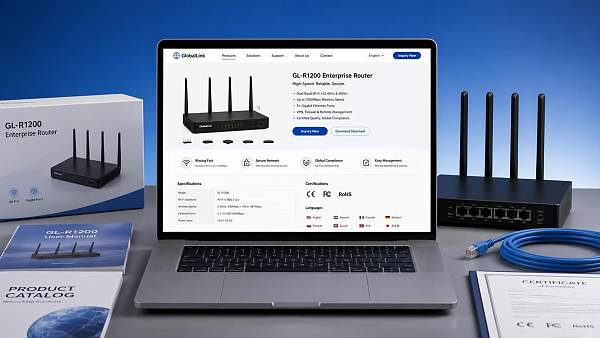
Page Structure Should Serve Inquiries, Not Just Browsing
The most common problem with multilingual product pages is that every language version looks the same, even with directly translated button copy. This may seem efficient, but it actually lengthens the inquiry path. A more practical approach is to compress the core information into the above-the-fold area: product positioning, core specifications, application scenarios, customization scope, delivery methods, and inquiry entry point. Try to let customers form a judgment without scrolling too much.
If the product parameters are complex, consider separating general information from regional information. General information includes product functions, materials, models, and application industries. Regional information can be placed in a separate module, such as local shipping, time zone response, commonly supported languages, and common compliance requirements in the target country. This ensures consistency across languages while preventing customers from different countries from seeing irrelevant content.
A Few Easily Overlooked Details
First, don't embed text directly into images. Many companies are used to making poster-style images with selling points, which machines cannot recognize and users cannot easily change the language of. Second, ensure that language switching doesn't cause URL chaos. It's best to have stable multilingual paths and standardized tags; otherwise, indexing and return visits will be affected. Third, don't have too many form fields, especially on mobile devices. One less input field usually means one less drop-off.
Fourth, translation must be consistent with the industry context. For example, a vague term like "high quality" is not very convincing in many industries. Customers want to see material grades, dimensional tolerances, testing standards, and application ranges. People who truly understand the industry write pages by transforming translation from "language conversion" to "business expression conversion."
Don't Overlook Security and Trust; They Are Also Part of the Inquiry
When B2B buyers decide whether a website is worth contacting, they usually look at three things: page stability, information completeness, and clarity of the contact path. If any of these is not smooth, the customer may go to a competitor. Especially in overseas access scenarios, if the page repeatedly reports errors, is slowed down by malicious traffic, or has poor access in certain regions, the experience of real customers will be directly affected.
Therefore, building multilingual product pages cannot just focus on content; it must also manage access control and basic protection. Capabilities like rate limiting, IP blacklists/whitelists, hotlink protection, and suspicious UA identification may not be noticeable in normal times, but when traffic increases or ad campaigns start, they often determine whether the page can remain stable. For companies integrating website building and marketing, this infrastructure is not an add-on but a part of the conversion chain.
A More Suitable Approach for Business Evaluation is to Layer First, Then Expand
If budget and time are limited, it's not recommended to roll out all languages at once. A safer approach is to first select two to three markets with the highest traffic and most potential for inquiries, and create verifiable versions. This version should not just be a translation; it should also calibrate titles, parameter expressions, form paths, and speed experience to see if customers are truly willing to stay, click, and submit.
Platforms like Yiyingbao that offer intelligent website building and overseas marketing digital services usually view multilingual sites, SEO, ads, and social media as a connected whole, rather than treating product pages as isolated pages. This approach is correct. Because customers don't only come from search; some come from ad landing pages, some from social media traffic, and some directly search for the brand name. If the page performs inconsistently across different entry points, the inquiry flow will be broken.
If you are currently building multilingual product pages, the three things worth prioritizing are: whether the page is fast enough, whether the content matches the decision-making habits of the target market, and whether the inquiry entry point is convenient enough. If any one of these three is lacking, it will be difficult to reduce the bounce rate. Conversely, if all three are satisfactory, even if the page copy is not flashy, it is often easier to obtain effective inquiries.
Related Articles


Related Products
 Yiyingbao SaaS Intelligent Website Building and Marketing SystemYiyingbao SaaS Intelligent Website Building and Marketing System, AI-powered no-code website building, rapid creation of multilingual B2B international websites in 10 minutes, global server acceleration, AI-powered SEO optimization, helping businesses connect efficiently with global markets. The perfect integration of technology and operation makes building an international trade website remarkably simple
 AI+SEM Intelligent Advertising Marketing SystemAI+SEM drives intelligent ad creation, empowering full-funnel precision advertising marketing. The system automatically generates weekly/monthly reports, AI recommends keywords and target countries, monitors core metrics in real-time with intelligent alerts, and enables one-click high-conversion ad solutions to help quickly acquire customers and improve ROI.
 AI+SEO Dual-Engine System Optimization ServicesYiyingbao’s AI+SEO dual-engine optimization system helps foreign trade enterprises acquire high-quality organic traffic through AI-powered keyword research, content generation, and comprehensive technical optimization, significantly improving search rankings and conversion rates.
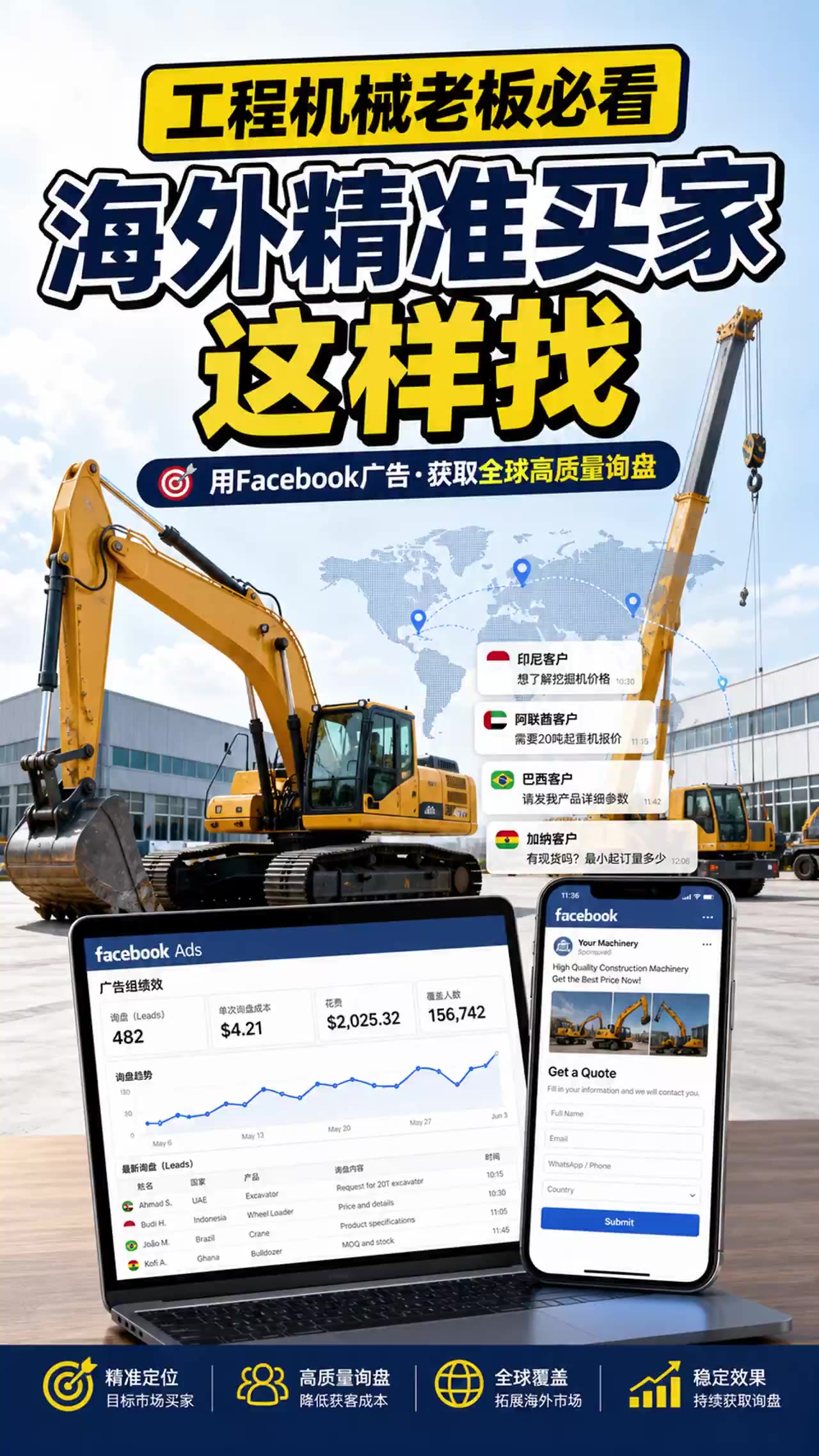
 AI+SNS Social Media Marketing SystemYingbao AI+SNS Social Media Marketing System - Precision social capture for the social media era. Supports one-click content synchronization across major platforms like Facebook and LinkedIn. AI intelligently rewrites posts for enhanced relevance. 24/7 AI customer service and user profiling analysis empower businesses to efficiently expand into global markets.
 AI+SEO营销解决方案易营宝AI+SEO营销解决方案,通过AI批量写作、智能生成TDK、精准关键词扩词等功能,全面优化网站SEO效果,提升流量与转化率。助力企业构建高效智能网站新生态。
 AI+SEM Advertising Marketing SolutionsAI+SEM Advertising Marketing Solution leverages AI technology to deeply empower SEM ad campaigns. It automatically generates weekly/monthly reports using AI, presenting account data across multiple dimensions for comprehensive insights into campaign performance and trends. The system precisely recommends keywords and target countries, intelligently generates high-conversion ad copy, and enables one-click activation of efficient campaign plans to help businesses rapidly acquire customers. Simultaneously, it monitors core metrics in real time, intelligently identifies abnormal fluctuations, and issues timely alerts to ensure stable, high-return advertising results.
 Domain Name ServicesEasyWin provides professional domain name services, including intelligent queries, one-stop registration, brand protection, and full lifecycle management, helping businesses build a digital brand image.
 EasyOperate B2C Cross-Border E-Commerce Platform & Independent WebsiteEasyStore B2C Cross-border E-commerce Independent Store is an intelligent website building and cross-border e-commerce integrated solution independently developed by EasyStore Information Technology (Beijing) Co., Ltd. The system is specially designed for small and medium-sized as well as large export enterprises, integrating 'website building, operation, marketing, advertising, and conversion' into one, helping enterprises quickly establish cross-border e-commerce independent stores to achieve brand globalization and global sales growth.
The platform supports multiple languages, multiple currencies, and multi-channel marketing, with built-in AI intelligent translation and SEO optimization systems, suitable for mainstream markets such as Southeast Asia, Europe and America, Latin America, and the Middle East, assisting Chinese manufacturing enterprises in efficiently deploying international e-commerce strategies. SSL证书易营宝提供专业SSL安全证书服务,包括单域名和泛域名证书,确保网站数据传输加密、身份验证和完整性保护,助力企业建立安全可信的在线业务环境。









