









- Is the EV SSL certificate market shrinking or upgrading? How should companies assess certificate procurement?Aug 11, 2026View details
- Why the old AMP SEO 2020 practices no longer work and what has changed in current optimization prioritiesAug 02, 2026View details
- How to Choose Topics for an Industry News Section to Attract More Organic Search TrafficJul 29, 2026View details
- Digital Marketing Shenzhen Market Insights: Why Are Companies Expanding Overseas Looking for Growth Teams in Shenzhen?Jul 31, 2026View details
- Can Zhejiang foreign trade independent websites still be developed today? Look at changes in traffic and lead generationJul 28, 2026View details
- What New Signals Are Emerging in Enterprise Services SaaS Marketing ReportsJul 27, 2026View details
What Is a certificat dv? An Analysis of Suitable Website Types and Risk Boundaries for DV Certificates
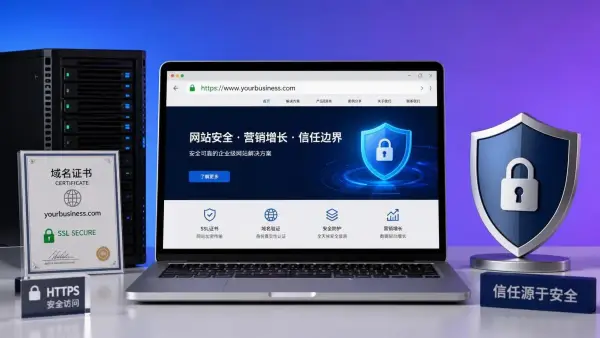
When many people first see the term DV certificate, they understand it as meaning “it can enable locking and HTTPS.” That is only half the story. The core of a DV certificate is that the certificate authority verifies only your control over the domain. It does not verify the corporate entity or brand identity, nor does it prove who operates the website. For personal blogs, event pages, and product showcase sites, this is usually sufficient; but once a website handles payments, user accounts, contract submissions, or customer data collection, the limitations of DV certificates quickly become apparent.
To determine whether a DV certificate is suitable, do not start by asking whether it is “affordable.” First consider what exactly your website is asking visitors to do. The following checklist can be used for pre-launch evaluation or for reviewing the risks of a website that is already in operation.
First, distinguish what a DV certificate does and does not do
A DV certificate addresses data transmission encryption. In other words, data exchanged between the browser and server will not be easily intercepted or tampered with in transit, provided that the certificate is deployed correctly and the protocol is properly configured. It displays a security lock in the address bar and prevents the most basic security weakness: transmitting data in plain text.
However, it does not solve another issue that is more easily misunderstood: whether visitors can verify who you are. If an imitation website also obtains a DV certificate, it can display HTTPS as well. For ordinary users, this type of “looks secure” deception can be highly convincing. The real threats to guard against are identity impersonation, brand confusion, and phishing landing pages—not simply whether a lock icon is present.
Step 1: Check which type of use case your website belongs to
This is the most important consideration. Many websites are not technically unable to use DV, but are simply unsuitable for it from a business perspective.
- Scenarios where DV is generally suitable as a priority: personal blogs, corporate news pages, brand showcase pages, multilingual corporate websites intended solely for content indexing, short-term event pages, and advertising landing pages.
- Scenarios requiring careful evaluation: B2B corporate websites with substantial inquiry forms, member logins, backend access portals, partner document submission, and websites that require users to submit their contact details before downloading quotations.
- Scenarios where relying solely on DV is not recommended: online payments, finance-related services, submission of medical information, legal contract processes, high-value customized orders, and platforms where users must clearly verify the identity of the business entity.
A simple rule of thumb is this: if users need to enter a mobile phone number, email address, company information, or payment details on the page, or need to decide “I need to confirm that this is your official website,” the credibility provided by DV is usually insufficient.
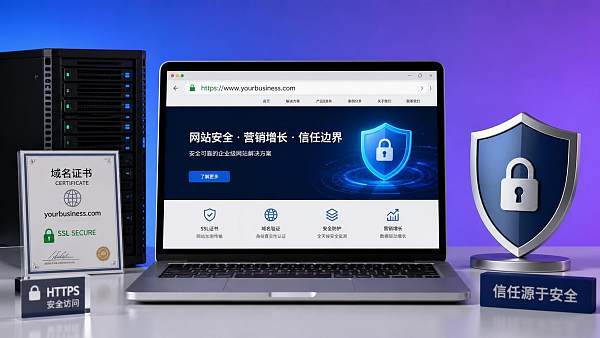
Step 2: Do not confuse “having HTTPS” with “having brand trust”
This misconception is especially common on marketing websites. After the technical team completes certificate deployment, it may assume that the security issue has been resolved. However, the conversion team is focused on something else: whether users are willing to submit information, continue the conversation, or make a payment.
DV can prove only that “you control this domain”; it cannot prove that “this domain belongs to this company.” If your business serves overseas buyers, cross-border retail users, or new visitors encountering the brand for the first time, certificat dv alone is unlikely to establish sufficient identity trust. This is especially true when the domain itself is not very strong, the brand name is not immediately clear, and the page contains strong conversion actions—users will instinctively hesitate.
At this point, the items to check include more than the certificate type:
- Whether the company name is consistent in the website footer, About Us page, and Contact page;
- Whether the email domain matches the main website domain, rather than being mixed with free email services;
- Whether the payment, login, and inquiry pages redirect to unfamiliar subdomains;
- Whether the domain shown in the browser’s certificate details exactly matches the current web address.
Step 3: Verify the certificate coverage and do not let subdomains become security gaps
On many websites, the main site uses HTTPS, but the certificate does not cover the form page, help center, download page, or mobile subsite. This creates a poor user experience and may also cause mixed signals for search engine crawling.
Before launch, check at least these types of addresses: `www`, the version without `www`, commonly used business subdomains, multilingual subsites, dedicated landing-page subdomains, and backend domains. A DV certificate may cover a single domain, or it may use a wildcard or multi-domain format. Whichever type you purchase, verify each item against the actual architecture instead of assuming that “once the main site is covered, everything is covered.”
Step 4: Check renewal and deployment methods—DV most often fails when it looks simple but is easy to overlook in practice
Fast issuance is a major advantage of DV. However, because issuance is fast, many teams manage renewals too casually. Common situations include certificate expiration, failed automatic renewal, CDN edge nodes not being synchronized, and the origin server being updated while the load balancer is not. As a result, the site may be accessible in some regions but trigger risk warnings in others, causing the greatest damage to advertising campaigns and organic-traffic landing pages.
In practice, confirm at least these three points:
- Whether the certificate is renewed manually or automatically, and who controls the responsible account.
- What domain validation method is used—DNS, file validation, or email validation—and whether it will still work when renewal is required.
- At which layer the certificate is installed, and whether the origin server, CDN, WAF, and load balancer all have the corresponding configuration.
If your website serves multiple markets, has multilingual sites, advertising landing pages, and an online store operating together, these details deserve attention before the question of which certificate brand to choose. Many business losses are not caused by a low certificate level, but by the fact that nobody notices immediately when the certificate becomes invalid.
Step 5: Look beyond browser security and examine the search and conversion journey
From an SEO perspective, HTTPS is a basic requirement, not a magic advantage. DV satisfies search engines’ basic requirements for secure transmission, and it does not automatically suffer because it is “only DV.” What really affects indexing and performance is often the chain of issues following an HTTPS migration: 301 redirects not being configured properly, on-site canonical URLs still pointing to HTTP, sitemap URLs not being updated, old resources being blocked, or form interfaces triggering cross-origin errors or security warnings.
If you are still in the information-gathering stage and want to determine whether certificat dv will affect marketing performance, the conclusion can be stated more directly: for search visibility, it is a “sufficient configuration”; for trust and conversion, it is a “scenario-dependent configuration.” Content sites and showcase sites generally have few issues; the deeper the transaction journey, the less appropriate it is to treat the certificate as merely a technical checkbox.
As an aside, this approach—recognizing that “basic compliance appears fine, but key points can easily be overlooked”—is actually similar to process auditing. If you work on project-based websites and also pay attention to risk-control documents, you can refer to the approach used in materials such as Analysis of Common Issues and Countermeasures in Engineering Settlement Audits: do not look only at whether something appears to be completed; also check whether key fields, responsibility points, and exception paths have been covered.
Step 6: When these signals appear, consider upgrading your certificate strategy
Not every website needs to pursue a higher-level certificate. However, when the following situations occur, continuing to use only DV is usually not the most prudent decision.
- Your website needs to handle brand-keyword advertising, and imitation sites, unauthorized reseller pages, or phishing pages already exist in the market.
- Users frequently need to submit company information, payment details, or high-value inquiries during their first visit.
- The sales team frequently encounters questions such as “Is this your official website?”
- The business covers multiple countries, and visitors are more sensitive to entity identity, privacy commitments, and payment security.
- The website contains multiple high-risk entry points, including the official website, online store, login system, and distributor portal.
The question to evaluate is not “Is DV acceptable?” but “Can domain validation alone support the trust requirements of your business?” If the answer is cautious, upgrade entity verification, website identity presentation, and the overall security configuration together, rather than focusing only on the annual certificate fee.
A brief checklist to review before launch
- First define the website’s purpose: displaying content, or handling transactions and lead collection.
- Verify the certificate validation level: DV validates only the domain, not the corporate identity.
- Inventory all domains and subdomains and confirm that they are all covered.
- Check whether HTTP-to-HTTPS redirects, internal links, and resource references are consistent.
- Simulate user visits to the login page, form page, and payment page to see whether the browser displays any abnormal warnings.
- Confirm the renewal mechanism, alert mechanism, and responsible person; do not rely solely on a single administrator email address.
- If the website handles high-trust actions, reassess whether a higher validation level and more complete identity presentation are required.
The truly practical principle is not complicated: a DV certificate is suitable for solving the problem of “putting a website online securely,” but it is not suitable for independently bearing the responsibility of “making users trust who you are.” For content display, brand exposure, and basic lead generation, it is usually sufficient. Once the website involves transactions, logins, payments, or the submission of sensitive information, certificate selection should follow the level of business risk. First examine the entire website journey in the order above, and then decide whether to continue using DV or upgrade identity verification and trust-related configurations together. This approach leads to more balanced decisions.
Related Articles
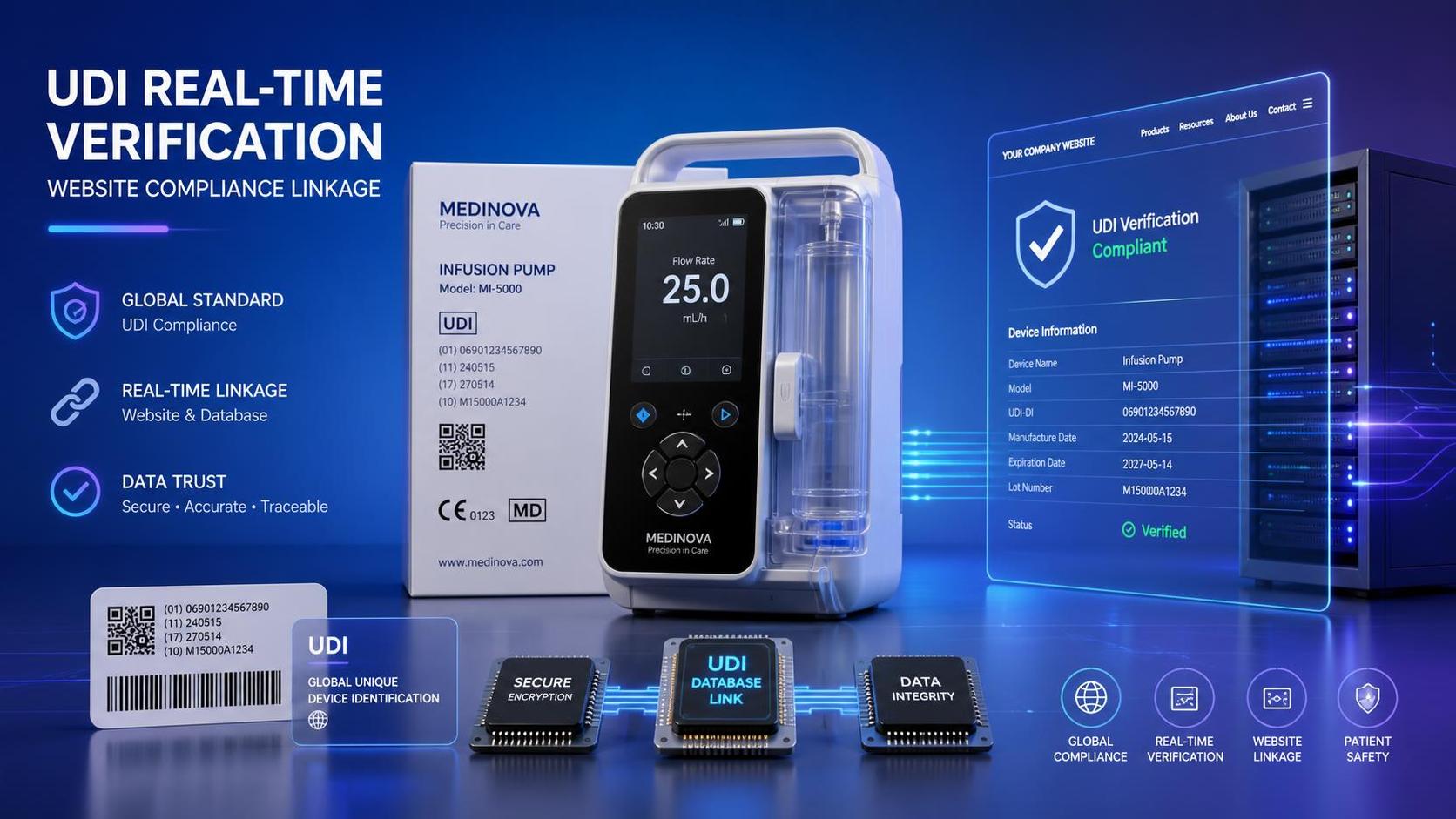
 FDA New Regulations Take Effect: Medical Device Independent Websites Add Real-Time UDI Verification
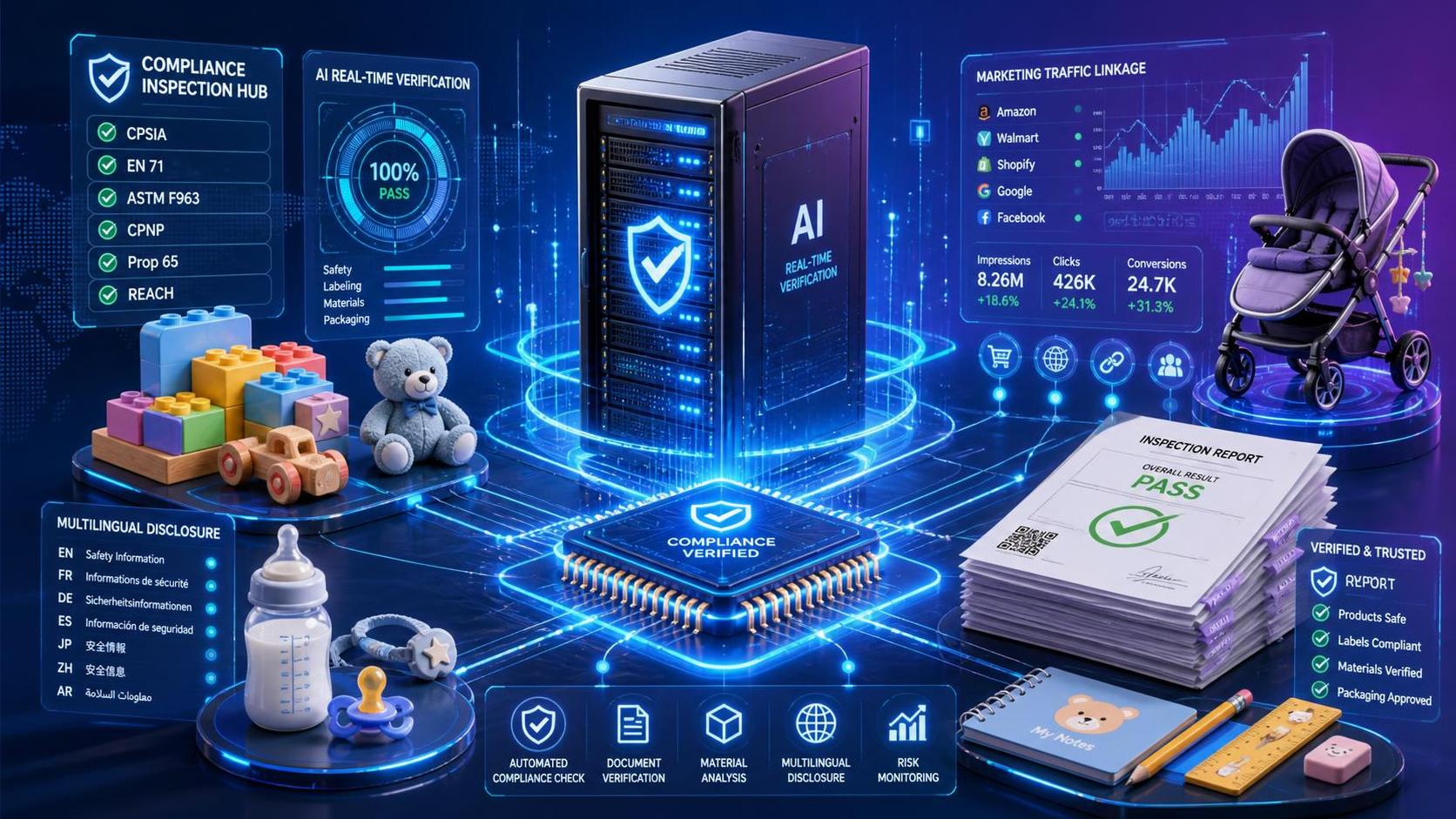
 New U.S. CPSC Regulations Take Effect: B2B Websites for Children's Products Must Integrate AI Compliance Verification
 FDA New Regulations Take Effect: Compliance Verification for Export Enterprises’ Standalone Websites Becomes a Prerequisite
Related Products
 Yiyingbao SaaS Intelligent Website Building and Marketing SystemYiyingbao SaaS Intelligent Website Building and Marketing System, AI-powered no-code website building, rapid creation of multilingual B2B international websites in 10 minutes, global server acceleration, AI-powered SEO optimization, helping businesses connect efficiently with global markets. The perfect integration of technology and operation makes building an international trade website remarkably simple
 AI+SEM Intelligent Advertising Marketing SystemAI+SEM drives intelligent ad creation, empowering full-funnel precision advertising marketing. The system automatically generates weekly/monthly reports, AI recommends keywords and target countries, monitors core metrics in real-time with intelligent alerts, and enables one-click high-conversion ad solutions to help quickly acquire customers and improve ROI.
 AI+SEO Dual-Engine System Optimization ServicesYiyingbao’s AI+SEO dual-engine optimization system helps foreign trade enterprises acquire high-quality organic traffic through AI-powered keyword research, content generation, and comprehensive technical optimization, significantly improving search rankings and conversion rates.
 AI+SNS Social Media Marketing SystemYingbao AI+SNS Social Media Marketing System - Precision social capture for the social media era. Supports one-click content synchronization across major platforms like Facebook and LinkedIn. AI intelligently rewrites posts for enhanced relevance. 24/7 AI customer service and user profiling analysis empower businesses to efficiently expand into global markets.
 AI+SEO营销解决方案易营宝AI+SEO营销解决方案,通过AI批量写作、智能生成TDK、精准关键词扩词等功能,全面优化网站SEO效果,提升流量与转化率。助力企业构建高效智能网站新生态。
 AI+SEM Advertising Marketing SolutionsAI+SEM Advertising Marketing Solution leverages AI technology to deeply empower SEM ad campaigns. It automatically generates weekly/monthly reports using AI, presenting account data across multiple dimensions for comprehensive insights into campaign performance and trends. The system precisely recommends keywords and target countries, intelligently generates high-conversion ad copy, and enables one-click activation of efficient campaign plans to help businesses rapidly acquire customers. Simultaneously, it monitors core metrics in real time, intelligently identifies abnormal fluctuations, and issues timely alerts to ensure stable, high-return advertising results.
 Domain Name ServicesEasyWin provides professional domain name services, including intelligent queries, one-stop registration, brand protection, and full lifecycle management, helping businesses build a digital brand image.
 EasyOperate B2C Cross-Border E-Commerce Platform & Independent WebsiteEasyStore B2C Cross-border E-commerce Independent Store is an intelligent website building and cross-border e-commerce integrated solution independently developed by EasyStore Information Technology (Beijing) Co., Ltd. The system is specially designed for small and medium-sized as well as large export enterprises, integrating 'website building, operation, marketing, advertising, and conversion' into one, helping enterprises quickly establish cross-border e-commerce independent stores to achieve brand globalization and global sales growth.
The platform supports multiple languages, multiple currencies, and multi-channel marketing, with built-in AI intelligent translation and SEO optimization systems, suitable for mainstream markets such as Southeast Asia, Europe and America, Latin America, and the Middle East, assisting Chinese manufacturing enterprises in efficiently deploying international e-commerce strategies. SSL证书易营宝提供专业SSL安全证书服务,包括单域名和泛域名证书,确保网站数据传输加密、身份验证和完整性保护,助力企业建立安全可信的在线业务环境。









