









- Levanta’s Inaugural China Summit Held in Shenzhen, Focusing on AI and Cross-Border Brand GrowthOct 20, 2026View details
- The October Edition of the 2026 GGE Shenzhen Cross-Border E-Commerce Expo OpensOct 20, 2026View details
- Dongguan’s foreign trade imports and exports reached RMB 1.29 trillion in the first three quarters, a record high for the same periodOct 20, 2026View details
- Liaoning Holds Province-Wide Meeting to Advance Cross-Border E-Commerce, Emphasizing the Need to Explore Differentiated Development PathsOct 20, 2026View details
- Advanced Manufacturing Seizes Global Opportunities as Guangdong’s Q3 Foreign Trade Surpasses RMB 3 Trillion for the First TimeOct 20, 2026View details
- Can the average annual growth rate reflect real opportunities in overseas markets?Oct 07, 2026View details
How can a foreign trade website for hardware fasteners accurately present material grades, standards, specifications, and certification information?
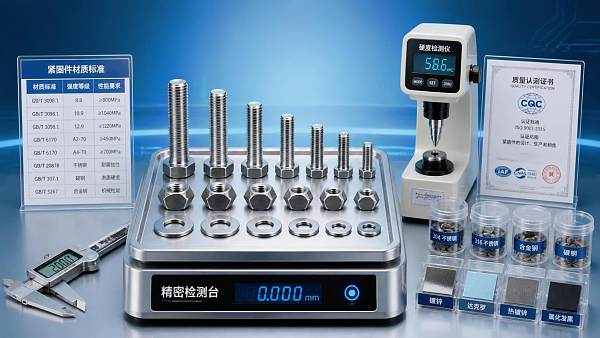
Fastener Export Website Development: Turning “Standards Compliance” into Verifiable Information
When overseas buyers open a fastener product page, what they truly care about is often not an attractive bolt image, but several questions that need to be confirmed quickly: What is the exact material grade? Which standard defines the property class? Are the dimensions, tolerances, and threads compatible with the existing assembly system? Are test reports and certification documents traceable?
Therefore, fastener export website development should not remain at the level of “product name + image + inquiry button.” For technical evaluation personnel, the website itself should function like a clearly structured pre-qualification document: clearly presenting materials, standards, specifications, testing, and compliance boundaries, so that purchasing, quality, and engineering teams can determine in a short time whether a supplier is worth moving forward with for the next round of communication.
First Distinguish Four Types of Information to Avoid Crowding Parameters onto One Page
A common issue on fastener pages is mixing DIN, ISO, ASTM, materials, strength classes, and surface treatments together. Although this may appear to provide extensive information, it actually makes it difficult to determine what each data point applies to. A better approach is to divide the content into four clear categories.
For example, “Hex Bolt, DIN 933, M12×60, 8.8, Zinc Plated” can serve as a product summary, but it cannot replace complete technical information. The page should further clarify that DIN 933 describes product type and dimensional requirements; 8.8 is a property class designation for carbon steel or alloy steel bolts; and zinc plating is a surface treatment method. These are not the same type of standard and cannot replace one another.
Material Information Should Not Simply State “Stainless Steel” or “Carbon Steel”
“Stainless Steel Bolt” is suitable for navigation and initial searches, but it is insufficient to support engineering selection. For stainless steel fasteners, it is recommended to display property markings such as A2-70 and A4-80 and explain their relationship to ISO 3506 series requirements. For carbon steel and alloy steel products, relevant property class standards such as ISO 898-1 should be referenced, clearly stating classes such as 4.8, 8.8, 10.9, and 12.9 as well as their applicable ranges.
If products are supplied to U.S. standards, corresponding specifications such as ASTM A307, ASTM A193, and ASTM A320 may be listed on the page. However, material standards for different applications should not simply be placed side by side. A193 is commonly used for alloy steel or stainless steel stud connections in high-temperature, high-pressure environments, while A320 relates to low-temperature service conditions; whether they are applicable depends on the product type, material grade, and project specification. It is best to provide separate sections for “Available to Supply to Standards” and “Regular Stock Specifications” to avoid giving users the impression that all sizes cover every grade.
Material descriptions should also leave room for key notes, such as whether thread fit needs to be considered after hot-dip galvanizing, whether higher-property-class fasteners present a risk of hydrogen embrittlement, and whether A4 grade or specific nickel-based materials are more suitable for marine or chemical environments. These details do not make the page more complicated; instead, they demonstrate the company’s understanding of actual assembly environments.
The Value of a Specification Table Lies in Saving Buyers One Confirmation Email
Specification parameters should preferably be presented in a filterable, downloadable, and comparable format rather than placing all content in images. At a minimum, they should include nominal diameter, pitch, length, head dimensions, thread length, measurement system, tolerance class, and weight or packaging quantity. For imperial products, thread types such as UNC, UNF, and BSW must be clearly specified rather than simply marked as “inch size.”
For nuts, washers, threaded rods, double-end studs, and non-standard parts, parameter fields should also vary according to the product. Double-end studs should show the thread lengths at both ends and the diameter of the center shank; washers need to specify inner diameter, outer diameter, thickness, and hardness requirements; non-standard fasteners should display the drawing revision, key dimensional control points, and minimum order requirements. The technical document download area may provide PDF specification sheets, 2D drawings, or 3D models, but the revision number must remain consistent with the page content.
This presentation is particularly important in heavy industrial equipment supply applications. Suppliers serving large-scale engineering projects, mining equipment, or complete machinery can refer to the scenario-based information structure of heavy machinery equipment and heavy industry websites: first allowing visitors to see the equipment operating conditions, then guiding them to the corresponding connection locations, material grades, and fastening solutions, rather than presenting products in isolation only by “bolts/nuts.” This better matches engineers’ habit of working backward from the application to select products.
Certification Information Should State Its “Scope of Applicability,” Rather Than Simply Displaying a Row of Logos
Certification is important for building trust on export websites and is also one of the areas most likely to cause misunderstandings. ISO 9001 usually reflects a quality management system; ISO 14001 concerns an environmental management system; and third-party test reports may apply to a particular batch, specification, or performance characteristic. As they certify different subjects, the page must state the certificate name, issuing organization, validity period or verification method, as well as the applicable factory, product scope, and production address.
For products exported to Europe, customers often ask about REACH and RoHS, but they do not apply to all fasteners in the same way. The website should use prudent wording, such as “Material compliance declarations or relevant test documentation can be provided according to customer project requirements,” while sales and compliance personnel should confirm regulations, applications, and market requirements for each specific order. Likewise, the CE mark must not be used as a general marketing label for ordinary fasteners. Relevant documents should only be provided as required when the products fall within the scope of applicable EU regulations or harmonized standards.
A more persuasive module is usually “Documentation and Traceability Information”: it should clearly state the extent to which raw material heat numbers, production batches, heat treatment records, coating tests, salt spray tests, dimensional inspections, EN 10204 3.1 material certificates, and other documents can be provided. If documents can only be provided after order confirmation, this should also be stated truthfully. Sample reports should not be presented as a commitment for all batches.
Keep Technical Meanings Consistent Across Multilingual Content
When fastener export website development serves English, German, Spanish, Russian, and other markets, the greatest risk is not lack of translation fluency, but terminology distortion. The Chinese term for “strength class” may correspond to property class; “material certificate” may be understood in different projects as MTC, MTR, or an inspection certificate; and “zinc plating” must also distinguish between processes such as electro zinc plated and hot-dip galvanized.
It is recommended to establish a unified terminology database and treat product names, standard numbers, property classes, units, and drawing annotations as controlled fields that must not be freely rewritten. Marketing copy can be localized, but technical parameters must remain in one-to-one correspondence. AI-generated multilingual drafts should be reviewed by personnel familiar with fastener standards, especially for property classes, thread systems, certification names, and temperature units.
Moving from “Displaying Products” to “Supporting Technical Decisions”
A reliable fastener website does not need to make exaggerated claims such as “full standards coverage.” Instead, it should allow visitors to see the boundaries of its information: which items are standard parts and which support customization; which documents can be supplied with the goods and which require project-based confirmation; which materials are suitable for conventional environments and which require further engineering evaluation.
When Yingyingbao provides integrated services including intelligent website development, multilingual content management, SEO, and overseas marketing for export-oriented manufacturing enterprises, the focus is not merely on making product pages more comprehensive, but on helping companies establish a sustainably maintainable technical content framework. Standard updates, specification expansions, certification renewals, and report replacements should all follow clear backend management and review processes. For overseas buyers, this continuous and accurate maintenance of information often demonstrates supply capability and quality awareness more effectively than one-time visual packaging.
Related Articles


Related Products
 Yiyingbao SaaS Intelligent Website Building and Marketing SystemYiyingbao SaaS Intelligent Website Building and Marketing System, AI-powered no-code website building, rapid creation of multilingual B2B international websites in 10 minutes, global server acceleration, AI-powered SEO optimization, helping businesses connect efficiently with global markets. The perfect integration of technology and operation makes building an international trade website remarkably simple
 AI+SEM Intelligent Advertising Marketing SystemAI+SEM drives intelligent ad creation, empowering full-funnel precision advertising marketing. The system automatically generates weekly/monthly reports, AI recommends keywords and target countries, monitors core metrics in real-time with intelligent alerts, and enables one-click high-conversion ad solutions to help quickly acquire customers and improve ROI.
 AI+SEO Dual-Engine System Optimization ServicesYiyingbao’s AI+SEO dual-engine optimization system helps foreign trade enterprises acquire high-quality organic traffic through AI-powered keyword research, content generation, and comprehensive technical optimization, significantly improving search rankings and conversion rates.
 AI+SNS Social Media Marketing SystemYingbao AI+SNS Social Media Marketing System - Precision social capture for the social media era. Supports one-click content synchronization across major platforms like Facebook and LinkedIn. AI intelligently rewrites posts for enhanced relevance. 24/7 AI customer service and user profiling analysis empower businesses to efficiently expand into global markets.
 AI+SEO营销解决方案易营宝AI+SEO营销解决方案,通过AI批量写作、智能生成TDK、精准关键词扩词等功能,全面优化网站SEO效果,提升流量与转化率。助力企业构建高效智能网站新生态。
 AI+SEM Advertising Marketing SolutionsAI+SEM Advertising Marketing Solution leverages AI technology to deeply empower SEM ad campaigns. It automatically generates weekly/monthly reports using AI, presenting account data across multiple dimensions for comprehensive insights into campaign performance and trends. The system precisely recommends keywords and target countries, intelligently generates high-conversion ad copy, and enables one-click activation of efficient campaign plans to help businesses rapidly acquire customers. Simultaneously, it monitors core metrics in real time, intelligently identifies abnormal fluctuations, and issues timely alerts to ensure stable, high-return advertising results.
 Domain Name ServicesEasyWin provides professional domain name services, including intelligent queries, one-stop registration, brand protection, and full lifecycle management, helping businesses build a digital brand image.
 EasyOperate B2C Cross-Border E-Commerce Platform & Independent WebsiteEasyStore B2C Cross-border E-commerce Independent Store is an intelligent website building and cross-border e-commerce integrated solution independently developed by EasyStore Information Technology (Beijing) Co., Ltd. The system is specially designed for small and medium-sized as well as large export enterprises, integrating 'website building, operation, marketing, advertising, and conversion' into one, helping enterprises quickly establish cross-border e-commerce independent stores to achieve brand globalization and global sales growth.
The platform supports multiple languages, multiple currencies, and multi-channel marketing, with built-in AI intelligent translation and SEO optimization systems, suitable for mainstream markets such as Southeast Asia, Europe and America, Latin America, and the Middle East, assisting Chinese manufacturing enterprises in efficiently deploying international e-commerce strategies. SSL证书易营宝提供专业SSL安全证书服务,包括单域名和泛域名证书,确保网站数据传输加密、身份验证和完整性保护,助力企业建立安全可信的在线业务环境。









