









- Fujian Announces the First Batch of Provincial-Level Cross-Border E-Commerce Industrial Parks and Key Brands for CultivationNov 14, 2026View details
- Amazon Global Store Announces the Launch of the 2026 Black Friday Global Shopping SeasonNov 14, 2026View details
- CCTV.com Examines APEC’s Role in China’s Foreign TradeNov 12, 2026View details
- China’s Tariff Commission of the State Council Adjusts Additional Tariffs on U.S. Goods: 24% Tariff Suspended for Two MonthsNov 10, 2026View details
- APEC Shenzhen Spotlight: Cross-Border E-Commerce Orders Promote Asia-Pacific Trade and Economic CooperationNov 08, 2026View details
- China-Europe Railway Express and CIIE Hold Business Matchmaking Event, Focusing on Cross-Border E-commerce B2B ExportsNov 07, 2026View details
What details should you look for in industrial website design cases?
When industrial companies select a website design service provider, they are often drawn to large homepage visuals, animations, and colors, while overlooking the details that truly affect project progress: whether equipment capabilities are clearly explained, whether application industries are presented credibly, whether technical documentation is easy to download, and whether overseas buyers can find an inquiry entry point within a few steps. For engineering project managers, reviewing industrial web design references is not primarily about deciding whether a page “looks good,” but whether the case demonstrates that the provider understands the industrial sales process.
An industrial website case worthy of inclusion on a shortlist should generally withstand three questions: Can complex products be understood by non-technical procurement personnel? Can professional parameters be quickly verified by engineers? When customers are ready to get in touch, will their path be interrupted by lengthy pages, vague buttons, or missing information? Using these three criteria first is often more effective than evaluating visual style page by page.
First, determine whether the case solves industrial information presentation issues
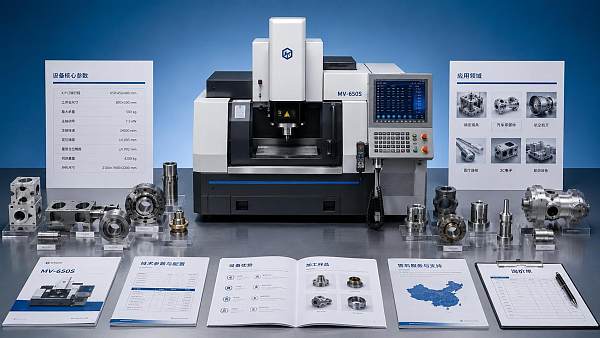
A common failure of industrial websites is to directly transfer a corporate brochure onto the web. The homepage states “professional manufacturer” and “reliable quality,” while product pages contain only a few images and a general introduction, leaving users unable to find key information such as materials, specifications, applicable operating conditions, and scope of delivery. Even with refined design, such pages can hardly support real inquiry decisions.
When reviewing a case, open two or three product detail pages and focus on whether the information hierarchy follows the reading sequence of industrial procurement. Users usually first need to know what the product is and which application problem it solves; then they need to confirm the model, performance range, key parameters, and optional configurations; only afterward will they look at production capacity, quality control, certification documents, or project materials. Not all information needs to be placed on the first screen, but there must be clear entry points so users do not have to repeatedly return to the navigation bar to search.
- Whether product categories are organized according to procurement logic: Categorization by application, equipment type, material, or industry scenario is generally easier to understand than categorization only by internal department names.
- Whether parameters are presented in a scannable way: Tables, expandable descriptions, model comparisons, or downloadable materials should enable users to quickly locate the data they need.
- Whether technical terms have clear explanatory boundaries: Retain professional accuracy while explaining the operating conditions, performance impact, or selection constraints associated with the terms.
- Whether images serve an explanatory purpose: Equipment details, interface locations, application environments, and process diagrams are more helpful for evaluation than simple factory carousels.
Especially for highly customized equipment, components, or engineering services, the case should clearly distinguish between “standard products” and “customizable content.” If everything is described as customizable, customers cannot form expectations; if everything is presented as fixed models, actual solution capabilities may be obscured. This balance often reflects whether the design team understands industrial business.
Case credibility does not mean filling the page with honors and slogans
After entering a corporate website, industrial customers generally will not submit requirements based solely on a statement such as “extensive experience.” A more valuable approach for a case page is to provide verifiable business clues, such as the applications served, the specific challenges solved by the product, the scope of delivery, descriptions of technical capabilities, and project processes that do not involve confidential information. It does not need to disclose customer names or sensitive drawings, but it should let visitors know what type of work the company has actually completed.
During evaluation, note whether the case is limited to a finished-product image and a brief overview. If the page explains the operating conditions for which the equipment is used, the limitations users originally faced, the stages covered by the solution, and provides links to related product or technical pages, its credibility will be higher. Conversely, when case content is unrelated to the core products, image sources are unclear, or descriptions are highly repetitive, further confirmation is needed regarding the reliability of material management and content review.
Review the inquiry path as an engineering process
Industrial website conversion is not simply about placing a “Contact Us” button. Procurement personnel may want to request a catalog, engineers may need to confirm drawings or technical parameters, and managers may first inquire about supply capacity and project timelines. Whether the case design considers these different actions directly affects lead quality as well as the efficiency of subsequent internal sales follow-up.
Do not check contact forms only on the homepage. Users with genuine purchase intent often enter product, application, or technical article pages directly from search results, so every type of high-value page should provide a next action that matches its content. For example, after reviewing equipment parameters, “Get Technical Documentation” is appropriate; after learning about industry applications, “Request a Suitable Solution” is appropriate. This design better fits the decision-making pace of industrial procurement than repeated pop-ups.
For overseas projects, also verify the “usability” of multilingual pages
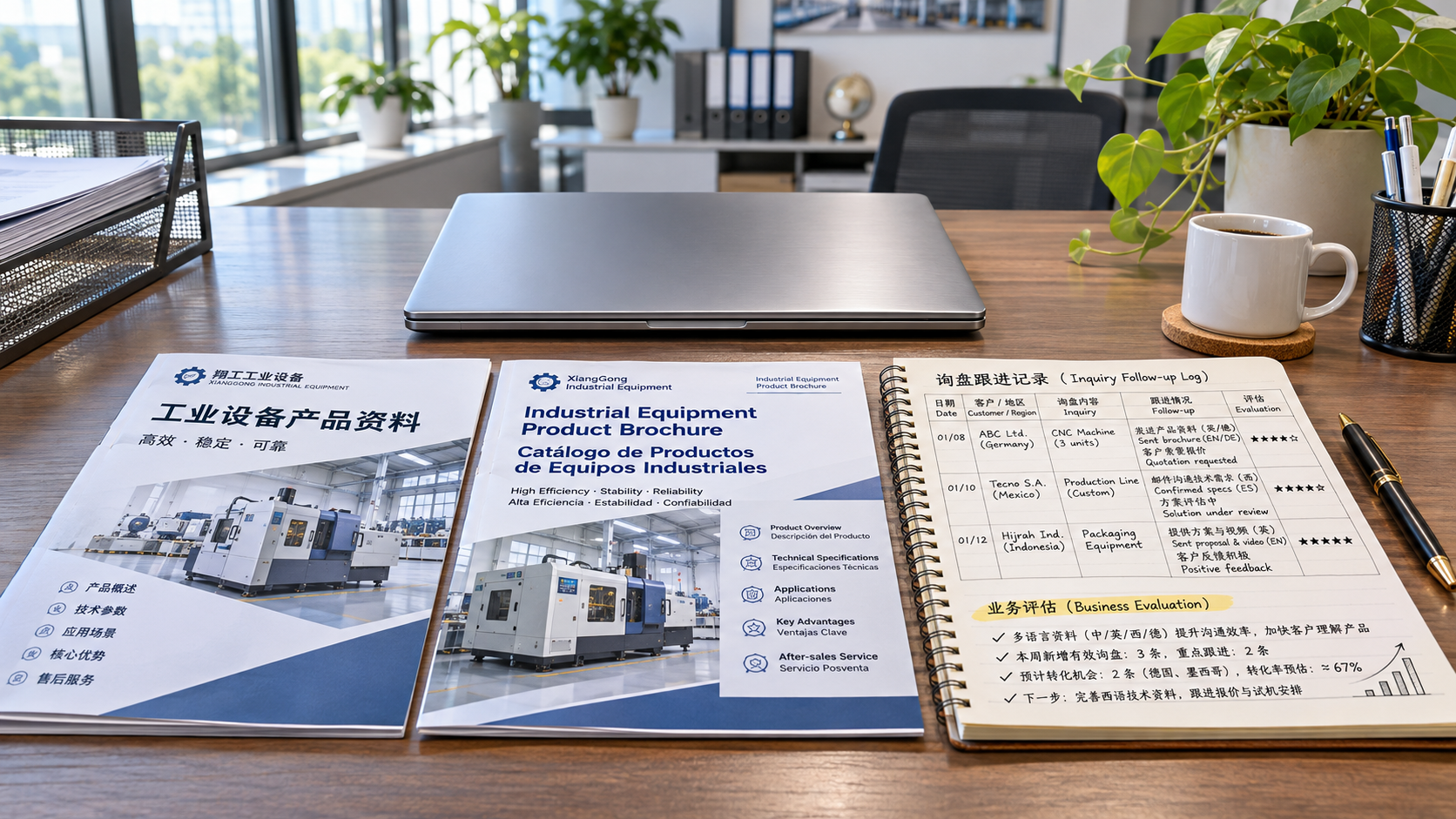
For industrial cases targeting overseas markets, a language switcher is only the foundation. More importantly, product structures, parameter units, downloadable materials, and inquiry entry points should remain consistent across different language pages. Some websites have a complete English homepage, but only brief translations on internal product pages; others use inconsistent model names, unit formats, or technical terms, which can make overseas visitors question the accuracy of the information.
Project managers can randomly inspect the same product page in different languages: whether the navigation corresponds, whether specifications are complete, whether text in images remains understandable, and whether form prompts have been fully translated. If the target market covers multiple regions, they should also confirm the content maintenance approach rather than merely verifying whether the initial batch of pages can go live. When new models are added, materials are updated, or parameters are adjusted later, information gaps will quickly reappear if language versions cannot be synchronized.
Do not overlook the search and maintenance capabilities behind the case
Completing the design draft does not mean that a website is equipped for long-term customer acquisition. When reviewing industrial web design references, further clarify whether page titles and descriptions can be edited, whether product pages can accommodate keywords and technical content, whether images support alternative text, whether new content will disrupt the existing structure, and who identifies and handles speed and mobile issues. The number of pages on industrial websites usually grows as products, industry applications, and materials accumulate. Without early planning, later optimization costs will rise significantly.
For projects that need to continuously acquire organic search traffic, content production and technical checks can be included in the selection criteria. For example, AI+SEO Dual-Engine System Optimization Service provides capabilities including keyword competitiveness and commercial value assessments, multilingual content generation, technical SEO audits, internal link and image ALT optimization, making it suitable for checking whether the website architecture supports future expansion. The focus is not on how many pages can be generated at one time, but whether the generated content can be verified by product, technical, and marketing personnel to ensure consistency in terminology, parameters, and business commitments.
When making the final case evaluation, it is advisable to ask the provider for a live demonstration rather than only viewing screenshots: enter a product content page from a search entry point, find the parameters and materials, complete an inquiry, then switch to the mobile version and another language version. This process can quickly reveal practical issues in navigation, content management, form design, and multilingual maintenance, while helping project managers determine whether the solution suits their own product complexity and promotion objectives.
Related Articles
 How Should You Evaluate Successful Multilingual Website Projects for International Trade?
 Are there verifiable case studies of Yiyingbao’s integrated website development and promotion services?
 How effective are Yiyingbao's export business website development real-world cases?

Related Products
 Yiyingbao SaaS Intelligent Website Building and Marketing SystemYiyingbao SaaS Intelligent Website Building and Marketing System, AI-powered no-code website building, rapid creation of multilingual B2B international websites in 10 minutes, global server acceleration, AI-powered SEO optimization, helping businesses connect efficiently with global markets. The perfect integration of technology and operation makes building an international trade website remarkably simple
 AI+SEM Intelligent Advertising Marketing SystemAI+SEM drives intelligent ad creation, empowering full-funnel precision advertising marketing. The system automatically generates weekly/monthly reports, AI recommends keywords and target countries, monitors core metrics in real-time with intelligent alerts, and enables one-click high-conversion ad solutions to help quickly acquire customers and improve ROI.
 AI+SEO Dual-Engine System Optimization ServicesYiyingbao’s AI+SEO dual-engine optimization system helps foreign trade enterprises acquire high-quality organic traffic through AI-powered keyword research, content generation, and comprehensive technical optimization, significantly improving search rankings and conversion rates.
 AI+SNS Social Media Marketing SystemYingbao AI+SNS Social Media Marketing System - Precision social capture for the social media era. Supports one-click content synchronization across major platforms like Facebook and LinkedIn. AI intelligently rewrites posts for enhanced relevance. 24/7 AI customer service and user profiling analysis empower businesses to efficiently expand into global markets.
 AI+SEO营销解决方案易营宝AI+SEO营销解决方案,通过AI批量写作、智能生成TDK、精准关键词扩词等功能,全面优化网站SEO效果,提升流量与转化率。助力企业构建高效智能网站新生态。
 AI+SEM Advertising Marketing SolutionsAI+SEM Advertising Marketing Solution leverages AI technology to deeply empower SEM ad campaigns. It automatically generates weekly/monthly reports using AI, presenting account data across multiple dimensions for comprehensive insights into campaign performance and trends. The system precisely recommends keywords and target countries, intelligently generates high-conversion ad copy, and enables one-click activation of efficient campaign plans to help businesses rapidly acquire customers. Simultaneously, it monitors core metrics in real time, intelligently identifies abnormal fluctuations, and issues timely alerts to ensure stable, high-return advertising results.
 Domain Name ServicesEasyWin provides professional domain name services, including intelligent queries, one-stop registration, brand protection, and full lifecycle management, helping businesses build a digital brand image.
 EasyOperate B2C Cross-Border E-Commerce Platform & Independent WebsiteEasyStore B2C Cross-border E-commerce Independent Store is an intelligent website building and cross-border e-commerce integrated solution independently developed by EasyStore Information Technology (Beijing) Co., Ltd. The system is specially designed for small and medium-sized as well as large export enterprises, integrating 'website building, operation, marketing, advertising, and conversion' into one, helping enterprises quickly establish cross-border e-commerce independent stores to achieve brand globalization and global sales growth.
The platform supports multiple languages, multiple currencies, and multi-channel marketing, with built-in AI intelligent translation and SEO optimization systems, suitable for mainstream markets such as Southeast Asia, Europe and America, Latin America, and the Middle East, assisting Chinese manufacturing enterprises in efficiently deploying international e-commerce strategies. SSL证书易营宝提供专业SSL安全证书服务,包括单域名和泛域名证书,确保网站数据传输加密、身份验证和完整性保护,助力企业建立安全可信的在线业务环境。









