









- Can the average annual growth rate reflect real opportunities in overseas markets?Oct 07, 2026View details
- Which customer acquisition channels will be affected by cross-border marketing trends in 2026?Sep 06, 2026View details
- Which homogenization risks should be considered in an analysis of the AI-powered website building industry?Aug 30, 2026View details
- How Will AI Marketing Trends 2026 Change Advertising Budget AllocationAug 28, 2026View details
- Is the EV SSL certificate market shrinking or upgrading? How should companies assess certificate procurement?Aug 11, 2026View details
- Why the old AMP SEO 2020 practices no longer work and what has changed in current optimization prioritiesAug 02, 2026View details
How Can German SEO Copy Avoid a Literal Translation Tone?
How to Avoid a Literal Translation Tone in German SEO Copywriting
The key to effective German SEO copywriting is not word-for-word translation, but understanding German users’ search habits, communication styles, and trust expectations. For those responsible for multilingual websites, product pages, or content operations, a literal translation tone not only affects the reading experience but can also weaken a page’s organic rankings and inquiry conversion rates.
German users can usually quickly distinguish between “locally written content” and translated copy. The former is clear, well-supported, and terminologically accurate; the latter often contains overly long sentences, stiff wording, or expressions that Germans rarely use in searches and business communication.
Therefore, the focus of German SEO copywriting should not be converting a Chinese or English draft into German, but reorganizing information around target keywords. Content operators need to first determine who the page serves, what problem it solves, and how users are likely to ask questions, before deciding on titles, paragraphs, case studies, and calls to action.
First, Identify the Four Most Common Issues of Literal Translation
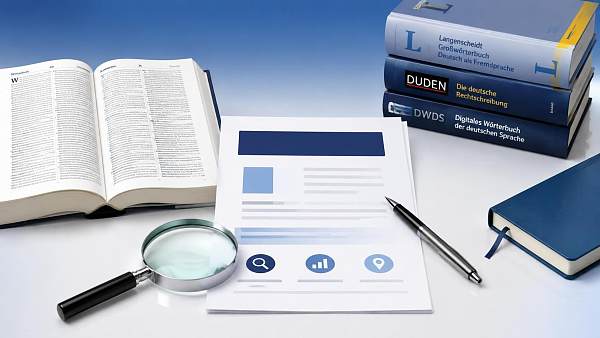
The first issue is retaining Chinese-style rhetorical language. Expressions such as “exceptional quality,” “thoughtful service,” and “strong capabilities” often sound vague when translated into German. German B2B customers care more about material standards, delivery lead-time ranges, certification documents, production capacity, and after-sales response mechanisms.
The second issue is transferring an entire long Chinese sentence directly into German. German allows complex sentences, but commercial webpages are not suitable for continuously stacking subordinate clauses. Each paragraph should present the conclusion first, followed by conditions, technical parameters, or application scenarios, allowing users to scan key information quickly.
The third issue is directly copying keywords. Chinese users may search for “German market promotion,” while German buyers are more likely to search for specific product names, specifications, industry applications, or intent terms such as “Hersteller” and “Lieferant.” Keywords must come from actual search behavior rather than literal equivalents.
The fourth issue is a tone that does not align with local business practices. Excessive promises, frequent use of superlatives, and repeated emphasis on being “number one” or “leading” can easily raise concerns. The German market is more receptive to verifiable statements, such as test data, certification numbers, service processes, and traceable delivery information.
Keywords Should Not Be Translated; They Should Be Rebuilt Around How German Users Search
When carrying out German SEO copywriting, first break core terms down into product terms, demand terms, regional terms, and decision-making terms. For industrial components, for example, users may search for model numbers, DIN standards, applicable equipment, purchase quantities, or delivery regions, rather than company-defined promotional names.
In practice, first collect Google autocomplete suggestions, related searches, competitor titles, and on-site search terms, then group them by search intent. Informational terms are suitable for guides and FAQs, comparison terms are suitable for selection pages, and transactional terms should lead to product pages, category pages, or inquiry landing pages.
Keyword placement should serve readability rather than occurrence frequency. Core terms can appear naturally in the page title, opening paragraph, subheadings, image descriptions, and final call-to-action section; related terms can supplement specifications, scenarios, questions, and answers to create comprehensive topic coverage.
In particular, avoid forcing Chinese brand terms or internal product names into the body text. If a common German category name already exists in the market, prioritize the generic term, then explain the brand, model, and differentiated advantages where appropriate. This better matches users’ understanding process.
Move from “Translating the Original” to “Rewriting According to the Page Purpose”
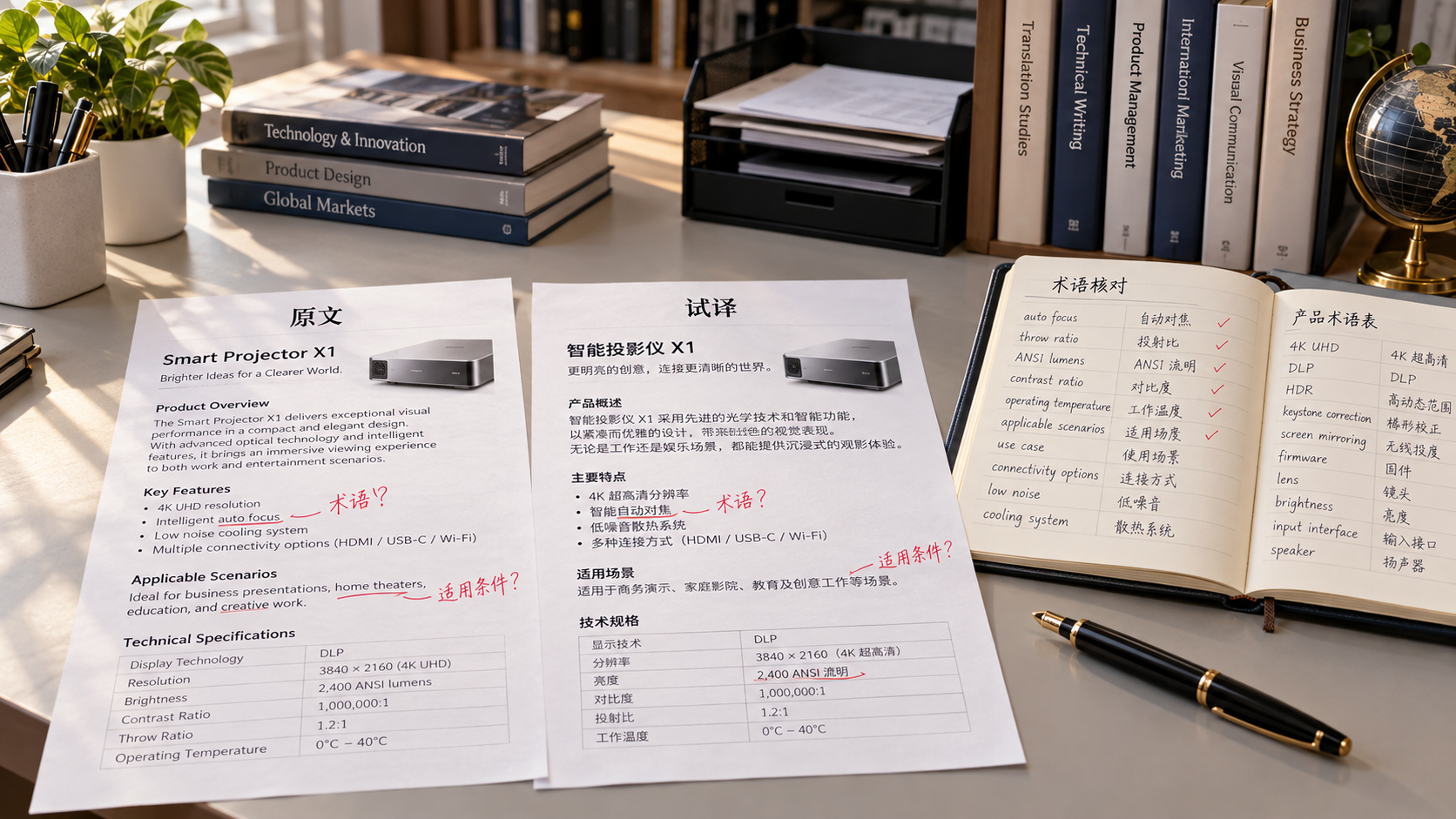
After receiving Chinese or English source materials, it is not advisable to translate them paragraph by paragraph directly. First retain factual information, such as materials, dimensions, certifications, compatibility scope, minimum order quantity, and delivery cycle; then remove promotional claims unsupported by evidence; finally, reorganize the content according to the structure of a German webpage.
A product page should generally prioritize answering: What is it? What is it suitable for? What are its key parameters? How does it differ from other models? How can it be ordered? A service page should explain implementation steps, responsibility boundaries, timelines, required materials, and deliverable results to reduce communication costs.
If a page targets German corporate buyers, there is no need to begin with a long brand story. Using one clear positioning statement to explain the product or service, followed by access to specifications, downloadable materials, certification information, and inquiry methods, often builds trust more effectively than stacking marketing slogans.
When writing, use the sequence of “conclusion first, supporting evidence afterward.” For example, first explain the operating conditions for which a piece of equipment is suitable, then explain its protection rating, temperature range, and testing conditions. This approach is both convenient for SEO crawling and consistent with how professional users seek information.
German Wording Must Be Localized; Terminology and Tone Matter Equally
The core of avoiding a literal translation tone is enabling native German speakers to read without having to “reverse-interpret” the content. Machine translation can be used for a first draft, but it cannot replace final review. Particularly in sectors such as machinery, chemicals, medical care, software, and finance, terminology errors directly undermine professional credibility.
German has many compound nouns, but longer does not necessarily mean more professional. For complex terms, use the full name with any necessary explanation on first mention, then use a simplified expression afterward. Units, dates, number formats, telephone formats, and address formats on the page should also be standardized according to local conventions.
Forms of address should be determined according to the business type. B2B websites commonly use the formal “Sie” and corresponding verb forms, with a clear and restrained tone; the more casual “du” may be considered only for younger consumer markets. Do not mix both forms of address on the same page, as this may appear insufficiently rigorous.
When referring to compliance, payment, delivery, and performance, avoid absolute wording. Use qualifying expressions such as “according to project requirements,” “under specified conditions,” and “relevant documentation can be provided.” This can reduce commitment risks while also showing customers that the company values details.
Use Evidence-Based Content to Improve Conversion After Ranking
SEO-driven visits are only the beginning. After German users enter a page, they continue to assess whether the company is genuine, whether the information is complete, and whether cooperation is controllable. Therefore, the body text should include verifiable content rather than merely increasing keyword density or lengthening the article.
Priority additions may include product data sheets, certification and testing information, production or service processes, common technical questions, delivery lead-time rules, packaging methods, and after-sales mechanisms. For complex solutions, also explain what information customers need to provide and how the company will conduct evaluation and quotation.
Case-study content should also avoid vague statements. Compared with “the customer highly recognized us,” it is more valuable to describe the customer’s industry, the constraints they faced, the solution adopted, and measurable results. Where confidential information is involved, customer names and sensitive parameters may be anonymized.
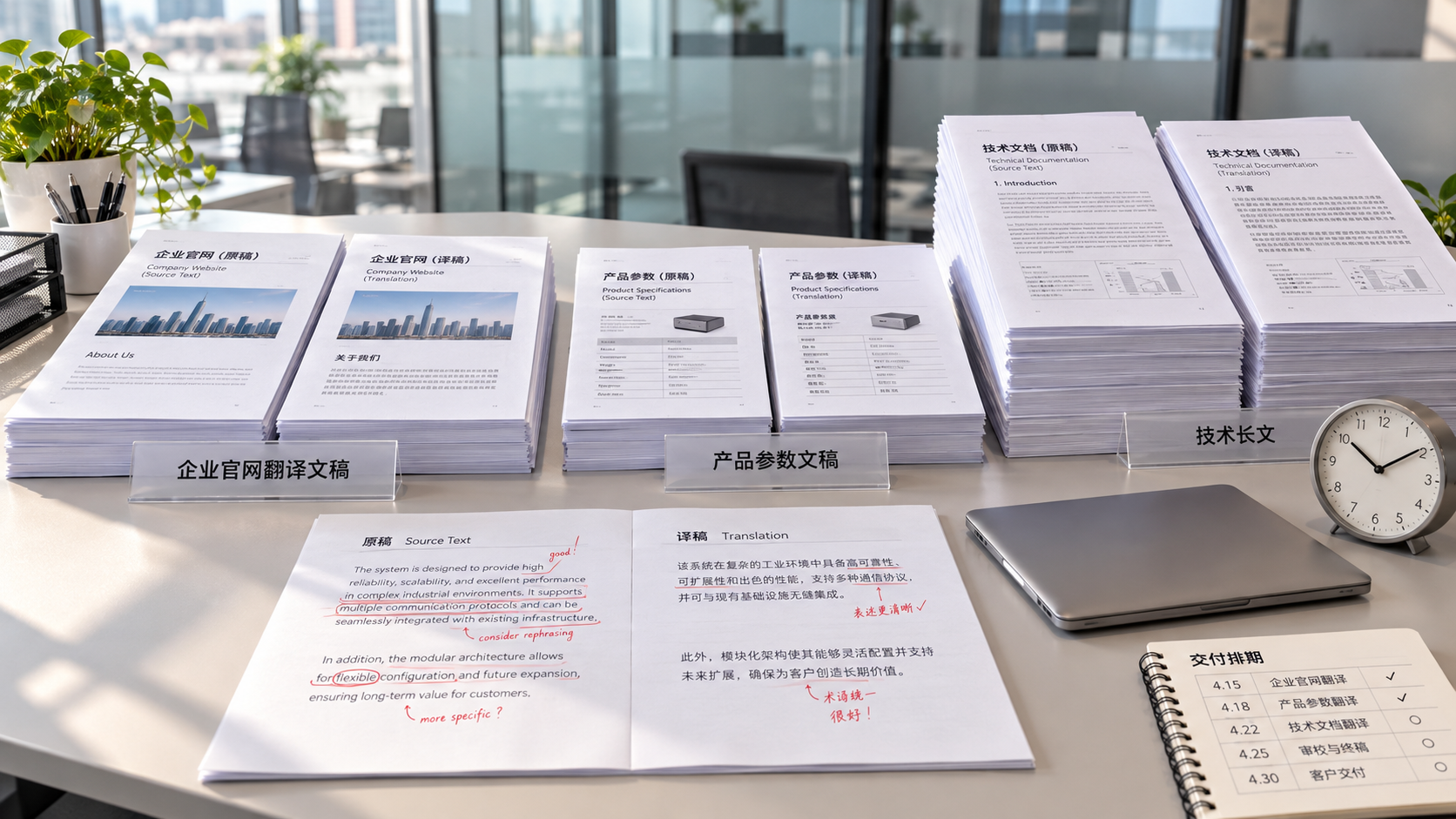
If the team is responsible for both overseas websites and marketing, content production can be incorporated into a fixed process: keyword research, material verification, German rewriting, native-speaker review, page publication, indexing monitoring, and conversion review. This makes it possible to continuously identify which terms generate effective inquiries rather than merely traffic.
Use a Checklist Before Publication to Eliminate Low-Quality Copy
Before going live, first check whether the title corresponds to a clear search intent, whether the opening paragraph explains the page’s value within seconds, and whether subheadings can be scanned quickly. If users can still understand the product, advantages, and next action by reading only the title and the first sentence of each paragraph, the page structure is basically qualified.
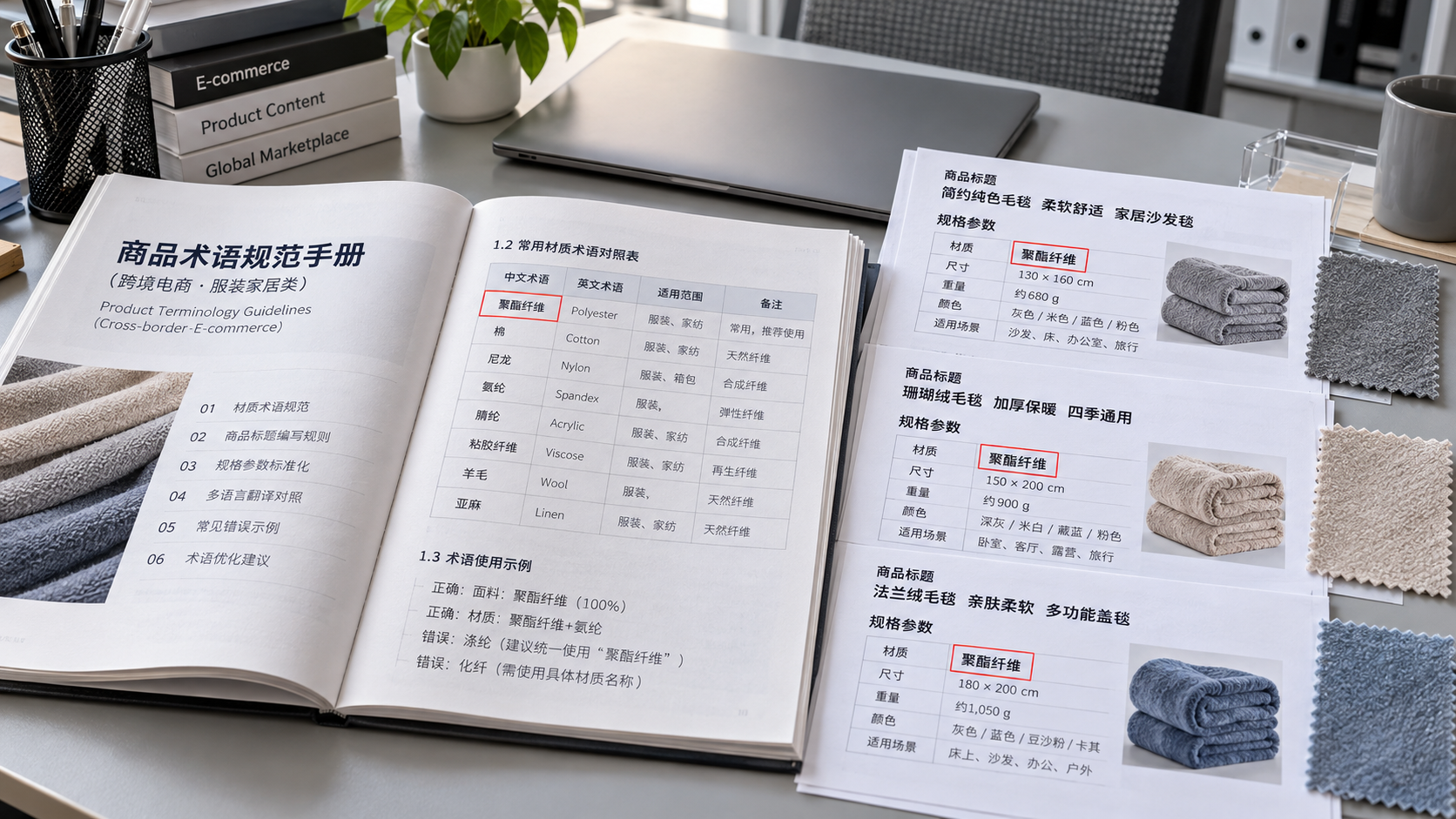
Then check whether keywords appear naturally, whether synonyms are repeated mechanically, and whether terminology is consistent with catalogs, quotations, and product materials. For multilingual websites, also confirm that the German page does not simply copy the link structure, image text, and meta description of other languages.
Finally, arrange for review by a native German speaker who understands the industry, rather than relying only on general language proofreading. The reviewer should be able to identify whether wording conforms to industry conventions, whether information is ambiguous, whether promises are excessive, and which terms more closely match the search terms users actually use.
If the team is also building cross-departmental AI collaboration capabilities, it can refer to the ideas on capability restructuring in Restructuring the Core Competencies of Corporate Finance Professionals in the AI-Driven Era: AI is suitable for improving the efficiency of material organization and first drafts, but key judgments still need to be made by people who understand both the business and the market.
Summary: Natural German Matters More Than “Sounding Translated”
The standard for high-quality German SEO copywriting is not sentence-by-sentence correspondence with the original draft, but enabling German users to quickly find answers, confirm professional capabilities, and be willing to continue contact. Keyword research determines traffic direction, localized rewriting determines readability, and evidence-based content determines trust and conversion.
For implementation personnel, the most effective improvement sequence is to first correct keywords and search intent, then rewrite the page structure, and subsequently verify terminology, tone, and factual basis. As long as copywriting is upgraded from “language conversion” to “information design for local users,” the literal translation tone will be significantly reduced.
Related Articles
Related Products
 Yiyingbao SaaS Intelligent Website Building and Marketing SystemYiyingbao SaaS Intelligent Website Building and Marketing System, AI-powered no-code website building, rapid creation of multilingual B2B international websites in 10 minutes, global server acceleration, AI-powered SEO optimization, helping businesses connect efficiently with global markets. The perfect integration of technology and operation makes building an international trade website remarkably simple
 AI+SEM Intelligent Advertising Marketing SystemAI+SEM drives intelligent ad creation, empowering full-funnel precision advertising marketing. The system automatically generates weekly/monthly reports, AI recommends keywords and target countries, monitors core metrics in real-time with intelligent alerts, and enables one-click high-conversion ad solutions to help quickly acquire customers and improve ROI.
 AI+SEO Dual-Engine System Optimization ServicesYiyingbao’s AI+SEO dual-engine optimization system helps foreign trade enterprises acquire high-quality organic traffic through AI-powered keyword research, content generation, and comprehensive technical optimization, significantly improving search rankings and conversion rates.
 AI+SNS Social Media Marketing SystemYingbao AI+SNS Social Media Marketing System - Precision social capture for the social media era. Supports one-click content synchronization across major platforms like Facebook and LinkedIn. AI intelligently rewrites posts for enhanced relevance. 24/7 AI customer service and user profiling analysis empower businesses to efficiently expand into global markets.
 AI+SEO营销解决方案易营宝AI+SEO营销解决方案,通过AI批量写作、智能生成TDK、精准关键词扩词等功能,全面优化网站SEO效果,提升流量与转化率。助力企业构建高效智能网站新生态。
 AI+SEM Advertising Marketing SolutionsAI+SEM Advertising Marketing Solution leverages AI technology to deeply empower SEM ad campaigns. It automatically generates weekly/monthly reports using AI, presenting account data across multiple dimensions for comprehensive insights into campaign performance and trends. The system precisely recommends keywords and target countries, intelligently generates high-conversion ad copy, and enables one-click activation of efficient campaign plans to help businesses rapidly acquire customers. Simultaneously, it monitors core metrics in real time, intelligently identifies abnormal fluctuations, and issues timely alerts to ensure stable, high-return advertising results.
 Domain Name ServicesEasyWin provides professional domain name services, including intelligent queries, one-stop registration, brand protection, and full lifecycle management, helping businesses build a digital brand image.
 EasyOperate B2C Cross-Border E-Commerce Platform & Independent WebsiteEasyStore B2C Cross-border E-commerce Independent Store is an intelligent website building and cross-border e-commerce integrated solution independently developed by EasyStore Information Technology (Beijing) Co., Ltd. The system is specially designed for small and medium-sized as well as large export enterprises, integrating 'website building, operation, marketing, advertising, and conversion' into one, helping enterprises quickly establish cross-border e-commerce independent stores to achieve brand globalization and global sales growth.
The platform supports multiple languages, multiple currencies, and multi-channel marketing, with built-in AI intelligent translation and SEO optimization systems, suitable for mainstream markets such as Southeast Asia, Europe and America, Latin America, and the Middle East, assisting Chinese manufacturing enterprises in efficiently deploying international e-commerce strategies. SSL证书易营宝提供专业SSL安全证书服务,包括单域名和泛域名证书,确保网站数据传输加密、身份验证和完整性保护,助力企业建立安全可信的在线业务环境。









