









- Which customer acquisition channels will be affected by cross-border marketing trends in 2026?Sep 06, 2026View details
- Which homogenization risks should be considered in an analysis of the AI-powered website building industry?Aug 30, 2026View details
- How Will AI Marketing Trends 2026 Change Advertising Budget AllocationAug 28, 2026View details
- Is the EV SSL certificate market shrinking or upgrading? How should companies assess certificate procurement?Aug 11, 2026View details
- Why the old AMP SEO 2020 practices no longer work and what has changed in current optimization prioritiesAug 02, 2026View details
- How to Choose Topics for an Industry News Section to Attract More Organic Search TrafficJul 29, 2026View details
Increasing foreign trade inquiries from 23 to 89 in 3 months—is it possible?
Can foreign trade inquiries really increase from 23 to 89 in three months? The answer is: it is possible, but not through isolated actions. It requires the coordinated improvement of website conversion capabilities, traffic structure, keyword planning, advertising, and data optimization. For most foreign trade companies, the real question is not “Can we double the number?” but “How much room is there to systematically amplify the existing traffic and conversion funnel?”
Readers searching for “Can foreign trade inquiries increase from 23 to 89 in three months?” are usually not looking for an inspirational story. They want to know whether the growth is realistic, which companies it applies to, how many resources are required, how soon results can be seen, and whether they should improve their website, invest in SEO, or launch advertising first. Only when these questions are clearly addressed does this target become meaningful to evaluate.
The conclusion first: It is possible, provided your growth foundation has no obvious weaknesses
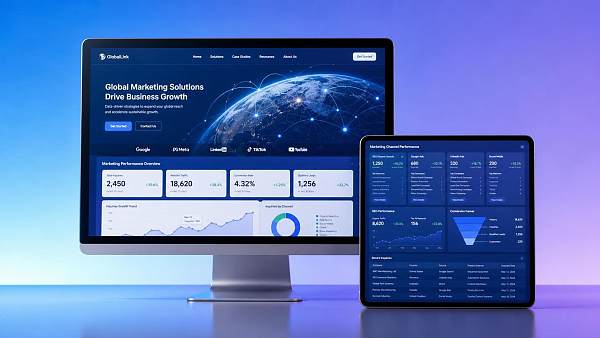
Increasing inquiries from 23 to 89 means nearly fourfold growth within three months. This figure sounds aggressive, but it is not necessarily unrealistic. For foreign trade companies with a relatively small initial customer base, low website conversion efficiency, or a single traffic source, significant short-term growth is entirely possible.
However, if a company already has a strong website foundation, good rankings for core keywords, and a consistently operating advertising account, achieving this level of growth again within a short period will be considerably more difficult. In other words, there is no universal answer applicable to every company; it depends on the current stage of growth.
Most companies receive few inquiries not because there is no market demand, but because exposure at the front end is insufficient, mid-funnel content does not match user needs, and the back-end conversion path is not smooth. As long as there are clear gaps in any of these three links, a sharp increase in inquiries within three months is not an unrealistic idea—it is a matter of execution efficiency.
What managers really care about is not “whether it is possible,” but “how it can be achieved”
When assessing whether a target is credible, business leaders generally focus on three things: whether traffic can increase, whether the conversion rate can improve, and whether the return on investment is acceptable. Looking only at the total number of inquiries is meaningless, because 89 inquiries cannot support business growth if most of them are invalid.
Truly valuable growth should be built on a complete journey in which more precise overseas visitors enter the website, are persuaded by the content, guided by the pages, and ultimately complete an inquiry action. In other words, inquiry growth should not be measured only by quantity; source structure, country distribution, product relevance, and follow-up conversion rate must also be considered.
Therefore, when evaluating whether it is possible to increase inquiries from 23 to 89 in three months, foreign trade companies should not focus only on the final number. Instead, they should first break down the path: how much traffic needs to increase, how much page conversion needs to improve, how many customer acquisition channels should be added, and which actions can genuinely produce results within 90 days. This is the more rational way to evaluate the target.
If your current situation resembles one of these types of companies, the probability of increasing inquiries within three months is higher
The first type consists of companies with a weak website foundation but competitive products. Common problems include too few website pages, shallow content, poor mobile experiences, and unreasonable form design, which prevent existing traffic from converting effectively. Once the website is restructured, inquiries often increase significantly.
The second type consists of factories or trading companies that have long relied on B2B platforms but have underdeveloped independent websites. These companies usually have some accumulated customer resources and understand industry needs, but invest very little in Google search, official brand websites, and overseas content. As a result, their growth potential is often substantial once their independent websites begin to perform.
The third type consists of companies already running Google Ads but with incomplete landing pages and conversion tracking. Much of their advertising budget is not actually wasted on acquiring traffic, but on failing to properly receive and convert visitors after they click. After optimizing page structure, inquiry access points, and data transmission, advertising inquiry efficiency can improve quickly.
The fourth type consists of companies with potential in multiple languages or markets but websites that have always displayed content in only one language. If a company targets Europe, the United States, Southeast Asia, the Middle East, or Latin America, the launch of multilingual content and localized pages can usually generate new exposure and inquiries within a relatively short period.
To increase inquiries, the first thing to examine is these four growth areas
The first is whether the website itself is “conversion-ready.” Many foreign trade websites can display products but cannot sell them. Their pages resemble electronic brochures but lack information that buyers genuinely care about, such as application scenarios, delivery capabilities, certifications, case studies, FAQs, contact details, and clear calls to action.
The second is whether the SEO strategy is built around real purchase search intent. Publishing a few industry news articles does not constitute SEO, and simply adding large numbers of product keywords will not bring customers. Effective SEO should cover product terms, application terms, question-based terms, regional terms, and solution terms to form a content matrix that can be indexed, ranked, and converted.
The third is whether advertising is sufficiently precise. A common mistake among foreign trade companies is spending the budget without conducting refined advertising around high-intent keywords, target markets, landing page content, and conversion events. Advertising is not simply about buying traffic; it uses audience, keyword groups, and page matching to bring prospective customers to the point of conversion more quickly.
The fourth is whether data operations form a closed loop. Without GA4, Search Console, advertising conversion tracking, and CRM lead attribution, a company cannot know how inquiries were generated or determine which markets, keywords, or pages deserve further investment. Without data, sustained growth is impossible.
To see results within three months, progress should be phased rather than evenly distributed
The focus of the first month is usually not blindly increasing volume, but laying the foundation. This includes organizing target markets, confirming core product terms, redesigning the website structure, completing high-conversion pages, installing analytics tools, and improving the form mechanism. This stage determines whether traffic can stay and convert after it arrives.
The second month enters the traffic acquisition stage. On the SEO side, product pages, scenario pages, blog content, and multilingual pages should be launched continuously. On the advertising side, efforts should focus on high-intent keywords, small-scale market testing, and landing page A/B optimization. The goal at this stage is to identify the combination of channels that can genuinely generate inquiries.
The third month focuses on scaling effective actions. Keywords that generate long visit durations after clicks, pages with high submission rates, and countries that produce higher-quality inquiries should receive more budget, content, and resources. Whether inquiries can increase from 23 to 89 within three months often depends on the decisiveness of execution during this stage.
Why do inquiries remain low for some companies after they have built websites and conducted promotion?
The problem is usually not whether they have done something, but whether they have done it correctly. Many companies launch websites whose pages are assembled from templates and whose content lacks industry depth, making it difficult for buyers to assess supply capabilities. Search engines may index the site and customers may visit it, but the site fails to build trust and does not encourage customers to submit inquiries.
Some companies also conduct SEO but remain at the level of regularly updating articles, without organizing content around the purchasing decision process. Buyers search not only for product names, but also for specifications, applications, pricing factors, customization capabilities, delivery times, certification requirements, and the possibility of local services. None of these types of content can be omitted.
Ineffective advertising is also common. Broad keyword selection, overly loose matching, incomplete landing page information, unclear mobile buttons, and overly long forms can all cause potentially convertible clicks to be lost. Companies may ultimately assume that overseas advertising is ineffective, when the real problem lies in the reception and optimization stages.
For foreign trade companies, the truly sustainable approach is “integrated website and marketing services”
Overseas customer acquisition is increasingly unsuitable for fragmented operations. When the website team only handles website development, the SEO team only publishes content, and the advertising team only manages the budget, the result is often disconnected data, inconsistent timing, and mismatched pages. Everyone may appear to be making an effort, but the efforts fail to create collective growth.
A more efficient approach is to advance website development, SEO, advertising, social media, and AI-based data optimization under one unified growth logic. The website handles reception and conversion, SEO generates long-term organic traffic, advertising delivers short-term targeted customer acquisition, social media provides reach and supplementary trust, and the data system continuously corrects the direction.
The value of enterprise-level AI-driven SaaS website-building and overseas marketing platforms such as 易营宝 lies in helping companies upgrade a “display-oriented website” into an overseas growth platform that can be promoted, indexed, and converted, while continuously acquiring global customers through SEO, advertising, social media, GEO, and other channels.
When deciding whether an investment is worthwhile, companies can first examine these three practical indicators
First, examine how many qualified visitors the existing website receives each month. If the website already has a certain amount of basic traffic but generates few inquiries, there is significant room for conversion optimization, and such projects often produce results relatively quickly. Second, examine whether existing inquiries rely excessively on a single platform. If so, the growth value of an independent website will be higher.
Third, examine whether the company has the basic internal capacity to cooperate, such as organizing product information, providing case studies, delivering sales feedback, and following up on leads. If the promotion side generates traffic and inquiries but internal response cannot keep up, even increasing inquiries to 89 in the short term may not convert them into actual business performance.
Therefore, increasing foreign trade inquiries from 23 to 89 within three months is not primarily about asking for the probability. It is about first determining whether the company has a foundation that can be amplified. As long as the product has market demand, the website can receive and convert traffic, channels can be tested, data can be tracked, and the team can cooperate, the target is executable.
Conclusion: Inquiry growth is not something to gamble on; it is calculated and achieved
Returning to the original question: Can foreign trade inquiries increase from 23 to 89 in three months? It is possible, but this is not a number reached by luck. It is a phased result based on systematic diagnosis, clear strategies, and efficient execution. For many foreign trade companies, the real constraint on growth is often not the market, but the lack of connection across the customer acquisition process.
If a company wants to increase overseas inquiries within a relatively short period, the priority should not be scattered attempts at various methods. Instead, it should first build a growth system capable of continuously amplifying results: use a marketing-oriented website as the foundation, SEO and advertising as the key tools, and data analysis as the basis for gradually turning traffic into qualified business opportunities.
When the website, content, channels, and operations truly work together, moving from 23 to 89 is not merely a target for discussion; it may become the starting point for the next stage of global customer acquisition growth.
Related Articles

Related Products
 Yiyingbao SaaS Intelligent Website Building and Marketing SystemYiyingbao SaaS Intelligent Website Building and Marketing System, AI-powered no-code website building, rapid creation of multilingual B2B international websites in 10 minutes, global server acceleration, AI-powered SEO optimization, helping businesses connect efficiently with global markets. The perfect integration of technology and operation makes building an international trade website remarkably simple
 AI+SEM Intelligent Advertising Marketing SystemAI+SEM drives intelligent ad creation, empowering full-funnel precision advertising marketing. The system automatically generates weekly/monthly reports, AI recommends keywords and target countries, monitors core metrics in real-time with intelligent alerts, and enables one-click high-conversion ad solutions to help quickly acquire customers and improve ROI.
 AI+SEO Dual-Engine System Optimization ServicesYiyingbao’s AI+SEO dual-engine optimization system helps foreign trade enterprises acquire high-quality organic traffic through AI-powered keyword research, content generation, and comprehensive technical optimization, significantly improving search rankings and conversion rates.
 AI+SNS Social Media Marketing SystemYingbao AI+SNS Social Media Marketing System - Precision social capture for the social media era. Supports one-click content synchronization across major platforms like Facebook and LinkedIn. AI intelligently rewrites posts for enhanced relevance. 24/7 AI customer service and user profiling analysis empower businesses to efficiently expand into global markets.
 AI+SEO营销解决方案易营宝AI+SEO营销解决方案,通过AI批量写作、智能生成TDK、精准关键词扩词等功能,全面优化网站SEO效果,提升流量与转化率。助力企业构建高效智能网站新生态。
 AI+SEM Advertising Marketing SolutionsAI+SEM Advertising Marketing Solution leverages AI technology to deeply empower SEM ad campaigns. It automatically generates weekly/monthly reports using AI, presenting account data across multiple dimensions for comprehensive insights into campaign performance and trends. The system precisely recommends keywords and target countries, intelligently generates high-conversion ad copy, and enables one-click activation of efficient campaign plans to help businesses rapidly acquire customers. Simultaneously, it monitors core metrics in real time, intelligently identifies abnormal fluctuations, and issues timely alerts to ensure stable, high-return advertising results.
 Domain Name ServicesEasyWin provides professional domain name services, including intelligent queries, one-stop registration, brand protection, and full lifecycle management, helping businesses build a digital brand image.
 EasyOperate B2C Cross-Border E-Commerce Platform & Independent WebsiteEasyStore B2C Cross-border E-commerce Independent Store is an intelligent website building and cross-border e-commerce integrated solution independently developed by EasyStore Information Technology (Beijing) Co., Ltd. The system is specially designed for small and medium-sized as well as large export enterprises, integrating 'website building, operation, marketing, advertising, and conversion' into one, helping enterprises quickly establish cross-border e-commerce independent stores to achieve brand globalization and global sales growth.
The platform supports multiple languages, multiple currencies, and multi-channel marketing, with built-in AI intelligent translation and SEO optimization systems, suitable for mainstream markets such as Southeast Asia, Europe and America, Latin America, and the Middle East, assisting Chinese manufacturing enterprises in efficiently deploying international e-commerce strategies. SSL证书易营宝提供专业SSL安全证书服务,包括单域名和泛域名证书,确保网站数据传输加密、身份验证和完整性保护,助力企业建立安全可信的在线业务环境。









