
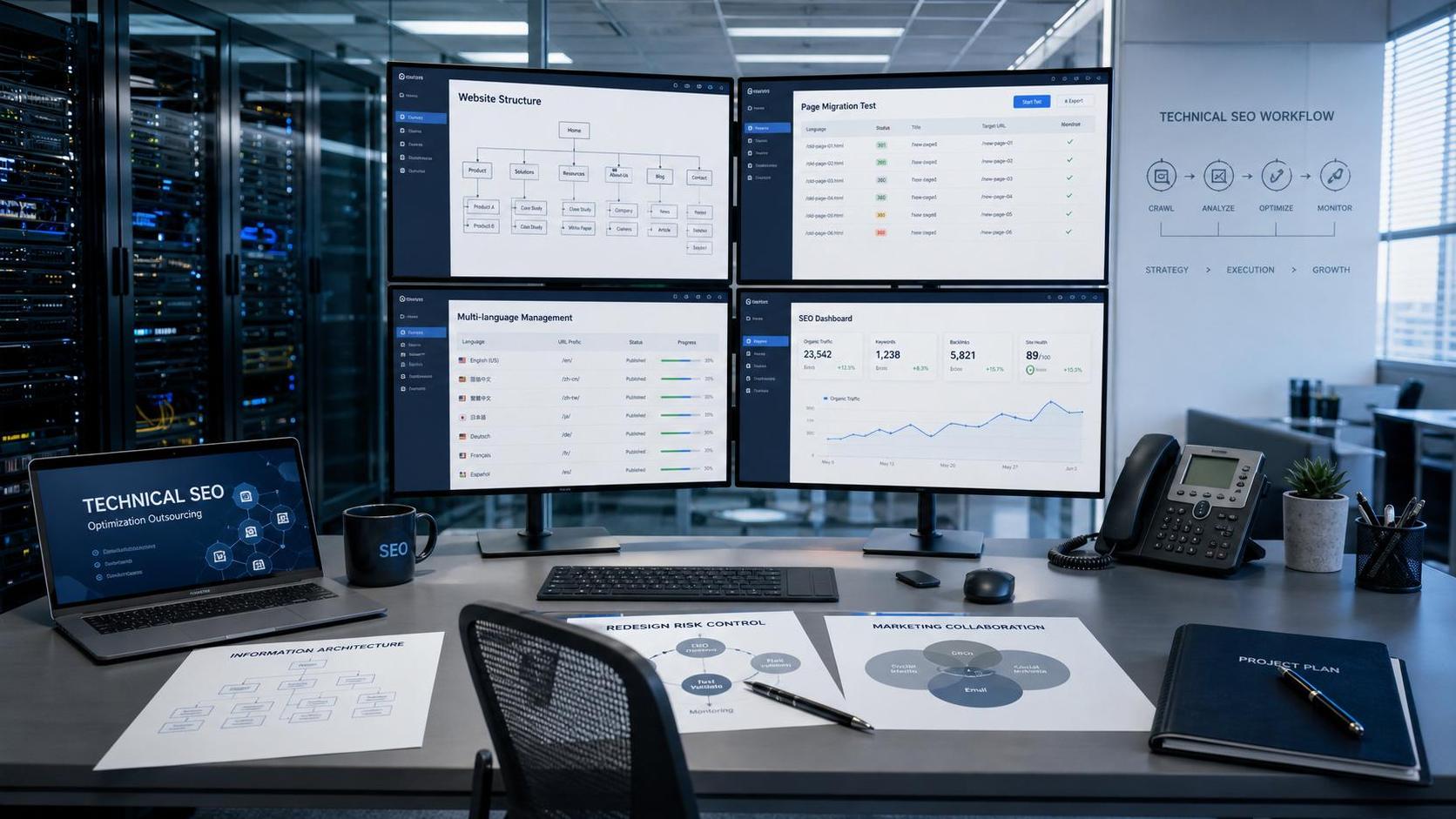
I. Definition and Business Scope of Technical SEO Optimization
Technical SEO optimization involves the systematic management of website architecture, server responses, page code, link relationships, and indexing signals to help search engines crawl websites reliably, parse them correctly, and select appropriate pages for inclusion in their indexes. It serves content and conversion objectives rather than merely pursuing technical metrics.
For B2B foreign trade websites, technical issues are often hidden in product filtering pages, specification pages, multilingual pages, and inquiry landing pages. If there are too many duplicate pages, broken links, or redirect chains, even high-quality product content may struggle to achieve sustained visibility.
The complete scope of work typically includes crawlability, indexability, site hierarchy, mobile compatibility, page experience, structured data, security protocols, as well as log and data monitoring. Each measure should correspond to specific business pages and target markets.
II. Technical Principles of Crawling, Rendering, and Indexing
Search engines generally discover URLs through internal links, sitemaps, and external links, then request the server, parse the code, and process the rendered results. Frequent server errors, slow responses, or blocked resources directly reduce effective crawling efficiency.
Successful crawling does not mean a page will enter the index. Search engines assess the main page content, level of duplication, canonical URL, language versions, and internal link signals before deciding whether to retain the page and which URL to use as its representative page.
Technical SEO optimization should first ensure that important pages return normal status codes, then address the consistency of canonical tags, redirects, and indexing directives. Product details, industry solutions, and inquiry pages should have clear navigation entry points to avoid becoming orphan pages.
III. Main Issue Categories and Diagnostic Priorities
The first category is accessibility issues, including server errors, certificate issues, incorrect redirects, failed mobile resource loading, and blocked critical scripts. These affect site-wide usability and should be addressed before fine-tuning page titles or copy.
The second category is index quality issues, including duplicate parameter pages, improper pagination handling, deleted pages that are still referenced, indexed test environments, and conflicts between canonical tags and sitemaps. Such issues disperse crawl resources and page signals.
The third category involves architecture and experience issues, such as excessively deep product categorization, vague internal-link anchor text, oversized images, and core content dependent on script output. During diagnosis, issues should be prioritized according to the number of affected pages, commercial value, and repair cost, with an issue list and retesting records established.
IV. Multilingual Site Architecture and Market Adaptation
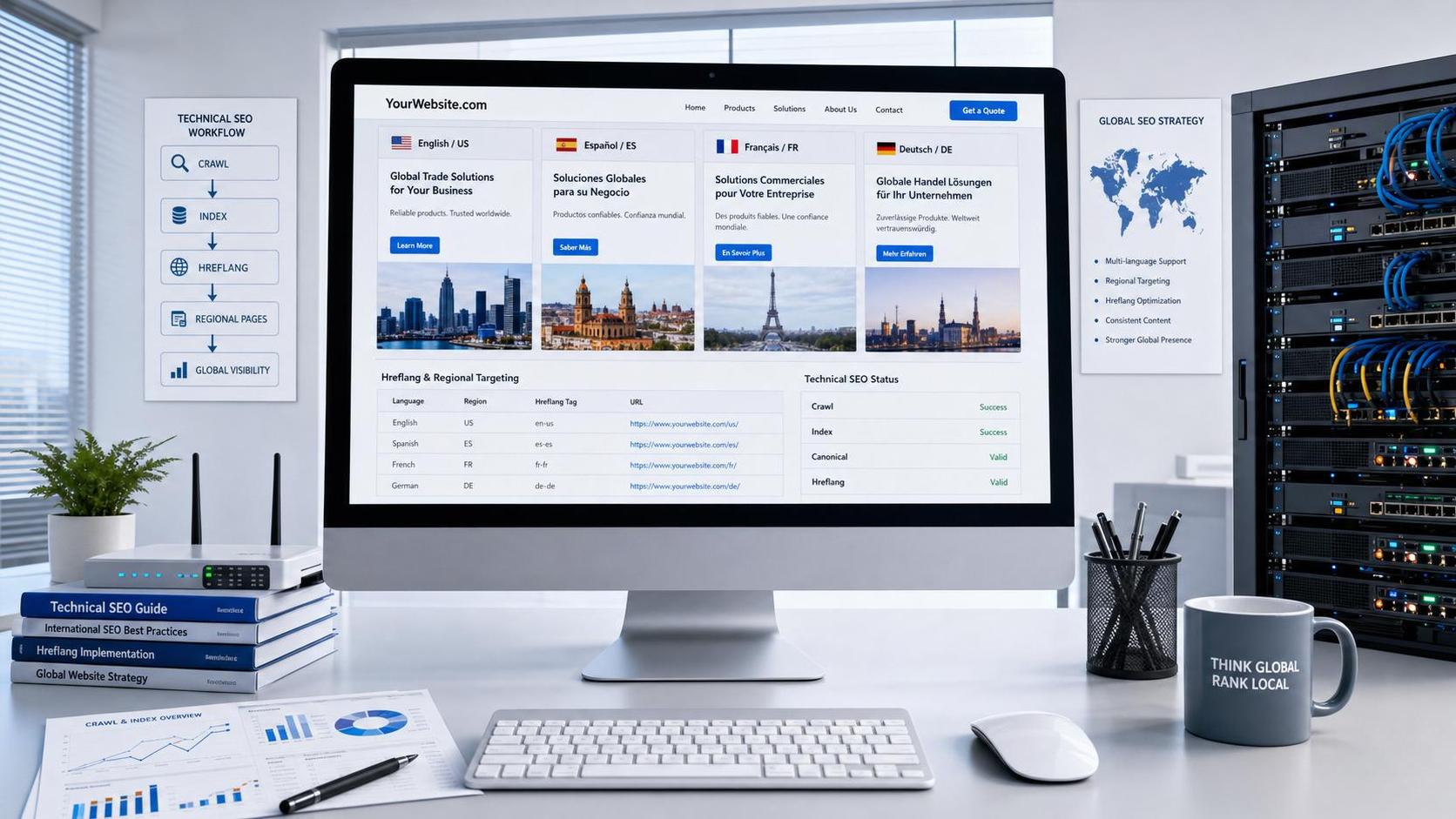
The key to multilingual technical SEO optimization is not mechanical translation, but ensuring that every language and regional version has recognizable URLs, accurate page languages, and corresponding relationships with one another. Language switching should be understandable to both users and search engines, avoiding access barriers caused by automatic redirects.
Companies may choose directory, subdomain, or country-code domain solutions based on market scale and maintenance capacity, but must maintain consistency within the same site. Language tags pointing to one another should be configured for major versions, and sitemaps should cover the official pages that can be indexed.
Yiyingbao's multilingual website-building and AI translation capabilities are suitable for export enterprises that need to maintain product pages, article pages, and company pages simultaneously. Before launch, terminology, units of measurement, contact details, and market restriction information should still be manually verified to ensure localized content can support purchasing decisions.
V. Platform Selection, Implementation Process, and Quality Control
When selecting technical SEO optimization services or website-building platforms, the focus should be on whether they support custom titles and descriptions, canonical tags, redirects, sitemaps, index control, language tags, image optimization, and data integration, rather than merely comparing the number of templates or launch speed.
Implementation can be divided into seven steps: requirements assessment, URL rule design, template and component configuration, content migration, pre-launch crawl testing, official launch, and continuous monitoring. When an old website migration is involved, high-value URLs should be mapped page by page, and a traceable redirect table should be retained.
Yiyingbao provides responsive website building, global node deployment, content management, and SEO operations capabilities, enabling website building and subsequent promotion to be managed within the same workflow. Its materials indicate that the platform supports multi-cloud nodes and mobile compatibility; purchasers should still conduct actual speed and functionality acceptance testing in target countries.
VI. Applicable Scenarios, Maintenance Cycles, and Development Trends
Technical SEO optimization is particularly suitable for manufacturing companies with numerous product models, multiple languages, and frequent updates, as well as globalizing brands that rely on organic search, advertising, and social media to acquire customers. Industries such as laser equipment, steel, chemicals, machinery, new energy, and medical products generally require clearer architectures for specifications and solutions.
Yiyingbao's service cases cover fields such as machinery, automobiles, agriculture, and furniture, and it has served enterprises including Haier, Shandong Airlines, and Little Duck Group. Implementation priorities vary among companies, and plans should be developed based on the current URL scale, market languages, content assets, and inquiry process.
It is recommended to check crawl anomalies, indexing changes, speed, and broken links monthly; review architecture, internal links, and multilingual versions quarterly; and conduct comprehensive crawl testing before major revisions. In the future, entity information, Q&A content, and structured expression for generative search will become important additions to technical governance.
VII. Total Cost of Ownership and Return on Investment Assessment
The total cost of ownership for technical SEO optimization consists of platform subscription or development costs, servers and acceleration resources, content migration, multilingual maintenance, issue resolution, data tools, and ongoing operations. If a low-cost launch lacks migration planning, subsequent remediation costs are often higher than the investment in initial design.
When evaluating returns, attention should be paid to effectively indexed pages, organic traffic from target countries, time spent on product pages, and inquiry conversion, rather than only the number of keywords. For high-ticket industrial products, return on investment can be calculated in combination with the value of each qualified inquiry, sales cycle, and advertising replacement traffic.
Before procurement, the service provider may be required to clearly define delivery boundaries, issue priorities, acceptance criteria, response time limits, and data ownership. Only through coordinated management of technical fixes, content development, advertising landing pages, and conversion tracking can a website gradually evolve from a display asset into a sustainable overseas customer acquisition channel.
 What should technical SEO optimization for the U.S. market focus on?A breakdown from indexing、speed to content structureTechnical SEO optimization for the U.S. market should first assess whether indexing、crawling、speed and content structure meet standards。This article breaks down common technical issues and optimization priorities for U.S. websites,helping enterprises improve indexing efficiency、ranking fundamentals and conversion performance。
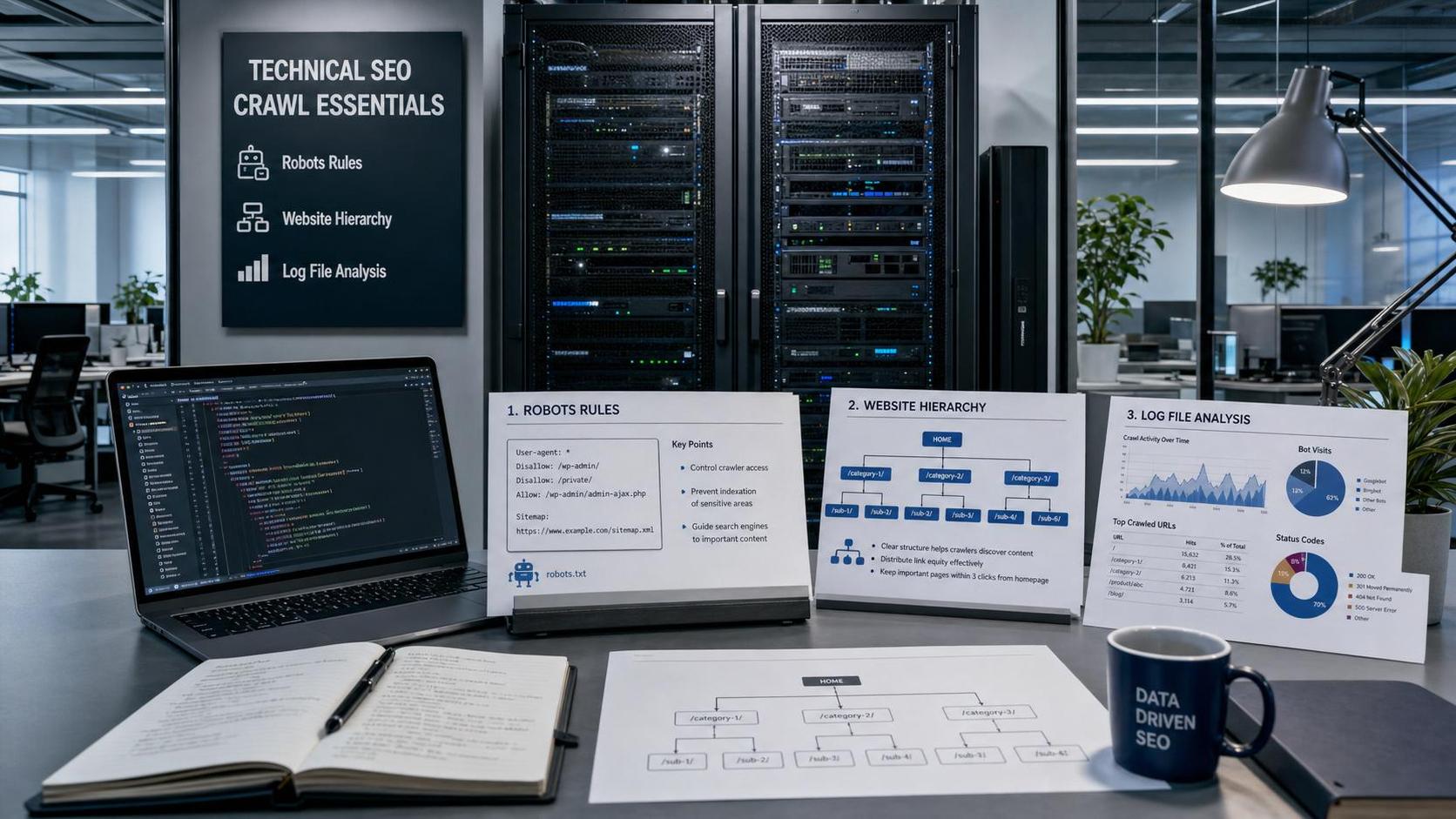
 How to optimize SEO for web crawling? The troubleshooting order from robots.txt to log analysis.How to optimize SEO and crawl your site? This article, following the order of robots.txt, site structure, status codes, page rendering, and log analysis, will help you quickly identify bottlenecks in indexing and crawling, and improve your independent website's exposure, indexing efficiency, and conversion performance.
 Which companies are suitable for outsourcing technical SEO optimization? A comprehensive guide from redesign risks to team configuration.Which companies are suitable for outsourcing technical SEO optimization? If you are facing website redesign, traffic fluctuations, expansion of multilingual sites, or insufficient team configuration, this article will help you quickly determine whether you should intervene immediately, from risk control and team supplementation to service selection.
 Which mobile optimization tasks should be prioritized first in technical SEO?Which mobile optimization tasks should be prioritized first in technical SEO? This article outlines the high-priority execution sequence, covering responsive design, Core Web Vitals, crawling and rendering, resource scheduling, and conversion optimization, helping businesses improve website indexing, rankings, and inquiry generation more quickly.
 Which companies are suitable for online marketing outsourcing, and when should they get started?Which companies are suitable for online marketing outsourcing, and at what stage should they get started? This article examines the timing for outsourcing, key decision signals, and integrated website marketing solutions across the overseas expansion launch, channel expansion, and cost pressure stages, helping companies generate overseas leads more quickly.
 Should foreign trade companies build their own digital marketing teams? Where is the cost tipping point?Should foreign trade companies build their own digital marketing teams? The key is not only the outsourcing cost, but whether they have the capacity for ongoing content production, channel optimization, and lead conversion. This article breaks down the cost tipping point, hidden investments, and hybrid staffing options for building an in-house team, helping companies improve overseas customer acquisition efficiency more reliably.