- Le calendrier tarifaire sino-américain a suscité un consensus positif, et le Conseil de commerce sera établiJun 15, 2026Voir les détails
- Quels facteurs déterminent le coût de développement d’une boutique e-commerce B2C transfrontalière ? Analyse des fonctionnalités, des interfaces et des méthodes de déploiementJun 17, 2026Voir les détails
- Non-tarifaire à la frontière sino-marocaine, importation marocaine de marchandises chinoises, baisse des coûts à explorerJun 11, 2026Voir les détails
- Quel signal opérationnel la suspension des exportations vers le Japon libère-t-elleJun 10, 2026Voir les détails
- Les importations chinoises de GNL ont rebondi en mai, les importations supplémentaires de la Russie et du Canada comblent le déficit au Moyen-OrientJun 10, 2026Voir les détails
- GEO va-t-il modifier sa stratégie SEO ?Jun 04, 2026Voir les détails
Le site mobile Google AMP est-il encore nécessaire ?
Google AMP site mobile, currently transitioning from "default option" to "scenario-based judgment"

Is a Google AMP mobile site still necessary? In recent years, it is clearly no longer a one-size-fits-all answer. In the early days, when mobile loading was slow, AMP did help many websites get an edge first. Today, with mobile networks, front-end frameworks, server architectures, and browser performance all improving, the question for Google AMP mobile sites has shifted from "whether to follow" to "whether the investment is worthwhile".
What is even more worth noting is that the way search engines evaluate page experience is also changing. In the past, AMP was like a shortcut to enter the mobile search scenario more quickly. Now, the relationship among search rankings, indexation efficiency, content quality, interaction completeness, and conversion capability has become much closer. For websites and marketing service integrated businesses that emphasize overseas customer acquisition, Google AMP mobile sites are no longer just a technical decision, but part of the growth strategy.
This is also why more and more companies, when rebuilding independent sites, no longer ask first whether AMP can be implemented, but instead evaluate whether their mobile business goals are aligned first. If the goal is news distribution, content fast browsing, and lightweight access, AMP still has discussion value; if the goal is lead inquiries, form submissions, complex product displays, and multilingual conversion, the judgment criteria are completely different.
Recent changes are mainly not about the disappearance of technology, but about the shift in priority
From recent overseas website building and SEO execution, the declining popularity of Google AMP mobile sites does not mean that it has completely become invalid, but rather that its unique advantages have been compressed. Especially in corporate websites, B2B marketing sites, cross-border e-commerce stores, and brand independent sites, AMP is no longer naturally equal to better SEO results.
There are several very realistic changes behind this. First, Google places greater emphasis on overall page experience, rather than whether a specific framework is used. Second, modern responsive website development, image compression, caching strategies, and deferred script loading can already allow ordinary mobile pages to achieve quite good speed. Third, as companies increasingly value conversion paths, overly simplified pages may instead weaken marketing capability.
- Content pages value first-screen loading speed more, but business sites value dwell time, interaction, and submission more.
- Technical teams care more about maintenance cost, and running AMP and the main site in parallel is not easy.
- Marketing teams care more about data integrity, and tracking touchpoints and attribution accuracy have become more critical.
- Brand teams care more about experience consistency and do not want mobile pages to be overly constrained.
Therefore, the discussion of Google AMP mobile sites has already expanded from "whether it can improve rankings" to "whether it will affect the business closed loop". Such changes are especially important for companies that rely on global traffic growth, because mobile access is only the starting point; the real goal is still customer acquisition efficiency and the accumulation of brand assets.
Why are more and more websites shifting their focus to mobile experience optimization, rather than simply adopting AMP
If we look at the issue over a longer time horizon, Google AMP mobile sites once solved the problem of "being a bit faster", while what companies care more about now is "whether it can still convert after being fast". This difference determines AMP's value in different stages.
What is more common in actual implementation is that companies can already achieve access experiences close to or even better than some AMP pages through high-performance responsive websites, streamlined code structures, CDN acceleration, and content distribution strategies. The advantage of this approach is that one site can balance SEO, ad landing pages, and multilingual operations without repeatedly coordinating across multiple versions.
For platforms like Yiyingbao, which are AI-driven intelligent website building and overseas marketing service platforms, the core focus in recent years has also shifted more toward overall performance optimization, content indexability, multi-channel promotion adaptation, and conversion path connectivity, rather than highlighting a single technical label. For enterprises, this approach is closer to real growth needs.
The impact is not limited to the SEO layer; conversion design is also affected
Many articles discussing Google AMP mobile sites only stay at the search ranking level, which is actually not enough. What truly affects decisions is often AMP's chain reaction on business processes. If a page becomes faster, but forms, jumps, tracking, content display, and remarketing become constrained, the overall returns may not necessarily be higher.
This is especially true for foreign trade websites, brand independent sites, and lead-generation websites, where mobile users do not just leave after reading, but continue to browse case studies, product pages, certification information, and contact methods. If Google AMP mobile sites over-simplify page elements, it may reduce interference, but it may also weaken trust-building.
In different scenarios, the judgment methods vary greatly
- Information content sites: if the core goal is readership and distribution efficiency, AMP value can still be evaluated.
- B2B marketing sites: product display depth, form conversion, and multilingual performance should be prioritized.
- Cross-border e-commerce stores: payment, recommendation, promotions, and data tracking need to be balanced, making AMP adaptation more difficult.
- Ad landing pages: the focus is not only speed, but also A/B testing, attribution, and page iteration.
This is also why many companies have begun to reassess Google AMP mobile sites within their business context. The technical solution itself is neither absolutely right nor wrong; the key is whether it can serve the current customer acquisition goals, rather than merely satisfying a stage-specific SEO imagination.
Before deciding whether to use AMP, first look at these more realistic judgment signals
If you are still evaluating whether Google AMP mobile sites are worth continued investment, you can start with several core signals instead of making a direct judgment based on experience.
- Whether the current mobile loading speed truly has a clear bottleneck, or whether it is only a historical impression.
- In organic search traffic, what tasks content pages and business pages respectively承担.
- Whether the site relies on complex interactions, tracking touchpoints, marketing automation, and multilingual switching.
- Whether the team has the capability to maintain AMP versions and main site content synchronization over the long term.
- After mobile traffic improves, whether inquiry rate, conversion rate, and lead quality improve simultaneously.
From an operational perspective, this is somewhat similar to the refined investment logic discussed in inventory management. Resources should not only be invested in seemingly advanced links, but should be directed to positions with more certain returns. The expanded reading mentioned in application strategies of lean cost concepts in enterprise inventory management is essentially also a reminder to enterprises to use fewer ineffective inputs in exchange for higher operational efficiency. This way of thinking is equally applicable to website technology decisions.
A more feasible direction for the future is to incorporate Google AMP mobile sites into the overall growth framework
For many websites that are currently laying out overseas markets, compared with discussing Google AMP mobile sites alone, it is still more necessary to build a complete mobile growth framework. This framework should at least answer four questions at the same time: whether the page is fast, whether the content can be indexed, whether it can convert after access, and whether it can continue to be optimized.
On this point, the value of website and marketing service integration becomes increasingly obvious. The website system determines the underlying performance, SEO strategy determines indexation and visibility, advertising and social media determine the traffic structure, and AI and data capabilities help the team identify page issues and user intent more quickly. AMP is only an optional component, not the growth framework itself.
For enterprises with multilingual official websites, cross-border e-commerce stores, ad landing pages, and content matrices, priority usually lies in a unified technical architecture, improving core mobile experience, shortening page loading paths, enhancing structured content expression, and improving dual visibility in AI search and traditional search. Such investment is often more sustainable than building Google AMP mobile sites separately.
If the current mobile performance of the website is relatively weak, you can first conduct a layered evaluation: break down news pages, product pages, case pages, and landing pages, and then decide which pages are suitable for extreme lightweighting and which pages must retain complete conversion components. The conclusion is usually not a one-size-fits-all "do everything" or "do nothing", but a combination strategy more aligned with business stages.
In the end, Google AMP mobile sites still have value today, but they are more suitable as an optimization option under specific scenarios, rather than a standard configuration that all mobile sites must have. What is more worth doing next is to sort out the real traffic sources, check the mobile conversion path, compare the actual returns of AMP and non-AMP pages, and then establish a phased optimization plan. Doing so will make judgments more stable and investment closer to results.
- Yiyingbao
- Site officiel d’entreprise
- SEO
- Marketing à l'international
- Site web indépendant
- Site de marque indépendante
- Site web intelligent
- Création de sites web responsive
- Site web réactif
- Automatisation marketing
- Marketing B2B
- Boutique en ligne transfrontalière
- Site mobile Google AMP
- Pages d’atterrissage publicitaires
- Site officiel multilingue
Articles connexes
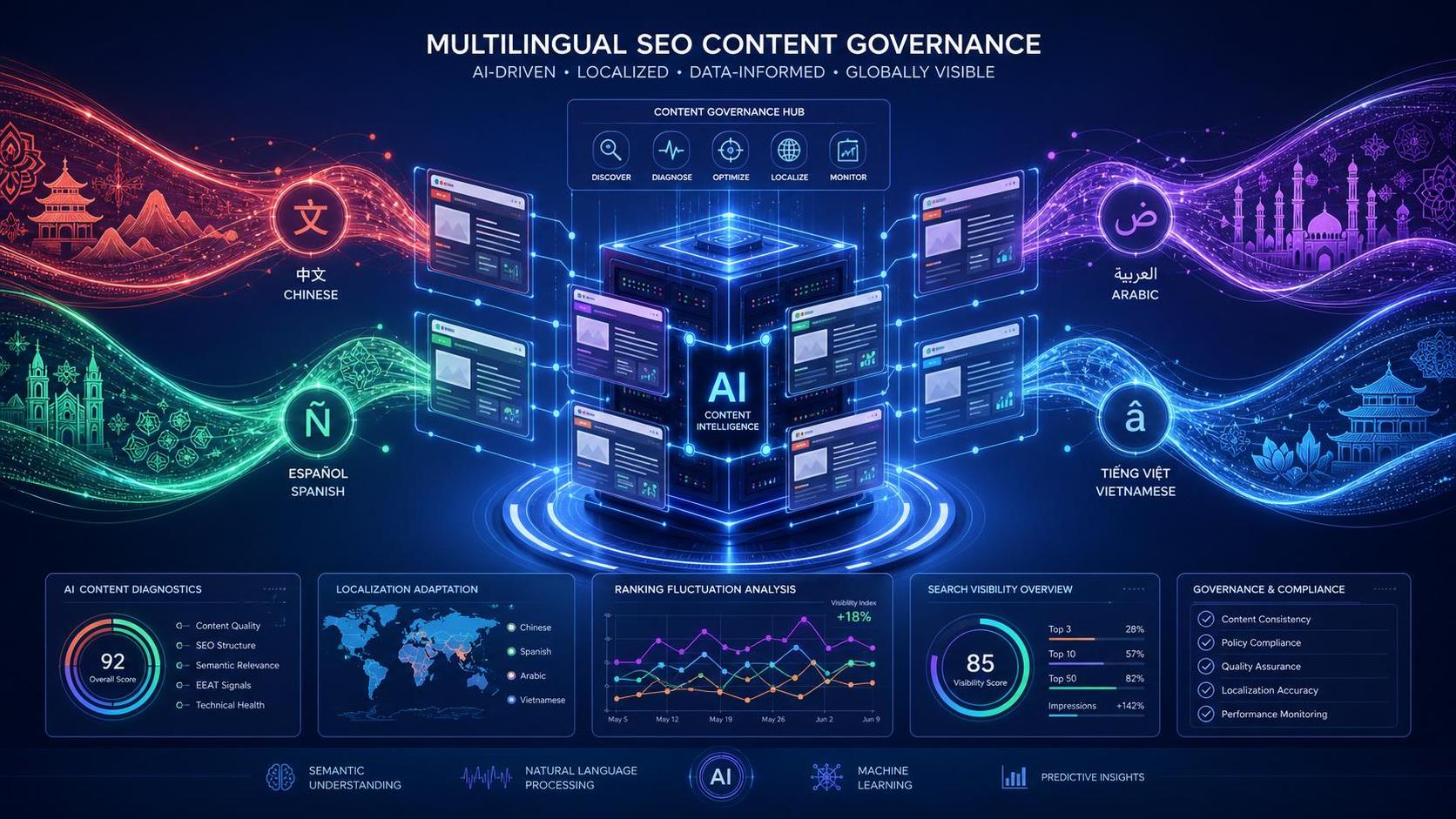
 Google Search Console ajoute un diagnostic de contenu IA, dynamisant la visibilité SEO multilingue
 Mécanisme d’investissement commercial Chine-Europe centrale et orientale, les services numériques attirent l’attention
 Google AMP vaut-il encore la peine d’être créé ? Selon le trafic obtenu et les coûts de maintenance


Produits connexes
 EasyCamp SaaS Système intelligent de création de sites Web et de marketingSystème intelligent de marketing web E-Yingbao SaaS : création de sites web sans code, basée sur l'IA. Créez rapidement des sites e-commerce multilingues indépendants en seulement 10 minutes. L'accélération mondiale des serveurs et l'optimisation SEO basée sur l'IA permettent aux entreprises de se connecter efficacement aux marchés mondiaux. La fusion harmonieuse entre technologie et convivialité rend la création d'une présence e-commerce internationale remarquablement simple.
 Service d'optimisation du système double moteur AI+SEOLe système d'optimisation double moteur AI+SEO d'YiYingBao, grâce à l'exploitation intelligente de mots-clés par l'IA, la génération de contenu et une optimisation technique complète, aide les entreprises de commerce extérieur à obtenir un trafic naturel de haute qualité, améliorant considérablement le classement des recherches et le taux de conversion.
 Système de marketing publicitaire intelligent AI+SEMAI+SEM propulse une création publicitaire intelligente, permettant un marketing publicitaire précis sur toute la chaîne. Le système génère automatiquement des rapports hebdomadaires/mensuels, l'IA recommande des mots-clés et des pays de diffusion, surveille en temps réel les indicateurs clés et fournit des alertes intelligentes, lance en un clic des solutions de diffusion à haut taux de conversion, aidant à acquérir rapidement des clients et à améliorer le ROI.
 Système de marketing sur les réseaux sociaux AI+SNSSystème de marketing intelligent Yingyingbao AI+SNS pour les réseaux sociaux - Capture sociale précise pour l'ère des réseaux sociaux. Prend en charge la synchronisation du contenu en un clic sur les principales plateformes, notamment Facebook et LinkedIn. La réécriture des publications alimentée par l'IA améliore la localisation. Un service client intelligent disponible 24 h/24, 7 j/7 et l'analyse du profil des utilisateurs permettent aux entreprises de se développer efficacement sur les marchés mondiaux.
 Solutions marketing publicitaire IA+SEMLes solutions publicitaires SEM basées sur l'IA exploitent l'intelligence artificielle pour améliorer considérablement la gestion des campagnes SEM. Grâce à l'IA, elles génèrent des rapports hebdomadaires et mensuels qui présentent les données des comptes sous plusieurs angles, permettant ainsi une supervision complète des performances et des tendances publicitaires. L'IA fournit des recommandations précises sur les mots-clés et les pays cibles, rédige de manière intelligente des textes publicitaires à fort taux de conversion et lance des campagnes efficaces en un seul clic, accélérant ainsi l'acquisition de clients pour les entreprises. Parallèlement, le système surveille les indicateurs clés en temps réel, identifie intelligemment les fluctuations anormales et émet des alertes en temps opportun, garantissant ainsi des performances publicitaires stables et des rendements élevés.
 AI+SEO营销解决方案易营宝AI+SEO营销解决方案,通过AI批量写作、智能生成TDK、精准关键词扩词等功能,全面优化网站SEO效果,提升流量与转化率。助力企业构建高效智能网站新生态。
 Services de noms de domaineEasy Marketing propose des services professionnels de noms de domaine, comprenant la recherche intelligente, l'enregistrement en un clic, la protection de marque et la gestion complète du cycle de vie, aidant les entreprises à construire une image de marque numérique.
 EasySell B2C Place de Marché Transfrontalière, Site Indépendant易营宝B2C跨境商城独立站是由易营宝信息科技(北京)有限公司自主研发的智能建站与跨境电商一体化解决方案。系统专为中小型及大型出口企业打造,集“建站、运营、营销、投放、转化”于一体,帮助企业快速打造跨境电商独立站,实现品牌出海与全球销售增长。
平台支持多语言、多币种、多渠道营销,内置AI智能翻译与SEO优化系统,适配东南亚、欧美、拉美、中东等主流市场,助力中国制造企业高效布局国际电商版图。 B2B2C双模式独立站解决方案易营宝推出的B2B2C双模式独立站解决方案,专为同时开展批发与零售业务的企业打造。平台支持商品价格展示、商品多规格管理、购物车与购物车弹窗、购物车总价计算,以及统一批量询价等功能,帮助企业以更高效、更直观的方式触达B端与C端客户。通过云建站、大数据分析与广告智能投放体系,助力企业打破渠道壁垒,实现国内外市场拓展与品牌价值提升。