- Estados Unidos y China han alcanzado un consenso positivo sobre los aranceles; la reunión comercial se establecerá15-06-2026Ver detalles
- ¿Qué determina el costo de desarrollo de una tienda B2C transfronteriza? Desglose de funciones, interfaces e implementación17-06-2026Ver detalles
- El arancel cero entre China y Marruecos impulsa las exportaciones chinas a Marruecos, con una caída en los costos.11-06-2026Ver detalles
- ¿Qué señal de ejecución libera la suspensión de las exportaciones a Japón?10-06-2026Ver detalles
- Las importaciones de GNL de China repuntaron en mayo, y el aumento marginal de Rusia y Canadá compensó el déficit de Oriente Medio.10-06-2026Ver detalles
- GEO cambiará la estrategia SEO04-06-2026Ver detalles
¿Cómo hacer la distribución de palabras clave de Google? Guía detallada sobre la estrategia de asignación para páginas de categoría, páginas de producto y páginas de blog
Don't rush to place keywords first, Google keyword layout should first look at the task the page needs to accomplish
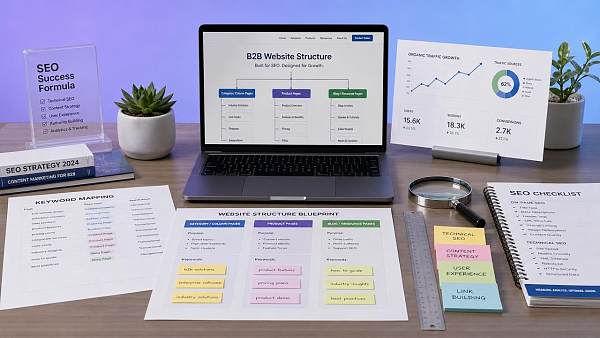
Doing Google keyword layout well usually leads to steadier traffic growth and is also more likely to convert. The problem is that many websites pile all high-search-volume keywords onto the homepage, while category pages, product pages, and blog pages end up competing with each other for keywords, resulting in slow indexing and unstable rankings.
In practical applications, the search intent addressed by different pages is not the same. Category pages are more suitable for carrying topic-level needs, product pages should solve specific transaction questions, and blog pages are responsible for explaining questions, covering long-tail terms, and building topical relevance. This is also why Google keyword layout cannot be handled with a one-size-fits-all template.
For websites that acquire customers overseas, especially multilingual official websites, B2B marketing websites, and cross-border independent sites, page structure often directly affects the efficiency of subsequent SEO expansion. When 易营宝 connects intelligent website building, SEO optimization, and AI content systems, it usually first breaks down the keyword database according to page responsibilities rather than looking only at the search volume of individual keywords.
Category pages are more like a topic entry point; the key is not keyword quantity, but whether the keyword group forms a system
Category pages are commonly found in product category pages, solution pages, and industry application pages. Their task is not to close the final sale, but to let Google understand what this section is talking about and organize the relevant content. Therefore, when Google keyword layout reaches category pages, the core is not stuffing keywords, but establishing clear topic boundaries.
The more common method is to first determine one main keyword, then build layers around related keywords, application keywords, and region modifiers. For example, when facing foreign trade website building services, the category page can expand around topic keywords such as “Google SEO optimization”, “multilingual website development”, and “B2B foreign trade marketing website”, but do not mix words with clearly different intents such as “quote”, “case study”, and “tutorial” on the same page.
- Main keywords are responsible for defining the page topic and are usually placed in the title, opening paragraph, and core modules.
- Synonyms are responsible for expanding relevance and are suitable for use in subtitles and explanatory sections.
- Application scenario keywords are responsible for capturing segmented searches, such as industry, region, and language version.
- Decision keywords should not be too many, otherwise the category page will overlap semantically with the product page.
If this layer is done well, the product pages and blog pages behind it are more likely to receive internal link support. If the category page itself has a messy topic, the entire site's Google keyword layout will suffer from dispersed resources.
Keyword allocation for product pages should revolve around real pre-conversion judgments
The most common mistake product pages make is copying the main keywords from the category page. This may seem like it strengthens Google keyword layout, but in reality it causes intranet competition. Product pages are more suitable for carrying words that are “more specific and closer to conversion”, such as model terms, service combination terms, price-related terms, delivery cycle terms, and region terms.
If the page corresponds to services such as website building, SEO, and advertising placement, the product page content cannot just describe functions. It needs to clearly state the scope of delivery, suitable audience, launch cycle, content support, data tracking, and other information. Because when searchers reach this stage, their focus has already shifted from “what is this” to “is it suitable for my current business”.
Some sites also stuff unrelated content into product pages, such as policy interpretations or cross-industry materials. Content like applications and optimization of management accounting in business unit financial management, if it appears in a knowledge section or themed content area, can be used as an example of information architecture extension; but if it is directly forced into a core service page, it often weakens the page's topical focus.
Blog pages are not for filling word count, but for carrying long-tail needs and early-stage search judgments
Many websites treat blogs as content repositories, resulting in a lot of articles but little effective traffic. The reason is usually not insufficient posting, but that Google keyword layout has not clearly designed the relationship between the blog page and the business page.
Blog pages are best for covering three types of terms: question terms, such as “how to do Google keyword layout”; comparison terms, such as “how category pages and product pages allocate keywords”; and scenario terms, such as “how to plan a multilingual website SEO word database”. These words do not necessarily need to convert immediately, but they can keep topic authority continuously flowing to more core pages.
If the website service covers multiple markets such as North America, Europe, and Southeast Asia, blog pages can also take on the task of localized expression. For example, when discussing Google keyword layout, North American sites pay more attention to clear commercial intent, while Japanese and Korean regions pay more attention to page structure and local expression accuracy. Blog content that explains these differences clearly is more valuable than simply piling up words.
Why keyword allocation logic changes under different scenarios
When doing a B2B inquiry website, the decision cycle is long, so Google keyword layout usually needs category pages and blog pages to build trust first, and then send traffic to solution pages or inquiry pages. Here, more emphasis is placed on the coordination of professional terms, industry terms, and explanatory question terms.
When doing a B2C independent site, the conversion path is shorter, and the importance of product pages and collection pages increases significantly. Keyword allocation will be more closely related to category terms, purchase terms, review terms, and comparison terms, while blog pages more often serve as guidance and content seeding.
If it is a multilingual official website, you also need to consider whether different language versions share the same root-word logic. You cannot have the Chinese site divide by business, while the English site divides by information, otherwise the internal structure will become unbalanced, and even with very detailed Google keyword layout, it will be difficult to maintain unified management later.
- For inquiry-based sites, prioritize ensuring that category pages have complete topics.
- For e-commerce sites, prioritize ensuring clear hierarchy between category pages and product pages.
- For multilingual sites, prioritize unified keyword mapping and page template logic.
- For advertising landing pages, prioritize avoiding keyword competition with organic search pages.
What is most easily overlooked during implementation is not keyword selection, but the crossfire between pages
Many sites look like they have a large word database, but the real problem is concentrated in internal consumption. When category pages, product pages, and blog pages all optimize the same core word at the same time, Google has a hard time judging which page is more worth ranking. The final result is usually repeated rankings, scattered indexing, and even old pages suppressing new pages.
Another common misconception is to only look at search volume and not conversion paths. High-volume words are not necessarily suitable for product pages, and low-volume long-tail words are not necessarily less valuable. Especially in overseas marketing scenarios, what really brings inquiries are often those terms that are clear, specific, and moderately competitive.
There is also a situation where content updates and site architecture become misaligned. For example, a new industry category is opened, but the blog internal links and product page anchor text are not adjusted in sync. In this way, even if new articles keep being added, Google keyword layout will still be hard to form a stable topic cluster. Content like applications and optimization of management accounting in business unit financial management needs to be placed in an appropriate information hierarchy to avoid damaging the relevance of the main business line.
The truly executable method is to first build an allocation table, then iterate by page
To implement Google keyword layout, a more stable approach is to first create a page allocation table. Assign core words, secondary words, and long-tail words to category pages, product pages, and blog pages respectively, then mark the page's target, internal linking direction, and update frequency. This way, when expanding the site later, it is not easy to create duplicate pages.
If the website is already live, you can start with three actions: check whether there are pages competing for the same word; confirm whether the category pages can summarize the topic; and sort out whether the blog pages are carrying effective traffic. For websites targeting international markets, it is also necessary to further check whether pages in different languages and different regions maintain the same allocation logic.
Google keyword layout is not a one-time task, but a process that runs alongside website building, content, advertising, and conversion optimization. Clearly dividing page responsibilities and then adjusting the word database based on real search scenarios will make it easier to improve indexing, rankings, and inquiry efficiency in sync.
- Yiyingbao
- Diseño y desarrollo de sitios web
- SEO
- Marketing internacional
- sitio web independiente
- Comercio exterior y construcción de sitios web
- Comercio exterior B2B
- Sitio web multilingüe
- Optimización SEO
- sitio web inteligente
- SEO de Google
- construcción de sitios web multilingües
- Publicidad pagada
- Marketing B2B
- Optimización SEO en Google
- Marketing B2B para comercio exterior
- Página de aterrizaje publicitaria
- Sitio web oficial multilingüe
- Distribución de palabras clave de Google
Artículos relacionados
 Se lanzó el panel de salud del contenido con IA en Google Search Console
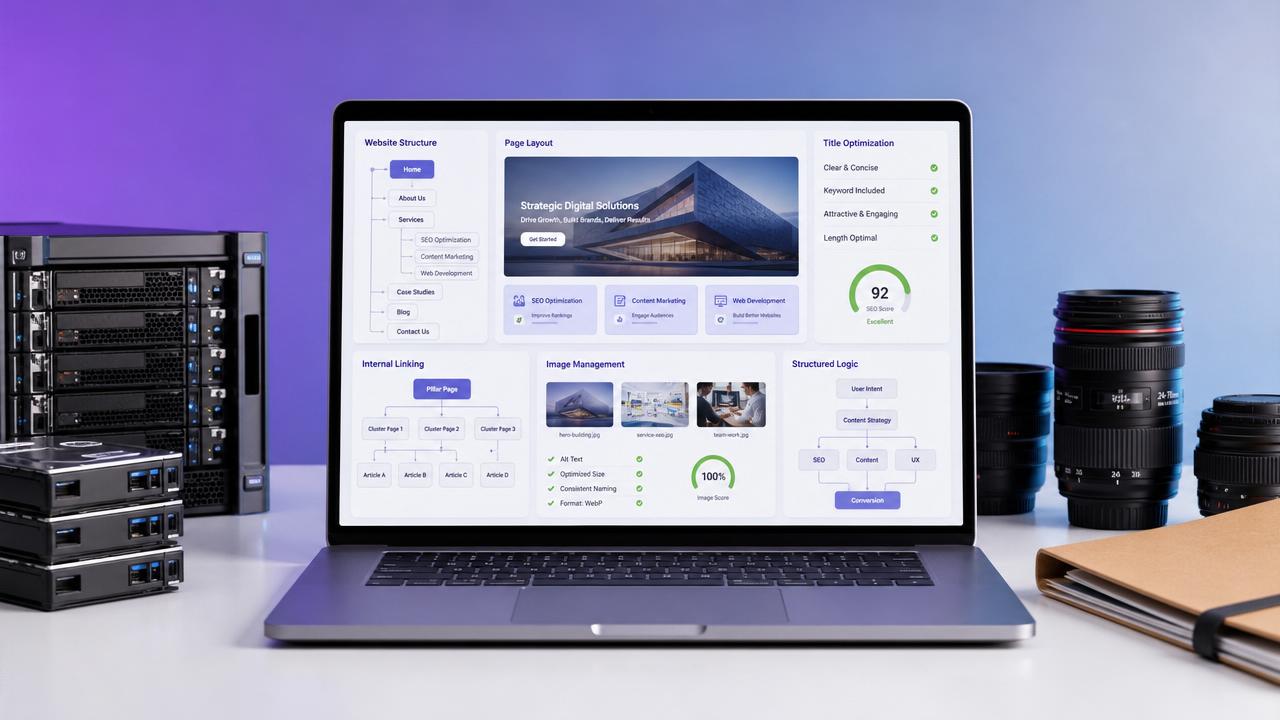
 ¿Cómo hacer que la configuración SEO de la página sea más estándar? Análisis de títulos, enlaces internos, imágenes y puntos clave de datos estructurados
 ¿Cómo hacer más eficaz la indexación de Google? Desde el rastreo, la indexación hasta la calidad de la página, revisa paso a paso


Productos relacionados
 EasyCamp SaaS: sistema inteligente de creación de sitios web y marketingSistema inteligente de marketing web E-Yingbao SaaS: creación de sitios web sin código y basado en inteligencia artificial. Cree rápidamente sitios web multilingües independientes de comercio electrónico en solo 10 minutos. La aceleración global del servidor y la optimización SEO basada en inteligencia artificial permiten a las empresas conectarse de manera eficiente con los mercados globales. La fusión perfecta entre tecnología y facilidad de uso hace que establecer una presencia internacional en el comercio electrónico sea muy sencillo.
 Servicio de optimización del sistema dual de motores AI+SEOEl sistema de optimización de motores duales AI+SEO de YYBaoku utiliza inteligencia artificial para la extracción de palabras clave, generación de contenido y optimización técnica integral, ayudando a empresas de comercio exterior a obtener tráfico orgánico de alta calidad y mejorar significativamente el posicionamiento en búsquedas y las tasas de conversión.
 Sistema de marketing publicitario inteligente AI+SEMAI+SEM impulsa la creación inteligente de anuncios, potenciando toda la cadena para un marketing publicitario preciso. El sistema genera automáticamente informes semanales/mensuales, la IA recomienda palabras clave y países de despliegue, monitorea indicadores clave en tiempo real y emite alertas inteligentes, inicia con un clic soluciones de despliegue de alta conversión, ayudando a adquirir clientes rápidamente y mejorar el ROI.
 Sistema de marketing en redes sociales AI+SNSSistema de marketing inteligente para redes sociales Yingyingbao AI+SNS: captura social precisa para la era de las redes sociales. Admite la sincronización de contenido con un solo clic en las principales plataformas, incluidas Facebook y LinkedIn. La reescritura de publicaciones impulsada por IA mejora la localización. El servicio de atención al cliente inteligente 24/7 y el análisis de perfiles de usuarios permiten a las empresas expandirse de manera eficiente a los mercados globales.
 Soluciones de marketing publicitario AI+SEMLas soluciones publicitarias SEM basadas en IA aprovechan la inteligencia artificial para mejorar significativamente la gestión de las campañas SEM. Mediante el uso de la IA para generar informes semanales y mensuales, estas soluciones presentan los datos de las cuentas en múltiples dimensiones, lo que permite una supervisión completa del rendimiento y las tendencias publicitarias. La IA ofrece recomendaciones precisas sobre palabras clave y países objetivo, elabora de forma inteligente textos publicitarios de alta conversión e inicia el despliegue eficiente de campañas con un solo clic, lo que acelera la adquisición de clientes para las empresas. Al mismo tiempo, el sistema supervisa las métricas principales en tiempo real, identifica de forma inteligente las fluctuaciones anormales y emite alertas oportunas, lo que garantiza un rendimiento publicitario estable y altos rendimientos.
 AI+SEO营销解决方案易营宝AI+SEO营销解决方案,通过AI批量写作、智能生成TDK、精准关键词扩词等功能,全面优化网站SEO效果,提升流量与转化率。助力企业构建高效智能网站新生态。
 Servicios de dominioEasyYun ofrece servicios profesionales de dominio, incluyendo consultas inteligentes, registro en un solo paso, protección de marca y gestión de ciclo completo, ayudando a las empresas a construir una imagen de marca digital.
 EasyOperate B2C Marketplace Transfronterizo y Sitio Web IndependienteEl sitio web independiente de comercio transfronterizo B2C de EasyStore es una solución integral de construcción de sitios web inteligentes y comercio electrónico transfronterizo desarrollada de forma independiente por EasyStore Information Technology (Beijing) Co., Ltd. El sistema está diseñado específicamente para pequeñas, medianas y grandes empresas exportadoras, integrando "construcción de sitios web, operación, marketing, publicidad y conversión" en una sola plataforma, ayudando a las empresas a crear rápidamente un sitio web independiente de comercio electrónico transfronterizo y lograr el crecimiento de las ventas globales y la expansión de la marca en el extranjero.
La plataforma admite múltiples idiomas, múltiples monedas y marketing multicanal, incorpora un sistema de traducción inteligente con IA y un sistema de optimización SEO, y es adecuada para mercados principales como el sudeste asiático, Europa y América, América Latina, Oriente Medio, etc., ayudando a las empresas manufactureras chinas a desplegar eficientemente su estrategia de comercio electrónico internacional. B2B2C双模式独立站解决方案易营宝推出的B2B2C双模式独立站解决方案,专为同时开展批发与零售业务的企业打造。平台支持商品价格展示、商品多规格管理、购物车与购物车弹窗、购物车总价计算,以及统一批量询价等功能,帮助企业以更高效、更直观的方式触达B端与C端客户。通过云建站、大数据分析与广告智能投放体系,助力企业打破渠道壁垒,实现国内外市场拓展与品牌价值提升。